
Sign up to save your podcasts
Or



Carbon monoxide (CO) leaking inside the house is a serious concern. How are they tested? What harm will it cause? How do you properly manage a furnace?
According to Reuben, experts in the field conflict with each other on how to properly test CO on furnaces. While it is not required in the standard inspection process, he shares the common and right way to do it. Tessa discusses the types of furnaces, how they work, as well as how to test them. They also talk about the proper equipment to use and its calibration.
Reuben also shares the downside of shutting off a furnace and their threshold for the servicing needs. On the other hand, one type is never tested because it always yields an erroneous result.
Fireplaces are decorative and give beautiful ambiance, but what are the safety issues? How do we address and prevent them? How do we inspect fireplaces?
Reuben mentions that gas log fireplaces are the closest to the real thing. However, he doesn't recommend this kind of fireplace. He discusses the differences between gas fireplaces, going over the key differences in such items as a gas log, log igniter, gas insert, and gas fireplace.Tessa highlights potential safety issues, especially with carbon monoxide inside the house.
They also talk about testing fireplaces for gas leakage and bad gas pressure regulators. Bill asks about the difference between a gas log fireplace and a gas range and their flames. Because gas log fireplaces are either unsafe or lead to energy loss, Reuben recommends using a gas insert fireplace instead.
Today's episode is about windows. How easy is it to identify window problems? What causes these problems? How are they inspected? Do you need new windows?
Reuben and Tessa discuss their observations about the kinds of windows that are usually damaged due to poor moisture control, condensation, and temperature or weather conditions. Reuben also shares his experience with his failed windows which were degraded by humidifiers.
Reuben and Tessa notice that the common damages are rotted sashes, failed seals, and collapsed glass. Moreover, they share their views on window materials such as wood, aluminum-clad wood, fiberglass, and vinyl. They also share the use of an infrared camera and suction cups during home inspections.
Related Link: https://structuretech.com/repairing-a-rotted-window-sash/
It's the final stretch for the talk about Structure Tech's home inspection process series.
Tessa, Reuben, and Bill start by talking about the top 5 things that they specifically look for when walking inside a house. They follow a step-by-step flow process that they stick to, in order to avoid being distracted and missing things.
Tessa talks about checking outlets, windows, and bedrooms, which are the easiest part of the inspection. She highlights that they also take time to check the bathroom water system, kitchen appliances, plumbing, and to note cracks on the floors and walls. Wood or gas-burning fireplaces are also required to run for a specific amount of time before performing any type of combustion testing. The basement is inspected for water intrusion, signs of moisture, environmental problems, floor drains, and potential foundation issues.
Tessa shares that the nose is one of the more powerful assets as a home inspector as it will cue inspectors to many potential problems during the inspection process. Reuben shares that infrared and time-stamped images have helped them address complaints. He adds that their thorough process, record keeping, and data availability also support their consistency with every inspection.
Today's episode is a continuation of Structure Tech's home inspection process. Bill opens the show by asking about getting permission from the homeowners to open attics. He also touches on the topic of having minors in the house during the inspection. Reuben highlights that the real estate contract in Minnesota defines intrusive inspections as when the property has changed.
Reuben talks about the entry to the attic access panel, electrical panel, checking the utilities such as the water and gas. Tessa also shares a story about getting locked out of a garage.
The show also touches on the physically challenging processes and tips on how to effectively inspect and test. Recording and handling defects and putting things into context for clients. Reuben and Tessa share their takeaways from their fun-fail stories.
Today's episode is part one of Structure Tech's home inspection flow process and why we do things this way. The standard process has been developed and enhanced since the start of the company. Tessa shares the process flow which starts from a pre-inspection call.
Tessa continues to share that from a quick walk outside the house, the team will proceed to wake up the house and use infrared cameras to take photos. Reuben highlights their learning experiences from failed and winning inspection steps. He discusses that the best way to inspect a house is through the top-down concept.
More about the inspection process will be discussed in next week's episode. For your questions, continue to write to [email protected].
Today, Josh Kerber from the Minnesota Department of Health will talk about radon gas. He is a research scientist who does applied research in building construction, specifically with indoor air.
Tessa checks the statistics of existing vs newly constructed homes that have radon. Reuben clarifies the action level to which one is encouraged to do something to fix it. While Bill confirms the licensure requirement for proper radon testing and installment of mitigation systems. Josh shares that 45% of Minnesota homes will have elevated levels of radon and the various safe levels that are identified by WHO, USA, and Canada. Further, he shares about the Radon Awareness Act. They also discuss the common defects in the installed radon mitigation systems and the alarm system that is required in the state.
Reuben shares a technical question about where to terminate the radon height and the need to have radon fans installed outside of the house. Josh shares the historical background where radon came to fruition.
Reuben extends appreciation for the feedback raised, especially from homeowners. He assures them that the podcast format will be retained. However, there will be episodes that are home inspector-focused.
Reuben Saltzman joins Waypoint Real Talk as a guest. He talks about how Structure Tech started and how its online presence since 2008 has helped the company grow. He shares that blogging on the company website allowed them to reach their market as well as other home inspectors. He also allows guest-blogging by inviting trade professionals to co-author. He highlights keeping content up-to-date by being consistent, committed, and upholding accountability with your partners.
Reuben shares how he learned that blogging must focus on a specific topic and the people who want to learn about it. Aaron Shishilla mentions that interesting blogs are first-hand and unique experiences. He shares that Reuben has influenced him and many readers, especially with his viewpoints and home inspection topics. Also, Austin Hintze asks for recommendations on how to start blogging, hiring writers, and finding time to blog.
Reuben also talks about their podcast, Structure Talk, as a new way to reach people. Also, their Facebook page is one of the popular home inspection pages where they post consistent content. Their YouTube channel also started by taking private home inspection videos for their clients. This paved the way to educate viewers about home inspection topics. Reuben highlights that these platforms direct the viewer traffic to their website.
Podcast Link :
https://waypointinspection.com/how-to-grow-your-business-online-w-reuben-saltzman/
Welcome to Structure Talk episode 100!
Kevin Wagstaff, one of the founders of Spectora, joins today's show to talk about their company. Spectora is the fastest, easiest, and advanced home inspection software that is currently assisting around 5,000 home inspectors in the US. He shares that their focus is making reliable, understandable, and useful information for inspectors and homeowners.
Reuben discusses the concept that in the future, home inspections might be a loss-leader. The real money might be in managing services and information, being a conduit for the services that people need. Kevin and Reuben also discuss kickbacks from these kinds of business relationships and being a preferred partner by other vendors.
Bill shares that the presence of Spectora as a trusted third-party provider, a communicator between homeowners and inspectors, will influence the home inspection industry. Then, Tessa realizes there are many opportunities in the industry that have yet to be explored, especially on the technology and marketing side.
Today’s session revisits the purpose of the show and discusses the plan to realign its focus to more specific and technical topics. Reuben shares that the show was originally designed for diligent homeowners who want to learn more about their house, real estate agents, and home inspectors. We're considering a new target audience of just home inspectors, but we'd like to hear your input. Please email us at [email protected] to let us know what you think.
Reuben also shares that StructureTech will be partnering with Majordomo. This is a third-party vendor who will be an additional option for homeowners to contact and request a repair estimate. Bill also highlights that this partnership will be a great help for homeowners to arrive at an informed decision.
The gang discusses the finer points of testing GFCI devices, and then Reuben shares his book summaries, which he just made public last week. To find these book summaries, visit https://structuretech.com/reubens-corner/.
From the publisher's feed
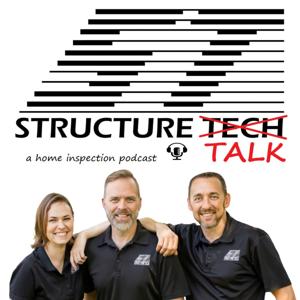
Structure Talk is a podcast about houses, home maintenance, home ownership, buying and selling houses, and of course, home inspections.
The show is hosted by Reuben Saltzman at
Our podcast is sponsored by Inspector Empire Builder.
Email us at [email protected]

16,689 Listeners

4,380 Listeners

32,776 Listeners

33,477 Listeners

46 Listeners

52 Listeners

2,647 Listeners
230 Listeners
380 Listeners

888 Listeners

9 Listeners

12 Listeners

33 Listeners

12 Listeners

3 Listeners