
Sign up to save your podcasts
Or

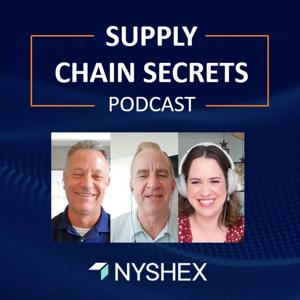


Transpacific rates are grinding higher into peak season while the Hormuz crisis shows no sign of resolution, and a new weather risk is quietly building for the Panama Canal.
In this episode, Lars Jensen and guest host Don Davis cover:
Pacific rates are flatlining but peak season signals are building, with freight futures pointing to a $900 per FEU jump on Asia-North Europe by July. Meanwhile, the Strait of Hormuz remains effectively closed, global container demand fell 2.4% year-on-year in March, and Maersk posted a second consecutive quarter of negative EBIT.
In this episode, Lars Jensen and Caroline Weaver cover:
The Strait of Hormuz has been closed for two months, yet TransPacific and Asia-Europe freight rates are barely moving compared to the disruptions of 2024-2025. This week, Lars and Caroline put the Hormuz crisis in proper context and cover the other headlines reshaping ocean freight.
In this episode, Lars Jensen and Caroline Weaver cover:
Iran has seized two MSC vessels in the Strait of Hormuz, bookings into the Persian Gulf have collapsed 66% year over year, and Somali pirates are back. The maritime risk picture is deteriorating fast.
In this episode, Lars Jensen and Caroline Weaver cover:
Ocean freight markets are sending mixed signals this week: Asia-Europe spot rates are falling, Pacific rates are ticking up, and Atlantic rates jumped sharply, but the bigger story is the widening spread between what different shippers are paying and what that uncertainty means.
In this episode, Lars Jensen and Caroline Weaver cover:
Freight markets are reacting to the Strait of Hormuz crisis, but not in the way many expected.
In this week’s episode of Supply Chain Secrets, we break down why rate increases have been relatively modest so far, despite major geopolitical disruption, and what signals to watch beneath the surface.
This episode covers:
• Why Asia–US and Asia–Europe rates are rising gradually, not sharply
• The role of bunker fuel in driving current rate increases
• What early NYFI-linked futures activity is telling us about market expectations
• How rerouting and limited transit through Hormuz are shaping capacity
• The risk of escalation and what it could mean for key logistics gateways
• Demand trends, including strong global growth and continued bifurcation
Plus, insights on OOCL’s latest earnings and what they reveal about volume vs. rate performance.
Tomorrow, April 7, container freight futures tied to the NYSHEX Freight Index (NYFI) go live on Intercontinental Exchange (ICE).
In this week’s episode of Supply Chain Secrets, the conversation focuses on what that means for the industry and how these new tools fit into freight strategy.
Rich Heath, who leads financial products at NYSHEX, joins to break down how freight futures work, how they connect to index-linked contracts, and how companies can begin thinking about managing freight risk in a more structured way.
This episode covers:
• What freight futures are and how they differ from physical freight contracts
• Why hedging is gaining traction now after years of limited adoption
• How futures can be used alongside existing procurement strategies
• What a first hedge can look like and how to start small
• How procurement and finance teams can work together on freight risk
As volatility continues to shape the market, the industry is beginning to adopt new tools designed to operate within it.
Freight markets are reacting to the crisis in the Strait of Hormuz but not in the way many expected.
In this week’s episode of Supply Chain Secrets, Caroline and Lars break down what is actually happening beneath the surface of the rate data.
While spot rates are only moving modestly week over week, the cumulative impact is building, and key signals in the market are starting to shift.
This episode covers:
• Why rate increases so far have been gradual, not explosive
• The sharp divergence between 20-foot and 40-foot pricing and what it signals
• What forward curves are indicating for peak season across major trades
• How rerouting via Oman and the Red Sea is reshaping capacity
• The latest developments in the Strait of Hormuz and who can still transit
• Why disruption remains highly regional for containers, but global for energy
Plus, a look at tariffs, IMO developments, and new trade agreements shaping global flows.
What will freight rates look like for the rest of 2026?
In this week’s episode of Supply Chain Secrets, the discussion moves beyond current spot rates to what the market is already pricing into the future.
From forward curves on key trades to the unfolding situation in the Strait of Hormuz, the episode explores how fuel costs, demand uncertainty, and capacity dynamics are shaping freight price expectations.
The key question: are current forecasts too conservative, or already balancing competing forces?
Topics covered:
• Forward price expectations across Asia–US and Asia–Europe trades
• How much of the expected increase is already explained by fuel surcharges
• Why rates may face both upward pressure from costs and downward pressure from demand
• What a “semi-permanent” disruption in Hormuz could mean for freight markets
• How to think about planning in a market where the range of outcomes is widening
The Strait of Hormuz crisis has abruptly changed the tone of the ocean freight market.
In this week’s Supply Chain Secrets episode, Caroline Weaver and Lars Jensen are joined by Peter Stallion of Clarksons to unpack what is happening right now and what it means for shippers, carriers, and NVOCCs navigating another wave of volatility.
Peter brings the perspective of one of the world’s largest shipping brokers and futures market participants, explaining how financial tools are beginning to complement traditional freight procurement strategies.
In this episode:
• Why the Strait of Hormuz is effectively closed to container shipping
• How fuel spikes and emergency surcharges are spreading across global trades
• Why freight indices have not yet fully captured the market shock
• What freight futures actually are and why adoption is accelerating
• How procurement teams can use hedging as a complement to carrier relationships and market expertise
The big takeaway: volatility is no longer rare. The industry is beginning to develop tools designed to operate in it.
From the publisher's feed
The Supply Chain Secrets Podcast cuts through the noise to bring you real, unfiltered insights from the front lines of global logistics. Whether you’re a shipper, NVO, carrier, or just someone who…

7,625 Listeners

520 Listeners

105 Listeners

27 Listeners

7 Listeners

111,799 Listeners

9 Listeners

7 Listeners

17 Listeners

6,068 Listeners

15,702 Listeners

9 Listeners
19 Listeners

19,254 Listeners

2 Listeners