
Sign up to save your podcasts
Or

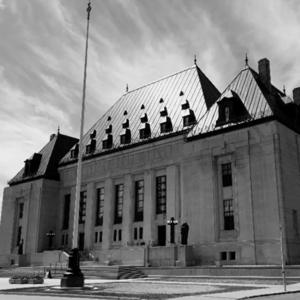


The Government of Alberta sought the Court of Appeal of Alberta’s opinion on the constitutionality of the Impact Assessment Act, S.C. 2019, c. 28, s. 1 (“IAA”) (found in Part 1 of Bill C 69, entitled An Act to enact the Impact Assessment Act and the Canadian Energy Regulator Act, to amend the Navigation Protection Act and to make consequential amendments to other Acts, S.C. 2019, c. 28) and one of its associated regulations, the Physical Activities Regulations, SOR/2019 285 (“Regulations”). The questions posed via Order in Council 160/2019 were as follows:
1. Is Part 1 of An Act to enact the Impact Assessment Act and the Canadian Energy Regulator Act, to amend the Navigation Protection Act and to make consequential amendments to other Acts, S.C. 2019, c. 28, unconstitutional in whole or in part, as being beyond the legislative authority of the Parliament of Canada under the Constitution of Canada?
2. Is the Physical Activities Regulations, SOR/2019 285, unconstitutional in whole or in part by virtue of purporting to apply to certain activities listed in Schedule 2 thereof that relate to matters entirely within the legislative authority of the Provinces under the Constitution of Canada?
The majority of the Court of Appeal of Alberta was of the opinion that the IAA is ultra vires Parliament, and that the IAA and Regulations are unconstitutional. Greckol J.A., dissenting, was of the opinion that the IAA and Regulations are a valid exercise of Parliament’s authority to legislate on the matter of the environment.
Argued Date
2023-03-21
Keywords
Constitutional law - Division of powers, Environmental law - Constitutional law — Division of powers — Environment — Whether Part 1 of An Act to enact the Impact Assessment Act and the Canadian Energy Regulator Act, to amend the Navigation Protection Act and to make consequential amendments to other Acts, S.C. 2019, c. 28 (“IAA”), is intra vires the legislative authority of the Parliament of Canada under the Constitution Act, 1867 — Whether the Physical Activities Regulations, SOR/2019 285 (“Regulations”), are intra vires the legislative authority of the Parliament of Canada under the Constitution Act, 1867 — Whether the Court of Appeal of Alberta erred in its characterization of the pith and substance of the IAA and Regulations — Whether the Court of Appeal of Alberta erred in its classification of the IAA and Regulations — Whether the Court of Appeal of Alberta erred in its application of the doctrine of interjurisdictional immunity to disapply the IAA and Regulations.
Notes
(Alberta) (Civil) (As of Right)
Disclaimers
This podcast is created as a public service to promote public access and awareness of the workings of Canada's highest court. It is not affiliated with or endorsed by the Court. The original version of this hearing may be found on the Supreme Court of Canada's website. The above case summary was prepared by the Office of the Registrar of the Supreme Court of Canada (Law Branch).
(PUBLICATION BAN)
The respondent was convicted of sexual assault and sexual interference, two offences perpetrated on the complainant when she was between six and eight years old. The convictions were based on the complainant’s unsworn, videotaped police statement, which the trial judge admitted into evidence by application of the principled exception to the hearsay rule, based on the requirements of necessity and threshold reliability. A majority of the Court of Appeal allowed the respondent’s appeal, set aside the conviction and entered an acquittal, concluding that the trial judge erred in law by admitting the out-of-court statement into evidence. MacPherson J.A., dissenting, would have dismissed the appeal from conviction.
Argued Date
2023-01-10
Keywords
Criminal law - Evidence, Admissibility, Hearsay - Criminal law – Evidence – Admissibility – Hearsay – Videotaped out-of-court statement given by complainant – Whether the majority of the Court of Appeal erred in law in finding that the trial judge erred in admitting the complainant’s out-of-court statement by (i) finding that the statement met the requirements of threshold reliability; and (ii) finding that the complainant had no motive to fabricate the allegations.
Notes
(Ontario) (Criminal) (As of Right) (Publication ban in case)
Disclaimers
This podcast is created as a public service to promote public access and awareness of the workings of Canada's highest court. It is not affiliated with or endorsed by the Court. The original version of this hearing may be found on the Supreme Court of Canada's website. The above case summary was prepared by the Office of the Registrar of the Supreme Court of Canada (Law Branch).
(PUBLICATION BAN IN CASE)
The respondent, H.V., pleaded guilty to a child luring offence committed between July 31 and August 9, 2017, which was prosecuted summarily. During sentencing, the respondent argued that the 6-month mandatory minimum sentence provided for in s. 172.1(2)(b) of the Criminal Code, R.S.C. 1985, c. C-46, was unconstitutional under s. 12 of the Canadian Charter of Rights and Freedoms. In his view, a sentence of imprisonment would be unjustified. The prosecution sought a term of imprisonment of between 9 and 12 months along with probation.
The Court of Québec declared that the 6-month mandatory minimum sentence was of no force or effect in relation to the accused, suspended the passing of sentence and imposed 2 years of probation with an obligation to perform 150 hours of community service.
The Superior Court allowed the appeal and affirmed that the mandatory minimum sentence of 6 months’ imprisonment provided for in s. 172.1(2)(b) Cr. C. was of no force or effect in relation to the accused under s. 12 of the Charter and was not saved by s. 1; it declared the mandatory minimum sentence to be invalid and of no force or effect and set aside the sentence imposed at trial. It sentenced the accused to 90 days’ imprisonment to be served intermittently and 3 years of probation, including 150 hours of community service. It maintained the other terms and conditions imposed and orders made at trial.
The Court of Appeal dismissed the prosecution’s appeal, upholding the 90-day sentence of imprisonment and the declaration that the minimum sentence of 6 months’ imprisonment provided for in s. 172.1(2)(b) Cr. C. was invalid. It held that the Superior Court had not imposed a demonstrably unfit sentence that did not reflect the objective and subjective seriousness of the crime committed and that the Superior Court had not erred in law in finding s. 172.1(2)(b) to be constitutionally invalid.
Argued Date
2023-02-16
Keywords
Canadian charter (Criminal) - Criminal law, Sentencing - Charter of Rights — Criminal law — Sentencing — Mandatory minimum sentence — Child luring — Whether s. 172.1(2)(b) of Criminal Code infringes s. 12 of Charter — If so, whether it constitutes reasonable limit prescribed by law that can be demonstrably justified in free and democratic society under s. 1 of Charter — Criminal Code, R.S.C. 1985, c. C-46, s. 172.1(2)(b) — Canadian Charter of Rights and Freedoms, s. 12.
Notes
(Quebec) (Criminal) (By Leave) (Publication ban in case)
Disclaimers
This podcast is created as a public service to promote public access and awareness of the workings of Canada's highest court. It is not affiliated with or endorsed by the Court. The original version of this hearing may be found on the Supreme Court of Canada's website. The above case summary was prepared by the Office of the Registrar of the Supreme Court of Canada (Law Branch).
At trial, the appellant was convicted by a jury of two counts of first degree murder. The appellant had refused to retain counsel subsequent to the preliminary inquiry and was adamant that he wanted to represent himself. Two separate amicus curiae were appointed to assist the court at different times; however, he refused to co-operate with either. The appellant appealed the convictions and alleged that the perceived fairness of the proceedings had been tainted due to the trial judge’s failure to appoint a partisan amicus curiae at an early stage of proceedings, with instructions to take on the key responsibilities of defence counsel. A majority of the Court of Appeal of Alberta found that there was no trial unfairness arising from the role of the amicus curiae in this case, and dismissed the appeal. It held that the appellant made the full answer and defence he wanted to. In dissent, O’Ferrall J.A. found that there was a miscarriage of justice. He would have allowed the appeal and ordered a new trial at which the appellant would be represented by defence counsel or an amicus curiae conferred with sufficient authority to advocate on his behalf, independent of the appellant’s wishes.
Argued Date
2023-03-14
Keywords
Criminal law - Trial - Criminal law — Trial — Appointment of amicus curiae — Role of amicus curiae — Self-represented accused — Trial fairness — Did the trial judge’s failure to appoint amicus curiae with a sufficient adversarial mandate result in a miscarriage of justice.
Notes
(Alberta) (Criminal) (As of Right)
Disclaimers
This podcast is created as a public service to promote public access and awareness of the workings of Canada's highest court. It is not affiliated with or endorsed by the Court. The original version of this hearing may be found on the Supreme Court of Canada's website. The above case summary was prepared by the Office of the Registrar of the Supreme Court of Canada (Law Branch).
The appellant was charged with multiple offences in relation to a home invasion robbery that took place on or about June 24, 2017. After stealing the homeowner’s possessions, the intruders drove off in his truck. The truck was located 11 hours later. A cigarette butt was seized by police from underneath the driver’s seat and tested for DNA, which returned a single profile matching the appellant. The trial judge convicted the appellant of breaking and entering to steal a firearm, two counts of robbery, and disguise with intent. Various other charges were conditionally stayed. The appellant appealed the convictions, but the majority of the Court of Appeal of Alberta dismissed his appeal. The majority held that the trial judge did not misapprehend the evidence related to the appellant’s recent possession of the stolen truck, or err in relying on the doctrine of recent possession to infer the appellant’s guilt for the home invasion robbery. It also held that the verdicts of guilt were reasonable. Veldhuis J.A., dissenting, would have allowed the appeal and substituted verdicts of acquittals on all counts. She concluded that the trial judge erred in his application of the law of the doctrine of recent possession and that the verdicts of guilt were unreasonable.
Argued Date
2023-02-14
Keywords
Criminal law - Evidence, Assessment, Reasonable verdict - Criminal law — Evidence — Assessment — Doctrine of recent possession — Reasonable verdict — Whether the verdicts of guilt were unreasonable — Whether the lower courts erred in the application of the law of the doctrine of recent possession — Whether the majority of the Court of Appeal of Alberta erred in law in drawing a negative inference on appeal because the appellant did not testify at trial.
Notes
(Alberta) (Criminal) (As of Right)
Disclaimers
This podcast is created as a public service to promote public access and awareness of the workings of Canada's highest court. It is not affiliated with or endorsed by the Court. The original version of this hearing may be found on the Supreme Court of Canada's website. The above case summary was prepared by the Office of the Registrar of the Supreme Court of Canada (Law Branch).
In 2018 and 2019, the Minister of Education, Culture and Employment of the Northwest Territories denied six applications for admission to French-language schools made by non-rights holder parents. The ineligibility of their children was assessed according to the criteria established in the Ministerial Directive — Enrolment of Students in French First Language Education Programs developed by the government of the Territories. Because none of the criteria in the Directive applied in the circumstances, the parents asked the Minister to exercise her residual discretion to authorize the admission of the six children concerned, which was denied. The non-rights holder parents and the school board applied for judicial review of the Minister’s decisions. In two judgments, the Northwest Territories Supreme Court set aside the Minister’s decisions on the ground that there had been no proportionate balancing of the protections guaranteed by s. 23 of the Charter and the government’s interests. The majority of the Court of Appeal allowed the Minister’s appeals and restored her decisions. The court found that the chambers judge’s reasoning on constitutional values had proceeded on the mistaken assumption that the case involved constitutional rights. The families in question did not qualify under s. 23 because they were not rights holders, and they therefore had no legal or statutory right or expectation to have their children attend the French-language schools.
Argued Date
2023-02-09
Keywords
Constitutional law - Charter of Rights, Administrative law - Constitutional law — Charter of Rights — Minority language educational rights — Ministerial directive — Administrative law — Discretion — Right to use French in court proceedings — Simultaneous interpretation — Children of non-rights holder parents — Minister denying applications for admission to French-language minority schools — Decisions set aside at first instance but restored on appeal — Whether Minister had to consider purpose of s. 23 in her decision-making process — Whether Minister’s denials were reasonable — Whether there was infringement of right to use French in courts protected by s. 19(1) of Charter and s. 9(1) of OLA — In alternative, whether right to natural justice was breached — Canadian Charter of Rights and Freedoms, ss. 19(1) and 23 — Official Languages Act, R.S.N.W.T. 1988, c. O-1, s. 9(1).
Notes
(Northwest Territories) (Civil) (By Leave)
Disclaimers
This podcast is created as a public service to promote public access and awareness of the workings of Canada's highest court. It is not affiliated with or endorsed by the Court. The original version of this hearing may be found on the Supreme Court of Canada's website. The above case summary was prepared by the Office of the Registrar of the Supreme Court of Canada (Law Branch).
The appellants, who were charged with various offences related to the large scale trafficking of cannabis, were arrested at the same time in more than one judicial district. They were divided into four different groups for separate trials. The appellants in the first group brought a motion for a stay of proceedings for abuse of process based on a series of infringements of the rights of the accused, and primarily their right to counsel.
On August 27, 2018, Dumas J. of the Superior Court entered a stay of proceedings on the ground that the police conduct had undermined the integrity of the justice system. He noted that the infringement of the right to counsel was the most serious infringement. On May 7, 2019, at a hearing before Dumas J., the parties agreed that the decision rendered concerning group 1 would apply to the accused in the other groups. The proceedings against all the other accused were therefore stayed. The Court of Appeal allowed the appeals, set aside the judgments of August 27, 2018 and May 7, 2019 staying the court proceedings, and ordered a new trial. It found that the trial judge necessarily had to assess the situation of each accused individually, since a remedy could be granted only to a person whose own constitutional rights had been infringed. That error in itself justified a new hearing.
Argued Date
2023-02-08
Keywords
Constitutional law - Charter of Rights, Enforcement (s. 24), Abuse of process - Constitutional law — Charter of Rights — Enforcement — Stay of proceedings — Abuse of process — Residual category — Standing — Infringement of right to counsel — Given that infringement of personal right is not determinative in application for stay of proceedings based on residual category, what standing is required to seek remedy in this category through s. 24(1) of Canadian Charter of Rights and Freedoms — Whether Crown can appeal conclusion of judgment that ends proceedings even though Crown specifically asked trial judge to reach such conclusion.
Notes
(Quebec) (Criminal) (By Leave)
Disclaimers
This podcast is created as a public service to promote public access and awareness of the workings of Canada's highest court. It is not affiliated with or endorsed by the Court. The original version of this hearing may be found on the Supreme Court of Canada's website. The above case summary was prepared by the Office of the Registrar of the Supreme Court of Canada (Law Branch).
The appellant, Cindy Dickson, is a member of the respondent Vuntut Gwitchin First Nation (“VGFN”) in the Yukon Territory; she resides in Whitehorse, instead of the VGFN’s Settlement Lands, approximately 800km away, for family medical reasons and other socio-economic reasons. Ms. Dickson sought to stand for election to the Council of the VGFN. However, the VGFN constitution specifies that any Councillor must reside on the Settlement Land (the “residency requirement”); it also states that if an eligible candidate for Chief or Councillor does not reside on Settlement Lands during the election, and wins their desired seat, they must relocate to the Settlement Lands within 14 days of election day. Given that Ms. Dickson was unwilling to move to the Settlement Lands, the VGFN Council declined to remove the residency requirement from the constitution, and rejected Ms. Dickson’s candidacy for the position of Councillor. Ms. Dickson then sought a declaration in the Yukon Supreme Court that the residency requirement was inconsistent with her right to equality protected and guaranteed by s. 15(1) of the Charter, could not be justified under s. 1 of the Charter, and was therefore of no force or effect.
The chambers judge issued a number of declarations, concluding that while the Charter applies to the VGFN Council and to the residency requirement in the VGFN constitution, the residency requirement at its core does not infringe s. 15(1) of the Charter. However, the time limit for relocation specified in the residency requirement — “within 14 days” — does infringe s. 15(1), and should be severed from the requirement and declared to be of no force and effect pursuant to s. 52 of the Constitution Act, 1982 (the declaration of invalidity was suspended for 18 months).
Alternatively, if this was incorrect and the residency requirement does infringe the s. 15(1) equality right, even without the time limit, the chambers judge concluded that s. 25 of the Charter would apply so as to “shield” the residency requirement (albeit with severance of the words “within 14 days”) from a finding of infringement.
Argued Date
2023-02-07
Keywords
Constitutional law - Canadian charter (Non-criminal), Application (s. 32), Right to equality (s. 15), Aboriginal peoples (s. 35), Treaty rights, Self-government - Constitutional law — Charter of rights — Application — Right to equality — Discrimination based on aboriginality-residence — Aboriginal peoples — Treaty rights — Self-government — First Nation constitution requiring elected Band councillors to relocate to settlement lands within 14 days of election — Appellant’s candidacy for councillor rejected for refusing to relocate if elected — Appellant challenging constitutional validity of residency requirement — Various declarations issued, including that Charter applies to First Nation’s residency requirement, that time limit in requirement infringes right to equality, but that s. 25 of Charter operates so as to shield requirement from review — Whether scope of “other rights and freedoms” that “pertain to aboriginal peoples of Canada” set out in s. 25 of Charter includes residency requirement — Whether court required to conduct full analysis of Charter right engaged, including s. 1, or whether application of s. 25 means collective rights need not be balanced with other interests — Whether Charter applies to residency requirement in constitution of self-governing First Nation — Whether residency requirement inconsistent with Charter, including whether analogous ground of “aboriginality-residence” rigidly applies in all circumstances of Indigenous governance — Canadian Charter of Rights and Freedoms, ss. 1, 15, 25, 32.
Notes
(Yukon Territory) (Civil) (By Leave)
Disclaimers
This podcast is created as a public service to promote public access and awareness of the workings of Canada's highest court. It is not affiliated with or endorsed by the Court. The original version of this hearing may be found on the Supreme Court of Canada's website. The above case summary was prepared by the Office of the Registrar of the Supreme Court of Canada (Law Branch).
(PUBLICATION BAN)
At trial, the appellant was acquitted of sexual interference, invitation to sexual touching and sexual assault respecting the complainant, a person under the age of 16 years. A majority of the Court of Appeal of Newfoundland and Labrador allowed the Crown’s appeal and ordered a new trial. It held that the trial judge engaged in impermissible stereotypical reasoning when assessing the complainant’s credibility by relying on the stereotypes that a victim could not be happy to see her abuser regardless of her age and circumstances, and that a victim will exhibit avoidant behaviour around her abuser if she were truly being abused. In dissent, White J.A. would have dismissed the appeal. In his view, the trial judge did not rely on any myth or stereotype about sexual assault when assessing the complainant’s credibility.
Argued Date
2022-12-01
Keywords
Criminal law - Evidence - Criminal law — Evidence — Credibility — Stereotypical reasoning — Whether the majority of the Court of Appeal erred in law in ruling that the trial judge relied upon impermissible stereotypes of victims of sexual abuse when he assessed the complainant’s credibility.
Notes
(Newfoundland & Labrador) (Criminal) (As of Right) (Publication ban in case) (Publication ban on party)
Disclaimers
This podcast is created as a public service to promote public access and awareness of the workings of Canada's highest court. It is not affiliated with or endorsed by the Court. The original version of this hearing may be found on the Supreme Court of Canada's website. The above case summary was prepared by the Office of the Registrar of the Supreme Court of Canada (Law Branch).
From the publisher's feed

111,841 Listeners

429 Listeners

5,740 Listeners

3,360 Listeners

15,605 Listeners

15,905 Listeners

1,325 Listeners
0 Listeners