
Sign up to save your podcasts
Or

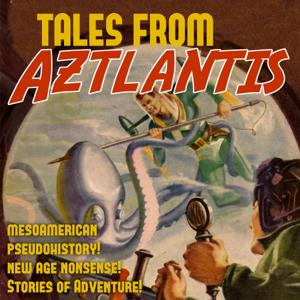


Aztec Philosophy, Ethics, and the Outward Path with Dr. Sebastian Purcell
What if living a good life isn't about chasing happiness, but about building strong relationships and fulfilling your responsibilities to others?
In this episode of Tales From Aztlantis, Kurly Tlapoyawa and Ruben Arellano Tlakatekatl sit down with philosopher Dr. Sebastian Purcell to discuss Aztec (Nahua) philosophy, ethics, language, and his groundbreaking books Discourses of the Elders and The Outward Path. Together they explore why Nahua philosophy deserves to stand alongside Greek, Indian, and Chinese philosophical traditions, and why many of its teachings remain surprisingly relevant today.
Dr. Purcell shares the story of how he transitioned from computer science and mathematical logic into philosophy before discovering the rich intellectual tradition preserved in Classical Nahuatl texts. He explains the challenges of producing the first intentionally philosophical English translation of the Huehuetlahtolli and why translating philosophy requires different choices than translating historical documents.
The conversation then turns to one of the central ideas in Nahua ethics: that living well is fundamentally a social endeavor. Rather than viewing ethics as an individual pursuit, the Nahuas understood human flourishing as something achieved through cooperation, mutual obligation, and healthy communities. Dr. Purcell contrasts this worldview with Aristotle, Confucius, Stoicism, and Buddhism, arguing that Nahua philosophy emphasizes an "outward path" that begins with our relationships before turning inward.
Along the way, the discussion explores the meaning of concepts such as in ixtli in yollotl (face and heart), in kwalli in yektli (the good and the right), rootedness, centeredness, and the famous Nahua metaphor of the slippery earth. The hosts also discuss whether modern scholars sometimes underestimate the philosophical sophistication of Nahua texts by insisting on overly literal translations.
The latter portion of the interview examines how to distinguish Indigenous teachings from later colonial Christian additions in the Huehuetlahtolli. Dr. Purcell proposes that passages emphasizing intrinsic reasons for acting well are more likely to preserve precolonial Nahua thought, while passages grounded primarily in divine punishment often reflect later Christian influence.
Finally, the conversation tackles one of the most debated subjects in Nahua studies: the controversial concept of Ometeotl, Miguel León-Portilla's influence on the field, and what current scholarship can and cannot confidently say about pre-Hispanic Nahua theology.
Whether you're interested in philosophy, Mesoamerican history, Nahuatl language, archaeology, or Indigenous knowledge, this episode offers an engaging introduction to one of the world's richest philosophical traditions.
Topics Discussed
Books Mentioned
Memorable Quotes
"Acting well is inherently a social activity, not an individual activity."
"You're not really after happiness. You're after a rich, meaningful life with your friends and family around you."
"The goal of ethics is to help you live better."
"Go outward first, then come in."
Connect With Tales From Aztlantis
If you enjoyed this episode, subscribe to Tales From Aztlantis, leave a review, and share it with someone interested in Indigenous philosophy, Nahua culture, and Mesoamerican history.
Listen wherever you get your podcasts.
listener comments? Feedback? Shoot us a text!
This December, I'll be joining Skeptoid Adventures as your guide for The Mysteries of the Maya, where we'll travel through the Yucatán exploring remarkable archaeological sites, uncovering the real history behind the Maya civilization, and separating fact from fiction along the way.
To reserve your spot, all you need is a fully refundable $500 deposit. Your deposit is refundable through August 1, so you can reserve your place with confidence. After Au
Lignum is a haven for culture, rest, and resistance. We believe in celebrating community and honoring the land that holds us. At our urban “milpa,” we practice indigenous science that respects the natural cycles of the region, and most of our workshops are hosted by indigenous and local experts. Every project we do is grounded in collective memory, creativity, and respect for the land and its people.
Order "NEVER WILL IT BE LOST" and get $5 off!
Support Lignum: A Cultural Haven in MéridaYour Hosts:
Kurly Tlapoyawa is an archaeologist, ethnohistorian, and filmmaker. His research covers Mesoamerica, the American Southwest, and the historical connections between the two regions. He is the author of numerous books and has presented lectures at the University of New Mexico, Harvard University, Yale University, San Diego State University, and numerous others. He most recently released his documentary short film "Guardians of the Purple Kingdom," and is a cultural consultant for Nickelodeon Animation Studios.
@kurlytlapoyawa
Ruben Arellano Tlakatekatl is a scholar, activist, and professor of history. His research explores Chicana/Chicano indigeneity, Mexican indigenist nationalism, and Coahuiltecan identity resurgence. Other areas of research include Aztlan (US Southwest), Anawak (Mesoamerica), and Native North America. He has presented and published widely on these topics and has taught courses at various institutions. He currently teaches history at Dallas College – Mountain View Campus.
Find us:
Family, friends, and listeners:
We gather virtually at a momentous historical threshold. The United States is engulfed in the pageantry, corporate sponsorships, and national choreography of its Semiquincentennial—the 250th anniversary of the signing of the Declaration
of Independence. Across the landscape, museum exhibitions are being mounted, monument plaques polished, and civic speeches drafted.
We are being summoned, collectively, to step into a grand civic liturgy: to
look back upon 1776 with an unclouded eye of pride, to venerate the so-called “Founding Fathers,” and to reaffirm a singular narrative of unfolding democratic progress. But as citizens of a deeply fractured landscape, we must ask the question that always haunts the perimeter of the American bonfire:
Who is this celebration for?
Sources
Primary Sources:
William Apess, Eulogy on King Philip, ed. Paul Royster, American Studies 39 (Published by the author, 1837; 2nd ed., Zea E-Books, 2022), https://digitalcommons.unl.edu/zeaamericanstudies/39
Frederick Douglass, “What to the Slave Is the Fourth of July?,” Oration Delivered in Corinthian Hall, Rochester (Rochester: Lee, Man, and Co, 1852), 14-37, https://loveman.sdsu.edu/docs/1852FrederickDouglass.pdf
Secondary Sources:
Patricia Bizzell, “The 4th of July and the 22nd of December: The Function of Cultural Archives in Persuasion, as Shown by Frederick Douglass and William Apess,” College Composition & Communication 48, no. 1 (1997): 44–60, https://doi.org/10.58680/ccc19973130
Drew Lopenzina, Through an Indian’s Looking-Glass: A Cultural Biography of William Apess, Pequot (University of Massachusetts Press, 2017), https://doi.org/10.2307/j.ctv346tn6
Drew Lopenzina, “What to the American Indian Is the Fourth of July? Moving beyond Abolitionist Rhetoric in William Apess’s Eulogy on King Philip,” American Literature 82, no. 4 (2010): 673–99, https://doi.org/10.1215/00029831-2010-041.
Mimi Yang, “What Does the 250th Anniversary of the Independence Mean to a ‘Browner’ America?,” On_Culture: The Open Journal for the Study of Culture(Germany) 15 (October 2023), https://doi.org/10.22029/oc.2023.1349
listener comments? Feedback? Shoot us a text!
This December, I'll be joining Skeptoid Adventures as your guide for The Mysteries of the Maya, where we'll travel through the Yucatán exploring remarkable archaeological sites, uncovering the real history behind the Maya civilization, and separating fact from fiction along the way.
To reserve your spot, all you need is a fully refundable $500 deposit. Your deposit is refundable through August 1, so you can reserve your place with confidence. After Au
Lignum is a haven for culture, rest, and resistance. We believe in celebrating community and honoring the land that holds us. At our urban “milpa,” we practice indigenous science that respects the natural cycles of the region, and most of our workshops are hosted by indigenous and local experts. Every project we do is grounded in collective memory, creativity, and respect for the land and its people.
Order "NEVER WILL IT BE LOST" and get $5 off!
Support Lignum: A Cultural Haven in MéridaYour Hosts:
Kurly Tlapoyawa is an archaeologist, ethnohistorian, and filmmaker. His research covers Mesoamerica, the American Southwest, and the historical connections between the two regions. He is the author of numerous books and has presented lectures at the University of New Mexico, Harvard University, Yale University, San Diego State University, and numerous others. He most recently released his documentary short film "Guardians of the Purple Kingdom," and is a cultural consultant for Nickelodeon Animation Studios.
@kurlytlapoyawa
Ruben Arellano Tlakatekatl is a scholar, activist, and professor of history. His research explores Chicana/Chicano indigeneity, Mexican indigenist nationalism, and Coahuiltecan identity resurgence. Other areas of research include Aztlan (US Southwest), Anawak (Mesoamerica), and Native North America. He has presented and published widely on these topics and has taught courses at various institutions. He currently teaches history at Dallas College – Mountain View Campus.
Find us:
Danzantes, Mexicanistas, and other cultural practitioners often display a banner that they claim is the "original" and "true" banner of the Mexika people. Often referred to as the Panketzalli, Bandera de Cuitlahuac, or the Bandera de Victoria, this symbol can be found emblazoned on t-shirts, flags, dance regalia, murals and tattoos. But where does this image actually come from? And who created it?
listener comments? Feedback? Shoot us a text!
Support the show
Order "NEVER WILL IT BE LOST" and get $5 off!
Support Lignum: A Cultural Haven in MéridaYour Hosts:
Kurly Tlapoyawa is an archaeologist, ethnohistorian, and filmmaker. His research covers Mesoamerica, the American Southwest, and the historical connections between the two regions. He is the author of numerous books and has presented lectures at the University of New Mexico, Harvard University, Yale University, San Diego State University, and numerous others. He most recently released his documentary short film "Guardians of the Purple Kingdom," and is a cultural consultant for Nickelodeon Animation Studios.
@kurlytlapoyawa
Ruben Arellano Tlakatekatl is a scholar, activist, and professor of history. His research explores Chicana/Chicano indigeneity, Mexican indigenist nationalism, and Coahuiltecan identity resurgence. Other areas of research include Aztlan (US Southwest), Anawak (Mesoamerica), and Native North America. He has presented and published widely on these topics and has taught courses at various institutions. He currently teaches history at Dallas College – Mountain View Campus.
Find us:
What does the 2nd Mexican Empire, Confederate soldiers on the run, and the TV show The Office have to do with a white supremacist secret society in St. Louis? Author and historian Devin Thomas O'Shea joins us to talk about his fantastic new book "The Veiled Prophet: Secret Societies, White Supremacy, and the Struggle for St. Louis." Strap yourselves in, dear listeners, you are in for a wild ride!
Our guest:
Devin Thomas O’Shea is the author of “The Veiled Prophet: Secret Societies, White Supremacy, and the Struggle for St. Louis,” publishing with Haymarket Books in June 2026. His writing is in The Nation, the Iowa Review, Slate, LA Review of Books, Boulevard, and elsewhere.
Buy the book!
listener comments? Feedback? Shoot us a text!
This December, I'll be joining Skeptoid Adventures as your guide for The Mysteries of the Maya, where we'll travel through the Yucatán exploring remarkable archaeological sites, uncovering the real history behind the Maya civilization, and separating fact from fiction along the way.
To reserve your spot, all you need is a fully refundable $500 deposit. Your deposit is refundable through August 1, so you can reserve your place with confidence. After Au
Lignum is a haven for culture, rest, and resistance. We believe in celebrating community and honoring the land that holds us. At our urban “milpa,” we practice indigenous science that respects the natural cycles of the region, and most of our workshops are hosted by indigenous and local experts. Every project we do is grounded in collective memory, creativity, and respect for the land and its people.
Order "NEVER WILL IT BE LOST" and get $5 off!
Support Lignum: A Cultural Haven in MéridaYour Hosts:
Kurly Tlapoyawa is an archaeologist, ethnohistorian, and filmmaker. His research covers Mesoamerica, the American Southwest, and the historical connections between the two regions. He is the author of numerous books and has presented lectures at the University of New Mexico, Harvard University, Yale University, San Diego State University, and numerous others. He most recently released his documentary short film "Guardians of the Purple Kingdom," and is a cultural consultant for Nickelodeon Animation Studios.
@kurlytlapoyawa
Ruben Arellano Tlakatekatl is a scholar, activist, and professor of history. His research explores Chicana/Chicano indigeneity, Mexican indigenist nationalism, and Coahuiltecan identity resurgence. Other areas of research include Aztlan (US Southwest), Anawak (Mesoamerica), and Native North America. He has presented and published widely on these topics and has taught courses at various institutions. He currently teaches history at Dallas College – Mountain View Campus.
Find us:
If you were to walk out onto the street right now and ask the average person to close their eyes and picture an “American Indian,” what images would flash across their mind? For most, those images wouldn’t be of contemporary indigenous lawyers, scientists, artists, or tribal leaders navigating the complex realities of the 21st century. Instead, their minds would automatically drift to a beautifully lit cinematic landscape: a weathered warrior in a majestic feather headdress standing on a desert ridge, or a mystical shaman whispering ancient riddles by a campfire.
We live in a culture saturated by these images. But where do they actually come from, and whose needs do they really serve?
In this episode, we are going to dive into a brilliant, blistering, and profoundly witty critique of American pop culture written in 1980 by the legendary Standing Rock Sioux scholar, historian, and activist, Vine Deloria, Jr. Deloria wrote a groundbreaking foreword titled “American Fantasy” for a book called The Pretend Indians: Images of Native Americans in the Movies, edited by Gretchen M. Bataille and Charles L. P. Silet.
Deloria’s central premise is as shocking as it is liberating: he argues that the “Indians” we see on movie screens, in television shows, and in popular literature have absolutely nothing to do with real Native Americans. Instead, they are completely artificial projections—a collection of “pretend” figures manufactured by white society to fulfill its own psychological needs, soothe its historical guilt, and escape its own deep identity crises.
In a world that prefers comforting myths over complex realities, Deloria challenges us to flip the script. He invites us to look at Hollywood not as a window into indigenous history, but as a mirror reflecting the fragmented, alienated psyche of the American white man.
So, let’s step into this urban fantasy together, look beneath the silver screen, and explore what happens when a culture replaces living people with a myth—and how Native communities brilliantly learned to use that very myth as a shield for survival.
listener comments? Feedback? Shoot us a text!
This December, I'll be joining Skeptoid Adventures as your guide for The Mysteries of the Maya, where we'll travel through the Yucatán exploring remarkable archaeological sites, uncovering the real history behind the Maya civilization, and separating fact from fiction along the way.
To reserve your spot, all you need is a fully refundable $500 deposit. Your deposit is refundable through August 1, so you can reserve your place with confidence. After Au
Lignum is a haven for culture, rest, and resistance. We believe in celebrating community and honoring the land that holds us. At our urban “milpa,” we practice indigenous science that respects the natural cycles of the region, and most of our workshops are hosted by indigenous and local experts. Every project we do is grounded in collective memory, creativity, and respect for the land and its people.
Order "NEVER WILL IT BE LOST" and get $5 off!
Support Lignum: A Cultural Haven in MéridaYour Hosts:
Kurly Tlapoyawa is an archaeologist, ethnohistorian, and filmmaker. His research covers Mesoamerica, the American Southwest, and the historical connections between the two regions. He is the author of numerous books and has presented lectures at the University of New Mexico, Harvard University, Yale University, San Diego State University, and numerous others. He most recently released his documentary short film "Guardians of the Purple Kingdom," and is a cultural consultant for Nickelodeon Animation Studios.
@kurlytlapoyawa
Ruben Arellano Tlakatekatl is a scholar, activist, and professor of history. His research explores Chicana/Chicano indigeneity, Mexican indigenist nationalism, and Coahuiltecan identity resurgence. Other areas of research include Aztlan (US Southwest), Anawak (Mesoamerica), and Native North America. He has presented and published widely on these topics and has taught courses at various institutions. He currently teaches history at Dallas College – Mountain View Campus.
Find us:
In the blistering heat of New Mexico’s sun-baked earth, under the protective gaze of Okuu Pin–the Turtle Mountain that majestically stands guard over Albuquerque–a strange and persistent legend has taken hold. It’s a story of hidden Jews, of ancient rites disguised as Catholic rituals, and of shadowy ancestors who supposedly hid their true faith during the Inquisition. This is the tale of New Mexico’s crypto-Jews—a myth so tangled in folklore, mistaken identities, and selective memory that it could only have been born in the fevered heart of the American Southwest.
The modern crypto-Jew craze began, as many myths do, with an eager academic and an over-reliance on confirmation bias. In the 1980s, historian Stanley Hordes launched a search for what he believed to be the long-lost Jewish roots of New Mexico’s Spanish-speaking residents—descendants, he claimed, of an elusive and mysterious population that had secretly kept the flames of Judaism alive for centuries, hidden beneath the Catholic veneer imposed by the Spanish Empire. But when we scratch the surface and look closer at what Hordes—and his followers—were really chasing, the myth becomes apparent. A myth so potent it gave rise to an entire identity-bending industry steeped in false history.
PLUS: Chapter Two of the JUAN DIEGO CODE!
listener comments? Feedback? Shoot us a text!
Support the show
Order "NEVER WILL IT BE LOST" and get $5 off!
Support Lignum: A Cultural Haven in MéridaYour Hosts:
Kurly Tlapoyawa is an archaeologist, ethnohistorian, and filmmaker. His research covers Mesoamerica, the American Southwest, and the historical connections between the two regions. He is the author of numerous books and has presented lectures at the University of New Mexico, Harvard University, Yale University, San Diego State University, and numerous others. He most recently released his documentary short film "Guardians of the Purple Kingdom," and is a cultural consultant for Nickelodeon Animation Studios.
@kurlytlapoyawa
Ruben Arellano Tlakatekatl is a scholar, activist, and professor of history. His research explores Chicana/Chicano indigeneity, Mexican indigenist nationalism, and Coahuiltecan identity resurgence. Other areas of research include Aztlan (US Southwest), Anawak (Mesoamerica), and Native North America. He has presented and published widely on these topics and has taught courses at various institutions. He currently teaches history at Dallas College – Mountain View Campus.
Find us:
Today, we’re talking about how we tell history, and specifically, how the media treats indigenous cultures. We are diving into the recent cultural history of the so-called Aztec Death Whistle. I’ve wanted to look into this topic for a while, but a recent horror movie about the whistle prompted a discussion on the Aztlantis discord, so I felt the time was right to dive into it. The main question at hand is how and why did the whistle enter popular culture?
That indeed is an interesting question. Of all the things attributed to the Aztecs that people would gravitate towards, a whistle associated with death is going to make the list. Right? I mean think of other things that the public associates with the Aztecs – it’s disproportionately related to violence and death. Even the explosion of Dia de los Muertos (Day of the Dead) in the last 20 years, while a positive celebration of deceased loved ones, is still about death.
Okay, so how did we get here with the whistle? It’s useful to note that the Aztec Death Whistle has been known to archeologists since the 19th century. Scholars largely ignored it as a curiosity until 1999 when an archeological discovery in Tlatelolco changed the perception and led to a more serious investigation of the whistle. The site held the remains of an individual clasping a whistle in each hand, and this led to a momentary surge on the topic. We’ll get to that later, but first, back to the article.
As I was looking around, I found a 2021 article from the Daily Science Journal by Alex Mitchell entitled “The Aztec Death Whistle is History’s Reminder That the Aztecs were Terrifying.” The title of this piece says it all (what a goober, this guy).
listener comments? Feedback? Shoot us a text!
This December, I'll be joining Skeptoid Adventures as your guide for The Mysteries of the Maya, where we'll travel through the Yucatán exploring remarkable archaeological sites, uncovering the real history behind the Maya civilization, and separating fact from fiction along the way.
To reserve your spot, all you need is a fully refundable $500 deposit. Your deposit is refundable through August 1, so you can reserve your place with confidence. After Au
Lignum is a haven for culture, rest, and resistance. We believe in celebrating community and honoring the land that holds us. At our urban “milpa,” we practice indigenous science that respects the natural cycles of the region, and most of our workshops are hosted by indigenous and local experts. Every project we do is grounded in collective memory, creativity, and respect for the land and its people.
Order "NEVER WILL IT BE LOST" and get $5 off!
Support Lignum: A Cultural Haven in MéridaYour Hosts:
Kurly Tlapoyawa is an archaeologist, ethnohistorian, and filmmaker. His research covers Mesoamerica, the American Southwest, and the historical connections between the two regions. He is the author of numerous books and has presented lectures at the University of New Mexico, Harvard University, Yale University, San Diego State University, and numerous others. He most recently released his documentary short film "Guardians of the Purple Kingdom," and is a cultural consultant for Nickelodeon Animation Studios.
@kurlytlapoyawa
Ruben Arellano Tlakatekatl is a scholar, activist, and professor of history. His research explores Chicana/Chicano indigeneity, Mexican indigenist nationalism, and Coahuiltecan identity resurgence. Other areas of research include Aztlan (US Southwest), Anawak (Mesoamerica), and Native North America. He has presented and published widely on these topics and has taught courses at various institutions. He currently teaches history at Dallas College – Mountain View Campus.
Find us:
Well, dear listeners, here we go again.
Like a brainless zombie emerging from the grave, a long-dead statue of Christopher Columbus has lurched back to life in order to reign terror on Washington DC.
And as his statue’s reanimated corpse claws its way up from the depths, it pauses momentarily to once again draw breath and utter…
“It’s a Me, Christopher Columbus!”
If you don’t know what I am referring to, dear listener, allow me to elucidate. On March 22, 2026, the Trump administration installed a 13-foot, one-ton marble replica of a Columbus statue on the White House grounds near the Eisenhower Executive Office Building. This was not an entirely new monument. It was constructed in part from fragments of the same columbus statue that protesters toppled in Baltimore six years earlier before dumping it neatly into the city’s Inner Harbor. That monument was one of many Columbus statues targeted during the height of the Black Lives Matter movement, as critics pointed to Columbus’ role in the violence, exploitation, and devastation of Indigenous peoples in the Americas.
The new, zombie statue was commissioned by the Conference of Presidents of Major Italian American Organizations and is part of the White House’s celebration of the nation’s 250th anniversary. According to the organization, artists recovered pieces of the original marble from the harbor and incorporated them into the reconstruction. After Baltimore officials declined to reinstall the monument (good on you Baltimore), the group turned to the White House to give it a new home. And of course, the usual gang of morons, war-criminals, and pedophiles that currently occupy the white house were more than happy to oblige.
listener comments? Feedback? Shoot us a text!
This December, I'll be joining Skeptoid Adventures as your guide for The Mysteries of the Maya, where we'll travel through the Yucatán exploring remarkable archaeological sites, uncovering the real history behind the Maya civilization, and separating fact from fiction along the way.
To reserve your spot, all you need is a fully refundable $500 deposit. Your deposit is refundable through August 1, so you can reserve your place with confidence. After Au
Lignum is a haven for culture, rest, and resistance. We believe in celebrating community and honoring the land that holds us. At our urban “milpa,” we practice indigenous science that respects the natural cycles of the region, and most of our workshops are hosted by indigenous and local experts. Every project we do is grounded in collective memory, creativity, and respect for the land and its people.
Order "NEVER WILL IT BE LOST" and get $5 off!
Support Lignum: A Cultural Haven in MéridaYour Hosts:
Kurly Tlapoyawa is an archaeologist, ethnohistorian, and filmmaker. His research covers Mesoamerica, the American Southwest, and the historical connections between the two regions. He is the author of numerous books and has presented lectures at the University of New Mexico, Harvard University, Yale University, San Diego State University, and numerous others. He most recently released his documentary short film "Guardians of the Purple Kingdom," and is a cultural consultant for Nickelodeon Animation Studios.
@kurlytlapoyawa
Ruben Arellano Tlakatekatl is a scholar, activist, and professor of history. His research explores Chicana/Chicano indigeneity, Mexican indigenist nationalism, and Coahuiltecan identity resurgence. Other areas of research include Aztlan (US Southwest), Anawak (Mesoamerica), and Native North America. He has presented and published widely on these topics and has taught courses at various institutions. He currently teaches history at Dallas College – Mountain View Campus.
Find us:
What is the actual history of Cinco de Mayo, what importance does it hold for Chicana/Chicano/Chicanx communities, and most importantly why is it celebrated in the United States? Well dear listener, if you have ever asked yourself any of those questions, you're in luck. Today's episode explores why we celebrate. Enjoy!
listener comments? Feedback? Shoot us a text!
This December, I'll be joining Skeptoid Adventures as your guide for The Mysteries of the Maya, where we'll travel through the Yucatán exploring remarkable archaeological sites, uncovering the real history behind the Maya civilization, and separating fact from fiction along the way.
To reserve your spot, all you need is a fully refundable $500 deposit. Your deposit is refundable through August 1, so you can reserve your place with confidence. After Au
Support the show
Order "NEVER WILL IT BE LOST" and get $5 off!
Support Lignum: A Cultural Haven in MéridaYour Hosts:
Kurly Tlapoyawa is an archaeologist, ethnohistorian, and filmmaker. His research covers Mesoamerica, the American Southwest, and the historical connections between the two regions. He is the author of numerous books and has presented lectures at the University of New Mexico, Harvard University, Yale University, San Diego State University, and numerous others. He most recently released his documentary short film "Guardians of the Purple Kingdom," and is a cultural consultant for Nickelodeon Animation Studios.
@kurlytlapoyawa
Ruben Arellano Tlakatekatl is a scholar, activist, and professor of history. His research explores Chicana/Chicano indigeneity, Mexican indigenist nationalism, and Coahuiltecan identity resurgence. Other areas of research include Aztlan (US Southwest), Anawak (Mesoamerica), and Native North America. He has presented and published widely on these topics and has taught courses at various institutions. He currently teaches history at Dallas College – Mountain View Campus.
Find us:
On the morning of April 20, tourists climbed the ancient steps of the Temple of the Moon at Teotiwakan, taking in the grandeur of the once-thriving Mesoamerican metropolis. From personal experience, I can tell you that the air that day was probably thin and dry, and the stones were likely still cool from the night before. Families would have paused briefly to catch their breath as they ascended a path that had been walked for centuries, while the many guides spoke in low voices about the legacy of a city that was once one of the largest in the ancient world.
Then sadly, and tragically, everything would change.
listener comments? Feedback? Shoot us a text!
This December, I'll be joining Skeptoid Adventures as your guide for The Mysteries of the Maya, where we'll travel through the Yucatán exploring remarkable archaeological sites, uncovering the real history behind the Maya civilization, and separating fact from fiction along the way.
To reserve your spot, all you need is a fully refundable $500 deposit. Your deposit is refundable through August 1, so you can reserve your place with confidence. After Au
Lignum is a haven for culture, rest, and resistance. We believe in celebrating community and honoring the land that holds us. At our urban “milpa,” we practice indigenous science that respects the natural cycles of the region, and most of our workshops are hosted by indigenous and local experts. Every project we do is grounded in collective memory, creativity, and respect for the land and its people.
Support the show
Order "NEVER WILL IT BE LOST" and get $5 off!
Support Lignum: A Cultural Haven in MéridaYour Hosts:
Kurly Tlapoyawa is an archaeologist, ethnohistorian, and filmmaker. His research covers Mesoamerica, the American Southwest, and the historical connections between the two regions. He is the author of numerous books and has presented lectures at the University of New Mexico, Harvard University, Yale University, San Diego State University, and numerous others. He most recently released his documentary short film "Guardians of the Purple Kingdom," and is a cultural consultant for Nickelodeon Animation Studios.
@kurlytlapoyawa
Ruben Arellano Tlakatekatl is a scholar, activist, and professor of history. His research explores Chicana/Chicano indigeneity, Mexican indigenist nationalism, and Coahuiltecan identity resurgence. Other areas of research include Aztlan (US Southwest), Anawak (Mesoamerica), and Native North America. He has presented and published widely on these topics and has taught courses at various institutions. He currently teaches history at Dallas College – Mountain View Campus.
Find us:
From the publisher's feed
We explore Chicano, Mexicano, and Mesoamerican history, archaeology, and culture, and combat the spread of disinformation about these very topics. Your hosts Kurly Tlapoyawa and Ruben Arellano…
Goodpods #1 in the Top 100 Chicano Podcasts (3 years running!)

91,022 Listeners

43,852 Listeners
5,746 Listeners
1,860 Listeners
3,781 Listeners
1,114 Listeners
14,655 Listeners
1,066 Listeners
6,108 Listeners
16,668 Listeners
16,365 Listeners
2,080 Listeners
1,012 Listeners

15,882 Listeners
2,633 Listeners