Talking Taiwan

Talking Taiwan

Download on the App Store

Talking Taiwan episodes

  • Ep 205 | Rev. Michael Stainton Working with Indigenous People in Taiwan Before and After Martial Law

    Related Links:

    To view all related links for this article, click link below:

    https://talkingtaiwan.com/rev-michael-stainton-working-with-indigenous-people-in-taiwan-before-and-after-martial-law-ep-205/

    A note from Talking Taiwan host Felicia Lin:

    In this episode of Talking Taiwan, I welcome back Reverend Michael Stainton to talk about his time in Taiwan and work with the indigenous people of Taiwan. Much of the time he spent in Taiwan was during the martial law era (before 1987) and he gives an interesting account of what Taiwan was like at the time.

    Reverend Stainton is the President of the Taiwanese Human Rights Association of Canada and the Founder and Director of the Canadian Mackay Committee. We had Reverend Stainton on as a guest previously (in episode 173) to talk about Canadian missionary George Leslie Mackay's contributions to Taiwan.

    This episode of Talking Taiwan has been sponsored by NATWA, the North America Taiwanese Women's Association.

    NATWA was founded in 1988, and its mission is:

    1. to evoke a sense of self-esteem and enhance women's dignity,
    2. to oppose gender discrimination and promote gender equality,
    3. to fully develop women's potential and encourage their participation in public affairs,
    4. to contribute to the advancement of human rights and democratic development in Taiwan,
    5. to reach out and work with women's organizations worldwide to promote peace for all.

    To learn more about NATWA visit their website: www.natwa.com

    Here's a little preview of what we talked about in this podcast episode:

    • In the 1970s, while Chiang Kai-shek was President of Taiwan Chinese Communist materials and materials from China were labeled "banditry materials" at the Stanford Center's library
    • Students could access the "banditry materials" but were required to sign out and promptly return them because the materials had to remain on premises
    • The Garrison Command would periodically stop by the library to check to make sure none of the "banditry materials" was missing
    • How the death of Chiang Kai-shek was covered by the three television stations in Taiwan
    • How Taiwan was a totalitarian police state in the 1970s
    • What happened when Reverend Stainton was sent to Taiwan as a missionary in 1980 to work with the Presbyterian Church of Taiwan
    • Reverend Stainton's work as the Director of the Taipei Aboriginal University Student Center
    • How students of the Taipei Aboriginal University Student Center were required to report to the political commissary what Reverend Stainton was teaching them
    • How Reverend Stainton tried to encourage the aborigine students to think about their identity and history by inviting various speakers such as local politicians and an academic who had critiqued the myth of Wu Feng (who was beheaded by the Tsou aborigine tribe)
    • How the police were always watching and Reverend Stainton's mail was opened and censored (during Taiwan's martial law era)
    • What happened when the police and garrison command arrived to break up a birthday party that students were having at the Taipei Aboriginal University Student Center
    • How Reverend Stainton knew that his phone was being tapped
    • Some students from the Taipei Aborigine University Student Center went on to become leaders and politicians including Icyang Parod who is the Minister of the Council of Indigenous Peoples (CIP)
    • In 1982 Reverend Stainton switched to doing work in a rural aboriginal development in Wulai
    • How Reverend Stainton helped to uncover embezzlement by the director of the Taipei Presbytery's community development center in Wulai
    • How Reverend Stainton discovered that he was disinvited from continuing to stay in Taiwan and sent back to Canada
    • The Atayal people began to request that they run the aboriginal development in Wulai be under the Atayal Presbytery church instead of the Taipei Presbytery
    • How Reverend Stainton studied at the Coady Institute after returning to Canada in 1983 and learned methods of community of development
    • How Reverend Stainton was invited to return to Taiwan
    • How Reverend Stainton was invited to work at community development centers in Taidong and Hualien
    • How the president of a cooperative ran for and was elected township mayor, but the KMT found a way to oust him
    • People who planned to participate in the Aboriginal return our land movement demonstration march in Taipei on August 25,1988 were harassed by the police and warned not to participate, busloads of people en route to the demonstration were also stopped
    • In this era Cheng Wen Chen's murder at Taida happened in 1981 and in 1989, Deng Nylon (Cheng Nan-jung) committed suicide by self-immolation rather than be arrested
    • Reverend Stainton and his wife returned to Canada in 1991
    • How Reverend Stainton's observation of the variations in behavior of different aborigine groups at the Taipei Aborigine University Student Center made him interested in anthropology
    • How Columbus Leo challenged the blacklist after martial law had been lifted
    • Reverend Stainton was sent by the United Church of Canada to be an observer at Columbus Leo's trial
    • Observers at Columbus Leo's trial included David Mulroney
    • The Columbus Leo Support Committee was renamed and continued as the Taiwanese Human Rights Association of Canada (THRAC)
    • The Taiwanese Human Rights Association of Canada organized the first nongovernment sponsored delegation (that included three members of Parliament) to observe the 1992 legislative elections in Taiwan
    • The 1992 delegation included: Jim Peterson (Liberal), Bill Blaikie (NDP) and Mary Clancy (Liberal)
    • In 1996 the THRAC organized a visit of indigenous leaders from Taiwan to Canada, the group included Icyang Parod, some clergy, legislators (two KMT and one DPP)
    • The group traveled to various parts of Canada learning about the different approaches to self- government that indigenous people had taken and met Ovide Mercredi
    • The Nisga'a Treaty
    • What is currently happening with indigenous peoples' rights in Taiwan
    • The "return our land movement" in Taiwan

    Related Links:

    To view all related links for this article, click link below:

    https://talkingtaiwan.com/rev-michael-stainton-working-with-indigenous-people-in-taiwan-before-and-after-martial-law-ep-205/

    1 hr 14 min
  • Ep 204 | Eduoard Roquette Talks About his Life-Changing Scooter Accident and Playing Tiger Man

    Related Links:

    To view all related links for this article, click link below:

    https://talkingtaiwan.com/eduordo-roquette-talks-about-his-life-changing-scooter-accident-and-playing-tiger-man-ep-204/

    A note from Talking Taiwan host Felicia Lin:

    Edouard Roquette is the founder of Rooms.Taipei a co-living business. In episode 192 he spoke to me about his experiences as an entrepreneur and the challenges facing foreign entrepreneurs in Taiwan. I've invited him back on to talk about the life-changing scooter accident that happened to him in 2012. It landed him in a wheelchair for six months, and on crutches for eight years. With physical therapy and treatment Edouard has been able to walk and hike again. To this day he continues to consult with physical therapists about his condition. We also spoke about how he took on the role of playing Tiger Man at the annual festivities in Beigang celebrating the birthday of Mazu, the goddess of the sea, and his fascination with Taiwan's religious festivals and ceremonies.

    This episode of Talking Taiwan has been sponsored by NATWA, the North America Taiwanese Women's Association.

    NATWA was founded in 1988, and its mission is:

    1. to evoke a sense of self-esteem and enhance women's dignity,
    2. to oppose gender discrimination and promote gender equality,
    3. to fully develop women's potential and encourage their participation in public affairs,
    4. to contribute to the advancement of human rights and democratic development in Taiwan,
    5. to reach out and work with women's organizations worldwide to promote peace for all.

    To learn more about NATWA visit their website: www.natwa.com

    Here's a little preview of what we talked about in this podcast episode:

    • How Edouard recovered enough from his scooter accident to be able to walk
    • How Edouard's accident happened three days before his visa for Taiwan expired
    • The approach that hospitals in Taiwan take with pain management
    • As a result of overstaying his visa Edouard had to leave Taiwan for a year
    • How Edouard has been able to go from not being able to stand for more than a few minutes to being able to walk and hike
    • Edouard's physical therapist in Taipei JJ. Physio
    • How Edouard had to advocate for himself to get physical therapy
    • As a result of Edouard's accident he lost his company, money, health, and relationship
    • How it took eight years for Edouard to walk again and how he got through it
    • How it was important for Edouard to feel a sense of normalcy as he was dealing with his injury and recovering
    • How he dealt with the way that people treated him at various stages of his recovery
    • How Edouard has been open trying all different types of treatments
    • The lessons that Edouard has learned throughout this journey to recover from his accident
    • The importance of connecting with support groups or people who have had similar experiences
    • Edouard's advice to others who have visa issues in Taiwan
    • How Edouard ended up playing the role of Tiger man for Mazu's birthday
    • Taiwan's dense religious practices
    • The Mazu festival in Beigang (北港) attracts 200,000 people
    • The Mazu festival in Dajia (大甲) attracts 2 million people
    • The Wanjin (aka Wanchin) Catholic Basilica in Pingtung, Taiwan
    • Obscure religious festivals in Taiwan
    • Edouard has posted videos of Mazu birthday festivities on Facebook
    • How Edouard has been involved with the Mazu birthday festivities in Beigang for 14 years
    • Edouard's recommendations for people interested in attending religious festivals in Taiwan
    • Being a tourist in your own country and constantly discovering things about the place you live
    • The Taiwan Gods website

    Related Links:

    To view all related links for this article, click link below:

    https://talkingtaiwan.com/eduordo-roquette-talks-about-his-life-changing-scooter-accident-and-playing-tiger-man-ep-204/

    45 min
  • Ep 203 | John Eastwood: Discusses Areas in Need of Legal Reform in Taiwan

    Related Links:

    To view all related links for this article, click link below:

    https://talkingtaiwan.com/john-eastwood-discusses-areas-in-need-of-legal-reform-in-taiwan-ep-203/

    A note from Talking Taiwan host Felicia Lin:

    John Eastwood is a partner at the Taipei office of the law firm Eiger. I spoke with John previously in episode 195 about some of the changes he's seen in Taiwan from a legal perspective, in the 20 years that he's resided in Taiwan. In this second half of our interview, John and I spoke about other issues and areas in need of legal reform in Taiwan.

    This episode of Talking Taiwan has been sponsored by NATWA, the North America Taiwanese Women's Association.

    NATWA was founded in 1988, and its mission is:

    1. to evoke a sense of self-esteem and enhance women's dignity,
    2. to oppose gender discrimination and promote gender equality,
    3. to fully develop women's potential and encourage their participation in public affairs,
    4. to contribute to the advancement of human rights and democratic development in Taiwan,
    5. to reach out and work with women's organizations worldwide to promote peace for all.

    To learn more about NATWA visit their website: www.natwa.com

    Here's a little preview of what we talked about in this podcast episode:

    • Legal reforms that John has seen happen in Taiwan
    • Issues that are in need of legal reform
    • The Anti-banditry Act (aka The Act for the Control and Punishment of Banditry)
    • The case of a man who decapitated a child in Taiwan
    • What does it mean to be not guilty by reason of insanity
    • The need for increased awareness and understanding of mental health and mental illness when it comes to making judgments on criminal cases
    • Cases of elder abuse fraud in Taiwan and conservatorship
    • How John's firm has helped to safeguard their elderly clients' assets
    • How elder fraud is not just an "old person's" issue but also a "young person's" issue
    • How difficult it is to undo things once fraud had been committed

    Related Links:

    To view all related links for this article, click link below:

    https://talkingtaiwan.com/john-eastwood-discusses-areas-in-need-of-legal-reform-in-taiwan-ep-203/

    23 min
  • Ep 202 | The History of Mets Taiwan Day with Diana Lee from Hello Taiwan

    Related Links:

    To view all related links for this article, click link below:

    https://talkingtaiwan.com/the-history-of-mets-taiwan-day-with-diana-lee-of-hello-taiwan-ep-202/

    A note from Talking Taiwan host Felicia Lin:

    On this episode of Talking Taiwan I'm speaking with Diana Lee, one of the founders and organizers of Hello Taiwan about Mets Taiwan Day which is in its 17th year. It's coming up soon on August 28th. We talked about how the event got started, some of the celebrities and notable people who have appeared at Mets Taiwan Day in the past and what sorts of activities and things people will experience at the event. Among the most exciting news for Taiwanese baseball fans is who will be throwing the first pitch of the game, and how to get a limited edition MetsTaiwan No. 1 jersey. Hello Taiwan also sponsors other sporting and cultural events throughout the year.

    This episode of Talking Taiwan has been sponsored by NATWA, the North America Taiwanese Women's Association.

    NATWA was founded in 1988, and its mission is:

    1. to evoke a sense of self-esteem and enhance women's dignity,
    2. to oppose gender discrimination and promote gender equality,
    3. to fully develop women's potential and encourage their participation in public affairs,
    4. to contribute to the advancement of human rights and democratic development in Taiwan,
    5. to reach out and work with women's organizations worldwide to promote peace for all.

    To learn more about NATWA visit their website: www.natwa.com

    Here's a little preview of what we talked about in this podcast episode:

    • How and when Mets Taiwan Day started
    • How the NY Mets have several celebration of different culture events in the month of August
    • Activities at Mets Taiwan Day include the Formosan Black Bear mascot, Third Prince, diabolo performance
    • Peng Cheng-min (aka Chia Chia) former Taiwanese baseball player and coach will be throwing the first pitch at this year's Mets Taiwan Day
    • The Mets Taiwan No. 1 jersey and how to get one
    • How the Mets Taiwan No. 1 jersey will be available in kids sizes for the first time this year
    • Celebrities and famous, notable Taiwanese who have made appearances or thrown the first pitch at past Mets Taiwan Day events
    • Other sports events sponsored by Hello Taiwan include: Rhode Island Dragon Boat Festival, Hello Taiwan Night at Dodgers' Stadium, Hello Taiwan Night Lunar New Year event with the Long Island Nets
    • Other events that Hello Taiwan has planned throughout the year for Halloween, a Taiwanese night market, Easter, Christmas

    Related Links:

    To view all related links for this article, click link below:

    https://talkingtaiwan.com/the-history-of-mets-taiwan-day-with-diana-lee-of-hello-taiwan-ep-202/

    19 min
  • Ep 201 | Shu-Ying Chung Talks About Filmmaking and her Award-Winning Short

    Related Links:

    To view all related links for this article, click link below:

    https://talkingtaiwan.com/shui-ying-chung-talks-about-filmmaking-and-her-award-winning-short-ep-201/

    A note from Talking Taiwan host Felicia Lin:

    Shu-Ying Chung is a filmmaker based in New York. Her short film Removable has been making the rounds at film festivals. It's won several awards for best story, best short, best actress, and best director, to name a few. I spoke with Shu-Ying about what motivated her to write, direct and produce the film and how she can identify with the subject matter of the film due to her own past immigration status issues. She also talked about some of the highlights of her career in film and offered some advice for those interested in filmmaking.

    This episode of Talking Taiwan has been sponsored by NATWA, the North America Taiwanese Women's Association.

    NATWA was founded in 1988, and its mission is:

    1. to evoke a sense of self-esteem and enhance women's dignity,
    2. to oppose gender discrimination and promote gender equality,
    3. to fully develop women's potential and encourage their participation in public affairs,
    4. to contribute to the advancement of human rights and democratic development in Taiwan,
    5. to reach out and work with women's organizations worldwide to promote peace for all.

    To learn more about NATWA visit their website: www.natwa.com

    Here's a little preview of what we talked about in this podcast episode:

    • What it was like growing up in Taiwan for Shu-Ying
    • Her interest in music, television and film and her parents' reaction
    • Her short film Removable that is currently making the rounds at several film festivals, which has earned many awards for best short, best actress, and best director, to name a few
    • What inspired her to write, produce and direct her short film Removable
    • Shu-Ying's own experience with being forced to leave the U.S. due to work visa issues
    • What happened when Shu-Ying had to leave the U.S. to return to Taiwan due to a visa issue and ended up staying there for 1.5 years
    • How she wrote the script for Removable with her husband
    • The research involved in writing the script for Removable
    • How Shu-Ying and her husband did everything required for pre-production of the film in four weeks and a five-day shoot to make the short film, Removable
    • How Removable was self-funded by Shu-Ying and her husband
    • If Shu-Ying has plans to expand Removable into a full-length film
    • Shu-Ying's career path in film so far and her work at Hearst Magazines
    • How Shu-Ying's immigrant/work status has been a barrier in her career path
    • How English language proficiency can be a barrier for foreigners to overcome in the U.S.
    • Shu-Ying's dream of being able to direct full length films full-time
    • What it takes to be a good film director
    • Shu-Ying's approach to filmmaking
    • The most memorable film/video projects (shown on Shu-Ying's website) that she has worked on
    • Shu-Ying's first experience shooting with 35 mm film
    • The difference between shooting on film vs. digitally
    • Shu-Ying's work on the Artists' Den documentary series
    • What Shu-Ying misses about Taiwan
    • Some of Shu-Ying's favorite films
    • One of the films that influenced her short film Removable
    • What Shu-Ying thinks she would be doing if she wasn't a filmmaker
    • The dream film project that Shu-Ying would like to make about her grandmother
    • How Shu-Ying would like to be remembered
    • What advice Shu-Ying has for others interested in being a filmmaker

    Related Links:

    To view all related links for this article, click link below:

    https://talkingtaiwan.com/shui-ying-chung-talks-about-filmmaking-and-her-award-winning-short-ep-201/

    1 hr 4 min
  • Ep 200 | Charlie Wu Talks About the Annual Event TaiwanFest

    Related Links:

    To view all related links for this article, click link below:

    https://talkingtaiwan.com/charlie-wu-talks-about-the-annual-event-taiwanfest-ep-200/

    A note from Talking Taiwan host Felicia Lin:

    Today Talking Taiwan hits a major milestone with episode 200! We think it's especially meaningful that the topic of this interview is TAIWANfest, an annual Taiwanese Canadian event that dates back to 1990.

    Nowadays, TAIWANfest is held annually in Toronto and Vancouver. And my guest on this episode is Charlie Wu, the Managing Director of Asian-Canadian Special Events Association , which organizes TAIWANfest and LunarFest. You may recall that we had Charlie on earlier this year (in episode 167) to talk about LunarFest.

    TAIWANfest will be held in Toronto later this month from August 26-28 and in Vancouver from September 3-5. This year's theme is: The Stories of Independence Indulge in Indonesia, Discover Malaysia.

    The programming will feature the indigenous band, Kanatal, which is a sort of experiment, that breaks the mold. They are a newly formed band of 4 experienced musicians, that have performing on tour without even having an album released. Other programs at TAIWANfest include a standup comedian, film screenings discussions, and events both in-person and virtual with topics covering: literature, social activism, food and culture.

    This episode of Talking Taiwan has been sponsored by NATWA, the North America Taiwanese Women's Association.

    NATWA was founded in 1988, and its mission is:

    1. to evoke a sense of self-esteem and enhance women's dignity,
    2. to oppose gender discrimination and promote gender equality,
    3. to fully develop women's potential and encourage their participation in public affairs,
    4. to contribute to the advancement of human rights and democratic development in Taiwan,
    5. to reach out and work with women's organizations worldwide to promote peace for all.

    To learn more about NATWA visit their website: www.natwa.com

    Here's a little preview of what we talked about in this podcast episode:

    • TAIWANfest will be taking place in Toronto from August 26-28 and in Vancouver from September 3-5
    • The theme of TAIWANfest 2022: The Stories of Independence Indulge in Indonesia, Discover Malaysia
    • The independence of nations vs. people
    • The newly formed band, Kanatal [ga-na-dal], which means "island" in the Amis language, referring to the small island of Taiwan
    • How Kanatal is touring and will perform at TAIWANfest
    • The opening concert for TAIWANfest Toronto will be performed by an orchestra led by Maestro Ken Hsieh
    • TAIWANfest Vancouver's closing concert will be performed by a string orchestra
    • Comedian Ed Hill who will be performing at TAIWANfest Toronto and Vancouver
    • TAIWANfest's virtual programming
    • The Let Taiwan Be Taiwan program
    • Connections between Indonesia and Taiwan
    • There are 300,000 Indonesians living in Taiwan
    • Indonesian migrant workers and their cultural impact on Taiwan
    • Films, performances and food presented at TAIWANfest
    • The "Taiwan Bookstore" concept at TAIWANfest Vancouver
    • The food known in Taiwan, Indonesia and the Philippines, as "lumpia"; "run-bing" in Mandarin Chinese; and "popiah" in Malaysia
    • The discussion on "Making Taiwan Relevant in Cansda" about the book Charlie wrote with two others about his experiences running TAIWANfest
    • How Indonesian culture will be represented at TAIWANfest
    • How TAIWANfest Vancouveris working with the Brilliant Time Bookstore in Taiwan to collect donated books in Southeast Asian languages for migrant workers in Taiwan
    • The graphic image that represents TAIWANfest 2022 was inspired by batik culture from Malaysia and Indonesia
    • How Charlie and his team decides and curates the content of TAIWANfest
    • Some of the films that will be part of Cinematic Taiwan, such as The Road Forward, a musical documentary by Marie Clements, which will be subtitled in Chinese
    • Kanatal's song Peace
    • The documentary being made about Kanatal
    • The story of how Kanatal was formed
    • Suana·Emuy·Cilangasay, who assembled the musicians to form Kanatal
    • Eden Liu's social activism in Indonesia
    • Due to capacity limitations at the Harbourfront Center in Toronto and the pandemic, TAIWANfest in Toronto will be scaled down while TAIWANfest in Vancouver will be at full scale
    • Future plans for the Jade Music Festival

    Related Links:

    To view all related links for this article, click link below:

    https://talkingtaiwan.com/charlie-wu-talks-about-the-annual-event-taiwanfest-ep-200/

    1 hr 13 min
  • Ep 199 | Gerrit van der Wees: The Past and Present State of US Taiwan Relations

    Related Links:

    To view all related links for this article, click link below:

    https://talkingtaiwan.com/gerrit-van-der-wees-the-past-and-present-state-of-u-s-taiwan-relations-ep-199/

    A note from Talking Taiwan host Felicia Lin:

    In June I spoke with Gerrit van der Wees about an article that he wrote about U.S. President Biden's remarks about Taiwan when he was in Tokyo in May.

    Just last week, Gerrit wrote a very timely article about the controversy over the U.S. House of Representatives Speaker Nancy Pelosi's plans to visit Taiwan. In April Pelosi had planned to visit Taiwan as part of a tour to the Indo Pacific region but had to cancel because she contracted COVID-19.

    Last week Pelosi left with a delegation for Asia, but made no mention of visiting Taiwan. There had been speculation that the Chinese would attack if U.S. fighter jets escorted Pelosi's plane into Taiwan, and in a phone conversation with U.S. president Joe Biden, Chinese president Xi Jinping warned Biden against "playing with fire" over Taiwan.

    In his piece for the Taipei Times, Gerrit stated that it is essential that Pelosi stands her ground and pushes through with her plan to visit Taiwan. We'll share Gerrit's Taipei Times article and a few others about this situation on our website for this episode.

    In my interview with Gerrit I asked him to explain in detail what the Taiwan Relations Act is, and what it tells us about the relationship between the U.S. and Taiwan. We also talked about the so-called U.S. policy of strategic ambiguity, how his work on the Taiwan Communique evolved from 1980 to 2016, and his thoughts on the war in Ukraine, and how it relates to China and Taiwan.

    About Gerrit van der Wees

    Gerrit van der Wees is a former Dutch diplomat. From 1980 through 2016, he served as chief-editor of "Taiwan Communiqué." Also, from 2005 through 2016 he was liaison for the Senate and the State Department at FAPA-HQ. He currently teaches the History of Taiwan at George Mason University and Current issues in East Asia at George Washington University's Elliott School for International Affairs.

    This episode of Talking Taiwan has been sponsored by NATWA, the North America Taiwanese Women's Association.

    NATWA was founded in 1988, and its mission is:

    1. to evoke a sense of self-esteem and enhance women's dignity,
    2. to oppose gender discrimination and promote gender equality,
    3. to fully develop women's potential and encourage their participation in public affairs,
    4. to contribute to the advancement of human rights and democratic development in Taiwan,
    5. to reach out and work with women's organizations worldwide to promote peace for all.

    To learn more about NATWA visit their website: www.natwa.com

    Here's a little preview of what we talked about in this podcast episode:

    • U.S. President Joe Biden's remarks on the U.S.'s willingness to help defend Taiwan
    • The Taiwan Relations Act, the document that contains US commitments to (help) defend Taiwan, and its first two clauses
    • How U.S. Secretary of State Anthony Blinken referred to the second clause of the Taiwan Relations Act in a speech he made at the end of May
    • What the second clause of the Taiwan Relations Act says and means
    • The background of the Taiwan Relations Act
    • How Harvey Feldman of the East Asia Pacific desk of the U.S. State Department was involved in initially drafting the Taiwan Policy Act
    • How in 1979 the U.S. Congress started drafting the Taiwan Relations Act which had security clauses and a human rights clause embedded within it
    • How Senator Ted Kennedy, Senator Claiborne Pell, and Congressman Jim Leach were instrumental in drafting the Taiwan Relations Act and getting it passed in April 1979
    • The establishment of the American Institute in Taiwan (AIT) in January 1979
    • Mark Chen's (陳唐山) work with Senators and Congressmen to ensure that the Taiwan Relations Act took into consideration the native Taiwanese perspective
    • The Taiwan Communique and why it was established
    • How news from and about Taiwan while under martial law was obtained, communicated and printed in the Taiwan Communique
    • How dangwai (outside party) magazines: Měilì dǎo aka Formosa Magazine (美麗島) and Bāshí niándài aka 1980s (8十年代) were sources of information for the Taiwan Communique
    • How the George Washington University library has a complete collection of dangwai magazines from Taiwan
    • The censorship of postal mail that was received in and sent out from Taiwan during the martial law era
    • After the Taiwan democratized in the early 1990s the focus of the Taiwan Communique shifted to working to gain more international recognition for Taiwan
    • What the "One China Policy" means from the perspective of the U.S. and China
    • How the "One China Policy" which was based on the 1970s, a time in which Beijing and Taipei that claimed to be the government of China
    • How things have changed since the 1970s, which requires an adjustment in policy to reflect current times
    • What makes the Taiwan Relations Act so unique
    • How Taiwan meets all the requirements of a nation state according to the Montevideo Convention of 1933
    • How Montevideo Convention states that the existence of an independent state does not depend on the recognition of other states
    • When the United States of America declared independence in 1776 there were no other countries that recognized the new government in Washington D.C. for two years
    • For the first 25 years of the United States of America it was only recognized by seven countries
    • The Taiwan Travel Act
    • Why the U.S. policy of strategic ambiguity toward Taiwan is not a policy
    • How the term "strategic ambiguity" dates back to the mid-1990s
    • Robert Suettinger's 2003 book, Beyond Tiananmen
    • Gerrit's thoughts on the war in Ukraine and what China is taking away from the situation
    • Gerrit's observations on how the war in Ukraine has impacted the people of Taiwan
    • Things that Taiwan need to reconsider about its military strategy

    Related Links:

    To view all related links for this article, click link below:

    https://talkingtaiwan.com/gerrit-van-der-wees-the-past-and-present-state-of-u-s-taiwan-relations-ep-199/

    52 min
  • Ep 198 | Emily Wu Truong: Award-Winning Mental Health Speaker Inspires Others to Find Meaning in Their Struggles

    A note from Talking Taiwan host Felicia Lin:

    Emily Wu Truong is a motivational speaker for mental health awareness. She is affiliated with NAMI, the National Alliance on Mental Illness and has been involved with this organization for the last 8.5 years. I've invited her on to Talking Taiwan as a guest since July is BIPOC (Black Indigenous People of Color) Mental Health Month. Emily spoke with me about her own struggles with mental health, and suicide. She has a passion for working with youths on mental health related issues. She also shared her thoughts about the oppression and trauma experienced firsthand or as generational trauma by the people of Taiwan, and how it could impact one's mental health.

    About Emily Wu Truong:

    Emily Wu Truong is an award-winning mental health advocate, nationally-recognized motivational speaker, catalytic thought leader, community educator, playwright and published author. For over a decade, Emily has worked tirelessly to create more compassionate & accepting communities by bringing mental health education wherever she goes. As a speaker, Emily utilizes her story from depression to self-actualization, inspiring others to find meaning in life struggles. She has spoken to a variety of audiences, including students from elementary school to graduate school students, school administrators, teachers, families, law enforcement, faith-based communities, medical and mental health professionals and many more. Over the years, in recognition of Emily's efforts to raise awareness on mental health and emotional resilience, she has been featured in the California Mental Health Movement "Each Mind Matters," Good Morning America, NBC Asian America, LA 18 and World Journal (世界日報). Emily has also been honored with the "2015 Woman of Achievement Award" by former Senator Ed Hernandez. Also in 2015, Emily was honored with the Youth and Young Adult Leadership Award at the 29th Annual National Alternatives Conference in Memphis, Tennessee. In 2017, the Los Angeles County Supervisors honored Emily's request to establish May 10th as "Asian Pacific American Mental Health Day." In 2018, former Assemblyman Ed Chau honored Emily with the 2018 Make A Difference Award. Emily has become a role model for many, sharing her life lessons and delivering her message that helplessness is not hopelessness and that with help, there is hope.

    This episode of Talking Taiwan has been sponsored by NATWA, the North America Taiwanese Women's Association.

    NATWA was founded in 1988, and its mission is:

    1. to evoke a sense of self-esteem and enhance women's dignity,
    2. to oppose gender discrimination and promote gender equality,
    3. to fully develop women's potential and encourage their participation in public affairs,
    4. to contribute to the advancement of human rights and democratic development in Taiwan,
    5. to reach out and work with women's organizations worldwide to promote peace for all.

    To learn more about NATWA visit their website: www.natwa.com

    Here's a little preview of what we talked about in this podcast episode:

    • Why she's been called the lady in green
    • How Emily tries to talk about mental health in a positive light
    • The struggles that Emily felt growing up
    • How the painting "The Potato Eaters" by Van Gogh reminds her of how she felt disconnected from her family in the past
    • How she started asking existential questions about life when she was in junior high
    • Competitiveness in the Asian culture
    • Comparisons made by Asian parents, families and relatives
    • Emily's passion for the mental health of youth
    • How important it is for kids to have supportive friends
    • How Emily struggled in elementary school and was bullied in junior high
    • Emily's best friend in high school Enoch who helped her to get through high school
    • How Emily used dating as a coping skill in the past
    • How Emily is a suicide survivor what her to consider suicide and what stopped her from committing suicide
    • Emily's thoughts on school shootings
    • Her first experience with a therapist and counseling in college
    • How Emily wants to help young people to develop coping skills to deal with their parents and peers so that they don't need to internalize things
    • How Emily took an interest Taiwan in order to bond with her mother
    • How Emily competed in the Miss Taiwan pageant
    • How Emily discovered that her mother's cousin is Taiwanese activist Koh Se Kai and that encouraged her to be more outspoken
    • How Emily got involved in the Write in Taiwanese Census Bureau, TACL and FAPA
    • Emily's thoughts on how the people of Taiwan have been oppressed and how and trauma experienced firsthand or as generational trauma could impact one's mental health
    • Author Iris Chang who committed suicide
    • Emily's work with NAMI (National Alliance on Mental Illness)

    Related Links:

    To view all related links for this article, click link below:

    https://talkingtaiwan.com/emily-wu-truong-award-winning-mental-health-speaker-inspires-others-to-find-meaning-in-their-struggles-ep-198/

    1 hr 28 min
  • Ep 197 | Ed Lin: Winner of Three Asian American Literary Awards Talks About his New Book "Death Doesn't Forget"

    A note from Talking Taiwan host Felicia Lin:

    Ed Lin is a native New Yorker of Taiwanese and Chinese descent. He is the first writer to win three Asian American Literary Awards. The last time we had Ed on Talking Taiwan (in 2014) we spoke about "Ghost Month" his first book in the Taipei Night Market Series of mysteries. Since then, he's written a YA novel and now four books in the Taipei Night Market Series. "Death Doesn't Forget," Is the latest book in the series and it will be published in July.

    This episode of Talking Taiwan has been sponsored by NATWA, the North America Taiwanese Women's Association.

    NATWA was founded in 1988, and its mission is:

    1. to evoke a sense of self-esteem and enhance women's dignity,
    2. to oppose gender discrimination and promote gender equality,
    3. to fully develop women's potential and encourage their participation in public affairs,
    4. to contribute to the advancement of human rights and democratic development in Taiwan,
    5. to reach out and work with women's organizations worldwide to promote peace for all.

    To learn more about NATWA visit their website: www.natwa.com

    Here's a little preview of what we talked about in this podcast episode:

    • Ed Lin's Taipei Mysteries books series and how he went about planning and writing them
    • The main character of Ed Lin's Taipei Mysteries book series, Jing-Nan and how he's evolved
    • The premise and what inspired Ed to write Death Doesn't Forget
    • How the indigenous tribe that Ketagalan Boulevard in Taipei is named after is not officially recognized as a tribe in Taiwan
    • The lack of representation of indigenous people in Taiwan's government
    • The way Ed has described Taipei in his novel
    • The neighborhood of Guangzhou Street west of Longshan Temple and why he described it as seedy
    • The training center located near Longshan Temple in Taipei for aborigine people and why the program was unsuccessful
    • The inconsistent romanization of streets in Taipei
    • How the stops on Taiwan's MRT system are announced in four languages: Mandarin, Taiwanese (Holo), Hakka and English
    • How safe Taipei and Taiwan is
    • The role of organized crime, good and bad in Taiwan's society
    • How the population of Taiwan is not monoethnic as some would assume
    • Taiwan's new immigrants from Southeast Asia
    • The plight of Taiwan's migrant workers
    • The "island mentality" of Taiwan that Ed describes as people's kindness and helpfulness
    • Ed's interactions with complete strangers and gangsters in Taiwan
    • How the characters in Death Doesn't Forget represent different ethnic and socioeconomic backgrounds
    • How Taiwan's White Terror era has affected the people of Taiwan and its lasting trauma
    • Some of the intriguing characters of Death Doesn't Forget
    • The abuse of migrant fishermen and migrant workers in Taiwan and Ed's interest in writing about it
    • The "orphan brigade" of Death Doesn't Forget and Taiwanese baseball teams from the Japanese occupation period (similar to what was portrayed in the film Kano)
    • How Japan used baseball as a form of soft power in its colonies
    • How Taiwan's Little League baseball team is a form of its soft power
    • Green Island and how one of the characters of Death Doesn't Forget in spent time at the prison there
    • Why murder is the crime featured in many of Ed's novels
    • Ed's observations and thoughts on the intermingling of religions in Taiwan
    • How Ed would immerse himself in the time period of 1976 when writing his Chinatown Mysteries series
    • Ed's thoughts on how the war in Ukraine may or may not be giving China ideas about attacking Taiwan
    • Ed's approach to his book readings
    • How/why the narration of Death Doesn't Forget was switched to third person, instead of first person for all of the other novels in the Taipei Mysteries series
    • How the writing James T. Farrell, Irish-American author of the Studs Lonigan trilogy and Danny O'Neill pentology, inspired Ed to write Death Doesn't Forget in third person
    • Ed's foray into YA (young adult) novel writing with David Tung Can't Have A Girlfriend Until He Gets Into An Ivy League College
    • How Ed came up with the title Death Doesn't Forget

    Related Links:

    To view all related links for this article, click link below:

    https://talkingtaiwan.com/ed-lin-winner-of-three-asian-literary-awards-talks-about-his-new-book-death-doesnt-forget-ep-197/

    54 min
  • Ep 196 | Susan Chung: Talks About her Career in Mental Health and BIPOC Mental Health Month

    A note from Talking Taiwan host Felicia Lin:

    July is BIPOC (Black Indigenous People of Color) Mental Health Month, which is also known as Bebe Moore Campbell National Minority Mental Health Awareness Month, named for the mental health advocate who brought awareness to the unique struggles that underrepresented groups face in regard to mental illness in the US.

    I've invited Susan Chung on to Talking Taiwan to talk about her career in mental health, and BIPOC Mental Health Month. Susan is a Licensed Clinical Social Worker at the University of North Carolina - Chapel Hill, who provides psychotherapy specifically to BIPOC students. We also spoke about key statistics and research findings that inform us about the mental health of Asians, some of the unique challenges facing BIPOC communities and individuals, the racism that Susan has experienced as a mental health professional, and the importance of managing our own mental health.

    This episode of Talking Taiwan has been sponsored by NATWA, the North America Taiwanese Women's Association.

    NATWA was founded in 1988, and its mission is:

    1. to evoke a sense of self-esteem and enhance women's dignity,
    2. to oppose gender discrimination and promote gender equality,
    3. to fully develop women's potential and encourage their participation in public affairs,
    4. to contribute to the advancement of human rights and democratic development in Taiwan,
    5. to reach out and work with women's organizations worldwide to promote peace for all.

    To learn more about NATWA visit their website: www.natwa.com

    Here's a little preview of what we talked about in this podcast episode:

    • How Susan got interested in studying mental health and social work
    • How Susan realized that there's a need to have more Asians represented in mental health
    • Susan's work with forensic social work and how it is different from social work
    • Susan's work with survivors of human trafficking
    • Susan's career path
    • Susan has worked with middle school-aged kids in addition to college kids
    • How Susan manages the impact that dealing with victims of human trafficking could have on her own mental health
    • How Susan continues to do forensic social work since moving from New York to North Carolina by accompanying police on raids
    • How Susan felt about being the only Asian-identifying therapist among Black-identifying therapists at the University of North Carolina counseling center
    • Work-related trauma that Susan has experienced
    • Susan's work experience at the University of North Carolina
    • Susan's experiences living in Irvine, California, New York City and North Carolina
    • In 2017, according to the Office of Minority Health, the leading cause of death in young Asian Americans in the US was suicide. Citation: Matsuoka, J. K., Breaux, C., & Ryujin, D. H. (1997). National utilization of mental health services by Asian Americans/Pacific Islanders. Journal of Community Psychology, 25(2), 141-145. doi:10.1002/(sici)1520-6629(199703)25:23.0.co;2-0
    • Susan's research at University of California, Irvine about the higher rate of depression and suicidal thoughts amongst Asian-identifying students
    • The rates of reported and diagnosed mental illness are low for Asian Americans compared to Euro-Americans, averaging between 5-12% Citation: https://minorityhealth.hhs.gov/omh/browse.aspx?lvl=4&lvlid=54
    • According to the nonprofit organization Mental Health America, Asian Americans are the least likely racial group in the United States to seek mental health services
    • Susan's work in the children's psychiatric department of a hospital and how many of the students referred to her were Asian, and none had voluntarily sought help for themselves
    • Challenges that BIPOC experience that could affect their mental health
    • Resources provided by Mental Health of America's web page for BIPOC Mental Health Month
    • How the 2021 BIPOC Mental Health Month tool kit acknowledged that the Western medical model is based on evidence-based approaches (which can be problematic especially for BIPOC)
    • Susan talked about how her Asian-identifying clients often have psychosomatic symptoms that are indicative of a mental health-related issue
    • Mental illness doesn't have to be about an illness or having a condition like depression, being bipolar, having PTSD, etc.
    • The stigmatization of mental health
    • De-stigmatizing mental health by changing the language we use or referring to it as mental wellness
    • How the pandemic has impacted people's mental health and the research that Susan did related to this
    • Susan's thoughts on the Atlanta spa shooting in March of 2021
    • Tips to manage and assess our own mental health
    • What can we do to support friends and family who may be struggling with their mental health
    • The racism that Susan has experienced as a mental health professional
    • The vicarious trauma Susan felt in dealing with a student who was the target of an Asian hate crime at UNC
    • How racial injustice and systemic injustice can affect BIPOC communities
    • Challenges faced by indigenous communities and how they may have some nonevidence-based practices that are therapeutic
    • While Susan has dealt with Black and Latinx students, she doesn't want to make any generalizations about BIPOC communities or their mental health

    Related Links:

    To view all related links for this article, click link below:

    https://talkingtaiwan.com/susan-chung-talks-about-her-career-in-mental-health-and-bipoc-mental-health-month-ep-196/

    1 hr 6 min

About Talking Taiwan

From the publisher's feed

Talking Taiwan is a Golden Crane Podcast Award Winner, and has been shortlisted in the 2024 International Women's Podcast Awards "Moment of Visionary Leadership" category. In 2025, it was nominated…

More shows like Talking Taiwan

Taiwan This Week by ICRT

Taiwan This Week

51 Listeners

轉角國際新聞 Daily Podcast by 轉角國際新聞 Daily Podcast

轉角國際新聞 Daily Podcast

191 Listeners

敏迪選讀 by 敏迪

敏迪選讀

204 Listeners

法客電台 BY 法律白話文 Plain Law Media by 法律白話文運動

法客電台 BY 法律白話文 Plain Law Media

152 Listeners

呱吉 by 呱吉

呱吉

312 Listeners

美國台灣觀測站 by US Taiwan Watch

美國台灣觀測站

74 Listeners

夏日只想躺在家 (Dark Potato) by 浚瑋&阿忠&Mandark

夏日只想躺在家 (Dark Potato)

23 Listeners

《The Real Story》By 報導者 by 報導者 The Reporter

《The Real Story》By 報導者

305 Listeners

唐陽雞酒屋 by 唐綺陽

唐陽雞酒屋

333 Listeners

我在案發現場 by ETtoday

我在案發現場

109 Listeners

斐姨所思 by 范琪斐

斐姨所思

86 Listeners

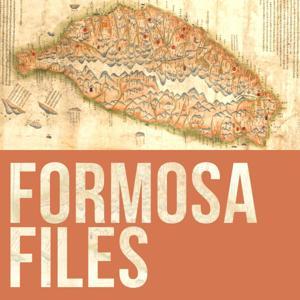
The Taiwan History Podcast: Formosa Files by John Ross and Eryk Michael Smith

The Taiwan History Podcast: Formosa Files

82 Listeners

小熱NOW by 小熱唱

小熱NOW

55 Listeners

重新路一段 by 勸世女孩

重新路一段

46 Listeners

珞亦不絕 by 法律白話文 Plain Law Media by 劉珞亦

珞亦不絕 by 法律白話文 Plain Law Media

32 Listeners