
Sign up to save your podcasts
Or

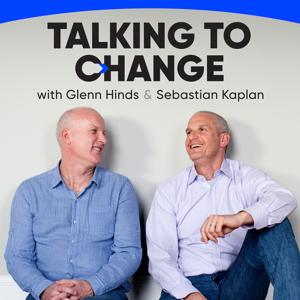


In Episode 97 of Talking to Change: A Motivational Interviewing Podcast, Glenn Hinds and Sebastian Kaplan welcome Douglas C. Smith, Ph.D., LCSW, to discuss Motivational Interviewing with families. The conversation explores what changes when MI moves beyond a single client and a single target behaviour, including working with change talk across family members, balancing autonomy and practitioner direction, and avoiding what Doug describes as the “superfluous engagement trap”.
Douglas C. Smith, Ph.D., LCSW, is Professor of Social Work at the University of Illinois at Urbana-Champaign and Director of the Center for Prevention Research and Development (CPRD). He received his Ph.D. in Social Work in 2006 from the University of Iowa and has over twenty years of experience in substance use disorder prevention and treatment as a clinician, clinical supervisor and researcher.
His research focuses on improving treatments for adolescents and young adults experiencing substance use disorders. He is the author of two books, including Emerging Adults and Substance Use Disorder Treatment (Oxford Press) and Motivational Interviewing with Families (Guilford Press).
This episode also has a Talking to Change: MI Practice Companion, developed to help practitioners explore and apply the learning from the conversation. Explore Motivational Interviewing with Families, Adolescents and Substance Use: Practice Lessons from Professor Doug Smith.
Podcast: [email protected]
Listen: Browse the full Talking to Change podcast listening archive.
Learn: Explore Talking to Change episodes and learning resources on glennhinds.com.
The post Ep 97 – Motivational Interviewing with Families appeared first on Glenn Hinds Motivation & Coaching Consultants.
In this episode of Talking to Change, Glenn Hinds and Sebastian Kaplan welcome Kristin Dempsey and Ali Hall to explore how mental health practitioners can strengthen their Motivational Interviewing skills through experiential learning, deliberate practice and feedback. Drawing on their book Advancing Motivational Interviewing: An Experiential Skills Guide for Mental Health Providers, the conversation considers an important question for anyone developing MI: how do we move from understanding Motivational Interviewing to using it skilfully in real conversations?
This Practice Companion draws out the practical learning from the conversation. It explores the assessment trap, using MI when time is limited, responding to wider systemic influences, and creating meaningful opportunities for deliberate practice. It also connects these ideas with related resources in the Motivational Interviewing Knowledge Centre for practitioners who want to develop their skills further.
This Practice Companion highlights selected ideas and practice implications from the episode. Listen to the full conversation with Kristin Dempsey and Ali Hall for the complete discussion, examples and reflections. Listen to Episode 96: Enhancing MI Skills for Mental Health Providers
Kristin Dempsey is a psychotherapist, trainer, and counselor educator in the San Francisco Bay Area. She has over 30 years’ experience working with individuals, youth, and families with challenging behavioral issues that impact their lives such as substance use disorders, co-occurring mental health and substance use disorders, trauma symptoms, and unresolved grief. Kristin believes that each individual has unlimited ability to change and grow, and she enjoys exploring the complexities of complex challenges and how to approach them with compassion and curiosity. Kristin has taught many classes in the counselor education curriculum, and she is currently focused on practitioner skill development, substance use disorder treatment, and effective practices in community mental health. Kristin is a member of the Motivational Interviewing Network of Trainers (MINT), and she currently teaches MI to behavioral health and other allied human services professionals. She is an adjunct professor at the Wright Institute’s Counseling Psychology Program and lecturing faculty at San Francisco State University. Kristin is the author of The Harm Reduction Workbook for Addiction (New Harbinger, 2024), co-author of Advancing Motivational Interviewing: An Experiential Skills Guide for Mental Health Professionals (PESI, April 2026), and a writer for The Mental Health and Substance Use Recovery Workbook (New Harbinger, May 2027).
Ali Hall is a member of the Motivational Interviewing Network of Trainers (MINT), a MINT Certified Trainer, and an independent consultant and trainer.
Ali has designed and facilitated thousands of MI workshops for a wide variety of providers, including those who serve within criminal justice systems, behavioral health, substance use recovery, mental health, health care, children/family services and wraparound, and has served multiple Training for New Trainers events. Ali regularly provides skill development coaching for interdisciplinary provider teams. Ali is the co-developer of the Motivational Interviewing Competency Assessment (MICA), a coding and coaching tool for MI skill improvement, co-author of the book Motivational Interviewing for Mental Health Clinicians: A Toolkit for Skill Development (2021), developer of the Cultivating Hope activity deck (2025) and co-author of Advancing Motivational Interviewing: An Experiential Skills Guide for Mental Health Providers (2026).
One of the central themes in this conversation is the difference between knowing about Motivational Interviewing and being able to use it skilfully in practice. Reading about MI, attending training and understanding its principles all matter, but they do not automatically translate into fluent practice.
Developing MI proficiency requires opportunities to practise specific skills, notice what happens in the interaction, receive useful feedback and try again. Dempsey and Hall’s emphasis on experiential learning therefore connects closely with deliberate practice: identifying an aspect of our MI practice that we want to improve and working on it purposefully rather than simply accumulating more experience.
This matters because experience alone does not guarantee improvement. Deliberate practice involves identifying a specific aspect of performance, practising with intention, using feedback to understand what is happening, and repeating the process. For MI practitioners, that might mean focusing on the depth of reflections, recognising opportunities to evoke change talk, reducing questions that inadvertently direct the conversation, or reviewing recorded practice with a coach or coding tool.
Explore further: Deliberate Practice in Motivational Interviewing
Mental health practitioners often need to gather substantial amounts of information. Assessment, risk, diagnosis, safeguarding and organisational requirements can all create pressure to ask questions. The difficulty arises when the conversation becomes a sequence of practitioner-led questions and client answers.
In Motivational Interviewing, this is sometimes described as the assessment trap. The problem is not assessment itself. It is what can happen to the quality of the conversation when information gathering takes precedence over engagement, listening and understanding what matters to the person.
A useful practice question is: Am I asking this question because I genuinely need the information now, or because asking questions has become the way I am organising the conversation?
MI does not require practitioners to abandon necessary assessment. Instead, we can pay attention to how we conduct it. Reflections, summaries and open questions can help an assessment feel more like a collaborative conversation and less like an interview conducted on the person.
One practical response is to become more intentional about the balance between questions and reflections. When someone gives us information, we do not always need another question. A reflection can communicate understanding, invite the person to elaborate and allow them greater influence over where the conversation goes.
Open questions remain valuable, particularly when they invite exploration rather than simply gather facts. Used alongside reflective listening, they can help practitioners meet assessment requirements while maintaining partnership and curiosity.
Explore further: Reflective Listening in Motivational Interviewing | Open Questions in Motivational Interviewing
A common concern for practitioners is whether there is enough time to use Motivational Interviewing. In busy mental health, healthcare and support settings, conversations may be brief and practitioners can feel pressure to move quickly towards assessment, advice or action.
MI does not necessarily require a long conversation. What matters is the quality and direction of the interaction. Even within a brief encounter, a practitioner can communicate partnership, listen carefully for what matters to the person, reflect rather than immediately advise, and create opportunities for the person to voice their own reasons for change.
The question therefore shifts from “Do I have time to do MI?” to “How can I bring an MI-consistent way of being and communicating into the time that I have?”
This does not mean squeezing every MI process or skill into a short conversation. Sometimes the most useful outcome may simply be stronger engagement, a clearer focus, or helping someone articulate something important about change.
The four processes of Motivational Interviewing, Engaging, Focusing, Evoking and Planning, provide a helpful way of understanding how conversations about change develop. They are not four stages that practitioners must complete in order during every encounter.
In a brief conversation, much of the useful work may involve Engaging and Focusing. At another time, a clear focus may already exist and a few carefully chosen reflections or questions can create space for Evoking. Planning becomes relevant when the person is ready to consider what they might do next.
Skilled MI therefore involves responding to where the person is in the conversation rather than trying to move them through a predetermined sequence.
Explore further: Engaging | Focusing | Evoking | Planning
Another important theme in the conversation is the influence of the systems in which practitioners work. Mental health professionals may practise within services shaped by assessment procedures, documentation requirements, risk management, targets, limited appointment times and expectations about what a practitioner should accomplish.
These pressures can influence how we communicate. When practitioners feel responsible for producing a particular outcome, it becomes easier to move towards directing, persuading, correcting or solving. In MI, this is closely related to the Fixing Reflex, our understandable tendency to want to put things right for another person.
Developing MI skill therefore involves more than learning conversational techniques. It also involves noticing the pressures acting on us as practitioners. A useful question is: What is happening in me, or around me, that is making it harder to remain curious about this person’s perspective?
This does not remove professional responsibilities. Rather, it helps us distinguish between what the situation genuinely requires of us and the additional pressure we may place on ourselves to make another person change.
Explore further: The Fixing Reflex in Motivational Interviewing
Consider a practitioner working with someone who has been struggling with their mental health and has stopped taking prescribed medication.
Practitioner-led response:
“You know the medication was prescribed for a reason. What made you stop taking it? Have you spoken to your doctor? You really need to make an appointment.”
A more MI-consistent response:
“You’ve made a decision to stop taking it, and I imagine there are some important reasons behind that.”
The second response does not mean that the practitioner agrees with the decision or ignores potential risk. It creates an opportunity to understand the person’s perspective before deciding what information, assessment or action may be necessary.
The person might respond by describing side effects, doubts about whether the medication helps, concerns about dependency, difficulties remembering it, or something entirely different. Once we understand what matters to them, the conversation can become much more focused.
This illustrates a recurring theme in MI: understanding before influencing. When we resist the urge to immediately correct or solve, we often learn something that helps us have a more useful conversation about change.
For practitioners developing their Motivational Interviewing skills, several practical lessons stand out from this conversation:
As you reflect on your own work, consider a recent conversation in which you were trying to help someone think about change. Rather than asking only whether you ‘used MI’, it can be more useful to examine what was happening moment by moment.
These questions can turn everyday practice into an opportunity for deliberate learning. The aim is not to produce a perfect MI conversation. It is to notice your practice closely enough to identify the next skill worth developing.
Short extracts from the full conversation can also be used as prompts for learning, supervision or deliberate practice. Three moments are particularly worth returning to:
These clips can later be embedded here and used independently on social media to invite listeners into the full episode and this Practice Companion.
If this episode has prompted you to look more closely at your own MI practice, the following Knowledge Centre resources develop several of the themes explored by Kristin Dempsey and Ali Hall:
Talking to Change: MI Practice Companion is designed to sit alongside the original podcast conversation. The episode provides the voices, discussion and context; the Practice Companion helps translate that conversation into reflection, deliberate practice and further learning.
Listening to an MI conversation can become more useful when you listen with a specific practice question in mind. Rather than trying to remember everything from the episode, choose one aspect of your own practice to notice and develop.
You might listen for how the speakers describe moving beyond knowledge towards skill, how they respond to the pressures of assessment and limited time, or how feedback and repeated practice contribute to greater proficiency. Then choose one small behaviour to practise in your next conversation.
A simple deliberate-practice cycle is: choose one skill, practise it, notice what happens, seek feedback where possible, and try again. Over time, this turns podcast learning into observable changes in practice rather than information that is simply understood.
Use these timestamps to return to particular parts of the full conversation:
Watch the promotional video for Ali Hall and Kristin Dempsey’s book, Advancing Motivational Interviewing: An Experiential Skills Guide for Mental Health Providers.
Try a sample activity from Advancing Motivational Interviewing: An Experiential Skills Guide for Mental Health Providers.
Podcast: [email protected]
Listen: Browse the full Talking to Change podcast listening archive.
Learn: Explore Talking to Change episodes and learning resources on glennhinds.com.
The post Ep 96 – Enhancing MI Skills for Mental Health Providers appeared first on Glenn Hinds Motivation & Coaching Consultants.
Glenn and Sebastian welcomed back Katie Hartlieb, PhD, RDN, to discuss advancing MI practice through coding and coaching. The conversation explores how structured feedback can support deliberate practice in Motivational Interviewing, how MITI and MI fidelity can help practitioners understand their developing skills, and the role of coaching and mentoring in strengthening MI practice over time. Dr. Hartlieb is a professor and program director of the Master of Science in Functional Nutrition at Parker University, in Dallas, Texas, for professionals seeking to create holistic, science-based health partnerships for optimal patient wellness. She has been an active member of MINT for over 15 years and was named a Pediatric Obesity Subject Matter Expert by the Commission on Dietetics Registration. Her research interests include improving health behavior change conversations and family empowerment to achieve healthy lifestyles.
Dr. Hartlieb specializes in MI coding, coaching, and strengthening the MI standardized patient experience internationally, collaborating with organizations like the Wisconsin Human Service MI Implementation Team and the Japanese Association for Motivational Interviewing (JAMI). She resides with her family in Northern Michigan, USA, where nature time and eating the rainbow are daily pursuits and serves on the Board of Directors for the Grain Train Community Food Cooperative.
0:00 – Opening and episode introduction
7:38 – Role play
27:14 – Katie’s journey into MI and using coding to enhance practice
33:10 – Coding and coaching using the MI Treatment Integrity Code (MITI)
38:40 – Coaching session between Katie and Seb
1:06:00 – Coaching session debrief
1:25:50 – Katie’s projects in Asia
1:27:50 – End of recording
Links and contact information:
Podcast: [email protected]
BlueSky
For all previous episodes, CLICK HERE
All Episodes
The post Ep 95 – Advancing MI Practice Through Coding and Coaching appeared first on Glenn Hinds Motivation & Coaching Consultants.
Episode 94 – MI in Leadership and Organizations – Part 2
Glenn and Seb were excited to bring Jeff Wetherhold, M.Ed. to the podcast to discuss MI in leadership and organizations (MILO) A former behavioral science researcher trained in change management and adult learning, Jeff has spent 20+ years supporting mission-driven organizations through change.
Research shows that 88% of organizational change efforts produce no lasting results. The most common reasons center on communication, engagement, and support. An MI approach brings particular attention to partnership and empowerment when people are navigating change. Many leaders and managers are never taught how to effectively engage others in change.
Jeff helps leaders and staff navigate change together using Motivational Interviewing (MI) as a foundation. This connects closely with implementing Motivational Interviewing in organisations, where relationships, engagement and sustained support matter as much as initial training. He specializes in adapting MI for the challenges they encounter every day. His approach integrates MI with behavioral science, change management, adult learning principles, and evidence-driven communication methods.
Jeff has trained thousands of professionals in healthcare, human services, and mission-driven organizations in using MI to engage people who may be skeptical, disengaged, or experiencing change fatigue. Clients include the State of Illinois, the Institute for Healthcare Improvement, the University of Nebraska Medical Center, MIT, and the Institute for Healthcare Delivery Design.
Jeff is a board member of Motivational Interviewing in Leadership and Organizations (MILO), a faculty member with the Institute for Healthcare Improvement (IHI), a Prosci Certified Change Practitioner, and a member of the MI Network of Trainers (MINT). He holds a Master’s in Education from Harvard University.
0:00 – Opening and episode introduction
7:37 – Jeff introduction and the challenge of organizational change
13:30 – The importance of relationship within organizations
17:30 – How does change happen within organizations?
23:40 – How we work with “agency”?
28:20 – Leadership can be lonely and how MI can help?
34:20 – An example from the field
43:30 – MI in Leadership and Organizations (MILO)
50:30 – Jeff’s work around “influence with dignity”
53:30 – Differences in training leaders and therapists
58:38 – End of recording
Links and contact information:
Podcast: [email protected]
Glenn: [email protected]
Sebastian: [email protected]
BlueSky
For all previous episodes, CLICK HERE
All Episodes
The post Ep 94 – Motivational Interviewing in Leadership & Organisations (MILO) – Part 2 appeared first on Glenn Hinds Motivation & Coaching Consultants.
Glenn and Sebastian welcomed Miranda Grattan and Marie Delorme to discuss integrating body awareness into Motivational Interviewing and the contribution of somatic therapy to MI practice. The conversation explores embodiment, nervous system capacity, trauma-informed practice, presence and how attention to bodily experience can deepen the relational spirit of MI. Related Knowledge Centre topics include the Spirit of Motivational Interviewing, Reflective Listening and Empowerment. Marie Delorme is a Certified Motivational Trainer based in Ottawa, Canada, regularly offering MI training and coaching internationally. She is a somatic psychotherapist certified in Integrated Somatic Therapy Practice (C-ISTP™) and provides trauma-informed therapy in both in-person and virtual settings. Marie’s work integrates motivational interviewing with body-based practices such as restorative yoga, breathwork, Thai yoga massage, movement, and sound therapy. She is passionate about creating safe, supportive spaces where people can reconnect with their bodies, release stress and trauma at their own pace, and move toward greater clarity, self-compassion, and personal growth.
Miranda Grattan is a Registered Social Worker (RSW, MSW), MI trainer and consultant, and a Somatic Experiencing® Practitioner (SEP™). She has been a member of the Motivational Interviewing Network of Trainers (MINT) since 2013 and served as a coach for the MINT-endorsed online Training New Trainers (TNT) in 2025. Based in Prince George, Canada, on the unceded lands of the Lheidli T’enneh, her work is grounded in relational, decolonizing, and anti-oppressive practice. Miranda is also an approved Advanced-level Training Assistant and a beginner-level Personal Education Session Provider within Somatic Experiencing® International’s three-year professional training program.
Drawing on her years of MI practice and teaching, alongside her work as a body-oriented trauma therapist, she explores an emerging contribution within the MI community: how attention to nervous system capacity, embodiment, and neurobiology can deepen the spirit of Motivational Interviewing, presence, and evocation. Her approach blends close observation of MI in action with practical guidance for nervous-system-informed communication and practice. She also facilitates neurobiologically informed professional learning across service systems, informing her understanding of motivation, capacity, and readiness in complex practice contexts.
Somatic Experiencing International (SEI) Disclaimer
The Somatic Experiencing® modality is provided for educational and informational purposes only and does not constitute providing medical advice, medical treatment or tools used for diagnosing or treating a health problem or disease. Those seeking personal medical advice should consult with a licensed physician. For more information about the Somatic Experiencing modality, please visit the website www.traumahealing.org.
SEI does not endorse, approve, or support any specific authors, practitioners, or contributors unless explicitly stated otherwise. Views, opinions, methodologies, or practices expressed by individuals regarding SEI modalities are their own and do not necessarily reflect the official views of SEI.
0:00 – Opening and episode introduction
7:05 – Marie and Miranda’s introductions and early MI stories
14:15 – Marie and Miranda’s early experiences with body focused work
19:00 – Noticing the body when doing MI
31:00 – Alignment of the mind, the heart, and the body
36:45 – Integrating body awareness and MI
46:35 – What does a body need when it is healing itself?
56:10 – Marie demonstrating a resting somatic exercise
1:05:15 – Miranda demonstrating an activating somatic exercise
1:27:10 – “The body as a doorway to motivation”
1:28:30 – Marie working on balance and Miranda being an ice hockey mom
1:32:46 – End of recording
Links and contact information:
Podcast: [email protected]
Glenn: [email protected]
Sebastian: [email protected]
BlueSky
For all previous episodes, CLICK HERE
All Episodes
The post Ep 93 – Integrating Body Awareness into Motivational Interviewing appeared first on Glenn Hinds Motivation & Coaching Consultants.
Glenn and Sebastian were excited to have Dr. Maya Obadia on the podcast to discuss MI in oncology cancer care. Maya is a Registered Psychotherapist and a Motivational Interviewing Network of Trainers (MINT) certified MI trainer. She is currently a Lecturer in Kinesiology and Psychology at the University of Guelph-Humber, an affiliate of the ELLICSR Cancer and Survivorship Centre at UHN, and Director of Maya Obadia Training and Psychotherapy. Her expertise is in MI for behaviour change in populations with chronic disease. Maya has received her doctorate from the Institute of Medical Science, Faculty of Medicine, University of Toronto, and training at Sickkids in Toronto where she developed a MI training program for primary care physicians to use when treating children with obesity. Maya’s post doctoral fellowship training in the Department of Psychiatry, University of Toronto, and at UHN, paved the way for use of MI as an integral part of Cancer Rehabilitation and Survivorship at the Princess Margaret Cancer Centre. Maya continues to be involved in curriculum writing, training and research in oncology and health related programs. She has authored research papers and book chapters. Maya continues to consult with various research institutions and non profit supporting programs and curriculums in health behaviour change. Maya offers a variety or programming and trainings both in person and online as well as speaking engagements.
0:00 – Episode intro
5:39 – Maya’s introduction and early MI story
12:00 – Ambivalence in Oncology
17:37 – Effective information exchange using Elicit-Provide-Elicit (or Ask-Offer-Ask)
22:10 – Supporting a person with changing needs throughout their cancer treatment
28:15 – System-wide implementation of MI
39:10 – The use of importance and confidence rulers
49:00 – Trusting the MI process: “MIsting the plants”
60:50 – Maya preparing for future trainings and travel
53:53 – End of episode
Links and resources:
CANO publication:
https://cdn.ymaws.com/www.cano-acio.ca/resource/resmgr/survivorship_modules/SurvMod_Unit_10-ENG-Sample.pdf
Relevant Citations
Ritvo P, Obadia M, Santa Mina D, Alibhai S, Sabiston C, Oh P, Campbell K, McCready D, Auger L, Jones JM. Smartphone-Enabled Health Coaching Intervention (iMOVE) to Promote Long-Term Maintenance of Physical Activity in Breast Cancer Survivors: Protocol for a Feasibility Pilot Randomized Controlled Trial. JMIR Res Protoc. 2017 Aug 24;6(8):e165. doi: 10.2196/resprot.6615. PMID: 28838886; PMCID: PMC5590009.
MacDonald AM, Chafranskaia A, Lopez CJ, Maganti M, Bernstein LJ, Chang E, Langelier DM, Obadia M, Edwards B, Oh P, Bender JL, Alibhai SM, Jones JM. CaRE @ Home: Pilot Study of an Online Multidimensional Cancer Rehabilitation and Exercise Program for Cancer Survivors. J Clin Med. 2020 Sep 25;9(10):3092. doi: 10.3390/jcm9103092. PMID: 32992759; PMCID: PMC7600555.
Flora PK, Lopez P, Mina DS, Jones JM, Brawley LR, Sabiston CM, Ferguson SE, Obadia MM, Auger LE. Feasibility and acceptability of a group-mediated exercise intervention for gynecological cancer survivors. J Psychosoc Oncol. 2022;40(6):770-789. doi: 10.1080/07347332.2021.1939474. Epub 2021 Jun 29. PMID: 34185628.
Podcast: [email protected]
Glenn: [email protected]
Sebastian: [email protected]
BlueSky
For all previous episodes, CLICK HERE
All Episodes
The post Ep 92 – Motivational Interviewing in Oncology Cancer Care appeared first on Glenn Hinds Motivation & Coaching Consultants.
Glenn and Seb welcomed Ken McMaster, MSW Hons, CQSW, on the podcast to discuss the use of MI for intimate partner violence. Ken has over forty years’ experience working at the cutting edge of intervention work with men who are violent and who sexually abuse. He is known for his innovative practice ideas and the ability to translate theory into practice. He has held positions as a member and Chair of the Family Violence Advisory Committee/ Te Rangai Whiriwhiri Tukinotanga a-Whānau. This committee was established to provide the Minister of Social Services and Employment with independent policy advice on matters related to government initiatives within the family violence arena. He was also a founding member of the National Network of Stopping Violence Services/Te Kupenga Whakaoti Mahi Putanga and is a past chair. Ken worked on the Respondent Program Regulations for the Domestic Violence Act (1995). In addition, he has worked as a part-time lecturer in Social Work at Canterbury University and is now involved full-time with HMA as manager, writer of materials and principal trainer. He has been a member of the Domestic Violence Act Program Approvals Committee for the Ministry of Justice.
Ken McMaster has published two books on Domestic Violence – A Private Affair, GP Books: Wellington (1989) and Feeling Angry, Playing Fair, Reed: Auckland, (1988). He has co-edited a book with Arthur Wells titled Innovative Approaches to Stopping Family Violence, Steele Roberts: Wellington (2003), and with Leon Bakker titled Will they do it again: Assessing and managing risk, HMA Books: Christchurch (2006). In 2011 Ken co-edited with David Riley Effective Interventions with Offenders, Steele Roberts: Wellington (2011).
Ken has had involvement in training dating back to 1985 and has led the design of a number of large Correctional and MI initiatives in Australia and New Zealand. Ken is a member of the MI Network of Trainers (MINT) and is currently Chair of MINT after serving as Chair of MINT Oceania, a voluntary group of MINT members tasked with supporting MI practice within Australia and New Zealand.
Podcast: [email protected]
Glenn: [email protected]
Sebastian: [email protected]
For all previous episodes, CLICK HERE
All Episodes
The post Ep 91 – MI for Intimate Partner Violence appeared first on Glenn Hinds Motivation & Coaching Consultants.
Glenn and Sebastian welcomed Dougie Marks and Mairi Albiston on the podcast to discuss Motivational Interviewing in healthcare, with a particular focus on MI in dentistry. Dougie’s work concerns the furthering of knowledge of the ways in which science-based practice can be used to answer one of the oldest philosophical questions: “How should we live?” He is a Health Psychologist, CBT Therapist and Lecturer in Behavioural Sciences at the University of Glasgow, where he is based in the Medical School. His work spans the areas of teaching, research, consultancy and clinical practice. He uses a biopsychosocial model to understand the human condition and works with organisations, groups, and individuals to point people towards the development of the wholly integrated self. As well as teaching and researching at the University of Glasgow, he keeps a small clinical caseload of individual clients experiencing a variety of difficulties. His approach to therapy is individualized, based on the needs of each unique client. He has worked with a variety of international organisations to help them develop their working environment in such a manner that best facilitates the psychological health of their workforce.
Mairi Albiston (MA, MSc, PhD, DClinPsy) is a Clinical Psychologist who lives in Glasgow. Mairi works as Head of Programme for Physical Health and for Supervision, within the Psychology Directorate of NHS Education for Scotland. She leads a teaching programme based on MI principles for staff working in the Scottish NHS and Partnership setting in physical health and dental settings. She qualified in 2005 and specialises in adult mental health (with a particular specialism in trauma) and physical health (including weight management, plastic surgery, stroke and cardiac specialisms). She used to work in a dental hospital in 2010 treating dental anxiety and she has a special interest in the Psychology of Dentistry. She also oversees and teaches clinical supervision skills. In her spare time she is a mad keen walker and busies herself with her 4 kids!
0:00 – Episode intro
Links and resources:
For suggestions, questions, and to enquire about training in Motivational Interviewing, contact Glenn & Sebastian:
Email: [email protected]
Glenn: [email protected]
Sebastian: [email protected]
BlueSky:
For all previous episodes, CLICK HERE
We welcome all donations to support us:
GBP
All Episodes
The post Ep 90 – MI in Dentistry appeared first on Glenn Hinds Motivation & Coaching Consultants.
Glenn and Sebastian bring you a different sort of episode. Recorded over three parts, plus a brief intro, they discuss a clinical scenario that Sebastian was involved with through the lens of Doing and Being MI. They consider the four elements of the MI spirit and discuss the technical element of evoking change talk.
Glenn Hinds and Sebastian Kaplan explore the relationship between doing MI and being MI through a clinical scenario. Across three parts, they consider how technical skill and relational practice work together, rather than treating Motivational Interviewing as a collection of communication techniques.
The discussion examines the four elements of MI spirit and the technical task of evoking change talk. Related Knowledge Centre topics include the Spirit of Motivational Interviewing, Change Talk and Reflective Listening.
For suggestions, questions, and to enquire about training in Motivational Interviewing, contact Glenn & Sebastian:
Email: [email protected]
Glenn: [email protected]
Sebastian: [email protected]
BlueSky:
For all previous episodes, CLICK HERE
We welcome all donations to support us:
GBP
All Episodes
The post Ep 89 – Doing and Being MI appeared first on Glenn Hinds Motivation & Coaching Consultants.
Episode 88 – Using Motivational Interviewing in Crisis Response
He is a long-time member of the Motivational Interviewing Network of Trainers (MINT) and the lead author of the Motivational Interviewing Competency Assessment (MICA), a widely adopted tool for building fidelity in MI practice. Casey’s work centres on translating powerful communication strategies into practical tools that empower people to lead with clarity, connect with purpose, and create lasting change.
Casey Jackson explores how Motivational Interviewing can support crisis response, including work involving mental health services, first responders and law enforcement. He considers how communication can reduce escalation and help practitioners respond with greater clarity, empathy and collaboration when people are distressed.
The conversation examines guiding, accurate empathy, partnership and evoking, alongside the importance of practitioner mindset. These themes connect with Reflective Listening, Partnership and the Spirit of Motivational Interviewing.
0:00 – Episode intro
6:25 – Casey’s introduction and early MI story
10:30 – “How do we help people help people?”
13:45 – Bridging law enforcement with mental health
19:50 – Deescalating the brain with MI
29:15 – Helping police officers respond to people in crisis
34:15 – The five intentions/mindsets: 1) Activation; 2) Guiding; 3) Expressing accurate empathy; 4) Partnership; and 5) Evoking
43:05 – Beyond reflective listening
58:30 – Opening an MI-based clinic
1:03:16 – End of episode
Links and resources:
For suggestions, questions and to enquire about training in Motivational Interviewing, contact Glenn & Sebastian:
Email: [email protected]
Glenn: [email protected]
Sebastian: [email protected]
BlueSky:
For all previous episodes CLICK HERE
We welcome all donations to support us:
GBP
All Episodes
The post Ep 88 – Using Motivational Interviewing in Crisis Response appeared first on Glenn Hinds Motivation & Coaching Consultants.
From the publisher's feed

10,267 Listeners

29,204 Listeners
166 Listeners