
Sign up to save your podcasts
Or

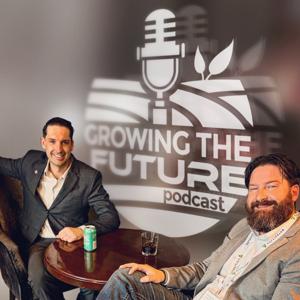

The data is in. Farms that perform better... perform a lot better. And the gap isn't luck.
In this live webinar event from Growing the Future Productions, host Dan Aberhart sits down with three of the sharpest minds working on Saskatchewan farms right now — Darren Sander of Crop-Aid Nutrition, Dave Norris of Norris Crop Consulting, and Todd Rowan of IXL Innovations — for a frank, no-sugarcoating conversation about what separates the producers clearing big margins from the ones leaving money on the table.
The number? Somewhere between $50 and $100 per acre. Every single year. Compounded over a decade — it's not a number. It's a different life.
What gets covered in this episode:
Soil Health & the First 30 Days — Darren makes the case that the first 30 days of a crop dictates maximum yield potential. Not the last 30. The first. That reframe alone is worth your time. He also talks about how a soil health program let his operation move from a three-crop rotation to two — and pencil out better. Earthworms optional, but encouraged.
(00:04:00) — Darren breaks down the incremental gains philosophy: fertilizer protection, stress reduction, nutrient use efficiency, and how every acre should be growing the crop it's best suited to grow.
Grain Marketing & the Probability Game — Dave Norris and Todd Rowan don't predict the future. They work with probabilities. And when warships started heading toward the Strait of Hormuz, they texted their clients to fill their fuel tanks. Fuel was $1.02. The downside risk was 93 cents. The upside was $1.50. That's not a prediction. That's a risk-reward conversation — and the producers who had that conversation in advance came out a lot better than the ones who watched the news.
(00:09:00) — The panel unpacks why so many producers make decisions after it feels urgent, and why the best time to act is almost always when it doesn't.
Crop Insurance, In-Season Pricing & the 2025-26 Landscape — It's the worst crop insurance environment since before 2021. The panel digs into what that means for in-season pricing on canola, wheat, and durum, and how to think about layering agri-stability on top when the base numbers aren't what they used to be.
(00:22:00) — Dave and Todd walk through the mechanics of in-season pricing, the cash flow timing issue with SCIC payments, and how to think about selling new crop canola when fertilizer costs are still wildly elevated.
The Fertilizer Problem Nobody's Talking About Enough — An estimated 400,000-tonne shortage of urea in Saskatchewan this year. Producers who didn't pre-buy are scrambling. The panel discusses how this reshapes planting decisions, top-dressing options, foliar programs as a partial substitute, and why the supply-demand models for yield estimates may be fundamentally broken this season.
(00:33:00) — Todd flags what this means for crop rotation flexibility. When the only crop penciling out is canola, what happens to everything else?
Macroeconomics, Gold, Oil & the Commodity Supercycle — Dave Norris had a supercycle bias since November. He didn't have a war in March as the trigger — he thought it would be El Niño. He wasn't entirely wrong. The panel talks about money flowing into commodities, what governments printing money means for grain prices, and why canola at $700 a tonne may not be the ceiling.
(00:40:00) — The canary in the coal mine: when gold and silver started ripping, the smart money was already watching inflation and currency hedges. Farmers paying attention to macros have a structural edge over those only watching local basis.
The $70 Poll — What the Audience Said — Dan ran a live poll with over 150 producers on the call. The majority landed between $50 and $100 per acre as the value of strong management decisions. Todd shared a real-world example: in 2021-22, clients who didn't over-contract and took in-season crop insurance pricing pocketed $18/bushel versus $12. Clients who panicked after 2021 and froze in 2022 took $17 off the combine when $22 was on the board. The math on those decisions — compounded over 10 years — is a different farm.
(00:56:00) — The close. Dan pulls together the final takeaways from the audience word cloud, and the panel leaves producers with the most important thing of all: knowing when to act, and not waiting until it's obvious.
Featured in this episode:
More from Growing the Future:
Register for the Convergence Conference at convergence.ag and stay updated by subscribing to the Growing the Future Podcast at growingthefuturepodcast.ca.
 View all episodes
 By Dan Aberhart , Terry Aberhart
5
11 ratings
The data is in. Farms that perform better... perform a lot better. And the gap isn't luck.
In this live webinar event from Growing the Future Productions, host Dan Aberhart sits down with three of the sharpest minds working on Saskatchewan farms right now — Darren Sander of Crop-Aid Nutrition, Dave Norris of Norris Crop Consulting, and Todd Rowan of IXL Innovations — for a frank, no-sugarcoating conversation about what separates the producers clearing big margins from the ones leaving money on the table.
The number? Somewhere between $50 and $100 per acre. Every single year. Compounded over a decade — it's not a number. It's a different life.
What gets covered in this episode:
Soil Health & the First 30 Days — Darren makes the case that the first 30 days of a crop dictates maximum yield potential. Not the last 30. The first. That reframe alone is worth your time. He also talks about how a soil health program let his operation move from a three-crop rotation to two — and pencil out better. Earthworms optional, but encouraged.
(00:04:00) — Darren breaks down the incremental gains philosophy: fertilizer protection, stress reduction, nutrient use efficiency, and how every acre should be growing the crop it's best suited to grow.
Grain Marketing & the Probability Game — Dave Norris and Todd Rowan don't predict the future. They work with probabilities. And when warships started heading toward the Strait of Hormuz, they texted their clients to fill their fuel tanks. Fuel was $1.02. The downside risk was 93 cents. The upside was $1.50. That's not a prediction. That's a risk-reward conversation — and the producers who had that conversation in advance came out a lot better than the ones who watched the news.
(00:09:00) — The panel unpacks why so many producers make decisions after it feels urgent, and why the best time to act is almost always when it doesn't.
Crop Insurance, In-Season Pricing & the 2025-26 Landscape — It's the worst crop insurance environment since before 2021. The panel digs into what that means for in-season pricing on canola, wheat, and durum, and how to think about layering agri-stability on top when the base numbers aren't what they used to be.
(00:22:00) — Dave and Todd walk through the mechanics of in-season pricing, the cash flow timing issue with SCIC payments, and how to think about selling new crop canola when fertilizer costs are still wildly elevated.
The Fertilizer Problem Nobody's Talking About Enough — An estimated 400,000-tonne shortage of urea in Saskatchewan this year. Producers who didn't pre-buy are scrambling. The panel discusses how this reshapes planting decisions, top-dressing options, foliar programs as a partial substitute, and why the supply-demand models for yield estimates may be fundamentally broken this season.
(00:33:00) — Todd flags what this means for crop rotation flexibility. When the only crop penciling out is canola, what happens to everything else?
Macroeconomics, Gold, Oil & the Commodity Supercycle — Dave Norris had a supercycle bias since November. He didn't have a war in March as the trigger — he thought it would be El Niño. He wasn't entirely wrong. The panel talks about money flowing into commodities, what governments printing money means for grain prices, and why canola at $700 a tonne may not be the ceiling.
(00:40:00) — The canary in the coal mine: when gold and silver started ripping, the smart money was already watching inflation and currency hedges. Farmers paying attention to macros have a structural edge over those only watching local basis.
The $70 Poll — What the Audience Said — Dan ran a live poll with over 150 producers on the call. The majority landed between $50 and $100 per acre as the value of strong management decisions. Todd shared a real-world example: in 2021-22, clients who didn't over-contract and took in-season crop insurance pricing pocketed $18/bushel versus $12. Clients who panicked after 2021 and froze in 2022 took $17 off the combine when $22 was on the board. The math on those decisions — compounded over 10 years — is a different farm.
(00:56:00) — The close. Dan pulls together the final takeaways from the audience word cloud, and the panel leaves producers with the most important thing of all: knowing when to act, and not waiting until it's obvious.
Featured in this episode:
More from Growing the Future:
Register for the Convergence Conference at convergence.ag and stay updated by subscribing to the Growing the Future Podcast at growingthefuturepodcast.ca.
228,383 Listeners
148 Listeners
129 Listeners
13 Listeners
764 Listeners
257 Listeners

127 Listeners
392 Listeners
45,948 Listeners
350 Listeners
39,483 Listeners

407 Listeners
16,332 Listeners
2 Listeners