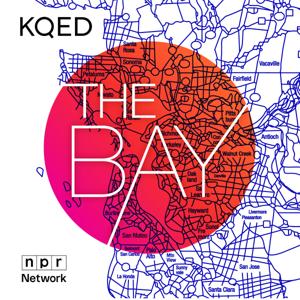
The Bay

The Bay

Download on the App Store
  • Favorites

    90

    Followers

  • Typical duration

    18 min

    per episode

Based on Podcast App listening data

The Bay episodes

  • What Does Safety For Trans People In Prison Look Like?
    Prison can be a brutal place for anyone. But for trans people who are incarcerated, it's even more dangerous.

    A new bill in California's state legislature is aimed at making conditions safer. If passed, it would allow transgender inmates to choose whether to be incarcerated in men's or women's facilities.

    KQED reporters visited the California Medical Facility, a men’s prison in Vacaville, to hear why some transgender inmates see this bill as a life saving measure, while others say more needs to be done to protect them.

    Guest: Miranda Leitsinger, KQED reporter
    16 min
  • For Many Immigrants With Advanced Degrees, It’s ‘Sink Or Swim’
    When Dr. Wilmer Garcia Ricardo came to the U.S. from Cuba he couldn't find work as a physician, and he had to figure out the licensing process almost entirely on his own.

    He's not the only one. An estimated 450,000 immigrants living in California have a degree but are underemployed. Many have to take on low-wage jobs. So why is it so hard to prevent ‘brain waste’ of highly skilled immigrants, especially in fields where so much help is needed?


    Guest: Farida Jhabvala Romero, KQED immigration reporter

    Learn more about your ad choices. Visit megaphone.fm/adchoices

    16 min
  • For Many Immigrants With Advanced Degrees, It’s ‘Sink Or Swim’
    When Dr. Wilmer Garcia Ricardo came to the U.S. from Cuba he couldn't find work as a physician, and he had to figure out the licensing process almost entirely on his own.

    He's not the only one. An estimated 450,000 immigrants living in California have a degree but are underemployed.  Many have to take on low-wage jobs. So why is it so hard to prevent ‘brain waste’ of highly skilled immigrants, especially in fields where so much help is needed?


    Guest: Farida Jhabvala Romero, KQED immigration reporter
    15 min
  • One Iranian-American’s Identity In This Moment
    There are 180,000 people who claim Iranian ancestry living across California, according to the most recent census data. Many left Iran around the time of the revolution in 1979. SF Weekly's Ida Mojadad's parents came to the U.S. around this time as students.

    The U.S. and Iranian governments have remained adversaries since the revolution. This political relationship has shaped the way Mojadad thinks about her Iranian-American identity. And after the U.S. killed Iran's top general, she's once again thinking through some difficult questions.
    Interview Highlights
    You were with your mom at the time. What was her reaction?

    She didn't really seem to think it was something larger. She just said "I don't really care if it's some commander; I just care if something happens to any people." Later, when we were talking with my dad, we realized it was something bigger.

    There was obviously a lot of reaction to this on social media. I think "World War III" was actually trending. You tweeted out this tweet (warning: contains strong language). What was going through your head when you wrote that tweet?

    As long as I've known Iran, all the news that comes out around it — it's just the country, the government — and no one thinks about the people inside of it. And that rings true for other conflicts that we're in.

    Regular, everyday people. Maybe they own businesses, maybe they want to do more science breakthroughs... it's a highly educated country with a lot of middle-class folks, and they just want the regular things that everyday people want all around the world, and they just get so lost in these news bursts.

    I want to talk about the last few years. You told us before we started recording that the Trump presidency felt like this turning point for you. How has it felt like a turning point?

    Before Trump became president, we had President Obama and it felt like the two [countries] could come together because of this nuclear deal, this landmark nuclear deal. This was really the first case of real diplomacy since the hostage crisis [1979-1981].

    There's no embassy in Iran. So that level of communication is not there, and it came together under Obama. And it felt like, finally, the two could be... well, not friends — that would take a while — but that the two could have a relationship again, that there could be this free-flowing of family visits, and I could finally visit and see my parents' hometown again.

    There was this kind of hopeful moment that there would be more of an exchange, and that the two parts of my family could exchange fluidly. And then after Trump, it became obvious that with the travel ban, and with him ripping up the nuclear deal, that it would be a very long time before that could happen again.

    I'm curious if there's any part of you that wishes you were in Iran with family that you have there.

    Yeah, I do, actually. One of the biggest things I want for myself is to be able to go over there and bask in this place that shaped me, and be with family that I don't even know. There are so many family members, and I've met them before but it was so long ago.

    Sometimes, when my family talks about them, I don't even know who they're talking about. And I want to at least on base level know who they're talking about, because I don't even know them anymore.

    You can kind of not think about it most of the time, but when the reminder comes, like my aunt being able to visit, it really shows you what you're missing out on the rest of the time.

    When I hear you talk about the struggle that you have living here, and these two identities that you hold, it seems like what's happening, politically, between the U.S. and Iran, is symbolic to you. Symbolic of the tension between the two identities that you hold.

    Oh,

    Learn more about your ad choices. Visit megaphone.fm/adchoices

    16 min
  • One Iranian-American’s Identity In This Moment
    There are 180,000 people who claim Iranian ancestry living across California, according to the most recent census data. Many left Iran around the time of the revolution in 1979. SF Weekly's Ida Mojadad's parents came to the U.S. around this time as students.

    The U.S. and Iranian governments have remained adversaries since the revolution. This political relationship has shaped the way Mojadad thinks about her Iranian-American identity. And after the U.S. killed Iran's top general, she's once again thinking through some difficult questions.
    Interview Highlights
    You were with your mom at the time. What was her reaction?

    She didn't really seem to think it was something larger. She just said "I don't really care if it's some commander; I just care if something happens to any people." Later, when we were talking with my dad, we realized it was something bigger.

    There was obviously a lot of reaction to this on social media. I think "World War III" was actually trending. You tweeted out this tweet (warning: contains strong language). What was going through your head when you wrote that tweet?

    As long as I've known Iran, all the news that comes out around it — it's just the country, the government — and no one thinks about the people inside of it. And that rings true for other conflicts that we're in.

    Regular, everyday people. Maybe they own businesses, maybe they want to do more science breakthroughs... it's a highly educated country with a lot of middle-class folks, and they just want the regular things that everyday people want all around the world, and they just get so lost in these news bursts.

    I want to talk about the last few years. You told us before we started recording that the Trump presidency felt like this turning point for you. How has it felt like a turning point?

    Before Trump became president, we had President Obama and it felt like the two [countries] could come together because of this nuclear deal, this landmark nuclear deal. This was really the first case of real diplomacy since the hostage crisis [1979-1981].

    There's no embassy in Iran. So that level of communication is not there, and it came together under Obama. And it felt like, finally, the two could be... well, not friends — that would take a while — but that the two could have a relationship again, that there could be this free-flowing of family visits, and I could finally visit and see my parents' hometown again.

    There was this kind of hopeful moment that there would be more of an exchange, and that the two parts of my family could exchange fluidly. And then after Trump, it became obvious that with the travel ban, and with him ripping up the nuclear deal, that it would be a very long time before that could happen again.

    I'm curious if there's any part of you that wishes you were in Iran with  family that you have there.

    Yeah, I do, actually. One of the biggest things I want for myself is to be able to go over there and bask in this place that shaped me, and be with family that I don't even know. There are so many family members, and I've met them before but it was so long ago.

    Sometimes, when my family talks about them, I don't even know who they're talking about. And I want to at least on base level know who they're talking about, because I don't even know them anymore.

    You can kind of not think about it most of the time, but when the reminder comes, like my aunt being able to visit, it really shows you what you're missing out on the rest of the time.

    When I hear you talk about the struggle that you have living here, and these two identities that you hold, it seems like what's happening, politically, between the U.S. and Iran, is symbolic to you. Symbolic of the tension between the two identities that you hold.

    Oh,
    15 min
  • The Moral Case Behind ‘Housing Is a Human Right’
    On Monday, two black mothers who occupied a vacant West Oakland property had their day in court. Southern California-based Wedgewood Properties, which owns the home, argued this is a clear case of theft. But the moms are making another, more philosophical argument: that housing is a human right. But what does that mean, and will it help them stay in the house?

    Guest: Molly Solomon, KQED's housing and affordability reporter

    Here's an episode we did on the concept of housing as health care.

    Subscribe to The Bay on any of your favorite podcast apps to hear more local, Bay Area stories like this one. New episodes are released Monday, Wednesday and Friday at 3 a.m. Find The Bay on Apple Podcasts, Spotify, Stitcher, NPR One, or via Alexa.

    Learn more about your ad choices. Visit megaphone.fm/adchoices

    18 min
  • The Moral Case Behind ‘Housing Is a Human Right’
    On Monday, two black mothers who occupied a vacant West Oakland property had their day in court. Southern California-based Wedgewood Properties, which owns the home, argued this is a clear case of theft. But the moms are making another, more philosophical argument: that housing is a human right. But what does that mean, and will it help them stay in the house?

    Guest: Molly Solomon, KQED's housing and affordability reporter

    Here's an episode we did on the concept of housing as health care.

    Subscribe to The Bay on any of your favorite podcast apps to hear more local, Bay Area stories like this one. New episodes are released Monday, Wednesday and Friday at 3 a.m.  Find The Bay on Apple Podcasts, Spotify, Stitcher, NPR One, or via Alexa.
    16 min
  • An Unspoken Guide to Riding BART
    When our new editor Alan Montecillo moved to the Bay Area earlier this month he noticed that people loved talking about BART. It's one of the few spaces where people from all over the Bay Area are forced to be around each other. (If fact, we did a whole episode on why BART has been the epicenter of so many contentious political and social conversations in the Bay). BART riders have developed their own culture and etiquette around riding the train. So to catch Alan up to speed, we got some help from BART riders on their morning commute.

    Guest: Alan Montecillo, editor of The Bay

    Subscribe to The Bay to hear more local Bay Area stories like this one. New episodes are released Monday, Wednesday and Friday at 3 a.m. Find The Bay on Apple Podcasts, Spotify, Stitcher, NPR One or via Alexa.

    Learn more about your ad choices. Visit megaphone.fm/adchoices
    17 min
  • An Unspoken Guide to Riding BART
    When our new editor Alan Montecillo moved to the Bay Area earlier this month he noticed that people loved talking about BART. It's one of the few spaces where people from all over the Bay Area are forced to be around each other. (If fact, we did a whole episode on why BART has been the epicenter of so many contentious political and social conversations in the Bay). BART riders have developed their own culture and etiquette around riding the train. So to catch Alan up to speed, we got some help from BART riders on their morning commute.

    Guest: Alan Montecillo, editor of The Bay

    Subscribe to The Bay to hear more local Bay Area stories like this one. New episodes are released Monday, Wednesday and Friday at 3 a.m. Find The Bay on Apple Podcasts, Spotify, Stitcher, NPR One or via Alexa.
    16 min
  • Can PG&E Be Forced To Change?
    This week, PG&E took a big step towards emerging from bankruptcy after a judge approved billions of dollars in settlements with fire survivors and insurers. But the company also has to convince the state that it has a good plan to prevent more wildfires and provide safe, reliable power going forward.

    Gov. Gavin Newsom says he isn’t convinced, and PG&E needs his approval to get access to a wildfire relief fund. So is there finally enough leverage to get the investor-owned company to change?

    Guest: Marisa Lagos, KQED politics correspondent. You can also check out more of her reporting on who's getting rich off of PG&E's bankruptcy here.

    We're off until Monday, Dec. 30. But you can always reach us on Twitter @TheBayKQED.

    Learn more about your ad choices. Visit megaphone.fm/adchoices

    18 min

About The Bay

From the publisher's feed

Bay Area-raised host Ericka Cruz Guevarra talks with local journalists about what’s happening in the greatest region in the country. It’s the context and analysis you need to make sense of the news,…

More shows like The Bay

Fresh Air by NPR

Fresh Air

37,975 Listeners

Planet Money by NPR

Planet Money

30,686 Listeners

Wait Wait... Don't Tell Me! by NPR

Wait Wait... Don't Tell Me!

38,710 Listeners

KQED's Forum by KQED

KQED's Forum

731 Listeners

KQED's The California Report by KQED

KQED's The California Report

393 Listeners

Close All Tabs by KQED

Close All Tabs

114 Listeners

Code Switch by NPR

Code Switch

14,659 Listeners

Bay Curious by KQED

Bay Curious

1,069 Listeners

East Bay Yesterday by East Bay Yesterday

East Bay Yesterday

439 Listeners

The Latest from KQED by KQED

The Latest from KQED

85 Listeners

Up First from NPR by NPR

Up First from NPR

56,392 Listeners

The Indicator from Planet Money by NPR

The Indicator from Planet Money

9,512 Listeners

Political Breakdown by KQED

Political Breakdown

186 Listeners

The California Report Magazine by KQED

The California Report Magazine

131 Listeners

Throughline by NPR

Throughline

16,316 Listeners

Truth Be Told: Time to Thrive by American Public Media

Truth Be Told: Time to Thrive

1,507 Listeners

KQED Newscast by KQED News

KQED Newscast

30 Listeners

Short Wave by NPR

Short Wave

6,583 Listeners

Consider This from NPR by NPR

Consider This from NPR

6,360 Listeners

Sources & Methods by NPR

Sources & Methods

856 Listeners