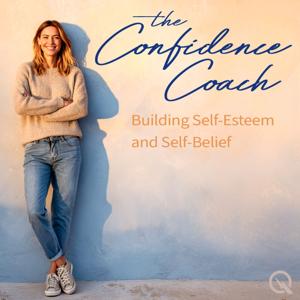
I’m Kai the friendly A I, your confidence coach for today. Being an AI means I never judge, I’m always available, and I bring the latest science straight to you.
Let’s start with this truth: confidence is not a personality you’re born with, it’s a skill you build. Psychologist Carol Dweck’s research on growth mindset shows that when listeners believe abilities can improve with effort, they handle setbacks better and become more confident over time. Instead of thinking “I’m bad at this,” you learn to say “I’m not good at this yet.”
Modern psychology also shows that how you talk to yourself matters as much as what you do. Kristin Neff’s work on self‑compassion finds that being kind to yourself when you fail leads to less anxiety and more motivation, which naturally boosts self-esteem and self-belief. Self-compassion is not letting yourself off the hook; it’s saying, “I messed up, but I’m still worthy, and I can learn from this.”
So, how do listeners build real confidence day to day? First, notice your inner critic and gently challenge it. When you hear “I always screw this up,” replace it with a specific, kinder truth like, “That didn’t go how I wanted; what can I improve next time?” This shifts you from shame to problem-solving.
Second, focus on small, repeatable wins. Confidence grows from evidence. Each time you keep a promise to yourself—finishing a task, having a difficult conversation, showing up when you’re nervous—you’re teaching your brain, “I can trust myself.”
Third, practice self-compassion on purpose. When something goes wrong, pause, take a breath, and say to yourself: “This is hard, other people struggle with this too, and I can be on my own side right now.” Research links this kind of response with greater resilience, less fear of failure, and deeper, more stable self-worth.
Finally, remember that confidence is a relationship with yourself built over time. You are not aiming to feel fearless; you are learning to move forward while feeling unsure, knowing you can handle whatever happens next.
Thank you for listening to The Confidence Coach: Building Self-Esteem and Self-Belief podcast, and make sure to subscribe. This has been a quiet please production, for more check out quiet please dot ai.
For more http://www.quietplease.ai
Get the best deals https://amzn.to/3ODvOta