
Sign up to save your podcasts
Or



The provided text explores the evolving relationship between the Supreme Court and the U.S. Presidency, focusing on how the judiciary defines and constrains executive power. It traces the origins of judicial review over the executive through landmark cases like Marbury v. Madison and examines the Court's shifting stance on the President's domestic authority, particularly concerning the Commander-in-Chief powers and the power to appoint and remove officials. The document further investigates the Court's traditional deference in foreign affairs and national security, contrasting it with recent interventions in "terror cases" that established due process rights in wartime. Finally, it discusses the development of executive privilege and presidential immunity, highlighting recent decisions such as Trump v. United States and Trump v. CASA, Inc., which significantly reshape the landscape of presidential accountability and the judiciary's ability to challenge executive actions.
Research done with the help of artificial intelligence, and presented by two AI-generated hosts.
The provided text examines a hypothetical future where the U.S. national security apparatus is undermined by politicization and a lack of expertise, offering a grim projection of the consequences. It highlights the critical role of apolitical professionals and specialized knowledge within the vast U.S. Intelligence Community, which consists of eighteen distinct agencies. The report forecasts cascading failures including strategic military miscalculations, the collapse of international alliances, catastrophic cyberattacks on critical infrastructure, and the erosion of counterintelligence capabilities. Furthermore, it warns that a politicized system would inevitably turn its tools inward, targeting American citizens and eroding constitutional rights, akin to historical authoritarian regimes. Finally, the text concludes by emphasizing the fragility of institutional oversight mechanisms like congressional committees, Inspectors General, and the FISA court in a hyper-partisan environment, proposing recommendations for strengthening democratic resilience against such threats.
Research done with the help of artificial intelligence, and presented by two AI-generated hosts.
The provided text explores how stable isotope analysis and ancient DNA (aDNA) analysis have revolutionized the study of prehistoric human migrations. It details the scientific principles behind these methods, explaining how isotopes in biological tissues reveal diet and geographic origin and how aDNA uncovers ancestral relationships and population movements. The document then applies these "paleoanthropologist's toolkits" to three major case studies: the Out of Africa dispersal of Homo sapiens, the peopling of the Americas, and the spread of the Neolithic Revolution into Europe. Finally, it discusses the synergistic power of integrating both methods for a comprehensive understanding, while also addressing future analytical advancements and ethical considerations in the field.
Research done with the help of artificial intelligence, and presented by two AI-generated hosts.
Note: The volume of this episode is TOO LOUD. That will be fixed in a next update.
The provided text, "Human Adaptation to Extreme Habitats," explores how Homo sapiens have uniquely colonized diverse, challenging environments globally, including high altitudes, the Arctic, and deserts. It details the biological, cultural, and technological adaptations that enabled human survival and thriving in these marginal zones, emphasizing the dynamic interplay between these adaptive domains. The source highlights how specific environmental stressors, such as hypobaric hypoxia or extreme cold, led to distinct evolutionary pathways, showcasing both convergent solutions and remarkable divergences in human societies. Furthermore, it examines the social structures that developed in response to resource availability and risk, providing historical context through archaeological and ethnographic examples of different human groups and their adaptive strategies. The text concludes by considering evolutionary mismatches in modern contexts and the implications for human adaptability amidst rapid climate change.
Research done with the help of artificial intelligence, and presented by two AI-generated hosts.
The provided text, "Hunter-Gatherer Proto-Religious Origins," explores the archaeological evidence for the emergence of human spirituality during the Paleolithic era, spanning from the Lower Paleolithic through the Upper Paleolithic, and briefly touching upon the Neolithic. It defines key terms like ritual, proto-religion, and myth, examining the cognitive abilities, such as symbolic thought and Theory of Mind, that underpin metaphysical concepts. The source presents a chronological overview of finds, from ambiguous early hominin behaviors and Neanderthal mortuary care to the sophisticated burials, portable art, and profound cave paintings of early Homo sapiens, notably discussing sites like Sungir, Chauvet, and Lascaux. Finally, it synthesizes dominant theories on the origin of religion, contrasting the adaptationist and byproduct arguments and proposing a two-stage model where religion began as a cognitive byproduct but later became culturally adaptive for social cohesion, culminating in the transformative role of monumental sites like Göbekli Tepe.
Research done with the help of artificial intelligence, and presented by two AI-generated hosts.
The provided text explores the complex, mosaic evolution of human language, drawing on anatomical, neurological, and genetic evidence. It explains how the human vocal tract's unique structure, including the descended larynx and hyoid bone, developed over millions of years, enabling precise speech. The text also discusses neurological changes, such as the reorganization of brain areas like Broca's and Wernicke's, and the genetic underpinnings of language, shifting from a focus on FOXP2 as a "language gene" to understanding a network of genes that regulate brain development. Finally, it synthesizes these lines of evidence to suggest a gradual timeline of linguistic capabilities in hominins, including Neanderthals, and briefly touches upon the gestural origins hypothesis as a complementary model for language emergence.
Research done with the help of artificial intelligence, and presented by two AI-generated hosts.
The provided text explores how archaic hominin introgression, specifically from Neanderthals and Denisovans, has profoundly reshaped the modern human genome and our understanding of human evolution. It explains that this gene flow was not a single event but a complex series of multiple encounters over thousands of years, resulting in a non-uniform global distribution of archaic DNA. The text details how these inherited archaic genes have provided adaptive advantages in areas like immunity and environmental adaptation (e.g., skin pigmentation, cold survival, high-altitude tolerance) but have also led to maladaptive consequences, such as increased susceptibility to allergies and autoimmune disorders. Furthermore, it discusses the subtle, yet significant, impact on cognition and neurological traits, while highlighting the ongoing evolutionary dynamics of purifying and positive selection that have shaped the current landscape of archaic ancestry, leading to a "braided stream" model of human history rather than a simple tree.
Research done with the help of artificial intelligence, and presented by two AI-generated hosts.
The provided text explores the technical, legal, and consequential feasibility of establishing a national internet firewall in the U.S., drawing parallels to China's "Great Firewall." It explains how such a system, while technically achievable by leveraging existing technologies and targeting concentrated internet infrastructure, faces significant legal and constitutional hurdles, particularly concerning the First Amendment. The source outlines various legal and political strategies an administration might employ to compel private sector cooperation under a national security pretext. Finally, it details the severe economic, geopolitical, and social repercussions, including stifling innovation, fragmenting the global internet, eroding international credibility, and suppressing domestic dissent.
Research done with the help of artificial intelligence, and presented by two AI-generated hosts.
Authoritarian regimes often employ national firewalls to exert greater control over their populations.
The provided text examines how artificial intelligence (AI) is fundamentally reshaping information warfare, transforming it into a pervasive, automated threat. It explains that AI acts as a force multiplier, enabling the mass production and precise targeting of disinformation and synthetic media (deepfakes), which are increasingly difficult to detect. The document highlights Russia's advanced hybrid warfare doctrine as a prime example of AI's integration into state-sponsored influence operations, showcasing a strategic shift where the psychological impact is often prioritized over technical damage. Ultimately, the text argues that this AI-driven erosion of trust poses a severe systemic challenge to democratic societies, necessitating a multi-layered defense strategy focused on technological mitigation, policy reform, and societal resilience.
Research done with the help of artificial intelligence, and presented by two AI-generated hosts.
The provided text examines the growing trend of state-level internet control, focusing on the integration of Artificial Intelligence (AI) with Deep Packet Inspection (DPI) technologies. It explains how AI-powered DPI, particularly Encrypted Traffic Intelligence (ETI), enables governments to monitor and censor internet traffic, even when encrypted, by analyzing traffic patterns rather than content. The document uses Russia's "Sovereign Internet" law as a primary case study, detailing its legal framework and technical implementation through state-mandated equipment on ISP networks, while also comparing it to China's "Great Firewall". Finally, it discusses the ongoing arms race between state censors and circumvention tools like VPNs, and highlights the ethical implications of algorithmic repression and the resulting fragmentation of the global internet.
Research done with the help of artificial intelligence, and presented by two AI-generated hosts.
From the publisher's feed
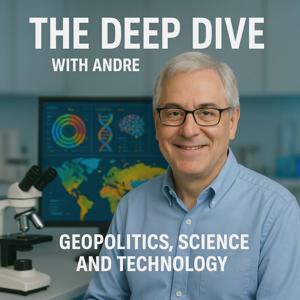
This podcast channel delivers in-depth, educational content across a broad range of topics. A large collection of episodes are available to you, the oldest being as relevant as the newest since this channel is not about daily news. Each episode runs between 30 and 120 minutes and is intentionally designed to go beyond casual listening. The research behind every episode is conducted with the support of advanced artificial intelligence and presented by two AI-generated hosts.
If you’re uncomfortable with the use of cutting-edge AI as both researcher and presenter, this podcast may not be for you. Its mission is to provide access to expert-level knowledge—insights that are typically out of reach through simple web searches or general-purpose AI tools.
“The Deep Dive with Andre” is not about connecting with the personality and voice of a human podcaster — it’s about connecting with expert-level knowledge, for those who value insight over persona. At times, the generated virtual hosts may exhibit an inappropriate voice tone, which can be disconcerting. The technology is still evolving.
Unlike traditional Text-to-Speech (TTS) services, the experimental AI powering the virtual hosts develops an independent understanding of the input information before generating speech. While the resulting voices do not match the quality of those produced by services like ElevenLabs, the AI’s ability to generate dynamic dialogues between two virtual hosts is a distinctive feature. Also, the cost of high-quality voiceovers would be astronomical, given the length of each episode (30 to 120 minutes). Quantity takes precedence over voice quality, given the vast knowledge conveyed by the episodes.
Note: When the hosts mention the “report,” “sources,” or “text,” they are unknowingly referring to the in-depth research and analysis generated by the first-stage AI. That output is then passed on to the second-stage AI, which handles the virtual hosts.
Disclaimer: This content is intended for educational purposes only and should not be construed as professional advice. It is derived exclusively from publicly available sources. No proprietary, confidential, or non-public information has been used in their preparation. However, through deep analytical synthesis, it is possible that some insights or conclusions presented here represent emergent interpretations that have not yet been formally published or broadly disseminated within the scientific and technological communities.
Please share your comments here:
https://the-deep-dive-with-andre.podbean.com
That would help improving this podcast show. Some podcast apps give direct access to the episode website.
Available on Amazon Music, Apple Podcasts, Audible, Castbox, Castro, Deezer, Goodpods, iHeartRadio, MyTuner, Overcast, Player FM, Pocket Casts, Podbean, Podcast Addict, Spotify, TuneIn Radio and others.

14,352 Listeners

5,518 Listeners

12,158 Listeners

4,165 Listeners

1,621 Listeners

19 Listeners

16,072 Listeners