
Sign up to save your podcasts
Or



The provided sources offer an in-depth analysis of the global economic and geopolitical landscape as of July 2025, dominated by the United States' aggressive "non-stopping tariff threats" under the current administration. They explain how this policy, rooted in "Project 2025" ideology and leveraging expanded executive powers, aims to atomize international opposition through "managed chaos." The text warns that simply "ignoring" these threats would lead to catastrophic economic and geopolitical fragmentation, causing global trade contraction and severe domestic U.S. stagflation. Instead, the sources advocate for a "Coordinated Strategic Resistance," detailing various approaches from negotiation and symmetric retaliation to China's asymmetric exploitation of U.S. vulnerabilities in critical minerals. Ultimately, the sources conclude that these U.S. actions mark the end of the post-Cold War globalization era, ushering in a more fragmented, inefficient, and conflict-prone system characterized by competing blocs and weaponized economic interdependence.
Research done with the help of artificial intelligence, and presented by two AI-generated hosts.
The provided text offers an extensive analysis of the catastrophic consequences of a tactical nuclear weapon (TNW) detonation in a non-NATO context, asserting that such an event, often mislabeled "tactical," is, in fact, a strategic game-changer. It details the immediate humanitarian disaster, including mass casualties and infrastructure destruction, and predicts an uncontrollable escalation to wider nuclear conflict due to miscalculation and the lack of a clear Article 5 response. Furthermore, the analysis projects a global systemic shock, leading to the collapse of the nuclear non-proliferation regime, a new arms race, severe economic contagion through financial market collapse and supply chain disruption, and the devastating threat of a global nuclear famine. The source emphasizes that no adequate humanitarian response would be possible and concludes with policy recommendations for prevention and mitigation in a "post-taboo world."
Research done with the help of artificial intelligence, and presented by two AI-generated hosts.
The provided text explores the dual nature of supernovae, highlighting their role as both creators of life's essential elements and potential destroyers of biospheres. It explains how these stellar explosions forge heavy elements crucial for planets and life, and may have even triggered the formation of our solar system. Conversely, the text details the two-stage destructive impact of nearby supernovae: an initial, fast burst of high-energy radiation that depletes the ozone layer, followed by a prolonged bombardment of cosmic rays that can cause widespread biological damage and climate shifts. Finally, the text presents forensic evidence, particularly Iron-60 deposits, linking past supernovae to Earth's geological record and discusses how these events may have contributed to mass extinctions, such as the Pliocene-Pleistocene marine megafauna extinction and the Late Devonian crisis.
Research done with the help of artificial intelligence, and presented by two AI-generated hosts.
The provided text offers a comprehensive guide to reviving democracy from authoritarian rule, emphasizing that understanding the specific nature of a dictatorship is crucial for devising effective pro-democracy strategies. It outlines various typologies of authoritarian regimes—military, one-party, personalist, and totalitarian—and their distinct vulnerabilities, suggesting tailored approaches for opposition movements. The sources also detail the concept of democratic consolidation, highlighting the need for a long-term vision that extends beyond the initial transition, encompassing five interconnected arenas for a stable democracy: a vibrant civil society, an autonomous political society, the rule of law, a usable state bureaucracy, and an institutionalized economic society. Furthermore, the text explores different pathways of democratic transition—pacted, top-down, and bottom-up—illustrating them with historical case studies like Spain, South Africa, Poland, the Philippines, and Chile, while analyzing the interplay of elite defection and mass mobilization as catalysts for change. Finally, it presents a pro-democracy playbook, focusing on the strategic imperative of nonviolent struggle and the systematic fracturing of a regime's pillars of support, before concluding with the critical tasks of constructing a new democratic state through the establishment of the rule of law, constitutional reform, electoral integrity, and transitional justice.
New virtual hosts configuration: Less chatty, not constantly alternating between hosts.
The provided text offers a comprehensive guide to reviving democracy from authoritarian rule, emphasizing that understanding the specific nature of a dictatorship is crucial for devising effective pro-democracy strategies. It outlines various typologies of authoritarian regimes—military, one-party, personalist, and totalitarian—and their distinct vulnerabilities, suggesting tailored approaches for opposition movements. The sources also detail the concept of democratic consolidation, highlighting the need for a long-term vision that extends beyond the initial transition, encompassing five interconnected arenas for a stable democracy: a vibrant civil society, an autonomous political society, the rule of law, a usable state bureaucracy, and an institutionalized economic society. Furthermore, the text explores different pathways of democratic transition—pacted, top-down, and bottom-up—illustrating them with historical case studies like Spain, South Africa, Poland, the Philippines, and Chile, while analyzing the interplay of elite defection and mass mobilization as catalysts for change. Finally, it presents a pro-democracy playbook, focusing on the strategic imperative of nonviolent struggle and the systematic fracturing of a regime's pillars of support, before concluding with the critical tasks of constructing a new democratic state through the establishment of the rule of law, constitutional reform, electoral integrity, and transitional justice.
Research done with the help of artificial intelligence, and presented by two AI-generated hosts.
The provided text examines how modern democracies are susceptible to authoritarian takeovers, shifting from traditional military coups to a more insidious "executive corrosion" from within. It outlines a systematic "authoritarian playbook" involving the subversion of the rule of law, control of information, and manipulation of democratic processes. The text further identifies key vulnerabilities that enable this decay, such as economic inequality, the rise of populism and exclusionary nationalism, and psychological factors that make citizens receptive to strongman leaders. Finally, it addresses how digital technology, particularly social media, accelerates these processes by spreading disinformation and deepening societal divides, concluding with strategies for building democratic resilience.
Research done with the help of artificial intelligence, and presented by two AI-generated hosts.
The provided text explores semantic conflicts during the initial encounters between European and Indigenous peoples in the Americas, arguing that these were not mere cultural clashes but fundamental collisions of semiotic systems. It highlights the profound differences between European logocentrism (prioritizing written word for truth and law) and Indigenous oral-kinesthetic traditions (valuing living, embodied knowledge linked to land). The sources further explain how these differing worldviews led to irreconcilable conceptual divides in areas like land ownership (commodity vs. kin), law (contract vs. covenant), and cosmology (conversion vs. coexistence). Crucially, the text emphasizes the role of interpreters as power brokers, whose translations significantly shaped perceptions and outcomes, often perpetuating misunderstandings that spiraled into systemic violence and dispossession. Ultimately, the sources illustrate how these initial semantic failures created a lasting legacy, continuing to influence modern legal battles and spur efforts for Indigenous semantic sovereignty.
Note: That is an arid listening.
Research done with the help of artificial intelligence, and presented by two AI-generated hosts.
The provided text explores "The Great Dying," the catastrophic demographic collapse of Indigenous American populations following European contact. It outlines the pre-Columbian epidemiological environment, noting the absence of Old World "crowd diseases" due to the Americas' isolation and different animal domestication practices. The text details the "Columbian Exchange," emphasizing the one-sided introduction of devastating pathogens like smallpox and measles, which acted as an "invisible army" aiding conquest and fueling the transatlantic slave trade. It then examines the immunological vulnerability of Indigenous peoples, who faced "virgin soil epidemics" due to a lack of prior exposure and potentially less diverse immune systems, as evidenced by genetic studies. Finally, the text introduces the concept of a "syndemic," arguing that colonial violence, forced labor, and social disruption synergistically amplified disease mortality, creating a tragedy far beyond simple biological interaction, a narrative supported by both scientific analysis and Indigenous historical accounts.
Research done with the help of artificial intelligence, and presented by two AI-generated hosts.
The provided text explores mercantilism as a foundational economic and political system from the 16th to 18th centuries, emphasizing its role in driving European colonial expansion. It details how American silver, primarily from mines like Potosí and Zacatecas, financed global imperial ambitions and sparked the Price Revolution in Europe. The text then examines the sugar complex, highlighting how the immense demand for sugar fostered an agro-industrial plantation model reliant on the brutal transatlantic slave trade. Finally, it synthesizes these elements, arguing that this "unholy trinity" of silver, sugar, and slavery was crucial for the rise of modern capitalism and left enduring legacies of global inequality and racial hierarchies.
Research done with the help of artificial intelligence, and presented by two AI-generated hosts.
The provided text explores the complex transformation of the Roman Empire from a polytheistic to a Christian society over four centuries. It explains that "paganism" was not a single religion but a diverse array of localized beliefs and practices deeply integrated into Roman civic and domestic life, which made it structurally vulnerable to an organized and exclusive competitor. The document highlights Christianity's inherent appeal through its message of monotheism, equality, and salvation, alongside its robust community structure and social support systems, which fostered grassroots growth. Crucially, it details how the shift in imperial policy under Constantine and his successors, moving from persecution to active patronage, accelerated Christianity's rise. Finally, the text describes the systematic dismantling of pagan institutions through imperial legislation and physical destruction, coupled with a strategy of cultural absorption and reinterpretation that incorporated pagan elements into Christian traditions, easing the transition for the populace.
Research done with the help of artificial intelligence, and presented by two AI-generated hosts.
From the publisher's feed
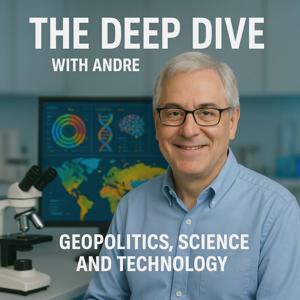
This podcast channel delivers in-depth, educational content across a broad range of topics. A large collection of episodes are available to you, the oldest being as relevant as the newest since this channel is not about daily news. Each episode runs between 30 and 120 minutes and is intentionally designed to go beyond casual listening. The research behind every episode is conducted with the support of advanced artificial intelligence and presented by two AI-generated hosts.
If you’re uncomfortable with the use of cutting-edge AI as both researcher and presenter, this podcast may not be for you. Its mission is to provide access to expert-level knowledge—insights that are typically out of reach through simple web searches or general-purpose AI tools.
“The Deep Dive with Andre” is not about connecting with the personality and voice of a human podcaster — it’s about connecting with expert-level knowledge, for those who value insight over persona. At times, the generated virtual hosts may exhibit an inappropriate voice tone, which can be disconcerting. The technology is still evolving.
Unlike traditional Text-to-Speech (TTS) services, the experimental AI powering the virtual hosts develops an independent understanding of the input information before generating speech. While the resulting voices do not match the quality of those produced by services like ElevenLabs, the AI’s ability to generate dynamic dialogues between two virtual hosts is a distinctive feature. Also, the cost of high-quality voiceovers would be astronomical, given the length of each episode (30 to 120 minutes). Quantity takes precedence over voice quality, given the vast knowledge conveyed by the episodes.
Note: When the hosts mention the “report,” “sources,” or “text,” they are unknowingly referring to the in-depth research and analysis generated by the first-stage AI. That output is then passed on to the second-stage AI, which handles the virtual hosts.
Disclaimer: This content is intended for educational purposes only and should not be construed as professional advice. It is derived exclusively from publicly available sources. No proprietary, confidential, or non-public information has been used in their preparation. However, through deep analytical synthesis, it is possible that some insights or conclusions presented here represent emergent interpretations that have not yet been formally published or broadly disseminated within the scientific and technological communities.
Please share your comments here:
https://the-deep-dive-with-andre.podbean.com
That would help improving this podcast show. Some podcast apps give direct access to the episode website.
Available on Amazon Music, Apple Podcasts, Audible, Castbox, Castro, Deezer, Goodpods, iHeartRadio, MyTuner, Overcast, Player FM, Pocket Casts, Podbean, Podcast Addict, Spotify, TuneIn Radio and others.

14,352 Listeners

5,518 Listeners

12,158 Listeners

4,165 Listeners

1,621 Listeners

19 Listeners

16,072 Listeners