
Sign up to save your podcasts
Or



The provided text analyzes Donald Trump's communication strategies during his potential 2025 administration, arguing that his dishonesty, refusal to admit error, and blame-shifting form a coherent, interdependent system. This system is described as stemming from a narcissistic psychological profile, enacted through a "firehose of falsehood" rhetorical approach, and is strategically vital for advancing an authoritarian populist agenda, notably outlined in Project 2025. Ultimately, the analysis concludes that these behaviors systematically erode public trust in democratic institutions and undermine core democratic principles like participatory inclusiveness and political equality.
Research done with the help of artificial intelligence, and presented by two AI-generated hosts.
The provided text explores the historical impact of inquisitorial censorship, particularly focusing on the Roman and Spanish Inquisitions and their powerful tool, the Index Librorum Prohibitorum. It examines how this systematic control of written materials, driven by the printing press and the Reformation, significantly affected scientific, philosophical, and literary development through a pervasive "chilling effect." The sources also illustrate various methods of circumvention and resistance, such as self-censorship, pseudonyms, smuggling, and the ingenious practice of expurgation, which allowed forbidden knowledge to persist. Ultimately, the text concludes by reflecting on the lasting legacy of censorship, from its measurable socio-economic impacts to its role in shaping contemporary debates about intellectual freedom.
Research done with the help of artificial intelligence, and presented by two AI-generated hosts.
This academic text examines how climatic shifts have influenced human migration and societal change throughout history, moving beyond simple environmental determinism. It emphasizes that climate acts as a "threat multiplier," exacerbating pre-existing social, economic, and political vulnerabilities rather than being a sole cause of collapse. The document highlights the necessity of "data fusion," integrating information from paleoclimatological, archaeological, and humanistic archives to reconstruct past human-climate interactions accurately. This interdisciplinary approach is illustrated through three case studies: the collapse of Norse settlements in Greenland, the varied impacts of the Little Ice Age, and the American Dust Bowl of the 1930s. Ultimately, the analysis aims to draw lessons from historical patterns of vulnerability, adaptation, and resilience to inform responses to contemporary climate challenges, stressing that societal choices and structures are key in determining outcomes.
Research done with the help of artificial intelligence, and presented by two AI-generated hosts.
The provided sources explore the Sephardic Diaspora following the 1492 expulsion of Jews from Spain, tracing their movements and the multifaceted ways their identity was preserved and transformed. They detail the diverse destinations of these exiles, from the welcoming Ottoman Empire to the perilous journeys to North Africa and the complex reception in various Italian states. The texts also illuminate the Atlantic expansion to tolerant havens like Amsterdam and the clandestine existence of Crypto-Jews in the Americas. Finally, the sources highlight modern methods for reconstructing this history, including genetic analysis, linguistic studies of Ladino, and the use of digital archives to uncover the enduring legacy of a resilient people.
Research done with the help of artificial intelligence, and presented by two AI-generated hosts.
The provided text examines the evolution of financial systems during Europe's transition from feudalism to early capitalism, highlighting the roles of Jewish financiers, the Knights Templar, and the Medici Bank. It first outlines the economic shifts from an agrarian, localized economy to one driven by commerce and capital, emphasizing the growth of towns and new institutions. The text then analyzes each financial system as a distinct network model, detailing their organizational structures, innovations like letters of credit and double-entry bookkeeping, and vulnerabilities to sovereign risk. Finally, it discusses the methodology of historical ledger reconstruction and the importance of digitized archival records in understanding these pre-modern economies, concluding that while each system advanced financial sophistication, they all ultimately succumbed to the unaccountable power of the state.
Research done with the help of artificial intelligence, and presented by two AI-generated hosts.
The provided text offers a comprehensive analysis of Stingrays, which are surveillance devices used by law enforcement and intelligence agencies worldwide. These devices impersonate cell towers to intercept mobile phone signals, gathering identifying information, location data, and sometimes even communication content from nearby phones. The document explores their technical design, including how they exploit vulnerabilities in cellular networks and can force phones to downgrade to less secure protocols for interception. It also details their operational deployment strategies, ranging from vehicle-mounted units for tracking to airborne systems for mass data collection, and identifies key manufacturers like Harris Corporation and Cobham. Finally, the text addresses the significant legal and ethical issues surrounding Stingray use, such as warrant requirements, lack of transparency, and the impact on civil liberties like privacy and freedom of assembly, highlighting ongoing debates and legal challenges globally.
Research done with the help of artificial intelligence, and presented by two AI-generated hosts.
The provided text explores the transformative capability of Wi-Fi signals in perceiving human activity through barriers like walls. It explains how various methods, including Received Signal Strength Indicator (RSSI) monitoring, passive Doppler radar, Channel State Information (CSI) analysis, and smart device signal sniffing, can detect presence, track movement, and even discern specific gestures. The article details the underlying physics of signal interaction with human bodies and discusses the hardware and environmental factors that influence the accuracy and range of these techniques. Finally, it addresses the significant privacy and legal implications of such technology, highlighting the ongoing debate between security benefits and individual rights.
Research done with the help of artificial intelligence, and presented by two AI-generated hosts.
The provided sources discuss "Alligator Alcatraz," a controversial immigration detention facility rapidly constructed in the Florida Everglades in 2025 as part of an intensified mass deportation agenda. This makeshift compound, built using disaster relief logistics, is designed to accelerate deportations by centralizing all stages of the process in an isolated, environmentally sensitive location. Critics argue it represents a profound crisis of human rights and legal principles, citing the use of emergency powers to bypass environmental reviews, the alleged repurposing of humanitarian funds for punitive detention, and a "federal-state shell game" to evade accountability. The facility's conditions are condemned as inhumane, and its existence raises concerns about the desecration of Indigenous lands and a deliberate strategy to operate outside normal legal and ethical bounds, leading to ongoing legal challenges and advocacy efforts for its closure.
Research done with the help of artificial intelligence, and presented by two AI-generated hosts.
The provided text offers a comprehensive assessment of Canada's capacity to protect its Arctic domain, highlighting the region's profound transformation due to environmental, geopolitical, and socio-economic pressures. It defines "sufficient protection" as a multifaceted imperative encompassing environmental integrity, sovereignty, security, Indigenous self-determination, and biodiversity preservation. The text explores the evolving definition of Arctic protection, detailing historical focuses, the impact of climate change, and geopolitical complexities, alongside Canada's foreign policy vision for a stable, prosperous, secure Arctic with resilient communities. Finally, it identifies key threats such as climate change, geopolitical dynamics, and resource development pressures, while also evaluating Canada's policy and governance framework, defence and security measures, and international cooperation efforts, acknowledging both successes and persistent challenges in implementation.
Research done with the help of artificial intelligence, and presented by two AI-generated hosts.
The provided sources explain that treason is the only crime explicitly defined in the U.S. Constitution, emphasizing its narrow definition and high evidentiary bar—requiring two witnesses to the same overt act or an open court confession. This strict framework was deliberately crafted by the Framers to prevent the weaponization of treason charges against political opponents and protect free speech. While a President is not immune from treason, the concept of "enemy" is strictly limited to nations in a state of declared war or open hostility, making such prosecutions exceedingly rare and often leading to other national security statutes being used for similar offenses. The texts also distinguish between criminal prosecution for treason and impeachment, highlighting that while both can address presidential disloyalty, they have different procedures and consequences, underscoring the legal and historical gravity of this ultimate charge.
Research done with the help of artificial intelligence, and presented by two AI-generated hosts.
From the publisher's feed
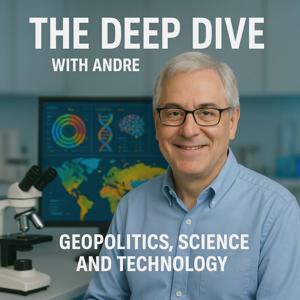
This podcast channel delivers in-depth, educational content across a broad range of topics. A large collection of episodes are available to you, the oldest being as relevant as the newest since this channel is not about daily news. Each episode runs between 30 and 120 minutes and is intentionally designed to go beyond casual listening. The research behind every episode is conducted with the support of advanced artificial intelligence and presented by two AI-generated hosts.
If you’re uncomfortable with the use of cutting-edge AI as both researcher and presenter, this podcast may not be for you. Its mission is to provide access to expert-level knowledge—insights that are typically out of reach through simple web searches or general-purpose AI tools.
“The Deep Dive with Andre” is not about connecting with the personality and voice of a human podcaster — it’s about connecting with expert-level knowledge, for those who value insight over persona. At times, the generated virtual hosts may exhibit an inappropriate voice tone, which can be disconcerting. The technology is still evolving.
Unlike traditional Text-to-Speech (TTS) services, the experimental AI powering the virtual hosts develops an independent understanding of the input information before generating speech. While the resulting voices do not match the quality of those produced by services like ElevenLabs, the AI’s ability to generate dynamic dialogues between two virtual hosts is a distinctive feature. Also, the cost of high-quality voiceovers would be astronomical, given the length of each episode (30 to 120 minutes). Quantity takes precedence over voice quality, given the vast knowledge conveyed by the episodes.
Note: When the hosts mention the “report,” “sources,” or “text,” they are unknowingly referring to the in-depth research and analysis generated by the first-stage AI. That output is then passed on to the second-stage AI, which handles the virtual hosts.
Disclaimer: This content is intended for educational purposes only and should not be construed as professional advice. It is derived exclusively from publicly available sources. No proprietary, confidential, or non-public information has been used in their preparation. However, through deep analytical synthesis, it is possible that some insights or conclusions presented here represent emergent interpretations that have not yet been formally published or broadly disseminated within the scientific and technological communities.
Please share your comments here:
https://the-deep-dive-with-andre.podbean.com
That would help improving this podcast show. Some podcast apps give direct access to the episode website.
Available on Amazon Music, Apple Podcasts, Audible, Castbox, Castro, Deezer, Goodpods, iHeartRadio, MyTuner, Overcast, Player FM, Pocket Casts, Podbean, Podcast Addict, Spotify, TuneIn Radio and others.

14,352 Listeners

5,518 Listeners

12,158 Listeners

4,165 Listeners

1,621 Listeners

19 Listeners

16,072 Listeners