
Sign up to save your podcasts
Or



The provided text explores the foundations and applications of programmable biology, detailing how engineering principles are applied to living systems to address the climate crisis. It begins by explaining the shift from traditional genetic modification to synthetic biology, highlighting core tenets like standardization, genetic circuits, and the design-build-test-learn cycle. The text then examines the toolkit of synthetic biology, with a focus on CRISPR technology and its advancements for precise genome editing and control. Furthermore, the source discusses various applications of this field, including climate mitigation strategies such as enhancing photosynthesis and engineering carbon sinks in plants and microbes, as well as climate adaptation efforts like developing stress-tolerant crops and restoring ecosystems. Finally, the text addresses the broader context of programmable biology, examining its economic landscape, key corporate actors, and the critical governance, ethical, and societal considerations necessary for its responsible implementation.
Research done with the help of artificial intelligence, and presented by two AI-generated hosts.
The provided text explores the remarkable longevity of queen honey bees compared to their worker counterparts, despite sharing identical genetics. It highlights three primary mechanisms contributing to this extended lifespan: genetic and hormonal adaptations, such as high levels of vitellogenin and suppressed insulin signaling; epigenetic changes driven by royal jelly consumption that alter gene expression; and the unique composition and stability of the queen's gut microbiome. The sources draw direct parallels between these bee longevity factors and human aging processes, suggesting that insights from queen bees could inform strategies for promoting healthier and longer lives in humans through dietary interventions, microbiome modulation, and targeting conserved aging pathways. Ultimately, the text positions the queen bee as a potent biological model for understanding the malleability of aging.
Research done with the help of artificial intelligence, and presented by two AI-generated hosts.
The provided sources offer a comprehensive overview of significant clinical breakthroughs in oncology as of mid-2025, highlighting a shift towards precision, multi-modal, and biologically engineered therapeutic strategies. They discuss advances in cellular therapies, such as the first FDA-approved tumor-infiltrating lymphocyte (TIL) therapy for solid tumors and next-generation CAR-T cell engineering designed for solid tumor challenges. The text also covers innovations in targeted treatments, including a novel FAK inhibitor for pancreatic cancer, a TKI-immunotherapy combination for colorectal cancer, and a highly effective neoadjuvant triplet for anaplastic thyroid cancer. Additionally, the sources examine developments in antibody and radiopharmaceutical therapies, showcasing a new bispecific antibody for multiple myeloma and powerful alpha-particle radioligands for prostate cancer. Finally, they underscore the emerging role of evidence-based non-pharmacological interventions, specifically a personalized exercise program demonstrating significant survival benefits in colon cancer.
Research done with the help of artificial intelligence, and presented by two AI-generated hosts.
The provided sources offer a comprehensive overview of Modern Druidry, revealing it as a contemporary spiritual movement focused on nature reverence and Celtic inspiration. Although it lacks direct historical continuity with ancient druids, having emerged from the 18th-century Romantic movement, this discontinuity is framed as its strength, fostering non-dogmatic beliefs and personal inspiration. The texts explain its diverse theological landscape, ranging from polytheism to atheism, and highlight core practices like celebrating the Wheel of the Year festivals and cultivating Awen, or divine inspiration. The sources also compare prominent organizations like OBOD and ADF, showcasing their varied approaches from mystery school to formal religion, and conclude by emphasizing Druidry's significant role in environmental activism and its adaptability in the modern world.
Research done with the help of artificial intelligence, and presented by two AI-generated hosts.
The provided text offers a comprehensive overview of Wicca, a modern Neopagan religion that emerged in the mid-20th century United Kingdom. It traces Wicca's origins, highlighting the pivotal role of Gerald Gardner in synthesizing various intellectual and esoteric traditions, and the critical influence of Doreen Valiente in shaping its core liturgy and theological emphasis on the Goddess alongside the Horned God. The text then explores Wicca's duotheistic theology, its ethical framework centered on the Wiccan Rede and the Law of Threefold Return, and its vibrant ritual practices including the Wheel of the Year Sabbats and Esbat observances. Finally, it examines the modern Wiccan landscape, detailing the diversity of traditions (like Gardnerian, Alexandrian, and Dianic Wicca), its growing global demographic, hard-won legal recognition in Western nations, and its deep interconnections with feminism, environmentalism, and the digital age.
Research done with the help of artificial intelligence, and presented by two AI-generated hosts.
The provided text offers an extensive overview of Slavic Native Faith, also known as Rodnovery, a contemporary religious movement revitalizing pre-Christian Slavic traditions across Eastern Europe, particularly in Russia, Ukraine, Poland, and Belarus. It examines the movement's core beliefs, which blend monism with polytheism, centering on the supreme god Rod and a pantheon including Perun, Veles, and Mokosh. The text discusses the historical emergence of Rodnovery from 19th-century Romanticism and its growth in the post-Soviet era, noting its reliance on fragmented historical records and controversial forged texts like the Book of Veles. A significant portion of the analysis focuses on the movement's complex relationship with nationalism, ranging from cultural preservation to far-right extremism, often rooted in an "ethnic religion" ideology. Finally, the text provides a comparative regional analysis, highlighting how the legal and political landscapes in each country shape Rodnovery's public presence, organizational structure, and ideological tendencies, especially in the context of the Russia-Ukraine conflict.
Research done with the help of artificial intelligence, and presented by two AI-generated hosts.
The provided text offers a comprehensive overview of Romuva, a contemporary Lithuanian Baltic pagan religion. It traces the movement's origins from ancient Baltic tribal faiths and its modern revival as a form of national identity and resistance, especially under Soviet occupation. The sources explain Romuva's core beliefs, which include a polytheistic pantheon featuring gods like Dievas and Perkūnas, deep reverence for nature, and the ethical principle of Darna (harmony). It also details the faith's ritual practices, emphasizing seasonal festivals like Rasos and Vėlinės, and the centrality of fire and traditional folk songs (dainos). Finally, the text extensively covers Romuva's decades-long struggle for state recognition in Lithuania, culminating in a landmark victory in 2024, and discusses scholarly debates regarding its authenticity and its complex relationship with Lithuanian identity, including unique connections to Vedic traditions.
Research done with the help of artificial intelligence, and presented by two AI-generated hosts.
The provided text offers a comprehensive exploration of Celtic Reconstructionism (CR), a modern Pagan tradition focused on meticulously rebuilding pre-Christian Celtic religions based on scholarly evidence. It explains CR's defining characteristics, such as its commitment to historical accuracy, its distinction from more eclectic forms of modern Druidry, and its reliance on fragmentary sources like archaeology, Greco-Roman accounts, and Insular literature. The document details CR's theological framework, including its polytheistic nature, the veneration of specific deities, ancestors, and land spirits, and the observance of the four major Gaelic fire festivals. Furthermore, it highlights the centrality of Celtic languages and cultures to the movement, describing its community structure, key figures, and the ongoing challenges of blending academic rigor with a living faith.
Research done with the help of artificial intelligence, and presented by two AI-generated hosts.
The provided text offers a comprehensive overview of Thraco-Dacian paganism, analyzing its origins, beliefs, practices, and enduring legacy. It emphasizes the sophisticated and unique nature of this ancient religious system, challenging perceptions of it as "primitive." The document explores key aspects such as the central doctrine of immortality focused on Zalmoxis, the theocratic structure of Dacian society where priestly and military authority were fused, and the impact of interactions with neighboring cultures. Furthermore, it examines archaeological evidence from sanctuaries and funerary customs, including the enigmatic "graveless period," and traces the religion's transformation following Roman conquest and its survival in folklore and modern revival movements.
Research done with the help of artificial intelligence, and presented by two AI-generated hosts.
The provided sources offer an extensive overview of Dievturība, a 20th-century Latvian pagan revival movement. They explain how this reconstructionist faith, born from Latvian nationalism in the 1920s, seeks to establish a spiritual identity distinct from Christianity by drawing upon ancient folk songs known as dainas. The texts detail its systematized theology, which includes a triune godhead and other deities, as well as its seasonal rituals and life-cycle ceremonies deeply tied to nature. Furthermore, the sources chronicle the movement's suppression under Soviet rule, its survival in diaspora communities, and its complex re-establishment in post-Soviet Latvia, highlighting its ongoing cultural significance despite a small formal membership.
Research done with the help of artificial intelligence, and presented by two AI-generated hosts.
From the publisher's feed
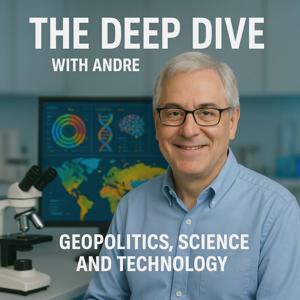
This podcast channel delivers in-depth, educational content across a broad range of topics. A large collection of episodes are available to you, the oldest being as relevant as the newest since this channel is not about daily news. Each episode runs between 30 and 120 minutes and is intentionally designed to go beyond casual listening. The research behind every episode is conducted with the support of advanced artificial intelligence and presented by two AI-generated hosts.
If you’re uncomfortable with the use of cutting-edge AI as both researcher and presenter, this podcast may not be for you. Its mission is to provide access to expert-level knowledge—insights that are typically out of reach through simple web searches or general-purpose AI tools.
“The Deep Dive with Andre” is not about connecting with the personality and voice of a human podcaster — it’s about connecting with expert-level knowledge, for those who value insight over persona. At times, the generated virtual hosts may exhibit an inappropriate voice tone, which can be disconcerting. The technology is still evolving.
Unlike traditional Text-to-Speech (TTS) services, the experimental AI powering the virtual hosts develops an independent understanding of the input information before generating speech. While the resulting voices do not match the quality of those produced by services like ElevenLabs, the AI’s ability to generate dynamic dialogues between two virtual hosts is a distinctive feature. Also, the cost of high-quality voiceovers would be astronomical, given the length of each episode (30 to 120 minutes). Quantity takes precedence over voice quality, given the vast knowledge conveyed by the episodes.
Note: When the hosts mention the “report,” “sources,” or “text,” they are unknowingly referring to the in-depth research and analysis generated by the first-stage AI. That output is then passed on to the second-stage AI, which handles the virtual hosts.
Disclaimer: This content is intended for educational purposes only and should not be construed as professional advice. It is derived exclusively from publicly available sources. No proprietary, confidential, or non-public information has been used in their preparation. However, through deep analytical synthesis, it is possible that some insights or conclusions presented here represent emergent interpretations that have not yet been formally published or broadly disseminated within the scientific and technological communities.
Please share your comments here:
https://the-deep-dive-with-andre.podbean.com
That would help improving this podcast show. Some podcast apps give direct access to the episode website.
Available on Amazon Music, Apple Podcasts, Audible, Castbox, Castro, Deezer, Goodpods, iHeartRadio, MyTuner, Overcast, Player FM, Pocket Casts, Podbean, Podcast Addict, Spotify, TuneIn Radio and others.

14,352 Listeners

5,518 Listeners

12,158 Listeners

4,165 Listeners
1,621 Listeners

19 Listeners

16,072 Listeners