
Sign up to save your podcasts
Or



The provided text examines the transformative impact of artificial intelligence (AI) on cybersecurity, specifically focusing on "zero-day" exploits—previously unknown software vulnerabilities. It highlights how AI, particularly Large Language Models (LLMs), automates the discovery and weaponization of these flaws, dramatically accelerating the timeline from identification to exploitation. The sources contrast two national strategies: the "Stockpile" doctrine, which hoards exploits for offensive advantage, versus the "Patch-when-seen" doctrine, which prioritizes disclosure for collective defense, arguing that AI's speed destabilizes the former. Finally, the text proposes a "Zero-Day Escrow Treaty" to govern critical infrastructure vulnerabilities, advocating for a shift towards AI-powered defensive measures and human-machine collaboration to counter the escalating AI-driven cyber threat.
Research done with the help of artificial intelligence, and presented by two AI-generated hosts.
The provided text examines the rapid evolution of space-based intelligence, surveillance, and reconnaissance (ISR), particularly the emergence of commercial Signals Intelligence (SIGINT) and Synthetic Aperture Radar (SAR) constellations. These new systems, leveraging small-satellite technology and artificial intelligence (AI), are fundamentally reshaping global intelligence capabilities by enabling real-time data analysis and automated "tip-and-cue" tasking between different sensor types. The overview discusses how this commercialization is blurring the lines between civilian and military overhead collection, offering unprecedented geopolitical transparency but also introducing complex strategic, legal, and ethical challenges related to data sharing, targeting, and corporate influence in international security. Finally, it highlights market dynamics, future opportunities like optical inter-satellite links, and recommends strategic actions for governments and commercial operators to navigate this transformative landscape.
Research done with the help of artificial intelligence, and presented by two AI-generated hosts.
The provided text explores how Open-Source Intelligence (OSINT) and commercial sensing technologies are fundamentally changing the landscape of spycraft, moving it from an exclusive state domain to a more democratized public sphere. It highlights how accessible satellite imagery, public signals intelligence (SIGINT), and ubiquitous social media empower non-state actors like Bellingcat and Human Rights Watch to conduct investigations, challenging state monopolies on information. The source also examines how state actors are adapting by integrating OSINT into their own processes while simultaneously developing sophisticated deception techniques to counter transparency. Ultimately, the text argues that the future of intelligence revolves around a battle for credibility in an increasingly transparent, yet contested, information environment.
Research done with the help of artificial intelligence, and presented by two AI-generated hosts.
This report, "An Autopsy of a Republic," meticulously examines the first six months of President Donald J. Trump's second administration, concluding on June 29, 2025. It analyzes the administration's actions through the lens of political science frameworks for dictatorship and democratic backsliding, particularly the concept of "competitive authoritarianism." The report asserts that the administration's actions are not random but a systematic implementation of the Heritage Foundation's Project 2025, which aims to consolidate executive power and dismantle institutional checks. Key areas of concern include the politicization of the Department of Justice, the purge of the civil service via "Schedule F," the deployment of the military for domestic law enforcement, and attacks on the press and judiciary. The document concludes that the United States is rapidly moving towards a "competitive authoritarian regime," where democratic institutions are hollowed out to entrench the incumbent's power, marking a profound and potentially irreversible threat to the republic, with significant global implications.
Research done with the help of artificial intelligence, and presented by two AI-generated hosts.
The provided sources examine the Five Eyes (FVEY) intelligence alliance, a long-standing partnership between the United States, United Kingdom, Canada, Australia, and New Zealand, emphasizing its historical foundations in shared trust, technology, and asymmetric contributions. They highlight how a potential second Trump administration's "America First" policy, characterized by transactionalism and a distrust of its own intelligence agencies, poses an existential threat to this trust-based alliance. Specifically, the sources explore scenarios ranging from a hollowing out of the alliance's core functions, with a potential formalization of a "Four Eyes" caucus excluding the U.S., to a complete dissolution, compelling non-US members to diversify intelligence partnerships and enhance sovereign capabilities to mitigate risk.
Research done with the help of artificial intelligence, and presented by two AI-generated hosts.
The provided text explores the transformation of Signals Intelligence (SIGINT), explaining how the exponential growth of digital information has expanded its scope beyond traditional electronic signals to include multi-modal data such as voice communications, imagery, metadata, and open-source intelligence (OSINT). It details the AI-driven pre-processing techniques for each data type, including automatic speech recognition, speaker identification, sentiment analysis, object detection, facial recognition, metadata correlation, and automated web scraping. The document then introduces the AI fusion core, highlighting the symbiotic relationship between Large Language Models (LLMs) for semantic understanding and Graph Neural Networks (GNNs) for relational reasoning, which work together to create a unified knowledge graph. Finally, it addresses the strategic implications and challenges of these advanced platforms, emphasizing the need for robust data governance, mitigation of algorithmic bias, and careful navigation of ethical and legal considerations to ensure effective and responsible use in national security.
Research done with the help of artificial intelligence, and presented by two AI-generated hosts.
The provided text examines the critical global reliance on Rare Earth Elements (REEs), indispensable for modern technology, green energy, and defense, highlighting China's near-monopoly over their processing. It details the geopolitical implications of this dominance, including China's strategic use of REEs as leverage. The sources then explore international efforts, particularly from the U.S., Australia, and Canada, to diversify supply chains through "ally-shoring" and rebuilding domestic capabilities. Furthermore, the text addresses the significant environmental and social costs associated with REE extraction, emphasizing the paradox of "green" technologies relying on "dirty" mining practices. Finally, it outlines future strategies for resilience, focusing on advancements in REE recycling and the development of substitute materials, particularly for permanent magnets.
Research done with the help of artificial intelligence, and presented by two AI-generated hosts.
The provided text explores the complex interplay between digital sovereignty and internet fragmentation, highlighting how nations' efforts to control their digital domains are leading to a splintering of the global internet. It defines digital sovereignty as a state's authority over its digital sphere, driven by political, economic, and national security concerns, and details how this pursuit contributes to internet fragmentation, which is the division of the internet into isolated networks. The text presents contrasting models of digital sovereignty from the European Union, China, Russia, and the United States, illustrating their diverse approaches and the consequences for users, businesses, and the internet's core technical infrastructure. Ultimately, it examines the ongoing battle over internet governance between multistakeholder and multilateral models and offers strategic recommendations for navigating this increasingly fragmented digital landscape.
Research done with the help of artificial intelligence, and presented by two AI-generated hosts.
The provided source, "Chronic Abuse's Brain Impact," offers a comprehensive overview of how sustained maltreatment profoundly alters the brain's structure, function, and chemistry. It explains that chronic abuse is distinguished from isolated incidents by its repetitive nature, leading to the toxic activation of stress response systems. The document details specific brain regions affected, like the amygdala, hippocampus, and prefrontal cortex, and explains how these neurobiological changes contribute to mental health conditions such as PTSD, depression, anxiety, and substance use disorders. Furthermore, it highlights the systemic health consequences, linking trauma to chronic inflammation and various physical illnesses, while also emphasizing the brain's capacity for healing through neuroplasticity and outlining future therapeutic advancements aimed at targeted recovery.
Research done with the help of artificial intelligence, and presented by two AI-generated hosts.
The provided text, titled "Post-Lithium Battery Technology Overview," presents a comprehensive analysis of next-generation battery technologies poised to succeed or complement lithium-ion (Li-ion) batteries. It highlights the limitations of current Li-ion technology, including performance ceilings, safety concerns, cost dynamics, and supply chain vulnerabilities, as the driving forces behind this shift. The report then categorizes and examines various "post-lithium" alternatives, distinguishing between metal-ion technologies like sodium-ion, zinc-ion, aluminum-ion, and magnesium-ion that leverage abundant elements, and high-energy chemistries such as lithium-sulfur and solid-state batteries, which aim for greater energy density. Ultimately, the overview suggests a future where a diverse ecosystem of battery types will be tailored to specific applications, emphasizing the importance of supply chain security, cost-effectiveness, and enhanced safety.
Research done with the help of artificial intelligence, and presented by two AI-generated hosts.
From the publisher's feed
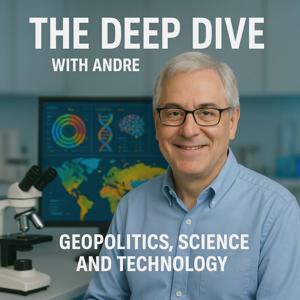
This podcast channel delivers in-depth, educational content across a broad range of topics. A large collection of episodes are available to you, the oldest being as relevant as the newest since this channel is not about daily news. Each episode runs between 30 and 120 minutes and is intentionally designed to go beyond casual listening. The research behind every episode is conducted with the support of advanced artificial intelligence and presented by two AI-generated hosts.
If you’re uncomfortable with the use of cutting-edge AI as both researcher and presenter, this podcast may not be for you. Its mission is to provide access to expert-level knowledge—insights that are typically out of reach through simple web searches or general-purpose AI tools.
“The Deep Dive with Andre” is not about connecting with the personality and voice of a human podcaster — it’s about connecting with expert-level knowledge, for those who value insight over persona. At times, the generated virtual hosts may exhibit an inappropriate voice tone, which can be disconcerting. The technology is still evolving.
Unlike traditional Text-to-Speech (TTS) services, the experimental AI powering the virtual hosts develops an independent understanding of the input information before generating speech. While the resulting voices do not match the quality of those produced by services like ElevenLabs, the AI’s ability to generate dynamic dialogues between two virtual hosts is a distinctive feature. Also, the cost of high-quality voiceovers would be astronomical, given the length of each episode (30 to 120 minutes). Quantity takes precedence over voice quality, given the vast knowledge conveyed by the episodes.
Note: When the hosts mention the “report,” “sources,” or “text,” they are unknowingly referring to the in-depth research and analysis generated by the first-stage AI. That output is then passed on to the second-stage AI, which handles the virtual hosts.
Disclaimer: This content is intended for educational purposes only and should not be construed as professional advice. It is derived exclusively from publicly available sources. No proprietary, confidential, or non-public information has been used in their preparation. However, through deep analytical synthesis, it is possible that some insights or conclusions presented here represent emergent interpretations that have not yet been formally published or broadly disseminated within the scientific and technological communities.
Please share your comments here:
https://the-deep-dive-with-andre.podbean.com
That would help improving this podcast show. Some podcast apps give direct access to the episode website.
Available on Amazon Music, Apple Podcasts, Audible, Castbox, Castro, Deezer, Goodpods, iHeartRadio, MyTuner, Overcast, Player FM, Pocket Casts, Podbean, Podcast Addict, Spotify, TuneIn Radio and others.

14,352 Listeners

5,518 Listeners

12,158 Listeners

4,165 Listeners

1,621 Listeners

19 Listeners

16,072 Listeners