
Sign up to save your podcasts
Or



The provided text offers a comprehensive analysis of Stockholm Syndrome, tracing its origins from the 1973 bank robbery to its controversial application in domestic abuse contexts. It explores the core psychological characteristics of this paradoxical bond, including positive feelings for captors and negative feelings towards authorities, while emphasizing that it is not a formal psychiatric diagnosis. The discussion highlights the concept of trauma bonding as a central mechanism in domestic abuse, detailing the cycle of idealization, devaluation, and intermittent reinforcement that creates profound psychological and physiological dependency. Furthermore, the text introduces Battered Person Syndrome and Complex PTSD as alternative, more clinically robust frameworks for understanding the long-term effects of chronic abuse, arguing for a shift in focus from victim pathology to perpetrator accountability and coercive control. Ultimately, it underscores the barriers to leaving abusive relationships and stresses the need for trauma-informed, survivor-centered interventions and systemic change to address domestic violence effectively.
Research done with the help of artificial intelligence, and presented by two AI-generated hosts.
The provided source, "Space Weaponization: Defense and Treaties," offers a comprehensive overview of the evolving military landscape in outer space. It distinguishes between the historical militarization of space, involving support functions like surveillance and communication, and the more recent and concerning weaponization, which entails deploying offensive capabilities. The text analyzes the doctrines and assets of major space powers—the United States, China, and Russia—highlighting their differing approaches to space as a warfighting domain. Furthermore, it examines the limitations of existing international law, particularly the 1967 Outer Space Treaty, in addressing modern counterspace threats and discusses the catastrophic consequences of kinetic space warfare, emphasizing the need for resilience and new diplomatic efforts to manage this increasingly contested frontier. Finally, the source explores future trajectories, including the impact of commercialization and artificial intelligence, and provides strategic recommendations for policymakers navigating this complex environment.
Research done with the help of artificial intelligence, and presented by two AI-generated hosts.
The provided text explores the complex relationship between endometriosis and autoimmune diseases, highlighting that endometriosis is increasingly understood as a systemic, chronic inflammatory condition rather than solely a localized pelvic disorder. It thoroughly reviews epidemiological data, demonstrating a significant and consistent increased risk of various autoimmune conditions in individuals with endometriosis. The sources further illuminate the shared biological underpinnings, detailing how both conditions involve immune system dysregulation, common inflammatory pathways, and overlapping genetic susceptibilities. While acknowledging the academic debate over whether endometriosis is formally an autoimmune disease, the text emphasizes the clinical implications of this comorbidity, including diagnostic challenges due to symptom overlap and the need for multidisciplinary care and targeted immunotherapy research.
Research done with the help of artificial intelligence, and presented by two AI-generated hosts.
This document provides an extensive analysis of gaslighting and covert psychological abuse, detailing its subtle yet destructive nature. It defines these forms of manipulation, which systematically erode a victim's self-worth and perception of reality, and traces the origin of the term "gaslighting" to a 1944 film. The text further explores various tactics used by perpetrators, the profound impacts on victims, and the psychological motivations of abusers, often linked to personality traits like narcissism. Finally, it outlines pathways to recovery through self-help and therapeutic interventions, and discusses the challenges of seeking legal justice for such often "invisible" harm across different relationship contexts.
Research done with the help of artificial intelligence, and presented by two AI-generated hosts.
This document provides an extensive overview of women's contributions to invention and innovation throughout history, from the Middle Ages to the Digital Age. It highlights numerous female inventors and their significant breakthroughs, ranging from early astronomical instruments and agricultural processes to foundational computing algorithms, life-saving medical treatments, and modern digital technologies like Wi-Fi. The text also examines the persistent structural barriers that have historically obscured women's ingenuity, such as legal disenfranchisement and the "Matilda Effect," where female scientists' work is misattributed or overlooked. Ultimately, the source argues for a rewriting of the traditional narrative of innovation to include these often-hidden contributions and acknowledge the resilience required by women to innovate in a world that frequently denied their roles.
Research done with the help of artificial intelligence, and presented by two AI-generated hosts.
The provided sources offer a comprehensive overview of the sewing machine's history and profound impact. They detail its evolution from early, unsuccessful European concepts to its American ascendancy, marked by key inventors like Elias Howe, Isaac Singer, and Allen B. Wilson, and the ensuing "Sewing Machine War" that led to the formation of the first patent pool. The texts also trace the machine's technological advancements, from manual operation to electric and computerized models, and examine its transformative social and economic effects, including the rise of the ready-to-wear industry, changes in household dynamics, and the contradictory impact on women's labor. Finally, the sources highlight the diversification of sewing machine applications beyond apparel, illustrating its crucial role in various heavy industries.
Research done with the help of artificial intelligence, and presented by two AI-generated hosts.
The provided text explores the Snowball Earth hypothesis, a theory suggesting that the Earth experienced extreme glaciations during the Cryogenian Period, roughly 720 to 635 million years ago. It examines the geological and atmospheric conditions that likely triggered these events, such as the position of the supercontinent Rodinia and changes in greenhouse gases. The text details the compelling evidence supporting the hypothesis, including glacial deposits found at paleo-equatorial latitudes and the reappearance of Banded Iron Formations, while also addressing the "hard Snowball" versus "Slushball" debate regarding the extent of ice cover. Ultimately, the source concludes by discussing how these severe ice ages served as a powerful evolutionary crucible, potentially driving the emergence of complex multicellular life and setting the stage for the Cambrian Explosion due to the unique environmental pressures and post-glacial conditions.
Research done with the help of artificial intelligence, and presented by two AI-generated hosts.
The provided text explores the contentious field of plant intelligence, examining the historical progression and modern revival of the idea that plants exhibit cognitive abilities. It highlights the semantic debate surrounding terms like "intelligence," "neurobiology," and "consciousness" when applied to organisms without a central nervous system. The document then presents scientific arguments from both proponents and skeptics, showcasing evidence for plant memory, learning, communication, and decision-making while also offering alternative, mechanistic explanations based on phenotypic plasticity and hormonal responses. Finally, it analyzes the "Wood-Wide Web" as a case study, illustrating the differing interpretations of plant cooperation versus competition within fungal networks.
Research done with the help of artificial intelligence, and presented by two AI-generated hosts.
The provided text explores the history, significance, and enduring legacy of the Library of Alexandria, challenging the popular myth of its singular, catastrophic destruction. It details the Library's rise as a revolutionary intellectual ecosystem and a project of Ptolemaic statecraft, highlighting its innovative contributions to library science, empirical research, and textual criticism. The document then clarifies that the Library's demise was a gradual decline caused by political instability and neglect, rather than a single fire, analyzing various destructive events and debunking the fabricated narrative of its burning by Arab conquerors. Finally, it examines the transmission of Alexandrian knowledge to later civilizations, particularly the Islamic Golden Age, and discusses the modern Bibliotheca Alexandrina as a symbol of renewed commitment to universal knowledge in the digital age.
Research done with the help of artificial intelligence, and presented by two AI-generated hosts.
The provided text offers a comprehensive analysis of civil wars, defining them as large-scale, sustained armed conflicts between a state and organized non-state actors over political control or territory, requiring specific casualty thresholds to distinguish them from other violence. It explores various theoretical frameworks, primarily the "greed versus grievance" dichotomy, which examines whether conflicts are driven by perceived injustices or opportunities for financial gain. The text then categorizes civil war causes into political factors like state weakness, exclusion, and elite competition; socio-economic factors such as poverty, inequality, and the "resource curse"; and social and identity-based drivers, including politicized identity and ideology. Finally, it discusses the dynamics of escalation, including immediate triggers and the crucial role of foreign intervention in internationalizing and prolonging conflicts, using the American, Rwandan, and Syrian civil wars as case studies.
Research done with the help of artificial intelligence, and presented by two AI-generated hosts.
From the publisher's feed
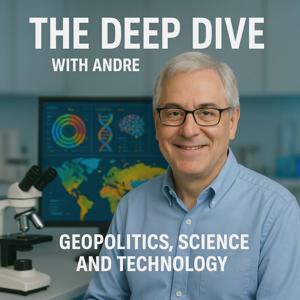
This podcast channel delivers in-depth, educational content across a broad range of topics. A large collection of episodes are available to you, the oldest being as relevant as the newest since this channel is not about daily news. Each episode runs between 30 and 120 minutes and is intentionally designed to go beyond casual listening. The research behind every episode is conducted with the support of advanced artificial intelligence and presented by two AI-generated hosts.
If you’re uncomfortable with the use of cutting-edge AI as both researcher and presenter, this podcast may not be for you. Its mission is to provide access to expert-level knowledge—insights that are typically out of reach through simple web searches or general-purpose AI tools.
“The Deep Dive with Andre” is not about connecting with the personality and voice of a human podcaster — it’s about connecting with expert-level knowledge, for those who value insight over persona. At times, the generated virtual hosts may exhibit an inappropriate voice tone, which can be disconcerting. The technology is still evolving.
Unlike traditional Text-to-Speech (TTS) services, the experimental AI powering the virtual hosts develops an independent understanding of the input information before generating speech. While the resulting voices do not match the quality of those produced by services like ElevenLabs, the AI’s ability to generate dynamic dialogues between two virtual hosts is a distinctive feature. Also, the cost of high-quality voiceovers would be astronomical, given the length of each episode (30 to 120 minutes). Quantity takes precedence over voice quality, given the vast knowledge conveyed by the episodes.
Note: When the hosts mention the “report,” “sources,” or “text,” they are unknowingly referring to the in-depth research and analysis generated by the first-stage AI. That output is then passed on to the second-stage AI, which handles the virtual hosts.
Disclaimer: This content is intended for educational purposes only and should not be construed as professional advice. It is derived exclusively from publicly available sources. No proprietary, confidential, or non-public information has been used in their preparation. However, through deep analytical synthesis, it is possible that some insights or conclusions presented here represent emergent interpretations that have not yet been formally published or broadly disseminated within the scientific and technological communities.
Please share your comments here:
https://the-deep-dive-with-andre.podbean.com
That would help improving this podcast show. Some podcast apps give direct access to the episode website.
Available on Amazon Music, Apple Podcasts, Audible, Castbox, Castro, Deezer, Goodpods, iHeartRadio, MyTuner, Overcast, Player FM, Pocket Casts, Podbean, Podcast Addict, Spotify, TuneIn Radio and others.

14,352 Listeners

5,518 Listeners

12,158 Listeners

4,165 Listeners
1,621 Listeners

19 Listeners

16,072 Listeners