
Sign up to save your podcasts
Or

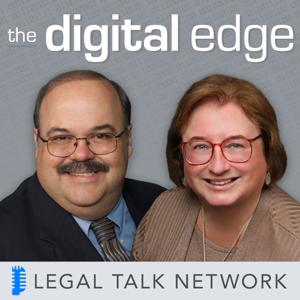


In this episode of The Digital Edge, hosts Sharon Nelson and Jim Calloway talk with PayneGroup CEO Donna Payne about ways attorneys can better handle their metadata. Donna reminisces about starting her company in 1998, the client experience that inspired the creation of her Metadata Assistant software, and The Wall Street Journal’s front page article mention that resulted in 150,000 downloads. She analyzes how metadata has changed since she started and provides a list of things, such as track changes and hidden text, that lawyers should be on the lookout for. She states that one of the best things you can do if you can’t afford a third party assistant program is to know what is in the document and use any free options available in your preferred office software suite. Donna closes the interview with an explanation of what exchangeable image file format data is, her checklist of the most common metadata mistakes that lawyers make, and some daily best practices that lawyers can implement to help protect their data.
Donna Payne is the founder and serves as chief executive officer of PayneGroup, Inc. She is a member of the American Bar Association, the American Society of Journalists and Authors, and the Project Management Institute. In addition Donna is an original member of the Microsoft Legal Advisory Council. She is a frequent speaker at legal and technical conferences worldwide and has spoken to Congressional committees, the Senate, and at international judicial conferences on the subject of metadata and preventing accidental disclosure.
Special thanks to our sponsors, ServeNow, CloudMask, and Scorpion.
Learn more about your ad choices. Visit megaphone.fm/adchoices
In this episode of The Digital Edge, hosts Sharon Nelson and Jim Calloway speak with Legal Technology Consultant Andrew Adkins about his time as chief information officer for the law firm of Steptoe & Johnson PLLC. Andy reflects on his 23 years as a technology consultant and gives a brief breakdown of the variables that led to his move to West Virginia and employment with Steptoe & Johnson PLLC. The firm was large and successful when he arrived but, as he recalls, the information technology infrastructure was understaffed and mostly focused on day-to-day problem solving. This lack of needed staff was one of his biggest challenges as he began to expand the law firm’s IT capabilities and integrate new software to help the attorneys improve the services they provided. Andy talks about the process of building relationships among his teammates, learning their strengths and weaknesses, and the challenges he had convincing management of the necessity of continued employee training. He warns other CIOs of potential “upgrade fatigue” within their IT departments and shares how traveling to introduce himself to each branch of the company and incorporating a monthly newsletter to inform staff of upcoming tech changes helped to prepare staff for company-wide tech improvements. Andy closes the interview with an analysis of how he addressed the law firm's cyber security needs and his list of his best and worst professional moments during his four year employment there.
Andy Adkins has been assisting law firms to improve their services to clients since the late 1980s. His career/journey has continuously led him down various paths, including a four year gig as the Chief Information Officer at Steptoe & Johnson PLLC, a large law firm based in Bridgeport, West Virginia.
Special thanks to our sponsors, ServeNow, CloudMask, and Scorpion.
Learn more about your ad choices. Visit megaphone.fm/adchoices
As the legal marketplace becomes more globalized, many lawyers are venturing out and starting their own law firms. However, many attorneys also establish law firms without creating a company-wide strategic business plan to help guide future growth and company development. How do attorneys create a strategic business plan for their firm and what are the best ways to implement that plan?
In this episode of The Digital Edge, hosts Sharon Nelson and Jim Calloway talk with The Remsen Group President John Remsen, Jr. about the benefits of creating a firm-wide business plan. John expresses how important it is for law firm leadership to recognize that they are running a business and states that it is difficult to run a successful business without a plan of where you are going. He shares that his research results show that only 40% of midsize firms report that they have a written strategic plan and less than 5% give themselves a positive score on implementing that plan well. Gordon also reveals that 90% of firms with a plan will attribute improved performance in areas like increased cohesiveness, profitability, long term sustainability, and growth to the planning exercise. He then analyzes the top five concerns of midsize firms, like associate development and firm governance, and provides ways that firms can address these concerns. He closes the interview with reasons that older lawyers resist these types of improvements and tips to help law firms start the strategic planning process.
John Remsen, Jr. is a frequent speaker and author on law firm leadership and marketing topics. He has spoken at national and regional conferences of the Legal Marketing Association, the Association of Legal Administrators, American Bar Association and numerous state and local bar associations. After serving as in-house marketing director at two major law firms, John formed The Remsen Group, a consulting firm that works exclusively with law firms to help them develop and implement long-term strategic objectives to improve cohesiveness, performance and profitability.
Special thanks to our sponsors, ServeNow, CloudMask, and Scorpion.
Learn more about your ad choices. Visit megaphone.fm/adchoices
The large volume of data that many law firms handle makes utilizing cloud computing services a very enticing prospect. What ethical standards should lawyers expect these companies to abide by? What should lawyers look for in a cloud computing provider?
In this episode of The Digital Edge, hosts Sharon Nelson and Jim Calloway speak with Clio founder and CEO Jack Newton and Rocket Matter founder and CEO Larry Port about cloud computing and the new cloud security standards for legal professionals released by the Legal Cloud Computing Association. Larry explains what the LCCA is and how it formed out of a need to educate lawyers about what is happening in the cloud. Jack provides some insight into the creation of the security standards, such as terms of service privacy policies and encryption, and states that with these standards as a baseline lawyers will be able to more easily assess if a cloud computing provider is adhering to certain ethical standards. Larry also lists a few factors lawyers should consider, like where the SaaS data center is located, and the four things (vulnerability scans, penetration testing, and aesthetic code and dynamic code reviews) that the standards require in security testing. They both end the interview with an analysis of in-transit and at rest encryption and the benefits and drawbacks of zero knowledge level security.
Jack Newton is the founder and CEO of Clio and recently joined the board of the International Legal Technology Standards Organization (ILTSO). He also co-founded and is acting president of the Legal Cloud Computing Association (LCCA). Jack received his master of science in computing science from the University of Alberta.
Larry Port is the founder and CEO of Rocket Matter and is a speaker and award winning writer at the crossroads of the legal profession, cutting edge technology, and law firm marketing. He was named to the 2012 Fastcase 50 and received his master of computer science with an emphasis in distributed systems from New York University.
Special thanks to our sponsors, ServeNow, CloudMask, and Scorpion.
Learn more about your ad choices. Visit megaphone.fm/adchoices
Over the past 100 years technology has made enormous leaps toward improving the ease of everyday living for the average citizen. This progress has also been reflected in the legal profession as tech becomes more integrated into the working lives of lawyers. However, in what ways has technology improved the profession and how can technological advancements aid us in the future?
In this special centennial episode of The Digital Edge, hosts Sharon Nelson and Jim Calloway sit down with ABA President-Elect Linda Klein to reflect on how technology has improved the practice of law throughout their careers. The hosts open by taking some time to reflect on the last 100 episodes of the podcast and Linda shares her memory of having the Digital Edge be the very first podcast she ever listened to. She then muses over being introduced to technology early in her career and how tech started to influence and improve the way she practiced law. Within these reflections, Linda provides some insight into why she thinks it is important for lawyers to give back to their communities and tips on how tech can help fit everything into one’s busy life. The group then focuses on ABA initiatives centered around positively influencing the rapid change happening in the legal profession spurred by globalization and technology. Linda then looks toward the future and discusses goals that she has for her presidency relating specifically to technology and the practice of law.
Linda A. Klein is president-elect of the American Bar Association. She is also a senior managing shareholder at Baker Donelson, recently completing a 6 year term on the Firm's Board of Directors. Her practice includes most types of business dispute resolution, including contract law, employment law and professional liability.
Special thanks to our sponsors, ServeNow, CloudMask, and Scorpion.
Learn more about your ad choices. Visit megaphone.fm/adchoices
Recently, the legal publishing company Fastcase received a takedown notice from the parent company of another publishing company, Casemaker, claiming they had exclusive rights to distribute, for commercial use, the Georgia Administrative Rules and Regulations. Fastcase CEO Ed Walters was surprised by this demand, because public law is not copyrightable. As a response, Ed decided to initiate litigation with Casemaker for the rights to the regulations and also to set a countrywide precedent. But why did Casemaker think they had exclusive rights to these Georgia laws in the first place?
In this episode of The Digital Edge, Sharon Nelson and Jim Calloway interview Ed Walters about the case, why he thinks keeping public law in the public domain is so important, and the history of law citations, annotations, and publication.
Topics include:
Ed Walters is the CEO and co-founder of Fastcase, a legal publishing company based in Washington D.C. Before working at Fastcase, he was a lawyer at Covington & Burling in Washington D.C. and Brussels. Ed also teaches The Law of Robots at Georgetown University Law Center.
Special thanks to our sponsors, ServeNow, CloudMask, and Scorpion.
Learn more about your ad choices. Visit megaphone.fm/adchoices
In 2009, the American Bar Association created the Commission on Ethics 20/20 to examine in depth how changes in technology affect the ABA Model Rules of Professional Conduct. The commission made many recommendations and, most notably, the ABA modified Rule 1.1 regarding lawyer competence. In the new version, Rule 1.1 Comment 8 reads “To maintain the requisite knowledge and skill, a lawyer should keep abreast of changes in the law and its practice, including the benefits and risks associated with relevant technology...” But what does it really mean to be competent in technology as a lawyer?
In this episode of The Digital Edge, Jim Calloway interviews lawyer and legal technology blogger/podcaster Bob Ambrogi about the lawyer’s duty of technology competence, how it applies to discovery and confidentiality, and how technology can really benefit lawyers too.
Topics include:
Special thanks to our sponsors, ServeNow, CloudMask, and Scorpion.
Learn more about your ad choices. Visit megaphone.fm/adchoices
30 years ago, the legal community began to see the value in the intersection between technology and the law. Lawyers are now using new software and tech devices more than ever in their practices and the courtroom, making the ABA TECHSHOW’s 30th anniversary valuable to anyone working in the legal field. So what’s going on this year?
In this episode of The Digital Edge, Sharon Nelson and Jim Calloway interview Steve Best, chair of ABA TECHSHOW’s Planning Board, about the popular technology topics that will be covered at the conference in March, why lawyers and other law firm staff should care about tech trends, and how Steve personally became so intricately involved.
Topics include:
Steve Best is an attorney and the founding partner at Affinity Consulting Group, a well-known and well-respected law office management and technology company. He is a member of the Florida Bar and the Georgia Bar and is also a certified consultant and trainer, maintaining certifications in many law office software products including time billing and accounting, practice management, document management, PDF production, document assembly, and paperless office packages.
Special thanks to our sponsors, ServeNow and CloudMask.
Learn more about your ad choices. Visit megaphone.fm/adchoices
“The question is not can a machine exhibit empathy or judgement but instead for what problems are empathy, judgement, or creativity the solution?” -Richard Susskind
After years of writing and thinking about the future of the legal profession, Richard Susskind began to run into legal professionals whose careers are being affected by technology. In addition to lawyers, those in the medical, architecture, financial, and other fields have begun to notice a shift in the provision of professional services. Richard got together with his son, Daniel Susskind, at the time working in justice policy, education policy, and health policy for the British Prime Minister, to examine how technology is increasingly playing a fundamental role in how all service-based professions work. They recently published a book on the subject called “The Future of the Professions.”
In this episode of The Digital Edge, Sharon Nelson and Jim Calloway interview Richard and Daniel Susskind about their new book and key topics within that might interest lawyers who wish to prepare for the future. They discuss a “grand bargain” concept of exclusivity, the capability of machines to replace cognitive, physical/manual, and emotional skills currently provided by human professionals, and the right questions to ask about the future of legal services. Are there any tasks that computers won’t be able to do?
Topics include:
Professor Richard Susskind is an author, speaker, and independent advisor to international professional firms and national governments. He is president for the Society for Computers and Law, IT advisor to the Lord Chief Justice of England and Wales, and chair of the Oxford Internet Institute Advisory Board. His books include the best sellers, “The End of Lawyers?” and “Tomorrow’s Lawyers.”
Daniel Susskind is a lecturer in economics at Balliol College, University of Oxford, where he researches and teaches, and from where he has two degrees in economics. He was also a Kennedy Scholar at Harvard University. Previously, he worked for the British government as a policy adviser in the Prime Minister's Strategy Unit and as a senior policy adviser at the Cabinet Office.
Special thanks to our sponsors, ServeNow and CloudMask.
Learn more about your ad choices. Visit megaphone.fm/adchoices
With the data breaches and ransomware that has plagued law firms (and other companies) of all sizes recently, clients and firm managers alike are seeking more advanced data security. Certifications like the ISO 27001 provide guidelines and standards for how to protect the confidentiality, integrity, and availability of the information your firm holds. But what does implementing the high level of cybersecurity mean practically, how much will it cost, and what if a solo or small law firm can’t afford it?
In this episode of The Digital Edge, Sharon Nelson and Jim Calloway interview John Simek about the International Standards Organization (ISO) 27001 certification, The National Institute of Standards and Technology (NIST) small business standards, and other news concerning law firm cybersecurity.
Topics include:
John Simek is the vice president of Sensei Enterprises, Inc. in Fairfax, Virginia, which offers IT, information security, and digital forensics services for law firms and other businesses. John is a co-author of the book “Encryption Made Simple for Lawyers,” published by the American Bar Association in 2015 and a co-author of the second edition of “Locked Down: Practical Information Security for Lawyers” which will be published in March of 2016. John is one of the country’s leading cybersecurity experts for law firms.
Learn more about your ad choices. Visit megaphone.fm/adchoices
From the publisher's feed
485 Listeners

11 Listeners

22 Listeners

116 Listeners

8 Listeners

9 Listeners

39 Listeners

53 Listeners

32 Listeners
26 Listeners

9 Listeners
34 Listeners

64 Listeners

639 Listeners

47 Listeners

32 Listeners
5 Listeners

51 Listeners

7 Listeners