
Sign up to save your podcasts
Or

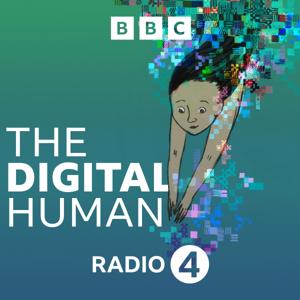


We've all had experiences of our attention wandering, usually at those moments when we most need to concentrate.
But, in our productivity-driven society, are we placing too much emphasis on paying attention and failing to recognise the benefits of more unstructured thought processes? After all, focus comes at a cost. With numerous demands on our attention, it's all too easy to experience burnout. Unfocus can recharge our batteries and allow us to be creative by making connections and connecting with other people.
In this episode, Aleks Krotoski explores some of the different modes of attention we can switch between and asks whether, perhaps, we should be awarding our unfocus equal status to our focus.
Producer: Lynsey Moyes
If you want to send a message without any chance of it being intercepted then end-to-end encryption services are the way to do it. Governments and intelligence agencies can’t even intercept these messages, without compromising the phone they’re sent or received on, because the tech companies themselves don’t even have access.
In the pursuit of protecting people’s privacy, in the wrong hands these messaging apps can be dangerous. Aleks discovers how the Taliban used WhatsApp to help them sweep through Afghanistan and take Kabul, without a bullet being fired.
Unless you turn off the internet it's impossible with technology like WhatsApp, Telegram and Signal to let the ‘good’ guys use it while restricting the ‘bad’ guys. Aleks hears why turning off the internet is not the answer because it often favours those who are trying to oppress rather than the people who need help.
Aleks learns that while the Taliban were using WhatsApp to organise and disarm those who may have tried to resist their takeover of Afghanistan, many Afghans who were desperately trying to escape Kabul relied on WhatsApp to connect and keep in touch with military officers and diplomats in order to get to and through the right gate and onto flights to safety. For some, when their phone battery ran out so did their hopes of escape.
"WhatsApp has provided a lifeline to millions of people around the world and we're grateful to have played a small role in helping people in Afghanistan. Of course, WhatsApp requires a mobile connection, and anyone who has spent time in Afghanistan knows its complex terrain often times requires multiple forms of communications to reach across the country." WhatsApp spokesperson.
Producer: Kate Bissell
Aleks Krotoski explores the relationships between social media content creators and their audience, asking how does it get complicated when money starts to change hands.
These are often described as para-social relationships. Ones were the audience knows a lot about the content creator and they know next to nothing about the viewers. This can lead to misunderstandings and even behaviours that border on coercive control.
How can this new breed of celebrity navigate this world when what their subscribers are paying for is their own piece of them?
Producer: Peter McManus
We all cheat at least a little bit, some of us in family games of monopoly, others on their taxes. Aleks asks if the digital era has made that easier; with less apparent consequence and therefore more tempting? If that's the case where does that lead us.
Why, for example, would people hack the language learning app Duolingo to achieve an entirely meaningless high score, just to beat those of their fellow learners? And if you use the fitness app Strava to compete with others who cycle the same route, what possesses you to use an electric bike next time, or even do it in your car? One of the key factors that encourage us to cheat is psychological distance - we can't see the impact of our cheating so it becomes more tempting. That's the digital world.
More charitably, another influence on our cheating is if we're already exhausted physically, psychologically or emotionally. Is that what might explain the rise in academic cheating that experts have detected during the course of the pandemic, when so much education and assessment has moved online?
Aleks explores all these examples along with the justifications people engage not own up to their behaviour.
Producer: Peter McManus
Aleks Krotoski explores what it's like to be 'villain of the day' on social media.
It seems every day an individual rightly or wrongly becomes the object of the online world's condemnation. What's that like and what motivates people to pile on? Are the criticisms always made in good faith or is there something more complex going on with what the critics are trying to signal.
Producer: Peter McManus
Dr Charu Smita, a media researcher in Delhi explains how as the social contract between middle class Indians and the Government, to provide medical assistance, crumbled, people realised they'd need to mobilise to help save lives.
Anirudh Deshmukh is a musician from Mumbai and when the second wave of Covid hit India and he saw the urgent tweets and posts from people searching for oxygen and hospital beds for loved ones he decided to do something about it. Using a combination of social media, WhatsApp and the meet up platform Clubhouse Anirudh began finding strangers hospital beds and oxygen. He quickly became inundated and along with others he began working day and night to locate beds and oxygen. Anirudh found himself having to decide who to save, a morally and ethically difficult decision even for a highly trained medic or relief worker.
Dr Venkata Ratnadeep Suri explains how technology enabled people to form local microcosmic systems to allow those most in need get the oxygen they needed. Aleks also hears how in desperation people started to think very creatively about how to use apps and online social platforms to save lives. Sohini Chattopadhyay returned to Kolkata at the beginning of the pandemic to be with her mum. When her childhood friend got sick with Covid during the second wave her doctors suggested plasma therapy. It was going to be too difficult to go through official channels so Sohini turned to Tinder to find a suitable match. She set up a profile with the most flattering selfie she could find but explained she wasn't looking for a date but people who'd recently had Covid with the right blood type. Two people came forward.
Produced by Kate Bissell
Aleks Krotoski talks to the children of those lost to QAnon conspiracies. Many have sought support and advice in online forums where they exchange stories of estrangement and bereavement unable to prevent their parent falling further down the rabbit of outlandish plots, twisted ideas and political extremism.
For many experts QAnon behaves like an authoritarian cult demanding total obedience to its ideas and anyone who can’t be converted are to be shunned. In an ironic twist on the classic cult narrative there as many parents as impressionable young people that have fallen under QAnon’s sway. But like cult members of the past can they be deprogrammed and reunited with their children?
Producer: Peter McManus
Most banks, airlines even the military use legacy software because to replace it costs millions. Instead, as companies grow or change, old software is merged with new software. Aleks hears about ‘technical debt’, when software engineers who create original software code leave or move on, taking their expertise with them. Without proper knowledge of the old code, maintaining legacy software can become problematic and leave a company or organisation vulnerable to technical bugs. The damage brought by thee bugs can leave a legacy of its own. And Aleks asks whether the software is really to blame?
Producer: Kate Bissell
Illustration by Seonaid MacKay
The history of early cinema, radio, and television has suffered from a mass loss of material. Lon Chaney’s vampiric grin and Betty Balfour’s joyful dances were melted down for the silver. Canisters full of voices from radio’s early days cast aside. Doctor Who and Dad’s Army fans still scour basements and attics in the hope of finding episodes lost decades ago. When a new technology creates a new artform, we seem to make the same mistake - not seeing the value, and ditching parts of our cultural history.
The same mistake was made with video games.
Compounding this is the fact that games are a particularly challenging art form to preserve. Technology is constantly changing, consoles rapidly become obsolete, and for the first few decades the companies that made the games had no financial incentive to save old games - it was all too easy for games to be cast into the void.
However, the gamer community has long been fighting against this erasure of history, and now more and more organisations are forming to save not just games, but the cultural and social history tied up in the games, and the communities who love them.
Aleks Krotoski explores how we can prevent gems of video game history from being lost, while following the unlikely story of how one of these forgotten games was recovered against the odds.
From the publisher's feed
Aleks Krotoski explores the digital world

7,625 Listeners
370 Listeners

1,048 Listeners

5,481 Listeners
1,797 Listeners

1,811 Listeners

1,033 Listeners

1,907 Listeners

753 Listeners

3,225 Listeners
1,004 Listeners