
Sign up to save your podcasts
Or

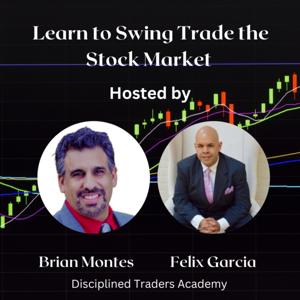


In this episode, we examine one of the most powerful bullish chart patterns in technical analysis—the long-term cup and handle pattern—using a real-world example from Home Depot ($HD).
Over the past three years, $HD has formed a textbook cup and handle, presenting a potential trading opportunity. Whether you're a swing trader or a long-term investor, this episode will give you actionable insights to approach similar setups confidently.
What You’ll Learn in This Episode:
Why This Episode is a Must-Listen:
The cup and handle is a foundational pattern every trader should understand. By studying this pattern on $HD, you’ll gain valuable insights into applying technical analysis to find high-probability trade setups.
Here is the link to the $HD chart - https://disciplinedtradersacademy.podia.com/blog/7b22cc13-c42e-43ad-b5f5-7a8e6239a39b
Want to join the Disciplined Traders Academy & Community - https://bit.ly/3Mm41N9
In this episode of Learn to Swing Trade the Stock Market, we tackle every trader's critical question:
How do you identify an A+ swing trade setup?
Brian Montes breaks down six actionable criteria in this episode to help you zero in on high-probability trades.
Whether you’re a beginner or looking to refine your strategy, this episode provides the tools to improve your trading results.
Key Takeaways:
**Trend Alignment:** Why trading in the direction of the prevailing trend is non-negotiable for A+ setups.
**Support and Resistance Zones:** Learn how to identify these critical levels and use them to time your entries and exits.
**Volume Confirmation:** Understand how to use volume to signal conviction and strength in price movements.
**Risk-Reward Ratios:** Discover why defining risk and targeting a 2:1 ratio or higher is essential for consistent profits.
**Catalysts and Market Context:** Explore how news events, earnings reports, and overall market trends can boost the probability of success.
**Technical Indicator Alignment:** Use RSI, MACD, and other tools to confirm your setups without overcomplicating your charts.
Why Listen?
- Find out what separates a mediocre trade from a high-reward A+ trade.
- Get practical tips you can implement immediately to refine your swing trading strategy.
- Learn to apply a systematic approach to identify, analyze, and execute trades confidently.
Connect with Us:
**Follow the Podcast:** Don’t miss future episodes packed with actionable swing trading tips and strategies!
**Join the Community:** Be part of the *Disciplined Traders Academy* and connect with other traders like you. https://bit.ly/3Mm41N9
**Leave a Review:** If this episode helped you, let us know by leaving a review—it helps us reach more aspiring traders!
**If you want a question or concept answered, email Brian at [email protected] with your question, and he will answer it on the podcast.
Do you want to listen to the episode about Bullish & Bearish Divergence? Check out episode # 31 titled Using Bullish & Bearish Divergence to Anticipate Market Reversals
In this episode of Learn to Swing Trade the Stock Market, Brian explores what swing traders need to know about navigating the stock market under a Trump administration. While we’re not making any political statements, it’s clear that markets respond differently to various administrations, and swing traders should be prepared for potential changes.
Tune in as we break down the three critical factors you must watch: market volatility, sector-specific trends, and the interest rate and inflation outlook.
Whether you’re a new swing trader or a seasoned pro, understanding how political shifts impact your trading strategy is essential for making informed decisions. Montes provides actionable tips on managing trading risks, identifying sector rotations, and staying ahead of policy-driven market moves.
Key Takeaways:
Do you have a question or topic you would like discussed on the podcast? Email Brian at [email protected]
Ready to join the Disciplined Traders Academy? You can join the community at https://bit.ly/3Mm41N9
In this episode of Learn to Swing Trade the Stock Market, we explore a crucial topic for new and experienced swing traders alike: understanding and overcoming bias in trading.
Brian Montes explains the different types of biases—from confirmation bias and recency bias to overconfidence and loss aversion—and how these mental tendencies can cloud judgment and lead to costly mistakes.
Discover practical strategies to identify and manage these biases, including maintaining a trading journal, setting clear entry and exit rules, and relying on data-driven decisions.
Bias is a hidden but powerful force that can negatively impact your trading performance if left unchecked.
By recognizing your personal biases and implementing the steps shared in this episode, you can build a more disciplined trading approach, stay objective, and improve your swing trading results over time.
Don’t let hidden biases sabotage your trades. Tune in to this episode to gain control over the mental habits that could be hurting your results and start making better trading decisions today.
Want to join the Disciplined Traders Academy & Community? Here you go!
https://bit.ly/3Mm41N9
In this episode, Brian Montes discusses the Anchored Volume Profile, a powerful tool for swing traders that provides insights into buying and selling activity at specific price levels.
He explains how this indicator can identify support and resistance zones, evaluate breakouts, and set stop losses and profit targets. The episode also covers best practices for using the Anchored Volume Profile effectively and common pitfalls to avoid.
We hope you like this episode. Please leave us a review and your feedback!
Do you have a topic you want covered on the podcast? Email those questions to [email protected]
Want to join a community of other swing traders? Come check out the Disciplined Traders Academy and Community -> https://bit.ly/3Mm41N9
In this episode, Brian Montes discusses the call-put ratio and its significance for swing traders. He explains the basics of call-and-put options and how to use the call-put ratio to gauge market sentiment, spot extremes, and confirm other indicators. He also highlights the pitfalls of relying solely on the call-put ratio and emphasizes the importance of risk management and combining it with different trading strategies.
Do you have a question or topic you want discussed on the podcast? Email Brian at [email protected]
Are you looking to join an education and coaching community? Check out the Disciplined Traders Academy & Community -> https://bit.ly/3Mm41N9
In this episode, Brian Montes introduces the concept of Anchored VWAP, a powerful tool for swing traders. He explains the fundamentals of VWAP, its significance in trading, and how the Anchored VWAP differs by allowing traders to select specific points in time for analysis.
The discussion covers the practical applications of Anchored VWAP in identifying trade setups, its role as a dynamic support and resistance line, and the importance of integrating it with other indicators for practical trading strategies.
Brian emphasizes the need for practice and experimentation with this tool and mentions upcoming blog articles for further learning.
Episode Takeaways:
- Anchored VWAP is a powerful tool for swing traders.
- VWAP stands for volume weighted average price.
- Anchored VWAP allows for specific point anchoring.
- Anchored VWAP can serve as dynamic support or resistance.
- Combining Anchored VWAP with other indicators is essential.
- Look for confluence in trading signals.
- Practice is critical to mastering Anchored VWAP.
Look for upcoming blog articles that will provide more insights. https://disciplinedtradersacademy.podia.com/blog
We hope you enjoyed this episode!
If you have a question or want a specific topic discussed on the podcast, email Brian at [email protected]
Are you looking to join a community for ongoing trading education, coaching, and trade ideas? Check out the Disciplined Traders Academy & Community.
https://disciplinedtradersacademy.podia.com/
In this episode, Brian Montes emphasizes the importance of defining your 'why' before embarking on a swing trading journey. He discusses the significance of clear motivations, setting short-term and long-term goals, and managing emotions throughout the trading process. The conversation highlights that trading is a skill that requires dedication, patience, and emotional resilience and encourages listeners to reflect on their motivations and goals to prepare for the challenges ahead.
In this episode, you will learn -
Ready to level up your swing trading journey? Check our the Disciplined Traders Academy & Community ->
In this episode, Brian Montes discusses the Advanced Decline Line (AD line), a crucial market breadth indicator for swing traders. He explains how to read and utilize the AD line to assess market health, confirm trends, and improve trading strategies. The conversation covers the significance of the AD line in identifying market direction, spotting divergences, confirming breakouts, and avoiding false signals. Brian emphasizes the importance of understanding market dynamics and encourages traders to incorporate the AD line into their analysis for better trading outcomes.
What you will learn in this episode:
1. The AD line measures the number of advancing versus declining stocks.
2. A rising AD line indicates strong market momentum and participation.
3. A falling AD line can signal a potential market reversal.
4. Divergence between the AD line and market indices can indicate reversals.
5. The AD line helps confirm breakouts and breakdowns in the market.
6. Avoiding false breakouts can significantly improve trading results.
7. The AD line can help identify market tops and bottoms earlier.
8. Improving trade timing is essential for successful swing trading.
9. The AD line provides insight into the market's overall health.
Do you have a question you want answered on the podcast? Email your question to [email protected]
Are you interested in learning how to swing trade? The Disciplined Traders Academy & Community is here to help new traders learn how to swing trade the stock market!
Need a refresher on Bullish & Bearish Divergence. Check out episode # 31, titled Using Bullish & Bearish Divergence to Anticipate Market Reversals.
Stay disciplined!
In this episode of the Learn to Swing Trade the Stock Market podcast, host Brian Montes discusses the common temptation among traders to focus on their profit and loss (P&L) rather than the trading process and risk management. He emphasizes the importance of concentrating on the trade itself, outlining three key reasons why focusing on P&L can undermine decision-making, distort risk perception, and drain emotional capital. Brian provides actionable strategies for managing P&L focus and encourages traders to trust their systems and engage with supportive trading communities for long-term success.
In this episode, you will learn -
- Why do you need to focus on the process, not the profits.
- Emotions should not dictate your trading decisions.
- Manage risk, not just profits.
- Emotional capital is as necessary as financial capital.
- Trading can be stressful enough without added strain.
- Hide the P&L column to reduce stress.
- Trust your system and manage your risk.
We hope you enjoyed this episode. If you did, please leave a review and, hopefully, five stars!
Do you have a question or topic you want discussed on the podcast? Please email them to [email protected]
Looking for a community to learn, grow, and build your training career? Check out the Disciplined Traders Academy and Community -
Stay disciplined, stay focused, keep trading.
From the publisher's feed

3,159 Listeners
1,983 Listeners
105 Listeners
806 Listeners

1,419 Listeners

222 Listeners

194 Listeners

380 Listeners

556 Listeners
359 Listeners

304 Listeners
58 Listeners

52 Listeners

28 Listeners

1 Listeners