
Sign up to save your podcasts
Or

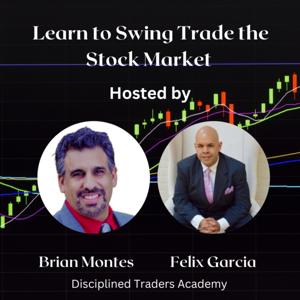


In this episode, Brian Montes discusses two essential tools for trading: the VIX and the 10-year Treasury yield. He explains how these indicators can provide insights into market sentiment and economic conditions. The VIX, also known as the fear gauge, measures market volatility and investor sentiment.
A high VIX indicates increased fear and uncertainty, often leading to a decline in stock prices. On the other hand, a low VIX suggests a favorable environment for entering new trades. The 10-year Treasury yield influences various financial instruments, including stock prices. Rising yields can lead to lower corporate profits and a shift of money from stocks to bonds, causing stock prices to decline. Conversely, falling yields can boost corporate profits and make stocks more attractive.
Brian provides tips on how to use these indicators to make informed trading decisions.
Episode Takeaways:
1. The VIX is a valuable tool for gauging market sentiment and volatility. A high VIX indicates increased fear and uncertainty, while a low VIX suggests a favorable trading environment.
2. The 10-year Treasury yield influences stock prices. Rising yields can lead to lower corporate profits and a shift of money from stocks to bonds, causing stock prices to decline. Falling yields can have the opposite effect.
3. Monitoring the VIX and the 10-year Treasury yield can help traders make informed trading decisions and manage risk.
4. Understanding market context and various factors that influence stock prices is essential for successful trading.
Questions? Email me at [email protected]
Want to join the DTA Community? https://disciplinedtradersacademy.podia.com/
In this episode, Brian Montes discusses the importance of patience in swing trading and the dangers of chasing trades. He emphasizes the value of waiting for the proper setup and not entering a trade before the chart has been set up. Brian also highlights the significance of cash as a position, especially in choppy or bear markets. He advises traders to sit on the sidelines if they are uncomfortable with the market conditions. He concludes by emphasizing the need to exercise patience, avoid chasing trades, and understand the value of holding cash to protect capital and successfully navigate the market.
Takeaways:
1. Patience is necessary in swing trading, and waiting for the proper setup significantly improves the odds of a profitable trade.
2. Chasing trades is a dangerous mistake as it often leads to entering at an overextended point and increases the risk of significant losses.
3. Cash is a position, and staying on the sidelines in choppy or bear markets can protect capital and improve trading performance.
4. Exercising patience, avoiding the temptation to chase, and understanding the value of holding cash are critical components of a successful trading strategy.
Questions - email me at [email protected]
Want to join a community where you get stock market education, community, coaching, stock market and chart analysis, AND trade set-ups? Join the Disciplined Traders Academy risk-free for 30 days!
https://disciplinedtradersacademy.podia.com/
In this episode, Brian Montes discusses the importance of setting technical stop losses when swing trading the stock market. He emphasizes that stop losses should be based on the chart and not arbitrary numbers. He explains that stop losses are meant to indicate when a trading idea is incorrect, even if the trade setup seemed perfect. Brian advises against using mental stop losses and recommends setting stop losses in the brokerage account to avoid missing them. He also suggests using support and resistance levels, moving averages, and patterns to determine stop-loss placement.
Takeaways::
1. Setting technical stop losses is crucial for managing risk when swing trading the stock market.
2. Stop losses should be based on the chart and not arbitrary numbers or personal risk tolerance.
3. Mental stop losses should be avoided, and stop losses should be set in the brokerage account to ensure execution.
4. Support and resistance levels, moving averages, and patterns can be used to determine stop-loss placement.
Email your questions to [email protected]
Looking to join the Disciplined Traders Community? https://disciplinedtradersacademy.podia.com/
In this episode, Brian Montes discusses the concept of market breadth and how swing traders can use it to manage risk and make informed trading decisions. Market breadth is an indicator that helps traders gauge the overall health of the stock market, particularly on an intraday basis. By analyzing the number of advancing and declining stocks, traders can determine the strength or weakness of the market and make decisions on profit-taking and stop-loss management. The breadth ratio, calculated by comparing the number of advancing stocks to declining stocks, can indicate bullish or bearish market sentiment. Understanding and utilizing market breadth can significantly improve a trader's strategy and decision-making process.
Takeaways:
➡️Market breadth is an indicator that helps traders gauge the overall health of the stock market on an intraday basis.
➡️Analyzing the number of advancing and declining stocks can help traders decide on profit-taking and stop-loss management.
➡️A high number of advancing stocks indicates widespread buying interest and suggests a bullish market sentiment.
➡️A high number of declining stocks indicates widespread selling pressure and bearish market sentiment.
➡️The breadth ratio, comparing advancing stocks to declining stocks, can indicate bullish or bearish market sentiment.
➡️Understanding and utilizing market breadth can significantly improve a trader's strategy and decision-making process.
We hope you enjoy this episode! If you have questions you can email them to [email protected].
Ready to take your stock market education to the next level? Join us at the Disciplined Traders Academy, where we blend education, coaching, and community to help new swing traders learn to trade consistently and profitably.
https://disciplinedtradersacademy.podia.com/
In this episode, Brian Montes discusses the concept of beta and its impact on swing trading. Beta measures a stock's volatility relative to the overall market performance. A beta of 1 indicates that the stock moves in line with the market, while a beta greater than 1 means the stock is more volatile than the market. Beta can help swing traders determine the risk level of their trades and optimize their trading positions. Stocks with a lower beta are less volatile and may be suitable for less risky approaches, while stocks with a higher beta offer the potential for higher returns but also come with more risk.
We hope you enjoy this episode! If you do, we would love to hear your feedback and comments.
Ready to take your swing trading to a new level?
Join our community for education, coaching, and trading opportunities. When you join the Disciplined Traders Community you get:
https://patreon.com/thedisciplinedtraderacademy?utm_medium=unknown&utm_source=join_link&utm_campaign=creatorshare_creator&utm_content=copyLink
Finbox -> https://finbox.com/NYSE:CAT/explorer/beta/
In this episode, Brian Montes discusses the hazards of trading or holding stocks just before earnings announcements. He emphasizes that as a swing trader, it is important to not hold over earnings due to the uncertainty of how the stock will react and the potential for large drawdowns.
Brian provides examples of recent earnings reports from companies like Meta, Disney, and Plantair where despite solid results, the stock prices dropped significantly. He highlights the importance of being aware of the earnings date, following a disciplined trading strategy, and keeping loss positions small to stay profitable as a swing trader.
Episode takeaways -
Do you have a question you want answered on the podcast? Email your question to [email protected]!
In this episode, Brian Montes discusses the idea of quitting a full-time job to become a full-time trader. He highlights the misleading information about the ease of trading and emphasizes the importance of understanding that trading is a journey that takes time and experience.
Brian provides several reasons why quitting a job to trade full-time may not be the best move, including financial instability, lack of experience, emotional stress, insufficient capital, limited diversification, regulatory constraints, lack of structure, unrealistic expectations, and limited growth opportunities.
Have a question? Email your question to [email protected]
In this episode, Brian Montes discusses how to manage a choppy market as a swing trader. A choppy market is characterized by significant price fluctuations without a clear trend.
Brian provides several strategies for managing choppy markets, including noticing the chop, adopting the right mindset, running the numbers with technical analysis, thinking short term, buying at support and selling at resistance, and embracing the idea of selling options.
He emphasizes the importance of risk management and knowing when to stay on the sidelines.
1. A choppy market is characterized by significant price fluctuations without a clear trend.
2. To manage a choppy market, it is important to notice the chop and adopt the right mindset of patience and discipline.
3. Technical analysis tools like support and resistance levels, moving averages, and the average directional index (ADI) can help identify potential entry and exit points.
4. Short-term trading strategies that capitalize on small price movements can be more effective in a choppy market.
5. Buying at support levels and selling at resistance levels can be practical in a choppy market.
6. Selling options can be profitable in a choppy market, but it requires a good understanding of options trading and risk management.
Risk management is crucial in a choppy market, and sometimes the best strategy is to stay on the sidelines and wait for clear signals or a more favorable market condition.
Are you looking for more education, coaching, and community to enhance your swing trading journey?
The Disciplined Trades Academy is for you!
https://disciplinedtradersacademy.podia.com/
In this episode, Brian Montes discusses how swing traders can benefit from bear markets or downturns by using inverse ETFs. He explains the process of short selling and the risks involved and then introduces inverse ETFs as an alternative.
He provides examples of inverse ETFs for the NASDAQ and S&P indices and discusses their unique characteristics and suitability for trading during market downturns. Brian emphasizes the importance of position sizing, risk management, and monitoring the market when trading inverse ETFs.
What you will learn in this episode -
We have an accompanying newsletter for this topic!
Here is the link - https://traderstalk.beehiiv.com/p/swing-trading-playbook-use-inverse-etfs-profit-market
Looking for more charting analysis, education, and trading opportunities? Check out the community -
https://www.patreon.com/thedisciplinedtraderacademy
In this episode, Brian Montes discusses classical chart analysis, which is essential for swing trading. He introduces three primary types of charts: bar charts, candlestick charts, and line charts.
Bar charts provide a comprehensive view of price movements and are good for identifying trends and patterns.
Candlestick charts originated in Japan and are widely used for all types of trading. They offer insights into market sentiment and indicate bullish or bearish settlement.
Line charts are the simplest form of charting and are useful for identifying long-term trends and establishing support and resistance levels.
What you will learn in this episode -
From the publisher's feed

3,159 Listeners
1,983 Listeners
105 Listeners
806 Listeners

1,419 Listeners

222 Listeners

194 Listeners
380 Listeners

556 Listeners
359 Listeners

304 Listeners
58 Listeners

52 Listeners

28 Listeners

1 Listeners