
Sign up to save your podcasts
Or

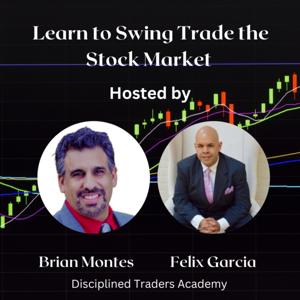


In this episode, Brian discusses the Average Daily Range. (ADR), a crucial concept for swing traders. He explains what ADR is, how it is calculated , and its significance in swing trading strategies. This episode covers how ADR can help traders set realistic price targets, manage risk, and improve timing for entries and exits.
What you will learn in this episode:
If you have a question or topic you want discussed on the podcast, email Brian at brian.montes@icloud. com
Ready to join a trading community? Check out the Disciplined Traders Academy and Community - https://bit.ly/3Mm41N9
In this episode, Brian discusses how seasonality can impact the stock market. Seasonality refers to recurring patterns or trends that appear at specific times of the year, just like seasons in nature. Brian emphasizes that while seasonality can provide insights into potential market movements, it should not be the sole factor in making trading decisions. He highlights key seasonal trends such as the January effect, sell in May and Go Away, Back to School and the infamous Santa Claus rally. Brian also explains how different sectors, such as retail, energy, and technology, are affected by seasonality.
What you will learn in this episode:
1. Seasonality refers to recurring patterns or trends in the stock market that appear at specific times of the year.
2. While seasonality can provide insights into potential stock market moves, it should not be the sole factor in making trading decisions.
3. Key seasonal trends include the January effect, sell in May and go away, back to school and the Santa Claus rally.
4. Different sectors, such as retail, energy, and technology are impacted by seasonality in different ways.
5. Traders can use seasonality to plan around earnings season, adjust position sizing, and stay agile in response to market movements.
Thank you for listening! If you have a topic or question for the podcast, email that question to [email protected].
Are you looking to join a community where you will get coaching, education, swing trade ideas and a supportive community, check out the Disciplined Traders Academy! https://bit.ly/3Mm41N9
In this episode, Brian discusses the importance of understanding support and resistance in technical analysis for swing trading. Support is the price level where a stock tends to stop falling and bounce back up. Resistance is a price level where a stock tends to stop rising and pull back. Mastering support and resistance is crucial for reading charts and making informed trading decisions.
As you listen to this episode you will learn different methods to identify support and resistance, including horizontal lines, trend lines, moving averages , and Fibonacci retracement levels. Understanding support and resistance helps bring order to the market, manage risk and improve trade entries and exits.
Episode takeaways:
We hope you enjoy the episode and it helps you on your journey to becoming a consistently profitable swing trader.
Do you have a question or want a topic covered on the podcast? Email Brian at [email protected]
Interested in joining a community to speed up your learning curve as a swing trader? Check out the Disciplined Traders Academy for community, coaching, education and trade ideas. Use the link below to learn more!
https://bit.ly/3Mm41N9
Last but not least, here is the free video training to show you what horizontal support and resistance looks like on a chart. https://www.loom.com/share/84ef580cf30841e989b21feed29b92eb
In this episode, Brian discusses divergences in technical analysis and how they can be used to make more informed trading decisions. He explains that divergences occur when the price of an asset moves in the opposite direction of a technical indicator, signaling a potential reversal in the trend. He focuses on two types of divergences; a bullish divergence and bearish divergence. Bullish divergence occurs when the price makes lower lows, but the indicator makes higher lows., indicating a potential reversal to the upside. Bearish divergence occurs when the price makes higher highs, but the indicator is making lower lows, indicating a potential reversal to the downside. Brian also emphasizes the importance of waiting for confirmation before entering a trade and combining divergences with other technical analysis tools.
Key Takeaways:
We hope you enjoy this episode!
If you have a swing trading question or topic you want covered, email Brian at [email protected].
Interested in joining a community to help your swing trading journey? Check out the Disciplined Traders Community -> https://bit.ly/3Mm41N9
In this episode, Brian discusses the importance of volume in trading and how it can enhance trading strategies. He explains what volume is and why it is important, as well as three ways to measure volume. Brian also explores how volume can be used as a confirming indicator, to identify price reversals, and to time trades. He highlights various volume indicators and tools that can be used by swing traders. Incorporating volume analysis into trading strategies can lead to more informed profitable trading decisions.
Takeaways:
Understanding volume is crucial for making informed trading decisions.
Volume can confirm price movements and indicate potential reversals.
Interested in becoming a consistently profitable swing trader? Check out the Disciplined Traders Community! In the community, you will get coaching, education, and trade opportunities!
https://bit.ly/3Mm41N9
In this episode Brian provides a high level overview of the different types of orders available to traders. Learn how to protect your profits, manage risk and avoid the common pitfalls with the different type of orders available to traders.
Learn the difference between -
1. Market orders
2. Limit orders
3. Stop on quote
4. Stop limit on quote
5. Trailing stop %
6. Trailing stop $
7. Conditional Order OCO
8. One triggers OCO
If you found this episode helpful, be sure to subscribe to the podcast and leave us a review. For more insights on learning to swing trade, visit our website and join our community of traders.
The Disciplined Traders Academy - https://bit.ly/3Mm41N9
Have a question you want answered on the podcast? Email your question to [email protected]
In this episode, Brian discusses the importance of using different chart timeframes in swing trading. He explains that different timeframes provide different perspectives, with shorter timeframes offering a more granular look and longer timeframes showing broader trends. Daily charts are commonly used by swing traders to identify short term trends and identify entry and exit points.
Weekly charts offer a broader perspective and help confirm (or deny) the trends seen on daily charts. Monthly charts provide a long term view and identify major levels of support and resistance. Integrating multiple timeframes can enhance trading strategies and increase the probability of success.
Have a question you wanted answered on the podcast? Email Brian at [email protected].
Ready to level up your swing trading skills? Check out the Disciplined Traders Academy. When you join the community, you will be part of a community that provides coaching, education and real time trade alerts.
Start by downloading our free course, Demystifying the Stock Market -> https://bit.ly/46X5p0B
In this episode, Brian Montes discusses revenge trading and its harmful effects on traders. Revenge trading occurs when traders let their emotions, such as frustration and anger, dictate their trading decisions after a significant loss. This type of emotional decision-making leads to poor trade exits, increased risk, loss of discipline, and a cycle of losses.
To avoid revenge trading, traders should recognize their emotional triggers, stick to their trading plan, take breaks when feeling overwhelmed, review and learn from losing trades, and practice patience. Managing emotions is crucial for successful trading.
Takeaways:
- Revenge trading occurs when traders let their emotions dictate their trading decisions after a significant loss.
- Emotional decision-making in trading leads to poor trade exits, increased risk, loss of discipline, and a cycle of losses.
- To avoid revenge trading, traders should recognize their emotional triggers, stick to their trading plan, take breaks when feeling overwhelmed, review and learn from losing trades, and practice patience.
- Managing emotions is crucial for successful trading.
Do you have a question or want a topic covered on the podcast? Email your questions to [email protected]
Are you looking to level up your Swing Trading career? At the Disciplined Traders Academy, you can join us for coaching, community, and education. We even throw out trade set-ups in real time!
https://disciplinedtradersacademy.podia.com/
In this episode, Brian Montes emphasizes the importance of risk management in swing trading. He explains that risk management is essential for preventing portfolio blow-ups and defines a trader's success. He warns against becoming complacent during bull markets and highlights the unpredictability of the market. Brian discusses how emotions can negatively impact trading decisions and emphasizes the need for rational decision-making based on strategy. He provides principles for effective risk management, including defining risk tolerance, setting stop losses, and proper position sizing. Brian also emphasizes the importance of keeping a trade journal to identify patterns and continuously improve risk management strategies.
Takeaways
Do you have a question you want answered on the podcast? Email me at [email protected]
Looking for coaching, education and community? Check out the Disciplined Traders Academy - https://disciplinedtradersacademy.podia.com/
In this episode, Brian Montes discusses the difference between institutional investors and retail traders in the stock market. He explains that institutional investors are entities like mutual funds and pension funds that manage large sums of money. At the same time, retail traders are individual investors who buy and sell securities for their accounts. The key differences between the two are the size and scale of investments, access to information, trading strategies and goals, market impact, and regulatory environment. Retail traders have the advantage of flexibility and agility in navigating the market.
Episode Takeaways:
1. Understanding the difference between institutional investors and retail traders is important for navigating the stock market.
2. Institutional investors manage large sums of money, while retail traders work with smaller amounts of capital.
3. Institutional investors have better access to information and resources, while retail traders have more flexibility and agility.
4. Retail traders can influence stock prices collectively, but institutional investors have a greater market impact individually.
5. The regulatory environment is more stringent for institutional investors compared to retail traders.
Question or topics you would like discussed - email me at [email protected]
Looking for a community for coaching, education and trade ideas? Check out the Disciplined Traders Academy - https://disciplinedtradersacademy.podia.com/
From the publisher's feed

3,159 Listeners
1,983 Listeners
105 Listeners
806 Listeners

1,419 Listeners
222 Listeners

194 Listeners

380 Listeners

556 Listeners
359 Listeners

304 Listeners
58 Listeners

52 Listeners

28 Listeners

1 Listeners