
Sign up to save your podcasts
Or



Dr. Alex Hutchinson is an accomplished author and journalist. He is known for his expertise in the science of endurance and fitness, and he writes on the topic for several publications, including Outside (where he is a contributing editor and writes the Sweat Science column), The Globe and Mail (where he writes the Jockology column), and Canadian Running magazine. He was also a Runner's World columnist from 2012 to 2017.
In 2011, he published a practical guide to the science of fitness, called Which Comes First, Cardio or Weights? Fitness Myths, Training Truths, and Other Surprising Discoveries from the Science of Exercise.
Alex's latest book, ENDURE: Mind, Body, and the Curiously Elastic Limits of Human Performance, was published in February 2018. The book is an exploration of the science and mysteries of endurance.
Prior to his career in journalism and writing, Alex had a background in physics. He earned a Ph.D. from the University of Cambridge. During this time, Alex also competed as a middle and long-distance runner for the Canadian national team, mostly as a miler but also dabbling in cross-country and even a bit of mountain running.
He still runs most days, and enjoys the rigors of hard training.
Dr. Pelletier is solving the “I’m exhausted and slipping, but I don’t know what to change” problem—helping busy professionals and leaders understand what burnout really is, how to spot the early warning signs, and how to rebalance demands vs. supplies with practical, evidence-based actions at both the individual and organizational level.
In today’s conversation Marie-Hélène Pelletier explores why burnout is more than just feeling tired—and how it shows up as exhaustion, cynicism, and declining performance. She breaks down a simple but powerful framework: demands are rising (especially during crisis), and if supply doesn’t increase, we slide downward over time. Dr. Wells and Dr. Pelletier also dig into how to build self-awareness earlier, reduce stigma through more specific conversations (anxiety, depression, substance use, etc.), and protect performance using the fundamentals that move the needle most.
You will learn the World Health Organization framing of burnout and why people often misuse the term. You’ll learn how to map your stressors using a “demand list” and identify the small percentage you can change to get meaningful relief. You’ll learn the four foundational behaviors that most strongly support mental health (sleep, nutrition, exercise, and relationships), plus why they require consistency—not quick fixes. You’ll learn simple self-awareness tools (daily 0–10 ratings, nuance over extremes, and check-ins with trusted people) that help you catch problems sooner.
You will discover that resilience isn’t just “trying harder”—it often starts by reducing the load you’re carrying and aligning your choices with your values, because some demand levels are impossible to “out-supply.”
She helps listeners solve the challenge of staying high-performing without slowly breaking down—by creating a realistic plan to prevent burnout, restore energy, and protect mental health in high-demand workplaces.
Kari Schneider is a highly accomplished strength and conditioning coach, researcher and physiologist who has dedicated her career to helping athletes reach their physical peak.
She began her journey in sport at the Canadian Sport Institute Manitoba. Throughout her years of experience and hard work, Kari has had the privilege of helping many athletes achieve their dreams, from making teams to competing in the Olympics.
Leading into the 2008 Olympics, Kari opened her own gym, Empower Conditioning. Over the next 15 years, together with her husband and team of dedicated coaches, Kari grew Empower Conditioning into a training center that helped athletes and achievers reach their goals in physicality, career and life.
Throughout her journey as an entrepreneur, Kari has experienced massive learning and intentional growth in the science of behavior change and life coaching. This was a necessary change as she found herself coaching clients more and more in life, communication and mindset skills alongside the physical conditioning.
Today, Empower Conditioning has transitioned to be online to help more people reach their performance goals in ways that are congruent to today's demands.
Kari is excited to help more people be the best version of themselves for an experience of life that is fuller and deeper than they could have imagined.
High-performing people are stuck in a cycle of chronic stress that quietly erodes energy, mood, relationships, and results—until it becomes burnout. Susan’s work (and this conversation) focuses on breaking that cycle with science-based tools that help leaders build sustainable high performance without sacrificing health.
In today’s conversation Susan Biali Haas explores how high achievers can build stress resilience and prevent burnout without lowering their standards. She and Dr. Wells unpack why the brain and nervous system can get “stuck” in threat mode, especially after prolonged stress, and how small, repeatable practices can shift you back toward calm, energy, and clarity. They also dig into the performance value of purpose, joy, and mental training—simple levers that help people show up better at work and at home.
You will learn how to spot early burnout signals (before you crash), how to use neuroscience-informed strategies to downshift stress and rebuild capacity, how purpose and meaning protect performance over time, and why “fun” and recovery aren’t indulgences—they’re part of the physiology of sustainable output.
You will discover that resilience isn’t a personality trait—it’s a trainable skillset, built through small, evidence-based shifts that change how you respond to pressure.
This episode helps solve the challenge of trying to maintain elite performance while feeling exhausted, overwhelmed, or emotionally flat—by giving you practical ways to protect your brain, energy, and mental health under real-world demands.
In this podcast with Dr. Ivan Joseph, I discuss strategies and tactics for building a healthy, high-performance mindset.
Dr. Ivan Joseph is a renowned author, speaker, and educator with a passion for empowering individuals to reach their full potential. He is the author of the best-selling book " You Got This: The Skill of Confidence," which has received critical acclaim for its practical and relatable advice on how to build self-confidence and achieve success in all areas of life.
Dr. Joseph has a Ph.D. in Sport and Exercise Psychology from the University of Ottawa, and he has over 20 years of experience in the field of sport psychology. He has worked with athletes of all levels, from amateur to professional, and has helped them to improve their performance, build self-confidence and achieve their goals. He has also worked with corporate leaders, entrepreneurs, and performers to help them build resilience and achieve success in their respective fields.
Dr. Joseph is a sought-after speaker, having given presentations at conferences, events and organizations around the world. He is known for his ability to deliver engaging and practical presentations that inspire and empower audiences to take action and achieve their goals. He is also a regular contributor to various media outlets, including The Globe and Mail, Huffington Post, and Psychology Today, where he writes about topics related to self-confidence, motivation, and achieving success.
In today’s show we discuss tactics for managing stress, setting and achieving targets, and harnessing the power of positive thinking. Overall, the podcast provides actionable advice and inspiration for listeners who want to improve their mental and emotional well-being and achieve success in their personal and professional lives.
Kyle is tackling the “toxic excellence” problem: how to pursue world-class performance without fear-based coaching, emotional harm, or unsafe culture—by building athlete-driven, supportive environments where people can grow, fail, and thrive.
In today’s conversation Kyle Shewfelt explores what it takes to build a healthy, high-performing life after the biggest moments—Olympic gold, devastating injuries, and the emotional crash that can follow achievement. He and Dr. Wells unpack how stress shows up in the body, why perspective is a practice, and how creating space (even sitting alone in a car) can restore clarity and leadership. Kyle also makes a powerful case for safe sport—pushing hard with dignity, respect, and kindness—so athletes can reach the top in a positive way.
You will learn practical ways to interrupt “fight-or-flight” when pressure spikes—by getting out of your head and into your body. You will learn how Kyle thinks about leadership during uncertainty, including the value of protecting time and space so you can show up better for others. You will learn what “athlete-driven, parent/coach-supported” development looks like—and why it matters for both performance and long-term wellbeing. You will learn the cultural ingredients of safer, healthier sport environments that still produce excellence.
You will discover that the fastest way back to calm isn’t more thinking—it’s noticing your body’s signals (jaw, chest, tension), then using breath and a quick change in environment to reset your physiology.
Kyle helps you solve the challenge of staying optimistic, steady, and constructive through setbacks—without losing themselves (or their culture) in fear, control, and reactivity.
Lisa Bentley is a ironman triathlete who has had a remarkable career in the sport of triathlon.
She began competing in triathlons in the late 1990s and quickly made a name for herself, winning Ironman 11-times. She is considered as one of the most successful female triathletes in the history of the sport. The fact that she was a world class athlete is even more remarkable when you consider that she also has cystic fibrosis, a genetic lung disease.
In addition to her competitive success, Lisa is also a highly sought-after coach and motivational speaker. She is known for her ability to inspire others to achieve their goals and is a true ambassador for the sport of triathlon.
She has been coaching athletes of all levels, from beginner to professional, for over a decade and has helped many of them achieve their personal bests and even win their own championships.
Lisa's approach to coaching is rooted in the belief that with the right mindset and training, anyone can achieve their goals. She is dedicated to helping her athletes understand the importance of proper nutrition and recovery, as well as the mental and emotional aspects of training and competition.
In her free time, Lisa enjoys spending time with her family and awesome puppies, traveling, and staying active.
In this podcast, Lisa Bentley joins us to share her insights on how to build a healthy, high-performance lifestyle. Lisa draws on her extensive experience competing at the highest levels of endurance sports to offer tips and strategies for you to improve your mindset, positivity, and overall wellbeing.
Whether you're an aspiring triathlete or just looking to make some positive changes in your life, this podcast is sure to inspire and inform.
This week I interviewed Professor Joe Baker from York University in Toronto Canada.
Professor Joe Baker is a leading expert in the field of optimal human development and sport skill development. He currently holds a position in the School of Kinesiology and Health Science at York University.
Throughout his career, Professor Baker has dedicated his research to understanding how individuals can reach and maintain the highest levels of performance in various sports. His work considers a wide range of psychosocial and environmental factors that influence athletic skill development, with the goal of cataloguing the numerous factors that affect an athlete's ability to maximize their potential. This research aims to inform the development of stronger policies, the building of better theories and models, and the construction of superior learning environments.
Professor Baker's research primarily focuses on two main areas. The first area examines the diverse factors that influence athlete skill development. He is currently studying the development and maintenance of skilled performance in both able-bodied and Paralympic sports, working with leading athlete development systems worldwide to advance our understanding of how individuals reach and maintain high levels of performance.
The second area of focus is on notions of 'talent' in sport. Despite its prominence in public discourse, there is a lack of understanding of what the term 'talent' means and how it affects sport programming. Professor Baker's research in this area concentrates on improving decisions made in talent identification and selection settings, working with leaders in high-performance and professional sport to understand the efficiency and effectiveness of various approaches and models to talent evaluation and development.
In addition to his work in high-performance sport, Professor Baker also applies models of athlete learning and development to understand how to maximize function and performance in non-elite populations. Specifically, he has examined how Masters Athletes (those over 50 years of age) can inform a deeper understanding of what older adults are capable of achieving in terms of performance.
Enjoy this conversation!
From the publisher's feed
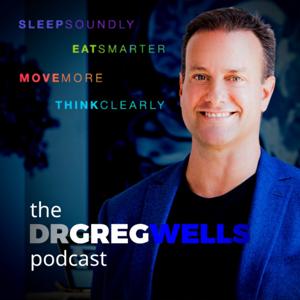
Healthy High Performance for a Limitless Life
You can get healthier, improve your wellness, and live a limitless life and physiologist Dr. Greg Wells would love to be your trusted guide on that adventure.
Dr. Greg is one of the rare scientists who can take research and make it understandable so that you can have a clear path to achieving your goals.
In every episode, Dr. Greg and his expert guests will explain the science of how your body and brain work in a way that you can understand so you that you can get healthy, perform better, and live a limitless life.

90,991 Listeners

9,620 Listeners

11,782 Listeners

10,714 Listeners
12,708 Listeners

3,457 Listeners

19,271 Listeners