
Sign up to save your podcasts
Or



Based on Podcast App listening data
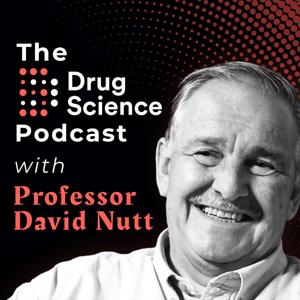
Join us in this episode of the Drug Science Podcast as Prof David Nutt speaks with Liam Hackett MBE, founder of the HALI Foundation. Liam details his early charitable work as the founder of Ditch the Label, and how this work gave him the skills necessary for dedicating himself to psychedelic advocacy many years later. He describes some of his early experiences with psychedelics and how they have transformed him personally, as well as shaped his beliefs on drug use. Throughout the conversation, David and Liam tackle pressing subjects in the field, including indigenous reciprocity and childhood harm reduction.
Links
● Ditch the Label
● HALI Foundation
● Psilocybin
● Ayahuasca
● World Ayahuasca Forum
● Know Before You Go Game
Join us in this episode of the Drug Science Podcast, where Prof Jo Neil speaks with Dr Maria Balaet, a computational neuroscientist based at King’s College London. She speaks on her research into cognition, highlighting her Great British Intelligence Test project and its longitudinal findings with regards to drug use. Maria explains the relationship between mental health and drug use during the pandemic, laying out her own interpretations of the data. She goes on to discuss her growing research focus on psychedelics and how the unmedicated childbirth experience may mimic the psychedelic experience in profound ways.
Links
● Dr Maria Balaet
● Great British Intelligence Test
● Recreational Drug Use During the Pandemic
● Recreational Drug Use and Mental Health
● MDMA
● Psilocybin
Join Prof David Nutt and Prof Rod Flower for a captivating journey into the history of pharmacology.
Rod is emeritus professor of biochemical pharmacology at Queen Mary University of London and co-author of Rang and Dale's Pharmacology, the textbook that has shaped the understanding of generations of medical and science students. His work was pivotal in advancing the knowledge of anti-inflammatory treatments, and his new book, Drugs: The Story of Pharmacology, looks back at the discoveries that built the foundations of modern medicine.
He recounts how a misread job advert landed him in Sir John Vane's lab, and traces his path from smoking chymograph traces to co-founding the William Harvey Research Institute at Queen Mary. The conversation covers the ethics of self-experimentation in the early days of drug development, the lineage of plant medicines from ancient civilisations to the everyday drugs in your medicine cabinet, the separate mechanisms behind aspirin and salicylic acid, and the discovery of curare and how it shaped our understanding of receptors. Rod also shares his views on the value of genetic understanding to the development of treatments, and why the Human Genome Project's early promises to pharmacology fell short.
Trigger Warning: This episode contains discussions of childhood sexual abuse, trauma, suicidal thoughts, and mental health challenges. Listener discretion is advised.
In this episode, Prof Jo Neill speaks with Wendi Rees, the critically acclaimed author of A Christian's Guide to Psychedelics. Wendi reflects on growing up as a preacher's kid under a strict set of household rules, and shares how surviving abuse from her father shaped her lifelong mission to protect children from similar harm.
She traces her path from full sobriety to healing using psilocybin, MDMA and intramuscular ketamine, before an even bigger breakthrough came with ibogaine, an experience that brought a profound sense of God's presence and support. Wendi now leads ibogaine retreats for Christians seeking emotional healing, and closes the conversation by exploring why acceptance of psychedelics remains so difficult within Christian communities.
If you or someone you know is struggling with any of these issues, support is available:
Support for survivors of childhood abuse
Support for suicidality
Links
● Journey to the Father’s heart
● Wendi Rees
● A Christian's Guide to Psychedelics
● Psilocybin
● Ketamine
● MDMA
● Ibogaine
● 22:2 Retreat
In this episode, we speak with Dr Dixon Chibanda, a psychiatrist and professor at the London School of Hygiene and Tropical Medicine. He shares how losing a patient to suicide drove him towards community-based mental health care in Zimbabwe. Chibanda discusses the Friendship Bench, a model he built around grandmothers as custodians of local culture, and how listening and storytelling became its foundation. He explores how the approach was proven through research, its expansion across the world, and why he sees grandmothers, who also gain from the intergenerational connection, as the gold standard for this kind of care.
Links
Dr Dixon Chibanda
The Friendship Bench
Friendship Bench in a Box
The Friendship Bench Book
In this episode of the Drug Science Podcast, Dr Hannah Thurgur speaks with Dr Justin Garson, professor of philosophy at CUNY and the author of The Madness Pill, a history of Professor Solomon Snyder and the biological understanding of schizophrenia. He outlines the significant shift to biological paradigms of mental health treatment in the 80s and its ramifications for psychiatry decades later. He dives into the role of different drugs, including psychedelics and amphetamines, in crafting a more informed understanding of schizophrenia and psychosis, before explaining the faults he sees within the field of psychiatry.
Links
● Justin Garson
● The Madness Pill
● Aeon Article
● Amphetamine
● LSD
Join us in this episode as Prof Nutt speaks with Dr Andy Barker, a senior psychiatrist, medical cannabis prescriber, and the co-founder of This Native Mind. Andy shares his journey into medical cannabis, detailing the regulatory process for prescribers entering the field. He goes on to discuss the outcomes he’s seen in his own patients, contrasted against backlash from GPs, non-patients, and the broader scientific community. He closes by talking about the psychedelic effects of high-dose cannabis, highlighting the role of set and setting in promoting positive cannabis experiences.
Links
In this episode, we speak with Sarah Tilley, a couple’s therapy pioneer and the CEO and founder of Beautiful Space, a provider of psilocybin programmes for couples. She details how her own divorce led her to this work, emphasizing that issues between couples become emotionally taxing on their children, manifesting in poor mental health and wellbeing. Sarah discusses how she has seen psilocybin, in conjuction with mindfulness and intentional couples’ exercises, rekindle lost connection and intimacy. She goes on to explore the typical outcomes couples experience after her programmes and why she prefers psilocybin over MDMA for this work.
Links
● Beautiful Space
● Psilocybin
● MDMA
● Este Perel
In this episode of the Drug Science Podcast, Prof Nutt speaks with David Hillier, a journalist and the creator of the Substack WHAT ARE YOU ON. David Hillier has been writing about drug culture and mental health for 12 years and shares his journey into the drugs and harm reduction space, describing how a feature he wrote on The Loop cemented the topic as a broader journalistic focus. The conversation largely revolves around cocoethylene, the metabolite produced by co-ingestion of cocaine and alcohol, and its potential role in a number of cocaine-related deaths that may have been misattributed. David explores his research and other organization’s work to raise awareness of cocaethylene and its harms, and to push for it to become a more substantive focus of scientific research.
Links
● WHAT ARE YOU ON
● Alcohol
● Cocaine
● Co-Alc Alliance
● Co-Ingestion Mortality Study
● Should Young People Drink More
● Students, Alcohol and Drugs Survey 2024-25
In this episode, we speak to Prof Matthew Cobb, professor of zoology at the University of Manchester and author of Crick: A Mind in Motion, which profiles Francis Crick. Matthew shares insights into his own academic background in neurobiology and evolution, explaining the motivation behind his latest book. He delves into the collaborative approaches that fueled Crick's work and explains the complex dynamics between Crick, James Watson, and Rosalind Franklin during their pursuit of the double helix structure. Finally, Matthew touches on Crick’s cannabis and psychedelic use.
Links
● Prof Matt Cob
● Crick: A Mind in Motion
● What and how do maggots smell?
● The Double Helix
● Beatles Letter
● Mescaline Poem
From the publisher's feed

1,945 Listeners

1,177 Listeners

417 Listeners

233 Listeners
310 Listeners
228 Listeners
683 Listeners
66 Listeners
1,798 Listeners
0 Listeners
12 Listeners
0 Listeners
57 Listeners
6 Listeners
0 Listeners

3,062 Listeners
368 Listeners

29 Listeners
2 Listeners
657 Listeners
3 Listeners