
Sign up to save your podcasts
Or

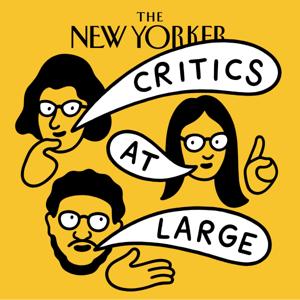

The first person is a narrative style as old as storytelling itself—one that, at its best, allows us to experience the world through another person’s eyes. On this episode of Critics at Large, Vinson Cunningham, Naomi Fry, and Alexandra Schwartz trace how the technique has been used across mediums throughout history. They discuss the ways in which fiction writers have played with the unstable triangulation between author, reader, and narrator, as in Vladimir Nabokov’s “Lolita” and Bret Easton Ellis’s “American Psycho,” a book that adopts the perspective of a serial killer, and whose publication provoked public outcry. RaMell Ross’s “Nickel Boys”—an adaptation of Colson Whitehead’s 2019 novel—is a bold new attempt to deploy the first person onscreen. The film points to a larger question about the bounds of narrative, and of selfhood: Can we ever truly occupy someone else’s point of view? “The answer, in large part, is no,” Cunningham says. “But that impossibility is, for me, the actual promise: not the promise of a final mind meld but a confrontation, a negotiation with the fact that our perspectives really are our own.”
Read, watch, and listen with the critics:
“Nickel Boys” (2024)
“The Nickel Boys,” by Colson Whitehead
“Lolita,” by Vladimir Nabokov
“Meet the Director Who Reinvented the Act of Seeing,” by Salamishah Tillet (The New York Times)
“Great Books Don’t Make Great Films, but ‘Nickel Boys’ Is a Glorious Exception,” by Richard Brody (The New Yorker)
“Lady in the Lake” (1947)
“Dark Passage” (1947)
“Enter the Void” (2010)
“The Blair Witch Project” (1999)
Doom (1993)
“The Berlin Stories,” by Christopher Isherwood
“American Psycho,” by Bret Easton Ellis
“The Adventures of Augie March,” by Saul Bellow
“Why Did I Stop Loving My Cat When I Had a Baby?” by Anonymous (The Cut)
“Harmony and Dissonance: Orphism in Paris, 1910-1930” at the Guggenheim Museum
New episodes drop every Thursday. Follow Critics at Large wherever you get your podcasts.
 View all episodes
 By The New Yorker

4.4
575575 ratings
The first person is a narrative style as old as storytelling itself—one that, at its best, allows us to experience the world through another person’s eyes. On this episode of Critics at Large, Vinson Cunningham, Naomi Fry, and Alexandra Schwartz trace how the technique has been used across mediums throughout history. They discuss the ways in which fiction writers have played with the unstable triangulation between author, reader, and narrator, as in Vladimir Nabokov’s “Lolita” and Bret Easton Ellis’s “American Psycho,” a book that adopts the perspective of a serial killer, and whose publication provoked public outcry. RaMell Ross’s “Nickel Boys”—an adaptation of Colson Whitehead’s 2019 novel—is a bold new attempt to deploy the first person onscreen. The film points to a larger question about the bounds of narrative, and of selfhood: Can we ever truly occupy someone else’s point of view? “The answer, in large part, is no,” Cunningham says. “But that impossibility is, for me, the actual promise: not the promise of a final mind meld but a confrontation, a negotiation with the fact that our perspectives really are our own.”
Read, watch, and listen with the critics:
“Nickel Boys” (2024)
“The Nickel Boys,” by Colson Whitehead
“Lolita,” by Vladimir Nabokov
“Meet the Director Who Reinvented the Act of Seeing,” by Salamishah Tillet (The New York Times)
“Great Books Don’t Make Great Films, but ‘Nickel Boys’ Is a Glorious Exception,” by Richard Brody (The New Yorker)
“Lady in the Lake” (1947)
“Dark Passage” (1947)
“Enter the Void” (2010)
“The Blair Witch Project” (1999)
Doom (1993)
“The Berlin Stories,” by Christopher Isherwood
“American Psycho,” by Bret Easton Ellis
“The Adventures of Augie March,” by Saul Bellow
“Why Did I Stop Loving My Cat When I Had a Baby?” by Anonymous (The Cut)
“Harmony and Dissonance: Orphism in Paris, 1910-1930” at the Guggenheim Museum
New episodes drop every Thursday. Follow Critics at Large wherever you get your podcasts.
38,504 Listeners

6,755 Listeners
11,560 Listeners

3,365 Listeners
3,984 Listeners

520 Listeners
9,196 Listeners
4,044 Listeners
1,491 Listeners
2,129 Listeners
28,201 Listeners
1,444 Listeners
796 Listeners
444 Listeners

16,010 Listeners
1,565 Listeners