
Sign up to save your podcasts
Or



Today’s episode is sharing thoughts and tips on how to grade English learners. You will hear the difference between grading and assessing, what makes teaching English learners equitable, and the differences between equality and fairness.
Grading an English learner can be an adjustment. It should be flexible and not a rigid formula. It is also essential your assessments match the learning to help provide more accurate measurement of the student’s learning.
Some key points are: content must be made accessible to English learners before assessments , and students can’t be penalized due to the fact they are learning English and not making the same progress as their peers.
What you will hear about in this episode:
Related Episodes:
Resources:
Connect with Me:
Support the show
Math teachers often express that they teach math…not language or how to read. Or even that math is universal. If this sounds familiar, then this episode is going to be for you. Students learn each subject through language.
This episode will cover teaching math to ESL students. I will be sharing 4 math specific tips that can be easily implemented and will allow you to understand how to help your English learners. Your newcomer could be a math wiz, but without the basic language skills, you might never know.
No matter what subject area you teach, having an EL newcomer in your class can be one of the most rewarding experiences.
What you will hear about in this episode:
Resources Mentioned:
Related Episodes:
Connect with Me:
Support the show
We all know that new students start school not only in August or September, but anytime of year.
Often I get asked by general education teachers how to help a new English learner, so I have decided to record a series of episodes specifically for general education teachers. They will help you make meaningful connections with your multilingual students, as well as give you some simple steps to help them be successful, even when it seems like they don’t understand.
I’ll help you feel prepared to welcome your new student, confident you’ll help them succeed, and excited to help them take on this new adventure.
Having an English learner newcomer in your class can be one of the most rewarding experiences in education.
What you will hear about in this episode:
Related Episodes:
Episode 35 - What are ILPs and what to include in them
Resources Mentioned:
Connect with Me:
Support the show
This month we have been talking about how Spring can be a difficult season for teachers energy wise, and changes that teachers either need or want to implement. Today’s guest, Jamie Sears, will help inspire and reinvigorate your love for teaching.
Jamie and I have a heart-to-heart conversation about building relationships, having fun, setting boundaries, lesson planning and really simple, practical and actionable tips of how to work less, be happier, and make an impact you were born to make.
What you will hear about in this episode:
Previous Episodes:
Episode 57 - How to nail your ESL Teacher interview (resume and cover letter tips) part 1
Episode 58 - 3 teacher interview tips to help you get the job Part 2
Episode 59 - How tutoring can be the secret sauce you need with Molly Wheatley
Resources Mentioned:
Connect with Jamie Sears:
Connect with Ieva:
Support the show
In this episode I was able to talk to Molly Wheatly about starting a tutoring business, and how she went from being a teacher to now coaching teachers on how to grow their own tutoring business.
Sometimes when we need a drastic change, we can benefit from taking a step back and look at the parts of our current situation that are missing. Just asking ourselves a few questions such as: what we love about our job, what we wish we could change, what would make me feel like I’m making a difference, or even how we could make more money, are all pretty good indicators of where we need to go next.
A lot of teachers have different side interests that help us make a more positive impact (and of course more money). Some of these are: photography, Etsy shops, copywriting, blogging, selling teacher resources, but one of the most natural side jobs could be tutoring.
Starting a tutoring business allowed Molly to love teaching again where she currently teaches 5th grade. Having her full-time tutoring business led her to then help teach other teachers how to do the same.
What you will hear about in this episode:
Related Episodes:
Episode 57 - How to nail your ESL Teacher interview (resume and cover letter tips) part 1
Episode 58 - 3 teacher interview tips to help you get the job Part 2
Resources Mentioned:
Connect with Molly Wheatley:
Connect with Ieva:
Support the show
Sometimes we find ourselves desperate for a teacher contract in a new district, but facing unknown territory as an ESL teacher, you must navigate the stressful interview process and bet on yourself to achieve your goal of finding the perfect job.
After many attempts at trying to find a new position for myself, years ago, I picked up some tips along the way. I learned about preparing for an ESL teacher interview.
This is part two of an interview series. If you missed part one on the resume and cover letter, visit the link for episode 57 of The ESL Teaching Podcast.
There are three main tips for nailing the interview, which are: being prepared, being yourself, and asking questions.
In this episode, you will learn the following:
1. What tips can help you nail your ESL Teacher interview?
2. How can you use connections and 'bet on yourself' to get an interview?
3. What questions can you ask in an ESL Teacher interview to gain insight into the program?
Related Episodes:
Episode 57 - How to nail your ESL Teacher Interview part 1
Resources Mentioned:
The ESL Teaching Roadmap – membership community for middle and high school ESL/ELL teachers. As a thank you for listening, use code ESLPODCAST for 10% off when you join.
Simply Ieva ESL Teachers Pay Teachers Store
Episode 16 - A new EL teacher’s perspective with Kennedy Merriam
Connect with Ieva:
Follow me on Instagram
Visit my website
Join the Simply Ieva Facebook Group
Support the show
It seems like every year there are only two speeds within a school year: rushing to get everything covered up to the ACCESS testing, and trying to catch up and make it to the end of the school year. Sometimes it feels like we have no control over what is going on.
To change the pace, I want to do a series of episodes that will allow you to take a look at how you can invigorate your life and career. That might mean taking up a hobby, starting a side passion, and other times you might be ready for a more radical change such as moving to another district or getting another job to preserve your sanity.
This is the time of year to make those decisions for next year. Looking for another position brings you to updating your resume and cover letter, looking through job postings, and wondering what questions you may get asked during an interview if you get one.
I want to share the practical tips to get you noticed during the interview process and where to look for job postings (and it’s not just the district website).
For this episode, I will cover the first part of your new job search: the resume and cover letter.
What you will hear about in this episode:
Resources:
Connect with Me:
Support the show
Valentina Gonzalez is a former teacher who has served 20 plus years in her own classroom, a district facilitator for English Learners, a professional development leader, and an educational consultant. Her work has been focused on literacy, culture, and language. She still delivers professional development for EL education and is an accomplished author.
She explains how many schools send the wrong message to EL students when they put their classrooms in outdoor portables, storage closets, and other less than desirable spaces. Students feel when they are consistently getting the short end of the stick. It is important that teachers speak up to their administration to make sure ESL classes and students are not overlooked.
It is crucial to make sure we are getting to know students and how they read. One great way to do this is to listen to them read in their native language. This helps students feel seen and heard. I can gather a lot of information about how comfortably they are reading even if I don’t understand the language. As you listen, you want to identify what they can do and use that as a starting off point for what to work on next.
In every lesson in every classroom, students should be practicing all four domains - reading, writing, listening, and speaking. Valentina explains that she does not have a favorite domain, but says that speaking is really great for many of our ELs because speaking will lead to good listening, reading, and writing. She describes how we all learn our first language by listening and speaking and then learn to read and write later. You cannot read and write if we cannot listen or speak.
In today's episode:
Resources
Valentina’s resources:
Support the show
We spend so long preparing for testing and getting testing completed, but what do we do once the testing season is over? Getting back into the swing of things after weeks and weeks of testing can be really tough. In today’s episode, I share some tips with you for how to get back on track after ACCESS testing.
What you will hear about in today’s coaching session:
Resources
Support the show
In today’s episode, we continue our coaching session from last week and discuss reading, writing, and phonics with ELs. For teaching literature, like Romeo and Juliet, it can be helpful to let students read in their native language first to let them access the content. You can also pre-teach vocabulary, or summarize chunks of the story and focus on key parts of the story, the balcony scene in Romeo and Juliet, for example.
We also discuss using novel studies to keep kids interested and engaged. I share a few of my favorite novels to teach this way. Remember that even when students are from the same country and speak the same language, their personal interests can be very different. You will never find a book that perfectly suits every students’ interest, but if even 50 percent of your class is engaged, you’ve won half the battle.
One of my favorite ways to keep kids engaged is through short stories and short films. I share some lesson resources I have for teaching literary elements with short stories and short films.
Next in the coaching session, we talk about writing. It can be tough to find good resources to teach writing to older EL students, so many teachers often end up finding resources from teacher pay teachers. I also recommend mini lessons in grammar and phonics lessons like consonant vowel consonant or silent e. There is also a phonics program from Saddleback that I use. It was too hard for beginners, but is great for level 2 and 3 students. Ultimately, the only way to improve writing is to write, so Incorporate writing into every unit in some form, even if it is journaling.
What you will hear about in today’s coaching session:
Resources
Affiliate Links
Support the show
From the publisher's feed
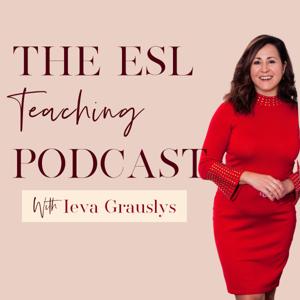
Welcome to The ESL Teaching Podcast, a place for K-12 teachers of English learners who are looking for simple and easy-to-implement ways to engage their students and for inspiration and empowerment…
2,549 Listeners

1,826 Listeners

1,040 Listeners

559 Listeners

178 Listeners

640 Listeners

26 Listeners
114 Listeners

27 Listeners