
Sign up to save your podcasts
Or



In this episode, I attempt to explain my perspective on the immigrant experience. I have struggled with how to explain this all my life. I share the complex feelings that come up when I visit my home in Lithuania. It feels impossible to explain my life as an immigrant in the United States to people in Lithuania and it feels impossible to explain life in Lithuania to people in the US. There are so many cultural differences that it is difficult for people to understand.
My experience helps me understand my students’ immigrant perspective to an extent, but each story is so different. People immigrate to the United States for a variety of reasons and we cannot assume we know what they have been through. Immigrant students often have difficulty connecting with American youth because of these drastically different life experiences.
Thinking about the perspective of an immigrant reminds me of one of my favorite quotes from Atticus Finch, “You never really understand a person until you consider things from his point of view—until you climb into his skin and walk around in it”
There are a few books I recommend for anyone trying to shift their perspective about the immigrant experiences:
What you will hear about an Immigrant's perspective:
Resources
As mentioned in the episode, I am linking some useful resources!
You may also be interested in:
Support the show
In this episode, I talk with Susan Patterson to answer five of the most popular questions I get from my awesome community about multilingual learners. Susan is a district multilingual ELD teacher on special assignment. She develops professional learning for best practices in multilingual classrooms and supports ELD coaches. She also has her own blog and creates materials for High School Multilingual teachers.
We start by discussing a question about learning materials for multilingual learners that focus on the language domain of listening. Then, we share some of our favorite ELL books and websites for levels 1, 2, and 3 with a special focus on high interest materials to share with students at their levels.
One of our questions was about how to make a schedule for small group instruction of our multilingual learners. We each discuss the important factors to consider when creating a schedule whether you are in elementary, middle, or high school.
We give our advice for preparing for an ELL teacher interview, including what questions to ask and what questions you may want to be prepared to answer. Finally, we share some of our favorite resources and tips for classroom decor.
What you will hear about in today’s episode:
Got a question - click here to let us know and you might hear it on the podcast!
Resources
You may also be interested in:
Support the show
In this episode, I talk with Carly Spina about her experience as a teacher and her book Moving Beyond for Multilingual Learners. I have followed Carly for years and have used her resources in my classes, so I know you’ll love them too.
Carly shares about her experiences growing up in a linguistically diverse neighborhood in Chicago. She went on to learn Spanish, but is quick to acknowledge that she learned a new language out of privilege, not out of necessity to learn. While she has a passion for working with elementary school students, she now works with multilingual learners and teachers from early childhood to high school. No matter the grade level, she believes she works with the best students and best families in the school.
We compare our experiences teaching in closet-like classrooms and our favorite lessons and student stories. The, we discuss the cultural change that needs to happen to change the acronyms used to refer to multi language learners, who are often reduced to letters like LEP, ELL, and ELs. These acronyms start with something the students don’t have as compared to labels like “gifted and talented” which are almost never reduced to letters.
She goes on to share her frustration around lessons that seem to treat multilingual learners as afterthoughts, only referred to in a gray box at the bottom of the lesson page. Language has to be at the forefront of every lesson plan, not a “tweak” at the end. Carly describes how she leans into student interests and get them learning and creating. So many students, she says, want to be content creators, which is the highest level of rigor and uses all 4 language domains, so why not?
What you will hear about Language and Inclusion for Multilingual Learners
Resources
As mentioned in the episode, I am linking some useful resources!
You may also be interested in:
Support the show
In this episode, I build upon the tips I shared in episode 39 on how to set up your speaking lesson by sharing several speaking activities my students love. I share all about picture prompts for speaking, projects that will help your students take ownership of their learning, and of course, games! These are also great for mixed proficiency classes.
Speaking is so connected with listening and writing. While listening is a receptive skill, which is absolutely necessary in order to navigate school and life, speaking and writing are the productive aspects of language. They are also much more difficult to master because one needs to retrieve the information they already have and present it to the listener or reader in a way they can understand. Lots of students know English grammar, but feel like they can’t speak it because the rules of grammar are easy to memorize using worksheets. This is not the same as speaking.
In order to succeed with speaking activities, students need vocabulary, knowledge of how to put those words into sentences, basic grammar, and knowledge to apply. Picture prompts incorporate all of this. You can show pictures of familiar things like hobbies and ask questions like what do you see in the picture? Or what is the person doing? Students will begin with one word answers and eventually work toward full conversations.
The next speaking activity is Projects, which are great because they incorporate all other language domains (reading, writing, and listening). They allow students to go in depth on a topic and can give them an opportunity to practice for projects in other classes. Make sure to set parameters for what you expect from students in terms of format, structure, etc.
There are also several games you can play with students to practice vocabulary and speaking. Listen to the episode to hear about the specific games I like to use with my students.
What you will hear about speaking activities for your English Learners
Resources
As mentioned in the episode, I am linking some useful resources!
You may also be interested in:
Support the show
In this episode, I share what I have learned about how to teach speaking to English Learners. Speaking is part of our students’ everyday lives because they are learning in an English Speaking Environment. Because of this, it is easy to overlook the importance of more structured speaking opportunities. Speaking is also a very personal thing and is intimidating even for native speakers.
There are six components of teaching speaking that I like to incorporate into my lessons.
Listen to the episode for more specific ideas on each of these components of teaching speaking.
Would you add anything to these tips? What do you find works well when teaching speaking?
What you will hear about teaching speaking to English Learners
Resources
As mentioned in the episode, I am linking some useful resources!
You may also be interested in:
Support the show
In this episode, I interview my friend and colleague, Hillary Woods. She shares her perspective on the responsive classroom method and teaching with English Learners in mind after 16 years of experience teaching 4th - 8th grade students.
Hilary discusses the value of connecting with students and getting to know them whether they are English Learners or not. This process starts at the beginning of the school year in her classroom, and continues in various ways throughout the year.
Through her use of the responsive classroom method, she describes the routines and procedures she introduces from the start to create a student centered learning environment. Her goal is to create a safe, joyful, engaging, and predictable classroom where students feel comfortable and engaged while learning the required academics.
We also discuss Hilary’s planning style. She likes to stay ahead, but not too far ahead in order to be prepared, but allow flexibility to respond to student needs. She highlights two questions she always asks herself while planning.
One of the specific lessons she shares about is an Emoji paragraph, including guiding questions that support students to practice writing in a low-risk, fun way.
Hilary believes success in a responsive classroom looks like students engaged and participating, students conversing with each other and having all of the materials ready. One key to this is teachers having partnerships set up at the beginning - students need to know exactly who they are supposed to converse with at any point so they feel included in the classroom.
What you will hear about Responsive Classroom and planning for ELs.
Resources
As mentioned in the episode, I am linking some useful resources!
You may also be interested in:
Support the show
In episode 37, we continue with the topic of mixed proficiency classrooms. Last week I talked about setting up your mixed proficiency class for success. Today i will discuss some of the activities that have worked well in these types of classes for me.All students need to work on vocabulary development and all four language domains. So, what activities work well for Mixed Proficiency classes? I will share 3 of my favorites.
First is choice boards. Choice boards ask students to answer questions or complete activities, but students get to choose a determined number of the options to work on in the order they choose. My choice boards usually have fewer activities, usually 5, and students get to choose any 4. Choice Boards in my mixed proficiency class are focused on Vocabulary, Writing,
The next activity I love for a mixed proficiency class is a simple “Do Now” question or task for students to do as soon as they walk in. These questions are a low risk way to get all students engaged and set the tone for my ESL class as a place where work gets done right away. Often, my Do Now questions will involve the Habits of Mind, which are on a poster in my classroom for students to reference.
Finally, I share about projects. When asked what they want to improve on over the year, my mixed proficiency students said they wanted to work on their speaking and presentations. Incorporating projects into my class allows students to work toward that goal while practicing with their groups in all 4 language domains.
What you will hear about activities for your mixed proficiency class:
Resources
As mentioned in the episode, I am linking some useful resources!
You may also be interested in:
Support the show
In this episode, we talk about a very popular topic - setting up a mixed proficiency class. Mixed proficiency or mixed level classes are challenging to take on, so today I will share some of the strategies I use and some that I am planning to implement for the first time.
First, I take a look at what my students need by looking at their WIDA access scores and some some informal data that I gather using a basic checklist I describe in further detail in the episode. I think about how those test scores translate to your students’ ability to access information in their content classes.
Next, I think of the routines that I need to set up in my mixed proficiency classroom. Routines are what help students know exactly what is expected of them at various points in my class. The more students in a class, the more essential it is to have clear, consistent routines for things like going to the bathroom, turning in assignments, and how to engage in independent and station work.
I also share a few tried and true tips for planning activities for students at mixed proficiencies. I discuss how to choose a focus, like vocabulary, for portions of a lesson, even if students are working at different levels. You will hear about different ideas for grouping students intentionally and resources I utilize for students to work independently while I work directly with a student.
Which of these 3 things that will help you to set up your classroom for success are you going to utilize first?
If you work with mixed levels, how do you set up your classroom for success?
What you will hear about setting up your mixed proficiency class
Resources
As mentioned in the episode, I am linking some useful resources!
Support the show
What are ILPs? The letters ILP stand for Individualized Learner Plan, I like to think of them as Personalized Learner Profiles and in today’s episode I share what I include in ILPs for my English Learners and how I have adapted them to fit the needs of the teachers and students in my school. The point of these documents is to support communication between a general educator and an ELL specialist and to create a plan that outlines a success path for our English Learners
In special education, IEPs or Individualized Education Programs are lengthy documents that include info about students' educational and personal history and outline goals for the upcoming year and how they will be achieved for students with disabilities. ILPs are similar plans designed for students who are English Learners. ILPs usually include things like student information, a student’s educational and cultural background, “can do” statements, and recommended accommodations for class and testing.
There are sophisticated platforms your school or district can invest in to manage and gather data for ILPs. If your school does not have a budget or need for a platform like this you can manage all of the data you need using a google spreadsheet like I do.
Listen to the episode to learn more about each of these topics and how I simplify what I include in my ILPs to be useful for general education teachers.
What you will hear ILPs and what to include in them.
Resources
As mentioned in the episode, I am linking some useful resources!
Support the show
Affirmations are a great way for anyone to combat negative self talk and our English learners are no exception. The teenagers I work with often struggle with thoughts that their English is not good enough and are hesitant to participate in conversations because of their low confidence. This is why the topic of today’s episode is affirmations to use with our English learners.
Young people feel pressure to do well in school and fall into the trap of comparing themselves to others. I like to remind my students that it takes time to learn a language and it is okay not to have it all figured out yet, that it takes time to adjust to a new culture, and that what others are doing is none of your business. There is a formula of thinking that I teach them to use - be, do, have. This can be used to formulate questions: What do I need to be and what do I need to do to have what I want?
I also share 10 of my favorite affirmations to use with my students and how to get the most out of them. I have found that not all affirmations work in all situations and the way they are used can really make a big difference.
What you will hear about using affirmations with your English Learners
Resources
As mentioned in the episode, I am linking some useful resources!
You may also be interested in:
Support the show
From the publisher's feed
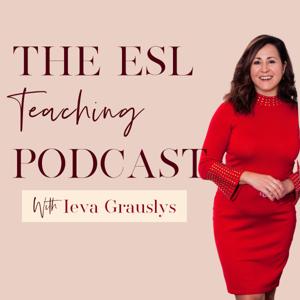
Welcome to The ESL Teaching Podcast, a place for K-12 teachers of English learners who are looking for simple and easy-to-implement ways to engage their students and for inspiration and empowerment…
2,549 Listeners

1,826 Listeners

1,040 Listeners

559 Listeners

178 Listeners
640 Listeners

26 Listeners
114 Listeners

27 Listeners