
Sign up to save your podcasts
Or



Based on Podcast App listening data
Recently, MITRE and the Cybersecurity and Infrastructure Security Agency (CISA) released the Open-Sourced Extension of MITRE's Caldera platform, specifically for operational technology. This is meant to be utilized by security teams to run automated adversary emulation exercises that are specifically focused on threats to operational technology. Federal Drive Executive Producer Eric White got the chance to speak with two of the people who helped build it: Alex Reniers, Chief of the Industrial Controls Systems section within CISA's Cybersecurity Division and John Wunder, the Department Manager of CTI and Adversary Emulation for the MITRE Corporation.
Learn more about your ad choices. Visit podcastchoices.com/adchoices
See Privacy Policy at https://art19.com/privacy and California Privacy Notice at https://art19.com/privacy#do-not-sell-my-info.
Let's face it, the IRS is not necessarily the most popular agency. But while most just grouse about having to deal with it, some take it to an even more harmful level, by making and acting on threats of physically harming IRS agents. So what processes are in place for agents to report these people? A recent audit by the Treasury Inspector General for Tax Administration (TIGTA), looked to answer that question. To learn what it found, Federal Drive Executive Producer Eric White spoke with Kent Sagara, who is the Acting Manager of TIGTA's Office of Inspections and Evaluations.
Learn more about your ad choices. Visit podcastchoices.com/adchoices
See Privacy Policy at https://art19.com/privacy and California Privacy Notice at https://art19.com/privacy#do-not-sell-my-info.
On today's episode of the Federal Drive with Tom Temin:
Learn more about your ad choices. Visit podcastchoices.com/adchoices
See Privacy Policy at https://art19.com/privacy and California Privacy Notice at https://art19.com/privacy#do-not-sell-my-info.
The Cybersecurity and Infrastructure Security Agency is preparing to furlough more than 80% of its workforce under a government shutdown, potentially leaving the lead U.S. cyber agency with a skeleton crew to initially respond to attacks on the networks of federal agencies and critical infrastructure.
The Department of Homeland Security’s plan for a “lapse in appropriations,” updated today, shows CISA estimates it would retain 571 employees out of the 3,117 it had onboard as of mid-June. Those “excepted” staff would be required to work during a government shutdown, while the rest would be furloughed.
Unless Congress acts in the coming days, funding for DHS and most other agencies expires at 12:01 a.m. Sunday, shutting down the government.
Learn more about your ad choices. Visit podcastchoices.com/adchoices
See Privacy Policy at https://art19.com/privacy and California Privacy Notice at https://art19.com/privacy#do-not-sell-my-info.
On today's episode of the Federal Drive with Tom Temin:
Learn more about your ad choices. Visit podcastchoices.com/adchoices
See Privacy Policy at https://art19.com/privacy and California Privacy Notice at https://art19.com/privacy#do-not-sell-my-info.
For more on this discussion visit https://federalnewsnetwork.com/federaldrive
It didn't last very long, but scientists at the National Nuclear Security Administration (NNSA) did run a test that resulted in nuclear fusion late last year. Fusion means the reaction put out more energy than the input to produce it. The proof of concept got lots of acclaim. And it produced finalists in the Service to America Medals program. Federal Drive Host Tom Temin spoke with those Sammies finalists: Dr. Sarah Nelson, Director of NNSA's Defense Programs Office and Dr. Samantha Calkins, Program Manager for High Density and Ignition Science.
Learn more about your ad choices. Visit podcastchoices.com/adchoices
See Privacy Policy at https://art19.com/privacy and California Privacy Notice at https://art19.com/privacy#do-not-sell-my-info.
How often have you heard it said: The census count determines how much federal money a state, county or city will get. Data analysis by the Project on Government Oversight (POGO) shows that supposition is not quite as simple as it sounds. For more, Federal Drive Host Tom Temin spoke with POGO senior policy analyst Sean Moulton.
Learn more about your ad choices. Visit podcastchoices.com/adchoices
See Privacy Policy at https://art19.com/privacy and California Privacy Notice at https://art19.com/privacy#do-not-sell-my-info.
With a potential shutdown on the horizon, the Centers for Medicaid and Medicare Services already has its hands full trying to decipher who no longer qualifies for Medicaid coverage now that we're on the other side of the COVID-19 pandemic. The process has already been hampered with a few issues, and a shutdown could make it worse. To find out how, Federal Drive Executive Producer Eric White spoke with Kelly Whitener, who is an Associate Professor of the Practice at the Georgetown University McCourt School of Public Policy’s Center for Children and Families.
Learn more about your ad choices. Visit podcastchoices.com/adchoices
See Privacy Policy at https://art19.com/privacy and California Privacy Notice at https://art19.com/privacy#do-not-sell-my-info.
Congressman Gerry Connolly couldn’t wait any longer for the Republican majority to jump on the FITARA bandwagon.
The Virginia Democrat and ranking member of the House Oversight and Accountability Subcommittee on cybersecurity, IT and innovation handed out grades under the 16th iteration of the Federal IT Acquisition Reform Act (FITARA) scorecard today with agencies earning 3 “As”, 16 “Bs” and 5 “Cs.”
Connolly is holding a FITARA roundtable this afternoon on Capitol Hill featuring testimony from the Government Accountability Office, the General Services Administration, the Social Security Administration and the departments of State, Veterans Affairs and Commerce.
Learn more about your ad choices. Visit podcastchoices.com/adchoices
See Privacy Policy at https://art19.com/privacy and California Privacy Notice at https://art19.com/privacy#do-not-sell-my-info.
Defense officials acknowledged Wednesday that they haven’t done nearly enough to provide decent housing for junior military service members after a scathing audit found widespread health and safety risks in government-owned barracks on military bases.
In site visits, the Government Accountability Office found problems like overflowing sewage, mold and mildew, broken locks and air conditioning systems, and numerous other ways “unaccompanied housing” falls short of DoD’s own housing facility standards.
And despite recognizing the problem, the military services likely don’t understand its full scope — partly because DoD doesn’t have a complete picture of what it’s spending to maintain barracks, and partly because it stopped asking service members what they think of their own living conditions several years ago, said Elizabeth Field, GAO’s director for defense capabilities and management.
Learn more about your ad choices. Visit podcastchoices.com/adchoices
See Privacy Policy at https://art19.com/privacy and California Privacy Notice at https://art19.com/privacy#do-not-sell-my-info.
From the publisher's feed
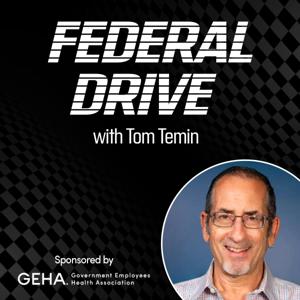
The Federal Drive with Terry Gerton provides expert insights on current events in the federal community.
Ranked by our users in the last 21 days

21,766 Listeners

78,369 Listeners

43,839 Listeners

31,962 Listeners

37,984 Listeners

30,703 Listeners

8,428 Listeners

41 Listeners
8 Listeners
55 Listeners

12,177 Listeners

14,659 Listeners

4,721 Listeners
7 Listeners

9,525 Listeners
0 Listeners

10,265 Listeners
6 Listeners
3 Listeners
4 Listeners
5 Listeners

6,374 Listeners
409 Listeners