
Sign up to save your podcasts
Or



Based on Podcast App listening data
Cybersecurity requirements for defense contractors and cyber incident reporting requirements for critical infrastructure organizations are both nearing critical junctures after years of discussion and development.
The Cybersecurity and Infrastructure Security Agency is “finishing” the notice of proposed rulemaking for the Cyber Incident Reporting for Critical Infrastructure Act of 2022, CISA Director Jen Easterly said during the Billington Cybersecurity Summit in Washington on Wednesday.
“That should be out later this year or early next year,” Easterly said.
Once in effect, the rules will require critical infrastructure entities to report cyber incidents to CISA within 72 hours. It will also require them to report ransomware payments within 24 hours. But first CISA has to go through a complex rulemaking process to define key processes, such as what organizations are required to report cyber incidents and what kind of incidents are covered by the law.
Learn more about your ad choices. Visit podcastchoices.com/adchoices
See Privacy Policy at https://art19.com/privacy and California Privacy Notice at https://art19.com/privacy#do-not-sell-my-info.
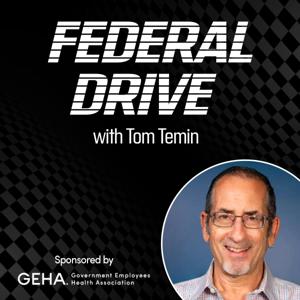
The Cybersecurity Maturity Model Certification program has been in gestation at the Defense Department longer than a baby elephant. CMMC is still not operational, but, boy, has it produced documents. Just out, new scoping documents. Do contractors need to read them? To discuss that topic, Federal Drive Host Tom Temin was joined in studio by Holland and Knight contracting attorney Eric Crucius.
Learn more about your ad choices. Visit podcastchoices.com/adchoices
See Privacy Policy at https://art19.com/privacy and California Privacy Notice at https://art19.com/privacy#do-not-sell-my-info.
The opioid scourge is as much a rural as an urban problem. The Health Resources and Services Administration (HRSA), part of Health and Human Services, has spent five years and hundreds of millions of dollars in grants to rural health services providers to help battle a nearly overwhelming problem. For its work, the HRSA team leading the effort has been named a finalist in the Service to America Medals program. Federal Drive Host Tom Temin spoke with two members in-studio: HRSA's Rural Strategic Initiatives Director, Megan Meacham and Team Lead Sarah O'Donnell. (Deputy director Allison Hutchings is the third member).
Learn more about your ad choices. Visit podcastchoices.com/adchoices
See Privacy Policy at https://art19.com/privacy and California Privacy Notice at https://art19.com/privacy#do-not-sell-my-info.
On today's episode of the Federal Drive with Tom Temin:
Learn more about your ad choices. Visit podcastchoices.com/adchoices
See Privacy Policy at https://art19.com/privacy and California Privacy Notice at https://art19.com/privacy#do-not-sell-my-info.
After the summer break, Congress has a lengthy, hefty to-do list this fall. And without getting a couple of key items across the finish line, there will be some serious implications for federal employees.
The House and Senate Appropriations committees are far from an agreement on agency spending levels for fiscal 2024. The Senate has advanced all 12 of its appropriations bills out of committee with bipartisan support and plans to move at least three spending bills to a floor vote next week. But the spending package is hitting a wall in the House.
That means top of the list for Congress right now, not surprisingly, is to pass some sort of temporary stop-gap bill by Sept. 30 to avoid a government shutdown.
House Speaker Kevin McCarthy (R-Calif.) and Senate Majority Leader Chuck Schumer (D-N.Y.) are in ongoing discussions over a continuing resolution, a common temporary measure used to avoid a shutdown. But it’s a steep hill to climb.
Learn more about your ad choices. Visit podcastchoices.com/adchoices
See Privacy Policy at https://art19.com/privacy and California Privacy Notice at https://art19.com/privacy#do-not-sell-my-info.
The Defense Department will prioritize three areas of concentration to strengthen and speed up its lumbering acquisition process. Instead of trying to reinvent the wheel, it will use the tools it has to operate more effectively.
Radha Iyengar Plumb, deputy undersecretary of Defense for acquisition and sustainment, described what she called the three “buckets” during a Center for Strategic and International Studies online event Wednesday.
“The Department of Defense has made really great progress over the last five to 10 years when it comes to prototyping. And what we’re really focused on now is getting that innovation, those new technologies to produce at scale in the right timeframe,” Plumb said.
Learn more about your ad choices. Visit podcastchoices.com/adchoices
See Privacy Policy at https://art19.com/privacy and California Privacy Notice at https://art19.com/privacy#do-not-sell-my-info.
Federal contractors get plenty of feedback from the government. But outside of protests, the notion of a 360-degree evaluation doesn't exactly operate here, until now, maybe. It is all thanks to a new rule from the Federal Acquisition Regulation Council called, "Acquisition 360," to encourage vendor feedback. To find out what it is all about, Federal Drive Host Tom Temin talked with Centre Law and Consulting Partner Alan Chvotkin.
Learn more about your ad choices. Visit podcastchoices.com/adchoices
See Privacy Policy at https://art19.com/privacy and California Privacy Notice at https://art19.com/privacy#do-not-sell-my-info.
Like it or not, windmills and solar panels won't be sufficient to power the U.S. economy and Americans' way of life. Nuclear power will be part of the mix. The Government Accountability Office (GAO) has found, licensing of advanced reactors, of widely varying sizes, are stuck at the Nuclear Regulatory Commission (NRC). To find out why, Federal Drive Host Tom Temin spoke with GAO's Director of Natural Resources and Environment Issues, Frank Rusco.
Link to GAO REPORT
Learn more about your ad choices. Visit podcastchoices.com/adchoices
See Privacy Policy at https://art19.com/privacy and California Privacy Notice at https://art19.com/privacy#do-not-sell-my-info.
If they say the clothes make the person, can special clothes make the first responder? The Intelligence Advanced Projects Research Activity (IARPA) wants to find out. It has launched a program to create trousers that look ordinary, but can record audio, video, and location data. Will Smart Electrically Powered and Networked Textile Systems, or smarty pants, be in a clothing store near you. Federal Drive Host Tom Temin wondered, so he talked, in studio, with IARPA Program Manager Dr. Dawson Cagle.
Learn more about your ad choices. Visit podcastchoices.com/adchoices
See Privacy Policy at https://art19.com/privacy and California Privacy Notice at https://art19.com/privacy#do-not-sell-my-info.
On today's episode of the Federal Drive with Tom Temin:
Learn more about your ad choices. Visit podcastchoices.com/adchoices
See Privacy Policy at https://art19.com/privacy and California Privacy Notice at https://art19.com/privacy#do-not-sell-my-info.
From the publisher's feed
The Federal Drive with Terry Gerton provides expert insights on current events in the federal community.
Ranked by our users in the last 21 days

21,769 Listeners

78,360 Listeners

43,840 Listeners

31,948 Listeners

37,987 Listeners

30,710 Listeners

8,431 Listeners

41 Listeners
8 Listeners
55 Listeners

12,174 Listeners

14,658 Listeners

4,720 Listeners
7 Listeners

9,523 Listeners

0 Listeners

10,265 Listeners

6 Listeners
3 Listeners
4 Listeners
5 Listeners

6,368 Listeners
409 Listeners