
Sign up to save your podcasts
Or

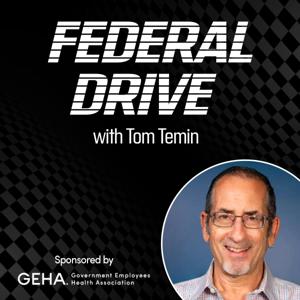


Based on Podcast App listening data
The Supreme Court, in the case of a former mail carrier who declined to work Sundays, is setting a higher standard for employers in and out of government to reject religious accommodations in the workplace. The court, in a unanimous opinion issued Thursday, clarified businesses must grant religious accommodations to workers, unless doing so would result in “substantial increased costs” carrying out the business.
The court’s ruling in Groff v. DeJoy raises the bar from a previous requirement that employers must demonstrate more than “de minimis,” or minor costs to claim a religious accommodation is unreasonable. The Supreme Court made its ruling in the case of Gerald Groff, a former rural letter carrier in Lancaster, Pennsylvania.
Learn more about your ad choices. Visit podcastchoices.com/adchoices
See Privacy Policy at https://art19.com/privacy and California Privacy Notice at https://art19.com/privacy#do-not-sell-my-info.
Learn more about your ad choices. Visit podcastchoices.com/adchoices
See Privacy Policy at https://art19.com/privacy and California Privacy Notice at https://art19.com/privacy#do-not-sell-my-info.
Time-wise, there's not much left of the federal fiscal year. Less then three months now. Money-wise it's a different story. Agencies will spend around $217 billion between now and September 30, more than half by the Defense Department. Contractors, especially small businesses, need to make sure their pipelines are clear, according to federal sales and marketing consultant Larry Allen, who spoke with Federal Drive Host Tom Temin.
Learn more about your ad choices. Visit podcastchoices.com/adchoices
See Privacy Policy at https://art19.com/privacy and California Privacy Notice at https://art19.com/privacy#do-not-sell-my-info.
It's perfectly legal for federal agencies to make grants to foreign entities. Research and scientific good can come of it. But it requires oversight. The Government Accountability Office (GAO) looked at how the Health and Human Services Department, and in particular the National Institutes of Health, overseas foreign grants, or money that went to grant sub-recipients in foreign countries, like China. For more on this, Federal Drive Host Tom Temin spoke with Candice Wright, the GAO's Director for Science, Technology Assessment and Analytics.
Learn more about your ad choices. Visit podcastchoices.com/adchoices
See Privacy Policy at https://art19.com/privacy and California Privacy Notice at https://art19.com/privacy#do-not-sell-my-info.
The Federal Drive with Tom Temin recently brought you an interview with one of this year's Data for Diplomacy awardees from the State Department. The award cited the Bureau of Conflict and Stabilization Operations for its work in a program called the Conflict Observatory. Team lede Susan Wolfinbarger joins Federal Drive Host Tom Temin once again for an update on a new observation post in the deeply troubled Sudan.
Learn more about your ad choices. Visit podcastchoices.com/adchoices
See Privacy Policy at https://art19.com/privacy and California Privacy Notice at https://art19.com/privacy#do-not-sell-my-info.
On today's episode of the Federal Drive with Tom Temin:
Learn more about your ad choices. Visit podcastchoices.com/adchoices
See Privacy Policy at https://art19.com/privacy and California Privacy Notice at https://art19.com/privacy#do-not-sell-my-info.
Learn more about your ad choices. Visit podcastchoices.com/adchoices
See Privacy Policy at https://art19.com/privacy and California Privacy Notice at https://art19.com/privacy#do-not-sell-my-info.
When 13 technology and venture capital leaders wrote an open letter to Secretary of Defense Lloyd Austin on June 26, it was a plea to reform the Defense Department’s acquisition process. The letter lists four items it calls “actionable,” but the realities of acquisition reform may mean the status quo won’t change, at least not quickly.
The letter referenced an interim report published by the Atlantic Council in April that listed ways the Defense Department can immediately modernize acquisition. The letter sent to Austin sought to highlight the importance of those reforms. The final version of the Atlantic Council’s report is due to be completed in November.
Learn more about your ad choices. Visit podcastchoices.com/adchoices
See Privacy Policy at https://art19.com/privacy and California Privacy Notice at https://art19.com/privacy#do-not-sell-my-info.
Budget talks in Congress are in suspended animation this week because of the 4th of July recess. When members return, they will have only three weeks until the August recess. For a recap of the sticking points, Federal Drive Host Tom Temin spoke with WTOP Capitol Hill Correspondent Mitchell Miller.
Learn more about your ad choices. Visit podcastchoices.com/adchoices
See Privacy Policy at https://art19.com/privacy and California Privacy Notice at https://art19.com/privacy#do-not-sell-my-info.
The PACT Act, which became law in 2022, aims to help veterans who were exposed to toxins. Since June 3, it has sparked more than 625,000 new claims. For how the agency is dealing with the caseload, Federal Drive Host Tom Temin spoke with Josh Jacobs, the Department of Veterans Affairs Undersecretary for Benefits.
Learn more about your ad choices. Visit podcastchoices.com/adchoices
See Privacy Policy at https://art19.com/privacy and California Privacy Notice at https://art19.com/privacy#do-not-sell-my-info.
From the publisher's feed
The Federal Drive with Terry Gerton provides expert insights on current events in the federal community.
Ranked by our users in the last 21 days

21,771 Listeners

78,356 Listeners

43,817 Listeners

31,931 Listeners

37,991 Listeners

30,698 Listeners

8,421 Listeners

41 Listeners
8 Listeners
54 Listeners

12,173 Listeners

14,657 Listeners

4,718 Listeners
7 Listeners

9,520 Listeners
0 Listeners

10,261 Listeners
6 Listeners
3 Listeners
4 Listeners
5 Listeners

6,372 Listeners
409 Listeners