
Sign up to save your podcasts
Or

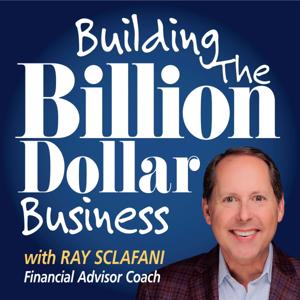

In this episode of Building the Billion Dollar Business, Ray Sclafani explores why New Year’s resolutions fail inside advisory firms and what high-performing advisory teams do differently when designing kickoff meetings. Drawing on behavioral research and real-world coaching experience, Ray explains that the early breakdown of resolutions is not a motivation problem, it is a design problem.
Ray introduces the concept of positive intent, a practical leadership approach that replaces vague resolutions with clear statements of what a team will do, how it will do it, and why it matters. He emphasizes that effective kickoff meetings begin before the meeting itself, with leaders building trust through one-on-one conversations that connect personal goals to professional alignment.
The Five-Part Kickoff Meeting Framework for High-Performing Advisory Teams
Key Takeaways
Questions Financial Advisors Often Ask
Q: Why do New Year’s resolutions fail in advisory firms?
A: Resolutions tend to fail early because they are often vague, reactive, and focused on avoidance rather than progress. According to research referenced in the episode, most resolutions break down within the first six to eight weeks, indicating a design problem rather than a lack of motivation.
Q: What is “positive intent” in a kickoff meeting?
A: Positive intent is a clear statement of what the team will do, how it will do it, and why it matters. Unlike resolutions, positive intent provides operational clarity and helps teams sustain momentum throughout the year.
Q: What should be included in an advisory firm kickoff meeting?
A: High-performing advisory teams include five parts: refining OKRs, setting clear priorities with a clear why, celebrating the previous year, reinforcing values through shared experiences, and aligning individual growth with team objectives.
Q: Why is celebrating the previous year important?
A: Recognition reinforces effective behavior, and reflection turns experience into learning. High-performing teams take time to acknowledge what worked and what did not before moving forward.
Find Ray and the ClientWise Team on the ClientWise website or LinkedIn | Twitter | Instagram | Facebook | YouTube
To join one of the largest digital communities of financial advisors, visit exchange.clientwise.com.
 View all episodes
 By Ray Sclafani

4.9
127127 ratings
In this episode of Building the Billion Dollar Business, Ray Sclafani explores why New Year’s resolutions fail inside advisory firms and what high-performing advisory teams do differently when designing kickoff meetings. Drawing on behavioral research and real-world coaching experience, Ray explains that the early breakdown of resolutions is not a motivation problem, it is a design problem.
Ray introduces the concept of positive intent, a practical leadership approach that replaces vague resolutions with clear statements of what a team will do, how it will do it, and why it matters. He emphasizes that effective kickoff meetings begin before the meeting itself, with leaders building trust through one-on-one conversations that connect personal goals to professional alignment.
The Five-Part Kickoff Meeting Framework for High-Performing Advisory Teams
Key Takeaways
Questions Financial Advisors Often Ask
Q: Why do New Year’s resolutions fail in advisory firms?
A: Resolutions tend to fail early because they are often vague, reactive, and focused on avoidance rather than progress. According to research referenced in the episode, most resolutions break down within the first six to eight weeks, indicating a design problem rather than a lack of motivation.
Q: What is “positive intent” in a kickoff meeting?
A: Positive intent is a clear statement of what the team will do, how it will do it, and why it matters. Unlike resolutions, positive intent provides operational clarity and helps teams sustain momentum throughout the year.
Q: What should be included in an advisory firm kickoff meeting?
A: High-performing advisory teams include five parts: refining OKRs, setting clear priorities with a clear why, celebrating the previous year, reinforcing values through shared experiences, and aligning individual growth with team objectives.
Q: Why is celebrating the previous year important?
A: Recognition reinforces effective behavior, and reflection turns experience into learning. High-performing teams take time to acknowledge what worked and what did not before moving forward.
Find Ray and the ClientWise Team on the ClientWise website or LinkedIn | Twitter | Instagram | Facebook | YouTube
To join one of the largest digital communities of financial advisors, visit exchange.clientwise.com.
2,186 Listeners

32,873 Listeners
28 Listeners

4,484 Listeners
100 Listeners

2,170 Listeners
30 Listeners

1,456 Listeners

10,213 Listeners
113 Listeners

994 Listeners