
Sign up to save your podcasts
Or

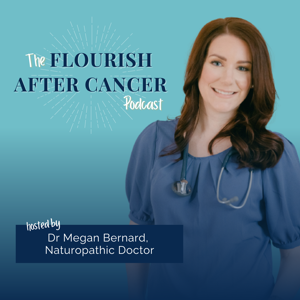


If you've had ER+ breast cancer, estrogen probably feels like the enemy, and every food label, lotion, and supplement bottle comes with the same question: "Is this raising my estrogen?" 😮💨
I’m Dr. Megan, a licensed naturopathic doctor. My team and I have worked with hundreds of women around the world to rebuild their health after cancer and reduce their risk of recurrence through science-backed nutrition, lifestyle, and targeted supplement strategies—so they can feel confident, strong, and free to enjoy life again.
✨ Let’s Connect!
Book a free Roadmap Call to discuss how we can help: https://flourishaftercancer.com/nextsteps
Follow me:
Medical Disclaimer: The information provided in these videos and podcasts is for educational purposes only and is not intended to diagnose, treat, cure, or prevent any disease. Consult a qualified healthcare provider before making changes to your diet, medications, or lifestyle. This content is not a substitute for professional medical advice or care.
A viral claim swept across social media a few months ago: a prominent breast surgeon said that mammograms cause breast cancer.
The fear spread quickly, and so did the confusion. If you’re a woman navigating life after breast cancer, that kind of claim isn’t just noise. It’s the kind of thing that can keep you up at night, wondering whether the test meant to protect you might actually be putting you at risk.
In this episode of The Flourish After Cancer Podcast, I break down what the research actually says about mammograms, the real math behind radiation exposure, how mammograms compare with ultrasounds, MRIs, QT scans, and thermography, and why breast density might be the part of your screening picture that no one has explained to you yet.
✨ This episode is designed to help you:
⚠️ This is a must-listen if:
✨ In this episode, you’ll learn:
💡 You’ll leave this episode with:
🔗 Episode Resources:
I’m Dr. Megan, a licensed naturopathic doctor. My team and I have worked with hundreds of women around the world to rebuild their health after cancer and reduce their risk of recurrence through science-backed nutrition, lifestyle, and targeted supplement strategies—so they can feel confident, strong, and free to enjoy life again.
✨ Let’s Connect!
Book a free Roadmap Call to discuss how we can help: https://flourishaftercancer.com/nextsteps
Follow me:
Medical Disclaimer: The information provided in these videos and podcasts is for educational purposes only and is not intended to diagnose, treat, cure, or prevent any disease. Consult a qualified healthcare provider before making changes to your diet, medications, or lifestyle. This content is not a substitute for professional medical advice or care.
Hot flashes, joint pain, night sweats, and decreasing bone strength—many survivors are told the same thing by their doctor: “Hormone therapy is completely off the table for you.”
I'm Dr. Megan, a licensed naturopathic doctor. My team and I have worked with hundreds of women globally to rebuild their health after cancer and reduce recurrence risk using science-backed nutrition, lifestyle, and targeted supplement strategies — so they can feel confident, strong, and free to enjoy life again.
✨ Let’s Connect!
Book a free Roadmap Call and let’s chat about how we can help:
https://flourishaftercancer.com/nextsteps
Follow me:
Instagram: @MeganBernardND
Facebook: @MeganBernardND
Website: https://flourishaftercancer.com/
Medical Disclaimer: The information provided in these videos and podcasts is for educational purposes only and is not intended to diagnose, treat, cure, or prevent any disease. Consult with a qualified healthcare provider before making any changes to your diet, medications, or lifestyle. Content is not a substitute for professional medical advice or care.
Broccoli, cabbage, kale, and Brussels sprouts.
Your mom probably told you to eat them—but she probably never told you why.
Every vegetable in this family produces the same type of starting compound, then does something different with it once it’s inside your body.
In this episode, I break down the cruciferous vegetable family and the specific compounds found in each one, why those compounds matter for your internal environment after cancer, and what the research actually shows about broccoli, cabbage, kale, and more.
⚠️ This is a must-listen if:
• You’ve been told to “eat more vegetables” without ever being told why.
• You want to understand the difference between general cancer information and a plan built for your body.
• You’re curious about what the research actually shows—not just what wellness culture repeats.
• You want simple changes that don’t give you one more thing to obsess over.
✨ In this episode, you’ll learn:
• Why broccoli, cabbage, and kale each specialize in different compounds, even though they come from the same plant family.
• How sulforaphane activates your body’s own detoxification and antioxidant genes through the NRF2 pathway.
• How I3C and DIM shift estrogen metabolism toward a more protective pathway.
• What the current research shows—and where the evidence is still limited to laboratory and animal studies rather than human trials.
• Why eating a variety of vegetables from this family matters more than staying loyal to one favorite.
💡 You’ll leave this episode with:
• A clear understanding of what’s happening inside your body when you eat these vegetables.
• Simple, practical ways to get more from what you’re already cooking.
• Language to help explain this to the people in your life who still won’t touch a vegetable.
• A better understanding of one more piece of your internal environment—based on evidence instead of guesswork.
The Cruciferous Vegetable Family at a Glance
Every cruciferous vegetable contains glucosinolates—plant compounds that are converted into the active compounds your body uses. Each vegetable specializes in a particular glucosinolate that becomes an active compound with its own potential role in cancer recurrence prevention.
•Broccoli and broccoli sprouts
- Glucosinolate: Glucoraphanin
- Becomes: Sulforaphane
- Anticancer impact: Activates your body’s own detoxification and antioxidant genes.
•Cabbage, mustard greens, and horseradish
- Glucosinolate: Sinigrin
- Becomes: Allyl isothiocyanate
- Anticancer impact: Supports cell repair and helps reduce inflammation.
•Kale, cabbage, and Brussels sprouts
- Glucosinolate: Glucobrassicin
- Becomes: I3C, then DIM
- Anticancer impact: Shifts estrogen breakdown toward a more protective pathway.
I'm Dr. Megan, a licensed naturopathic doctor. My team and I have worked with hundreds of women globally to rebuild their health after cancer and reduce recurrence risk using science-backed nutrition, lifestyle, and targeted supplement strategies — so they can feel confident, strong, and free to enjoy life again.
✨ Let’s Connect!
Book a free Roadmap Call and let’s chat about how we can help:
https://flourishaftercancer.com/nextsteps
Follow me:
Instagram: @MeganBernardND
Facebook: @MeganBernardND
Website: https://flourishaftercancer.com/
Medical Disclaimer: The information provided in these videos and podcasts is for educational purposes only and is not intended to diagnose, treat, cure, or prevent any disease. Consult with a qualified healthcare provider before making any changes to your diet, medications, or lifestyle. Content is not a substitute for professional medical advice or care.
You've heard "move more" a hundred times since your diagnosis, and it never quite explains why.
What if the advice was never vague, just incomplete.
There's a real trial, published in the New England Journal of Medicine in 2025, showing that a structured exercise program lowered the risk of cancer coming back by 28 percent, and lowered the risk of death by 37 percent, compared to usual care.
That's the kind of result a new drug has to prove in a randomized controlled trial. This one came from walking and support, nothing you have to buy.
In this episode of The Flourish After Cancer Podcast, I break down what's happening in your blood sugar, your hormones, your muscle, and your immune system every time you move, and why muscle itself works more like a messenger than an engine.
⚠️ This is a must-listen if:
✨ In this episode, you'll learn:
💡 You'll leave this episode with:
I'm Dr. Megan, a licensed naturopathic doctor. My team and I have worked with hundreds of women globally to rebuild their health after cancer and reduce recurrence risk using science-backed nutrition, lifestyle, and targeted supplement strategies — so they can feel confident, strong, and free to enjoy life again.
✨ Let's Connect! Book a free Roadmap Call and let's chat about how we can help: https://flourishaftercancer.com/nextsteps
Follow me:
Instagram: @MeganBernardND
Medical Disclaimer: The information provided in these videos and podcasts is for educational purposes only and is not intended to diagnose, treat, cure, or prevent any disease. Consult with a qualified healthcare provider before making any changes to your diet, medications, or lifestyle. Content is not a substitute for professional medical advice or care.
Brain fog that won't lift. Energy crashes an hour after lunch. Cravings you can't outrun, no matter how disciplined you are.
You've probably chalked it up to stress, age, or just life after cancer. But what if it's actually one hormone—and it's not the one anyone's testing?
You're exhausted, but not the kind of tired that sleep fixes. Wired at night, dragging in the morning, and nobody's mentioned why. There's a piece of the recovery conversation that rarely comes up: what cancer, and everything involved in treating it, does to your cortisol.
In this episode, I talk about your cortisol rhythm during and after cancer, why it shapes your sleep, blood sugar, inflammation, and immune function, and how a simple test shows you your own pattern instead of guessing what's going on.
This conversation is designed to help you:
• Understand the difference between normal stress and a disrupted cortisol rhythm
You've probably typed your labs into ChatGPT at some point, or asked it a question you were too tired to bring up at your next appointment.
Maybe you got an answer back that felt more personal than anything your medical team has said in months.
In this episode of The Flourish After Cancer Podcast, I talk about where AI helps your recovery, and where it quietly falls short, even when the answer feels confident and complete.
✨ In this episode, you'll learn:
💡 You'll leave this episode with:
I'm Dr. Megan, a licensed naturopathic doctor. My team and I have worked with hundreds of women globally to rebuild their health after cancer and reduce recurrence risk using science-backed nutrition, lifestyle, and targeted supplement strategies — so they can feel confident, strong, and free to enjoy life again.
✨ Let’s Connect!
Follow me:
Medical Disclaimer: The information provided in these videos and podcasts is for educational purposes only and is not intended to diagnose, treat, cure, or prevent any disease. Consult with a qualified healthcare provider before making any changes to your diet, medications, or lifestyle. Content is not a substitute for professional medical advice or care.
"My oncologist said I probably shouldn't take these supplements."
You've heard some version of this. Usually it comes with one word attached: interacts. And then the conversation stops there, with no real explanation of what that actually means or how much it actually matters.
In this episode of The Flourish After Cancer Podcast, I walk through the exact process I use to evaluate a supplement, the same kind of process your care team uses when weighing medication decisions, so you understand why that "probably shouldn't" answer happens, and when it's worth a second conversation.
This isn't about telling you your oncologist is wrong. It's about giving you a better answer than "we just don't know." 💛
⚠️ This is a must-listen if:
✨ In this episode, you'll learn:
I’m Dr Megan, a board-certified naturopathic doctor. My team and I have worked with hundreds of women globally to rebuild their health after cancer and reduce recurrence risk using science-backed nutrition, lifestyle, and targeted supplement strategies — so they can feel confident, strong, and free to enjoy life again.
✨ Let’s Connect!
Follow me:
Medical Disclaimer: The information provided in these videos and podcasts is for educational purposes only and is not intended to diagnose, treat, cure, or prevent any disease. Consult with a qualified healthcare provider before making any changes to your diet, medications, or lifestyle. Content is not a substitute for professional medical advice or care.
"What's the best anticancer diet?" Keto, Mediterranean, plant-based, vegan, raw. You've probably tried at least one of them, and you're still wondering if you picked the right one 😮💨
Here's the honest answer: there isn't one best anticancer diet Not because nutrition doesn't matter, but because the question assumes one diet could be right for every body that's been through cancer treatment
In this episode of The Flourish After Cancer Podcast, I walk you through the exact 6-step process my team and I use to build individualized eating plans for our clients, starting with the symptoms your body is already showing you.
This episode is designed to help you:
🔗 Episode Relevant Resources
⚠️ This is a must-listen if:
✨ In this episode, you'll learn:
I’m Dr Megan, a board-certified naturopathic doctor. My team and I have worked with hundreds of women globally to rebuild their health after cancer and reduce recurrence risk using science-backed nutrition, lifestyle, and targeted supplement strategies — so they can feel confident, strong, and free to enjoy life again.
✨ Let’s Connect!
Follow me:
Medical Disclaimer: The information provided in these videos and podcasts is for educational purposes only and is not intended to diagnose, treat, cure, or prevent any disease. Consult with a qualified healthcare provider before making any changes to your diet, medications, or lifestyle. Content is not a substitute for professional medical advice or care.
From the publisher's feed
11,782 Listeners

8,502 Listeners
3,605 Listeners
3,422 Listeners
9,165 Listeners

35,886 Listeners

27,851 Listeners
14,751 Listeners

29,187 Listeners
583 Listeners

19,271 Listeners
1,410 Listeners
174 Listeners
2,220 Listeners
3,135 Listeners