
Sign up to save your podcasts
Or

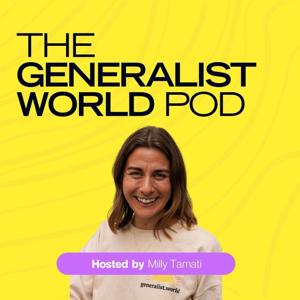


Natalie Hoop on squiggly careers, the confidence problem, and multi-unit retail as training ground.
📚 What You'll Learn
Why your transferable skills don't disappear just because you're sitting in front of a new audience, industry, or type of work
How confidence is a learned skill that comes from taking ownership of who you are and what your secret sauce is
Why rejection isn't personal - when someone says no, they're saying no to their vision of what fits that spot, not to you
✍️ Some Takeaways
We've been programmed to believe we need specialisation to succeed, but humans naturally keep growing and developing - it's odd to think we'd do the same work at 60 that we did at 18.
Women especially have been trained that humble is the way to go, that accepting compliments is ego-driven and frowned upon - but learning to take ownership of your abilities is essential for communicating your value.
Multi-unit retail experience teaches foundational transferable skills that apply across industries and roles you never imagined pursuing.
Life happening to you rather than being designed can be the path to where you need to be - intentional design often only becomes possible after you've accumulated unexpected experiences.
Where to find Natalie Hoop
https://www.linkedin.com/in/nataliehoop/
Where to find Milly
LinkedIn: https://www.linkedin.com/in/milly-tamati/
Website: http://www.millytamati.com/
Generalist World Resources:
Podcast: https://open.spotify.com/show/0qbGzMU...
The Generalist Quiz: https://www.generalistquiz.com/
Essays: https://www.generalistcareer.com/
Upcoming events: https://lu.ma/generalist.events
Positioning Guidebook: https://www.generalist.world/positioning
Hosted on beehiiv. Read the full Privacy Policy at beehiiv.com/privacy.
Why "glue people" are valuable in organisations and how spotting the best in others helps you connect the dots
The difference between transactional networking and the "be a villager" approach of showing up consistently without expecting immediate returns
How to identify your unique superpower by noticing what keeps magnetising toward you without you seeking it
Portfolio careers don't require launching multiple streams simultaneously - start with one extra thing and build slowly over a year or more.
Your effortless skills can transform outcomes for others - volunteer what feels easy to you but impossible to someone else.
The "be a villager" mindset transforms community engagement by focusing on consistent contribution rather than transactional exchanges.
Being a glue person means seeing the best in people and understanding how they prefer to interact, then connecting those dots within teams.
https://www.linkedin.com/in/nicola-ruth-earle/
Where to find MillyLinkedIn: https://www.linkedin.com/in/milly-tamati/
Website: http://www.millytamati.com/
Generalist World Resources:Podcast: https://open.spotify.com/show/0qbGzMU...
The Generalist Quiz: https://www.generalistquiz.com/
Essays: https://www.generalistcareer.com/
Upcoming events: https://lu.ma/generalist.events
Positioning Guidebook: https://www.generalist.world/positioning
Hosted on Acast. See acast.com/privacy for more information.
Hosted on beehiiv. Read the full Privacy Policy at beehiiv.com/privacy.
Why the "back to the 90s" prediction suggests internet-era careers will be massively disrupted as AI forces us to reconnect with our physical communities
How AI is acting as a mirror that prompts us to think deeply about what we value as humans, not just economically but in terms of our core values
Why building micro-communities and leveraging AI for local, hands-on work might become the new career path as digital work becomes automated
The internet era of careers is ending as AI automates digital work, potentially forcing a "back to the 90s" shift toward local, physical community work.
Community will become essential for navigating AI disruption because isolated individuals struggle while connected groups adapt together.
AI is prompting us to examine what we value as humans, forcing decisions about whether we let it replace us as people or use it to enhance life.
Values need directional energy behind them (valences) to create meaningful action and build a positive future.
https://www.linkedin.com/in/jonsaltzman/
Where to find MillyLinkedIn: https://www.linkedin.com/in/milly-tamati/
Website: http://www.millytamati.com/
Generalist World Resources:Podcast: https://open.spotify.com/show/0qbGzMU...
The Generalist Quiz: https://www.generalistquiz.com/
Essays: https://www.generalistcareer.com/
Upcoming events: https://lu.ma/generalist.events
Positioning Guidebook: https://www.generalist.world/positioning
Hosted on Acast. See acast.com/privacy for more information.
Hosted on beehiiv. Read the full Privacy Policy at beehiiv.com/privacy.
What a fractional role actually is (a senior embedded leader working part-time for multiple companies, not just consulting or freelance work)
Why the fractional job market is harder than people think and can take 3-9+ months to land your first role, requiring network building while still employed
How to balance being the founder of a free community with the reality of needing to pay yourself and avoid resentment
A fractional role is a senior embedded leader position, not synonymous with part-time consulting or freelancing.
Landing your first fractional role is harder than it looks and requires strategic network building while you're still employed.
Going fractional means becoming your own boss with all the administrative responsibilities nobody talks about.
Community monetisation requires balancing giving value with sustainability, especially when resentment starts creeping in.
LinkedIn: https://www.linkedin.com/in/karinamikhli/
Where to find MillyLinkedIn: https://www.linkedin.com/in/milly-tamati/
Website: http://www.millytamati.com/
Generalist World Resources:Podcast: https://open.spotify.com/show/0qbGzMU...
The Generalist Quiz: https://www.generalistquiz.com/
Essays: https://www.generalistcareer.com/
Upcoming events: https://lu.ma/generalist.events
Positioning Guidebook: https://www.generalist.world/positioning
Hosted on Acast. See acast.com/privacy for more information.
Hosted on beehiiv. Read the full Privacy Policy at beehiiv.com/privacy.
Why interpreting friction as personal failure keeps you stuck, and how to reframe it as a signal that something needs communication or change
How building AI reflection bots as "survival scaffolding" during burnout can become tools that help entire teams work more clearly and honestly
Why AI fluency will fail wherever it's treated as a tooling problem instead of a human orientation problem
Self-loyalty means designing systems that don't require people to abandon parts of themselves to be productive.
Stop interpreting friction as personal failure and start seeing it as a signal that something isn't working or communication needs to happen.
AI reflection bots built as survival scaffolding during crisis can become powerful team tools for making work clearer and safer.
AI fluency success depends on understanding that AI amplifies existing cultural patterns rather than fixing broken systems.
LinkedIn: https://www.linkedin.com/in/peter-harrison-z90/
Where to find MillyLinkedIn: https://www.linkedin.com/in/milly-tamati/
Website: http://www.millytamati.com/
Generalist World Resources:Podcast: https://open.spotify.com/show/0qbGzMU...
The Generalist Quiz: https://www.generalistquiz.com/
Essays: https://www.generalistcareer.com/
Upcoming events: https://lu.ma/generalist.events
Positioning Guidebook: https://www.generalist.world/positioning
Hosted on Acast. See acast.com/privacy for more information.
Hosted on beehiiv. Read the full Privacy Policy at beehiiv.com/privacy.
Why volunteering for nonprofits' behind-the-scenes operations work is an untapped opportunity to build new skills and meaningful connections
How following "breadcrumbs" of community connections can lead you to unexpected opportunities and networks you never knew existed
Why building vulnerability and genuine relationships in community beats transactional networking every time
Volunteer organisations desperately need behind-the-scenes operational help but rarely ask for it because they assume people only want glamorous hands-on work.
Following community "breadcrumbs" rather than strategic networking creates unexpected pathways to opportunities you couldn't have planned.
Creating space for vulnerability in community gatherings transforms transactional networking into genuine friendship and collaboration.
The tough job market makes volunteering an underutilised strategy for skill building and career direction.
LinkedIn: https://www.linkedin.com/in/allisondono/
Where to find MillyLinkedIn: https://www.linkedin.com/in/milly-tamati/
Website: http://www.millytamati.com/
Generalist World resources:Podcast: https://open.spotify.com/show/0qbGzMU...
The Generalist Quiz: https://www.generalistquiz.com/
Essays: https://www.generalistcareer.com/
Upcoming events: https://lu.ma/generalist.events
Positioning Guidebook: https://www.generalist.world/positioning
Hosted on Acast. See acast.com/privacy for more information.
Hosted on beehiiv. Read the full Privacy Policy at beehiiv.com/privacy.
How to get diverse teams speaking the same language using glossaries and visual communication across global organisations
Why using AI as a "trained co-pilot" on your own content creates better outputs than generic prompts
How treating your role like a customer experience helps you stay connected to the real problems you're solving
Creating a shared language across technical and non-technical teams requires comprehensive glossaries and visual documentation.
Using AI as a trained co-pilot on your own content produces far better results than generic prompting.
Treating your role like a customer experience keeps you grounded in solving real problems rather than abstract technical challenges.
Generalist World events succeed because they remove the transactional pressure typical of industry networking.
LinkedIn: https://www.linkedin.com/in/darrenwu/
Website: https://tutxi.com/
Where to find MillyLinkedIn: https://www.linkedin.com/in/milly-tamati/
Website: http://www.millytamati.com/
Generalist World resources:Podcast: https://open.spotify.com/show/0qbGzMU...
The Generalist Quiz: https://www.generalistquiz.com/
Essays: https://www.generalistcareer.com/
Upcoming events: https://lu.ma/generalist.events
Positioning Guidebook: https://www.generalist.world/positioning
Hosted on Acast. See acast.com/privacy for more information.
Hosted on beehiiv. Read the full Privacy Policy at beehiiv.com/privacy.
How to answer "what do you do?" as a generalist using the "I'm at my best when [X], and that's when I step away" framework
Why identifying your zone of genius (not just competence or excellence) is critical for career clarity and satisfaction
The critical mistake companies make when implementing AI—focusing on productivity instead of reclaiming human time
How passion and communication skills create more opportunities than technical specialisation for generalists
The "I'm at my best when" positioning framework helps generalists explain their value without listing chronological job titles.
Finding your zone of genius requires distinguishing between competence, excellence, and flow state.
Self-awareness about your strengths often requires external input because you're blind to skills that feel effortless.
Event planning should prioritise depth of experience over breadth of attendance by designing for specific community needs.
LinkedIn succeeds as a professional platform because it offers authentic connection without performative pressure.
AI should be repositioned as a tool for reducing work hours, not increasing productivity within the same hours.
Passion is the most attractive quality in professional contexts, making it the secret weapon for generalist networking.
Communication excellence creates more opportunities than technical skills through three core practices.
Self-employment as a generalist requires accepting trade-offs while building success on passion and communication.
Where to find Zach
LinkedIn: https://www.linkedin.com/in/zachary-reizes-832628106/
Slowdown Summit: https://www.linkedin.com/company/the-slowdown-summit/
Where to find Milly
LinkedIn: https://www.linkedin.com/in/milly-tamati/
Website: http://www.millytamati.com/
Generalist World resources:
Podcast: https://open.spotify.com/show/0qbGzMUMDCK5v3XbvRANmD?si=b1d7af51c24e43ee
The Generalist Quiz: https://www.generalistquiz.com/
Essays: https://www.generalistcareer.com/
Upcoming events: https://lu.ma/generalist.events
Positioning Guidebook: https://www.generalist.world/positioning
Hosted on Acast. See acast.com/privacy for more information.
Hosted on beehiiv. Read the full Privacy Policy at beehiiv.com/privacy.
What you'll learn:
How to turn around failing teams by implementing honest leadership, accessible office hours, and graceful exit rituals
Why building roles around people instead of business needs creates unsustainable organizational structures
The CHAOS framework for systematically delegating, automating, or eliminating work that doesn't serve you
How training managers on hiring, retention, and self-management creates exponentially better team outcomes
Why teams must be healthy before they can be happy, and happy before they can be high-performing
How to budget correctly for hiring by adding 6-9 months to cover recruitment time and potential mishires
The critical distinction between solving today's problems with contractors versus building tomorrow's team with full-time hires
Why psychological safety and constructive disagreement are prerequisites for high-performing teams, not optional perks
Some takeaways:
Turn around toxic team cultures through radical honesty and permission to exit.
Invest your leadership time in training managers, not doing their work.
Implement weekly office hours where you only listen.
Design graceful exits as carefully as you design onboarding.
Stop building roles around people and start building around business needs.
Budget for hiring reality, not hiring fantasy.
Apply the CHAOS framework quarterly to reclaim your time and focus.
Prioritise healthy teams over happy teams, and happy teams over high-performing teams.
Recognise that chaotic structures inevitably lead to savage restructures.
Where to find Neda
LinkedIn: https://www.linkedin.com/in/nedasahebelm/
keshty: https://www.keshty.com/
Newsletter: https://theminoritymisfit.beehiiv.com/subscribe
@nedasahebelm if people want to follow her on IG!
Where to find Milly
LinkedIn: https://www.linkedin.com/in/milly-tamati/
Website: http://www.millytamati.com/
Generalist World resources:
Podcast: https://open.spotify.com/show/0qbGzMUMDCK5v3XbvRANmD?si=b1d7af51c24e43ee
The Generalist Quiz: https://www.generalistquiz.com/
Essays: https://www.generalistcareer.com/
Upcoming events: https://lu.ma/generalist.events
Positioning Guidebook: https://www.generalist.world/positioning
Hosted on Acast. See acast.com/privacy for more information.
Hosted on beehiiv. Read the full Privacy Policy at beehiiv.com/privacy.
What you'll learn:
How to build community with members rather than for them by co-creating value from the earliest stages
Why successful community metrics focus on connections between members, not engagement rates or post volume
The "win-win-win" framework for designing community programs that serve members, partners, and the organisation
How small teams leverage member-led initiatives to scale impact without burning out
Why community building requires slow, sustained effort rather than quick returns like social media marketing
The power of designing business operations around life priorities rather than sacrificing personal well-being
How to identify if you're truly a "community person" by examining your emotional response to connecting with others
Strategic approaches to making founders and leaders "redundant" by building self-sustaining community systems
Some takeaways:
Community requires fundamental mindset shifts from traditional growth strategies.
Peer support within niche communities addresses isolation that broader networks cannot solve.
The most valuable community metric is connection density between members, not platform engagement.
Member-led programming scales impact while building ownership and deeper engagement.
Small teams achieve outsized impact through strategic "win-win-win" thinking and clear constraints.
Community cultures must balance consistency with experimentation to maintain energy and prevent stagnation.
Businesses should plan life first, profit second and impact third to achieve sustainable community leadership.
Breaking into community work requires emotional alignment more than specific skills or credentials.
Where to find Ece
LinkedIn: https://www.linkedin.com/in/ecekurtaraner/
Where to find Milly
LinkedIn: https://www.linkedin.com/in/milly-tamati/
Website: http://www.millytamati.com/
Generalist World resources:
Podcast: https://open.spotify.com/show/0qbGzMUMDCK5v3XbvRANmD?si=b1d7af51c24e43ee
The Generalist Quiz: https://www.generalistquiz.com/
Essays: https://www.generalistcareer.com/
Upcoming events: https://lu.ma/generalist.events
Positioning Guidebook: https://www.generalist.world/positioning
Hosted on Acast. See acast.com/privacy for more information.
Hosted on beehiiv. Read the full Privacy Policy at beehiiv.com/privacy.
From the publisher's feed

2,190 Listeners