
Sign up to save your podcasts
Or

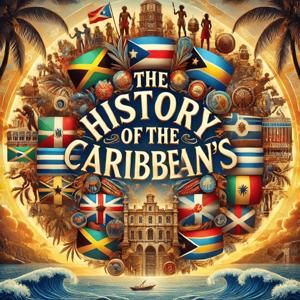


He governed a garrison, brokered a peace with his deadliest enemy, and was shot over 40 times by police on a Kingston roadside. This is the true story of Claude Massop — the most powerful don in Jamaican history, and the man the system destroyed for choosing peace over war.
In the late 1960s, Claude "Claudie" Massop rose from the streets of West Kingston to become the undisputed don of Tivoli Gardens — the most politically fortified garrison in Jamaica. As the enforcer of Edward Seaga and the Jamaica Labour Party, he didn't just run a gang. He governed a community. But when Massop and his sworn enemy, PNP don Bucky Marshall, found themselves locked in the same jail cell, something no politician had planned for happened — two of Kingston's most dangerous men decided the war was over.
Together, they organized the One Love Peace Concert of April 22, 1978 — convincing Bob Marley to return from exile, bringing 32,000 Jamaicans into the National Stadium, and forcing both Prime Minister Michael Manley and opposition leader Edward Seaga onto the same stage in a moment that stunned the island. The peace spread through the garrison communities almost overnight.
Nine months later, Claude Massop was dead.
On February 4, 1979, his car was blocked at the corner of Industrial Terrace and Marcus Garvey Drive. Police reported he fired first. Witnesses said he never had a chance. Over 40 bullets. The gun they claimed he fired was never recovered. Four officers were charged with murder. All four were acquitted.
Within two years, Bucky Marshall was also dead — shot in a New York nightclub. The 1980 Jamaican general election became the bloodiest in the island's history, with 844 recorded murders. And into the power vacuum Massop left behind stepped Lester Lloyd "Jim Brown" Coke — transforming the Tivoli garrison from a political enforcement operation into the Shower Posse, one of the most violent international drug networks the Caribbean has ever produced.
This is the story of the don who built the peace — and what happened to Jamaica when they killed him for it.
Carriacou’s Maroon and String Band Music Festival looks like a cultural show. But this story goes back to the days when running into the bush meant life or death for enslaved Africans on the small islands of Grenada, Carriacou and Petite Martinique. In this History of the Caribbean episode, we trace how secret Maroon rituals of survival, big drum ceremonies and smoked‑food feasts became a branded three‑day festival promoted as “heritage” and “authentic culture.”
You’ll hear how Maroon communities formed in the hills and bush, why Carriacou kept its big drum “nation” rituals while similar practices on nearby islands faded or went underground, and how modern tourism, national branding and diaspora attention now shape what the world sees as “Maroon culture.” We compare Carriacou’s festival to Maroon celebrations in Jamaica and beyond, and ask a hard question: when a culture built on fugitivity becomes a scheduled event on someone else’s calendar, is that survival or a new kind of capture?
If you care about Caribbean history, African ancestry, Maroon resistance, cultural survival and the politics of “authentic” festivals, this episode is for you.
The Haitian Revolution wasn’t just a revolt—it was a surgical military decapitation of a global superpower. Why was a French officer found with a white orchid in his mouth? Discover the gritty truth.
In this deep-dive into Caribbean History, we explore the Haitian Revolution 1791 through a hardline, forensic lens. This is the story of how Toussaint Louverture and Jean-Jacques Dessalines led a "sleeper cell" network of enslaved people to defeat Napoleon Bonaparte’s finest troops. We investigate the Battle of Vertières, the biological warfare of Yellow Fever, and the "White Orchid" mystery that funded a new republic.
He never held political office. He never recorded a song. But without him, the most iconic moment in Jamaican musical history never happens.
Aston "Bucky" Marshall Thomson was the top don of Matthews Lane — the most feared PNP-aligned enforcer in West Kingston during Jamaica's bloodiest era of political gang warfare. He controlled a garrison the political system built, armed, and depended on to win elections. And then, in a jail cell in January of nineteen seventy-eight, he made a decision that no politician had ordered and no party had planned. He chose peace.
Together with his sworn JLP rival Claudie Massop, Bucky Marshall negotiated a ceasefire that stopped a war the Jamaican government couldn't stop on its own. They organized the One Love Peace Concert — thirty-two thousand people, Bob Marley, and the moment two prime ministers were pulled onstage and forced to shake hands in front of the world.
Within two years, both men were dead.
This is the full story — from the garrison streets of West Kingston to the Brooklyn ballroom where it ended. The childhood, the rise, the peace treaty, the concert, the exile, and the killing. And the question the history has never answered: were their deaths a coincidence, or did the system that built them decide it no longer needed them?
The History of the Caribbean. The Jamaican Gangster series. This is the story of Bucky Marshall.
This narrative is a deep-immersion exploration of Jamaica’s dual identity: a land of volatile political fracturing and unparalleled cultural resilience. It traces the "Signal" of the island from the blood-stained streets of 1970s Kingston to the global diaspora in London, Toronto, and New York.
The story centers on the One Love Peace Concert of 1978, using the iconic moment where Bob Marley joined the hands of political rivals Michael Manley and Edward Seaga as a lens to examine the temporary nature of political treaties versus the permanent power of culture. It bridges the gap between the auditory fire of Roots Reggae and the physical theology of Ital and Jerk food traditions, revealing how both were born from a necessity for survival and resistance.
Ultimately, it is a tribute to the Jamaican diaspora—the people who carried the specific, irreplaceable frequency of the island across the water, transforming a nation of three million into one of the most influential cultural brands on Earth. It asks a final, biting question about the value of that influence and the price the island has paid to give its soul to the world.
This long-form documentary explores the modern history of Haiti and the cyclical nature of foreign interference from the fall of the Duvalier dictatorship in nineteen eighty-six to the current gang crisis of twenty twenty-six. We examine the critical transition periods including the rise and exile of Jean-Bertrand Aristide, the controversial UN MINUSTAH mission, and the devastating aftermath of the twenty ten earthquake aid mismanagement. This episode breaks down how systemic external pressures, from U.S. military interventions to the introduction of cholera by peacekeepers, have shaped the political and social landscape of the nation.
Our deep dive into Haitian sovereignty investigates the fragmentation of the state following the twenty twenty-one assassination of Jovenel Moise and the subsequent rise of paramilitary gang coalitions. We move past simplistic "failed state" narratives to analyze the mechanics of the "Republic of NGOs" and the disappearance of PetroCaribe funds. By centering the impact on the Haitian people and the role of international committees in determining local leadership, this documentary provides an essential perspective on how decades of outside interest have influenced the current struggle for stability and self-determination in the Caribbean.
In October 1937, Dominican dictator Rafael Trujillo ordered the massacre of up to 30,000 Haitian workers along the Dominican-Haitian border. The method of identification was chilling in its simplicity: hold a parsley stem to a man's face and ask him to say the Spanish word for it. The rolled R that Spanish requires — a sound Haitian Creole speakers produce differently — became the line between survival and death. This episode of History of the Caribbean examines El Corte: how Trujillo's racial ideology built toward October 1937, what happened during the eight days of killing, how the international community settled it for $525,000 total, and how the same ideological framework resurfaced in a 2013 Dominican court ruling that stripped citizenship from 200,000 people of Haitian descent. History of the Caribbean is available wherever you listen to podcasts.
Did a legendary Calypso King hide a 1939 murder mystery inside his lyrics? This is the untold history of Caribbean resistance.
In this hardline documentary, we strip away the velvet suits of the 1950s to reveal the gritty, dangerous origins of Lord Kitchener and the "Old Brigade." Before the international fame and the BBC microphones, there was a makeshift bamboo tent on Edward Street and a song titled "The Ghost of Prince’s Building"—a track so subversive it was marked with a red stamp by colonial censors and disappeared from history.
Why did three men vanish from the Port of Spain docks in 1939, and why did the King spend six years turning their names into a melody? We deep-dive into the forensic reality of the Calypso tents, the secret ledgers of the Trinidad Constabulary, and the linguistic warfare used against the British Empire.
Sixty-five years after 1,400 CIA-trained Cuban exiles landed at Playa Girón and failed to overthrow Fidel Castro, one classified document — a CIA cable designated TX-1162 — has never been released. This episode tells the full story of Operation Zapata: the planning, Kennedy's last-minute cancellation of the crucial air strikes, three days of fighting in the swamp, and what the Bay of Pigs meant for Caribbean sovereignty for generations to come. History of the Caribbean brings you the stories the history books left out — subscribe on Spotify and Apple Podcasts to never miss an episode.
Britain banned this bread. Jamaica remade it with the byproduct of slavery — and the person who did it left no name behind.
In fifteen ninety-two, Queen Elizabeth the First's government restricted the sale of spiced cross-marked buns to three occasions only: Good Friday, Christmas, and burials. The bread was too old, too symbolic, too loaded with pre-Christian meaning the church could not fully control. A century later, Britain seized Jamaica and brought that bread with them. What happened next was never recorded — not because it wasn't significant, but because the colonial archive was never built to record the decisions of the people it had enslaved.
From the publisher's feed

4,757 Listeners

111,767 Listeners

56,395 Listeners

16,318 Listeners

236 Listeners

78 Listeners

143 Listeners

67 Listeners

358 Listeners

8,478 Listeners
93 Listeners