
Sign up to save your podcasts
Or

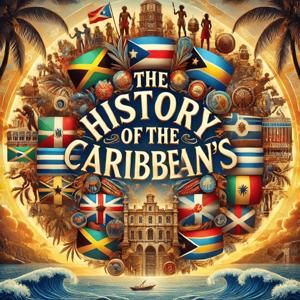


Venezuela lifts sanctions on Delcy Rodríguez — and 14 Caribbean nations are watching. Is PetroCaribe coming back, or is this just another great power energy trap?
An Argentine tourist faces criminal racism charges in Brazil, reopening the nation's 90-year racial democracy myth — from Gilberto Freyre's 1933 theory to the Caó Law.
History tells us the Transatlantic Slave Trade was a story of silence, but the archives of the Danish West India Company tell a much darker, more defiant story. In this episode of THE HISTORY OF THE CARIBBEAN, we go deep into the forensic reality of the 1733 rebellion. From the sharpened blades hidden in firewood at Fort Frederiksvaern to the final, haunting leap at Ram Head, we explore the tactical genius of the Akwamu warriors who turned a sugar island into a black kingdom.
Gucci Mane was forced to sign a record contract release at gunpoint. Pooh Shiesty was arrested. The document may be legally worthless. Here is everything that went wrong.
For 500 years, every history textbook has taught the same lie: that the Taíno people were wiped out shortly after 1492. But the "extinction" of the Indigenous Caribbean was a calculated colonial narrative—a "paper genocide" designed to steal land and erase a civilization. Today, we uncover the shocking truth of how the Taíno outsmarted history to survive in the shadows.
In this deep dive, we investigate the secret mountain alliances, the hidden "Maroon" communities, and the high-stakes survival strategies that kept Taíno culture alive against all odds. We analyze the groundbreaking 2026 DNA evidence proving that the Taíno bloodline is still thriving in Puerto Rico, Cuba, and the Dominican Republic today.
The British Empire had a secret they tried to bury in the limestone of the Blue Mountains. In this deep-dive documentary, we explore the true history of the Maroon Kingdoms—a sovereign nation that existed inside a colony. From the "Living Forest" tactics of Queen Nanny to the unexplained mystery of the Copper Plate, this is the history of the Caribbean they didn't teach you in school.
How did a band of rebels defeat the most powerful military force on Earth? We analyze the forensic evidence of the Maroon Wars (1720–1739), the strategic use of the abeng communication network, and the "Great Betrayal" of the 1738 Peace Treaty.
Seven thousand years ago, a woman was buried in the salt of Trinidad with an object that shouldn't exist. We’ve been told the history of the Caribbean began with "discovery," but the archaeological record tells a much darker, more sophisticated story. From the massive industrial shell-processing plants of Curacao to a 3,000-mile trade link with ancient Mexico, we are revealing the lost "Lithic Revolution" that shaped the archipelago long before the Arawak or the Spanish.
In this episode of THE HISTORY OF THE CARIBBEAN, we explore the intense and complex evolution of modern Jamaica from the turbulent nineteen eighties to the present day. We trace the structural shift from political tribalism to the rise of international organized crime, detailing how the power of the ballot was replaced by the influence of the "donmanship" system and the global reach of the Shower Posse. The narrative examines the grueling reality of the nineteen nineties economic liberalization, where the vibrant "One Love" branding of the tourism industry masked a deepening chasm of social inequality and the emergence of a sophisticated underground economy.
The documentary further investigates the digital transformation of survival through the lottery scamming phenomenon that gripped the two thousands, illustrating a new generation’s pursuit of agency in a globalized world. We conclude with a focused look at the twenty ten Tivoli Incursion, a pivotal moment of national reckoning that signaled the end of the untouchable don while leaving the island to grapple with the persistent shadows of its past. This is a story of continuity, resistance, and the incredible resilience of a people navigating the crossroads of systemic pressure and the relentless drive for survival.
The sound of the Caribbean in 2026 is no longer just a local heartbeat; it is the primary engine of global pop culture. This episode of THE HISTORY OF THE CARIBBEAN explores the high-stakes reckoning currently facing island creators as their traditional rhythms are digitized, harvested, and sold to the highest bidders in international markets. From the historic 2026 Grammy recognition of dancehall legends to the complex digital fracture where analog soul meets software precision, we examine how the shift from live instrumentation to laptop production is altering the DNA of our music. We dive deep into the "global graft" of the Dembow and Soca-Afrobeats explosion, questioning who truly profits when island culture becomes a universal utility for lifestyle brands and streaming algorithms.
The digital age promised a revolution for Caribbean creators, but beneath the surface of global connectivity lies a new system of extraction. This episode of THE HISTORY OF THE CARIBBEAN investigates the transition from the physical power of the sound system to the invisible gatekeeping of the streaming algorithm. We trace the shift from the nineteen nineties era of tangible ownership—where vinyl and compact discs fueled local economies—to the modern "digital plantation" where artists are paid in fractions of a cent. From the vanishing revenues of the Trinidadian Road March to the high cost of data in Kingston and San Juan, we expose the mathematical trap that forces our most influential voices to struggle for basic survival while their rhythms generate billions for Silicon Valley boardrooms.
We explore how the flattening of our culture into generic "World Music" buckets serves as a form of digital segregation, stripping the revolutionary soul from reggae, soca, and dancehall to satisfy a global background vibe. This is a story of dispossession, but it is also one of resistance. As creators seek a modern form of marronage through independent distribution and a return to physical media, we ask the critical question: Can our culture survive if its creators cannot afford the rent? Join us as we examine the structural inequities of the modern music industry and the fight for digital independence in a world that loves the Caribbean sound but ignores the reality of its people.
From the publisher's feed

4,757 Listeners

111,767 Listeners

56,395 Listeners

16,318 Listeners

236 Listeners

78 Listeners

143 Listeners

67 Listeners

358 Listeners

8,478 Listeners
93 Listeners