
Sign up to save your podcasts
Or

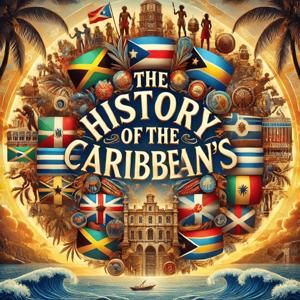


This documentary episode of THE HISTORY OF THE CARIBBEAN exposes the systemic exploitation within the music industry from the nineteen eighties to the present day. We trace the journey of the islands' most iconic sounds—from the raw, digital revolution of early dancehall in Kingston to the global pop charts of the twenty-first century—revealing how communal creativity was harvested by international interests. The narrative explores the transition from handshake agreements and "riddim" culture to predatory "three sixty" contracts and the modern era of micro-royalties. Through case studies of legendary artists who shaped global culture only to die in poverty, we examine the legal mechanisms and corporate maneuvers that allowed foreign entities to extract the wealth of Caribbean vibrations.
This deep-dive into the history of Caribbean music explores the hidden war between the state and the artists who defined a region. From the colonial-era radio bans in 1960s Jamaica to the modern surveillance of drill and trap artists, we examine how governments have systematically used censorship, police intimidation, and legal warfare to silence the voice of the streets. Discover the high-stakes stories of icons like Don Drummond, the attempted assassination of Bob Marley, and the banning of revolutionary rhythms in Grenada and Cuba. We reveal how "moral panic" and "national security" have long been used as tools to suppress the cultural identity of the urban poor and the Rastafari movement.
This documentary podcast episode of THE HISTORY OF THE CARIBBEAN investigates the deep-seated, systemic entanglement between the Caribbean music industry and the power structures of the street. Spanning from the early nineteen eighties to the present day, we explore how the decline of traditional political patronage in Jamaica and Trinidad gave rise to the "Dancehall Don"—local leaders who filled the vacuum left by the state to become the primary financiers of the arts. We trace the evolution of the recording studio from a place of creative refuge to an extension of the garrison office, where the price of a hit record was often a public declaration of factional loyalty.
This long-form documentary exploration of THE HISTORY OF THE CARIBBEAN dives into the grit and the silence behind the global stage of Caribbean music. While the world danced to the infectious rhythms of Ska, Rocksteady, Reggae, and eventually Dancehall and Reggaeton, a massive portion of the story remained hidden in the shadows of the recording studio. This episode examines the systemic marginalization of women and gender-nonconforming voices in a industry built on the pillars of liberation and revolution. From the international breakout of Millie Small with My Boy Lollipop in the nineteen sixties to the modern digital defiance of Ivy Queen and the new generation of independent artists, we trace a timeline of survival against a backdrop of hyper-masculinity and economic exploitation.
This episode of THE HISTORY OF THE CARIBBEAN investigates the high-stakes spiritual warfare played out through the music of Jamaica and Haiti from the nineteen sixties to the present day. We explore how the drum became a weapon of resistance against colonial structures, beginning with the rise of Rastafarian percussion in the gullies of Kingston and the seismic impact of Haile Selassie’s nineteen sixty six visit. The narrative tracks the evolution of the sound of the outcast, where every heartbeat of the Funde and Repeater drums served as a direct challenge to the state and the traditional church, resulting in a systematic attempt by the authorities to smash the instruments and silence the movement.
Discover the untold history of how Caribbean music transformed from a sanitized "island paradise" backdrop into a global force of resistance and identity. In this episode of THE HISTORY OF THE CARIBBEAN, we trace the sonic journey from the gritty nineteen seventy-two debut of The Harder They Come to the digital dominance of the twenty-twenties. Learn how roots reggae, calypso, and dancehall broke the lens of global media, moving beyond the "tropical caricatures" of the eighties and nineties to reclaim the narrative on the world stage. We explore the evolution of representation, the impact of the sound system culture on global pop, and the ongoing struggle for cultural ownership in the age of the algorithm.
In this episode of THE HISTORY OF THE CARIBBEAN, we explore the high-stakes era between nineteen seventy and nineteen ninety-nine when music became a battlefield for free speech across Jamaica and Trinidad. As governments in Kingston and Port of Spain realized the power of a three-minute track to expose corruption and mobilize the masses, they responded with heavy-handed censorship, radio bans, and the legislative weight of the Radio and Television Act. This documentary-style journey uncovers the secret history of the Frequency Killers at the Jamaica Broadcasting Corporation and the Calypso Censors who attempted to silence the social commentary of the tents, revealing a gritty reality where the state tried to sanitize our national identity by turning off the transmitter.
In this episode of THE HISTORY OF THE CARIBBEAN, we confront the most pressing threat to our archipelago’s survival: the escalating environmental crisis. Titled "Can the Caribbean Be Saved," this documentary explores the fragile reality of life on the front lines of climate change, from the ghostly bleaching of the Mesoamerican Reef to the brown tides of sargassum choking our shores. As the Caribbean Sea transforms into a pressurized heat sink, we examine how rising surface temperatures are redrawing our maps and turning the sea from a provider into an intruder. This is a grounded, gritty look at the biological and atmospheric audit facing our islands, moving beyond the postcard imagery to reveal the tense negotiation between a changing sun and a rising tide.
This episode of THE HISTORY OF THE CARIBBEAN explores the transformative power of sound through three pivotal moments where music bypassed political machinery to awaken a new collective consciousness. We begin in nineteen seventy eight at the National Stadium in Kingston, where Bob Marley used the pulse of Jamming to force a historic, physical reconciliation between warring political leaders Michael Manley and Edward Seaga. This chapter dissects how a single reggae melody served as a temporary ceasefire for a nation on the brink of civil war, proving that cultural identity could wield more authority than the state itself.
Our history is being cleared, sold, and silenced. In this episode of the history of the Caribbean, we examine the escalating crisis facing environmental activists from the nineteen nineties to the present day. We move beyond the postcard images of our islands to reveal the gritty reality of those standing on the front lines of conservation. From the sabotaged boats of marine biologists in the Greater Antilles to the disappearances of forest rangers in the Guiana Shield, the cost of protecting our land has never been higher. We investigate how international capital and local corruption have turned the defense of our mangroves and mountain ranges into a lethal occupation. This is a story of risk, where the people who love the land the most are the primary targets of those who want to strip it bare.
From the publisher's feed

4,757 Listeners

111,767 Listeners

56,395 Listeners

16,318 Listeners

236 Listeners

78 Listeners

143 Listeners

67 Listeners
358 Listeners

8,478 Listeners

93 Listeners