
Sign up to save your podcasts
Or



About this episode
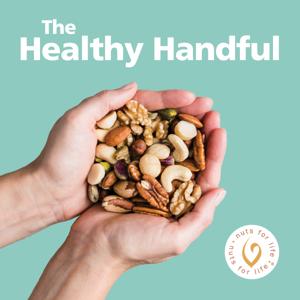
Our latest podcast episode takes a fascinating look at the relationship between nuts and cognition.
Decades of research supports the role of nuts for chronic disease prevention. But more recently, nuts have been associated with brain health and specifically, cognitive function.
In this episode, we speak with researcher Dr Sze-Yen Tan from Australia's Deakin University to uncover the relationship between nut intake and the cognitive function in older adults.
We discuss the potential mechanisms, as well as the types and amounts of nuts needed to benefit brain health.
About today's guest
Dr Sze-Yen Tan is an Advanced Accredited Practising Dietitian, Senior Lecturer and the Deputy Course Director of the Bachelor of Nutrition Science at Deakin University. Yen is also an active researcher at the Institute for Physical Activity and Nutrition (IPAN), where his research focuses on finding effective dietary strategies that promote healthy body weight and prevent chronic diseases.
Supporting resources
Associations between nut intake, cognitive function and non‐alcoholic fatty liver disease (NAFLD) in older adults in the United States: NHANES 2011-14
https://bmcgeriatr.biomedcentral.com/articles/10.1186/s12877-021-02239-1
Sign up to NutENews
Follow us on Instagram, Twitter, Facebook and LinkedIn
Credits
Host: Belinda Neville
Contact us
About this episode
The prevalence of food allergy is on the rise.
In Australia, 10% of infants have an allergy – a rate which is alarmingly high. Approximately 3% of the population have peanut allergy and 1.6% have an allergy to tree nuts. The good news, is we now understand a lot more about trying to prevent food allergies developing, and much research is underway looking at possible treatments.
But what causes allergy? And why is Australia the 'allergy capital of the world'? We take a look at the evidence to answer these (and many more) questions about food allergy.
About today's guest
Maria Said is the CEO of Allergy & Anaphylaxis Australia (A&AA), a position she has held since 1999. Maria works with consumers, teaching and health professionals, the food industry, government and the Australian community.
A registered nurse, Maria is an associate member of the Australasian Society of Clinical Immunology and Allergy (ASCIA) and holds a position on several working parties.
She has co-authored numerous publications in medical and food industry journals, and presented at several US and European medical and food industry meetings. Maria is also co-chair of the National Allergy Strategy, a partnership between ASCIA and A&AA, which was launched in Sydney in August 2015.
Supporting resources
Allergy & Anaphylaxis Australia
https://allergyfacts.org.au/
National Allergy Strategy – Food allergy prevention projects
"NIP allergies in the bub"
https://preventallergies.org.au/
Nuts for Life's baby food recipe booklet
https://www.nutsforlife.com.au/recipe/baby-food-recipes/
Sign up to NutENews
Follow us on Instagram, Twitter, Facebook and LinkedIn
Credits
Host: Belinda Neville
About this episode
The largely plant-based Mediterranean diet is a well-studied dietary pattern.
Research tells us that following a Mediterranean dietary pattern (MDP) can significantly reduce the risk of overall mortality, cardiovascular disease and type 2 diabetes.
Despite the convincing evidence for its benefits, it's not clear whether this dietary pattern is actually being recommended by Australian health professionals.
To find out, a Queensland-based research team investigated the extent to which the MDP is being incorporated into dietary consultations. They uncovered some interesting findings!
About today's guest
Dr Hannah Mayr is an Accredited Practising Dietitian and has expertise as a clinical researcher in chronic disease prevention and management with a 'food as medicine' mantra. Her work has a focus on healthy dietary patterns, including the Mediterranean diet.
Hannah received the Dietitians Australia Early Career Researcher Award in 2018 for her PhD work. Hannah works as a Research Dietitian at both the Princess Alexandra Hospital and Nutrition Research Australia.
She collaborates with diverse teams of medical and allied health clinician researchers, and nutrition scientists. Hannah is also a lecturer and is passionate about teaching research skills to new dietitians and educating multi-disciplinary clinicians on diet.
Supporting resources
Investigating whether the Mediterranean dietary pattern is integrated in routine dietetic practice for management of chronic conditions: A national survey of dietitians. https://www.mdpi.com/2072-6643/12/11/3395
Focus on diet quality: a qualitative study of clinicians' perspectives of use of the Mediterranean dietary pattern for non-alcoholic fatty liver disease. https://doi.org/10.1017/S0007114521001100
Sign up to NutENews
Follow us on Instagram, Twitter, Facebook and LinkedIn
Credits
Host: Belinda Neville
Contact us
About this episode
This episode forms part of a series on nuts and sustainability. We speak with an expert from one of the largest nut industries in Australia – the Almond Board of Australia.
Find out about the Australian Sustainable Almonds Program, which has been progressing work on a broad range of sustainability issues for more than two decades. From water use to waste management, learn more about what the almond industry is doing to ensure quality almonds are produced without compromising the health of our environment.
About today's guest
Joseph Ebbage is the Market Development Manager for the Almond Board of Australia, a position he has held from the inception of the collaborative industry marketing program in 2003.
He is the founder and director of a market research agency, Consumer Insights, which has undertaken a range of research and marketing consulting projects for FMCG food brands and pharmaceutical brands over the past 25 years.
Joseph was previously a Senior Buyer and National Category Manager for Coles Supermarkets, and has also served as a Board Director of several not-for-profit organisations, including Camberwell Grammar School and the Rotary Club of Melbourne.
Sign up to NutENews
Follow us on Instagram, Twitter, Facebook and LinkedIn
Credits
Host: Belinda Neville
Contact us
About this episode
Australians today are much more knowledgeable than in the past when it comes to the environmental credentials of the food they eat. As the expectations on corporate responsibility increase, and as transparency becomes more prevalent, companies and industries recognise the need to act on sustainability.
This episode forms part of a series on sustainability, where we speak with an expert from one of the largest nut industries in Australia – the Australian Macadamia Society (AMS).
Their approach is to identify the key aspects of sustainability and work to improve performance in each area. From water use and pesticides to waste management, learn about what this industry is doing to ensure quality macadamias are produced without compromising the health of our environment.
About today's guest
Jolyon is the CEO of the Australian Macadamia Society, a role he has held since August 2008. He is a Director and past Chair of the Australian Nut Industry Council which represents seven tree nut crops grown in Australia.
Jolyon is a member of the Sustainable Development Committee of the National Farmers Federation and Chair of the Organic Industry Standards and Certification Council. He is the Chair of the International Macadamia R&D Committee, an organisation based in Lincang, China dedicated to fostering closer research and commercial ties between the macadamia industries of the world. He is also a Ministerial appointment to the Board of the NSW North Coast Local Land Services.
Jolyon has worked in Australian horticulture for the last 40 years during which time he has been the CEO of Irrigation Australia Limited, the CEO of Nursery & Garden Industry Australia, the Senior Program Manager for the Horticultural Research & Development Corporation, a Director of the Horticulture Australia Council, a member of the Australian Government National Water Commission Advisory Council, a member of the National Working Party on Pesticide Application and worked as a researcher, an academic, a horticultural consultant and journalist.
Jolyon has degrees in Agricultural Science and Environmental Science and is a graduate of the Australian Institute of Company Directors.
Sign up to NutENews
Follow us on Instagram, Twitter, Facebook and LinkedIn
Credits
Host: Belinda Neville
Contact us
About this episode
It's fair to say that nuts have earned their place as a key food within healthy eating patterns.
Yet most Australians (98%, in fact), fall well short of the recommended 30g a day, so are missing out on the health benefits of a daily handful of nuts.
One of the reasons for this shortfall is concern over the energy and fat content of nuts. In particular, roasted and salted nuts have received a bad rap, despite their nutrient density.
So how do raw and roasted nuts stack up? Are salted nuts as 'salty' as we think? And is it time to reconsider nuts in their variety of forms?
To find out, Nuts for Life collected data on the energy, total fat, saturated fat and sodium content of 158 nut products, from five Sydney grocery stores.
Belinda Neville outlines the surprise findings from this audit, and what they mean for health professionals and the nut industry alike.
About today's guest
Belinda Neville is the Program Manager at Nuts for Life – the leading health education initiative of the Australian Nut Industry, responsible for raising the awareness of the health benefits of tree nuts.
Belinda is an Accredited Practising Dietitian (APD) with over fifteen years' experience working in the food industry sector, specialising in regulatory affairs and in preparing relevant and effective nutrition and health communications.
Supporting resources:
Summary Report: An audit of the energy, fat and sodium content of nutsSign up to NutENews
Follow us on Instagram, Twitter, Facebook and LinkedIn
Credits
Host: Maree Hall (guest host)
Contact us
Nuts are high in healthy fats and are energy (kilojoule) dense. But does this mean that regularly eating nuts is linked to weight gain?
No. In fact, the opposite is what we tend to see. Decades of large population-based studies and clinical trials have consistently shown that those who regularly consume nuts tend to have a lower body weight and are less likely to gain weight over time.
The mechanisms by which nuts help manage body weight and reduce adiposity have been examined in scientific research.
And while we know of some mechanisms - such as that nuts contain protein and fibre which help satisfy hunger and reduce appetite, and that up to 30% of the kilojoules in nuts are not absorbed - we still need to better understand all the factors at play. Things like the amount and type of nuts, the time period, and the comparator diet.
Elizabeth Neale explains the research and the known mechanisms by which nuts do not lead to weight gain.
About today's guest
Dr Elizabeth Neale is an Advanced Accredited Practising Dietitian. She completed her PhD in nutrition at the University of Wollongong in 2012. Elizabeth currently works as a Career Development Fellow (Lecturer) at the University of Wollongong. Elizabeth's research focuses on the evidence-based framework in nutrition, with a particular focus on systematic reviews and meta-analyses in nutrition. Elizabeth's research also explores the impact of nut consumption on risk factors for chronic diseases.
Supporting resources
Fraser GE, et al. A possible protective effect of nut consumption on risk of coronary heart disease. The Adventist Health Study. Arch Intern Med. 1992 Jul;152(7):1416-24. PMID: 1627021.
Guarneiri LL, Cooper JA. Intake of Nuts or Nut Products Does Not Lead to Weight Gain, Independent of Dietary Substitution Instructions: A Systematic Review and Meta-Analysis of Randomized Trials. Advances in Nutrition, nmaa113, https://doi.org/10.1093/advances/nmaa113
Baer DJ, Novotny JA. Metabolizable Energy from Cashew Nuts is Less than that Predicted by Atwater Factors. Nutrients. 2019; 11(1):33. https://doi.org/10.3390/nu11010033
Credits
Host: Belinda Neville
Contact us
Sign up to NutENews
Follow us on Instagram, Twitter, Facebook and LinkedIn
The perception of the 'healthiness' of nuts has changed over the last three decades, following the publication of a landmark study in 1992, 'A possible protective effect of nut consumption on risk of coronary heart disease'. The study concluded that regular nut eaters had half the risk of heart disease compared to those who didn't eat nuts.
Many years later in 2003, the health promotion program, Nuts for Life, was established by the Australian nut industry collectively, and Horticulture Australia Limited, with a remit to educate Australians on the health benefits of regular nut consumption.
Lisa Yates, who was the Program Manager at Nuts for Life for more than 13 years, walks us through the development of Nuts for Life and the 'health history' of nuts from a 'fat-promoting', 'need-to-be-avoided' food to an important core food with a wealth of health-promoting properties.
About today's guest
Lisa Yates is an Advanced Accredited Practising Dietitian and newly-minted Fellow of Dietitians Australia. She is currently working part time in private practice, consulting to patients and industry, and also works part time in food policy. She has a wealth of knowledge in public relations and marketing, nutrition communications, stakeholder management, and strategic planning, implementation and evaluation.
Supporting resources
Nuts for Life website https://www.nutsforlife.com.au/
A possible protective effect of nut consumption on risk of coronary heart disease. The Adventist Health Study (1992). https://pubmed.ncbi.nlm.nih.gov/1627021/
Credits
Host: Belinda Neville
Contact us
Sign up to NutENews
Follow us on Instagram, Twitter, Facebook and LinkedIn
The momentum for nuts and heart health initially started following the publication of a landmark study in 1992, "A possible protective effect of nut consumption on risk of coronary heart disease". The study concluded that regular nut eaters had half the risk of heart disease, compared to those who didn't eat nuts.
Decades on, and the evidence for nuts and heart health continues to grow. The body of evidence suggests that a regular intake of nuts is associated with improvements in heart health indicators, including total cholesterol, LDL cholesterol and the LDL: HDL cholesterol ratio, as well as reductions in mortality from cardiovascular and coronary heart disease.
Elizabeth Neale explains the research and the mechanisms by which nuts contribute to heart health.
About today's guest
Dr Elizabeth Neale is an Advanced Accredited Practising Dietitian. She completed her PhD in nutrition at the University of Wollongong in 2012. Elizabeth currently works as a Career Development Fellow (Lecturer) at the University of Wollongong. Elizabeth's research focuses on the evidence-based framework in nutrition, with a particular focus on systematic reviews and meta-analyses in nutrition. Elizabeth's research also explores the impact of nut consumption on risk factors for chronic diseases.
Supporting resources
Nuts and heart health - A summary of the evidence 2019
A possible protective effect of nut consumption on risk of coronary heart disease. The Adventist Health Study (1992)
Credits
Host: Belinda Neville
Contact us
Sign up to NutENews
Follow us on Instagram, Twitter, Facebook and LinkedIn
The debate on whether you need to activate nuts has been around for a while – with supporters claiming that activating (or soaking) increases the availability of nutrients by reducing phytate levels (phytates are often referred to as inhibitors as they can bind with certain nutrients and thereby prevent their absorption).
But what does the research say? We take a look at the evidence to answer the question – do you need to activate nuts to reap their benefits.
About today's guest
Rachel Brown is a Professor at the Department of Human Nutrition, at the University of Otago in New Zealand where she teaches. She is involved in research in a number of areas, including her favourite - that of nuts and health, which she has been involved in for over 14 years.
Supporting resources
Does 'activating' nuts affect nutrient bioavailability?
Kumari S., et al. Does 'activating' nuts affect nutrient bioavailability? Food Chemistry 2020. 319: p. 126529.
https://pubmed.ncbi.nlm.nih.gov/32199146/
The effects of 'activating' almonds on consumer acceptance and gastrointestinal tolerance.
Taylor, H., et al., The effects of 'activating' almonds on consumer acceptance and gastrointestinal tolerance. Eur J Nutr, 2018. 57(8): p. 2771-2783.
https://pubmed.ncbi.nlm.nih.gov/28956139/
FAQ: Are activated nuts better for you?
Credits
Host: Belinda Neville
Contact us
Sign up to NutENews
Follow us on Instagram, Twitter, Facebook and LinkedIn
From the publisher's feed
31 Listeners

820 Listeners
576 Listeners
57 Listeners

2,058 Listeners
3 Listeners