
Sign up to save your podcasts
Or

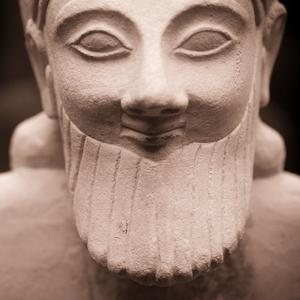


Sir Henry Light, a British officer stationed in Malta in 1814, received permission to travel through Egypt, the Holy Land, and Cyprus. Motivated by curiosity and leisure, he documented what he saw with detailed notes and sketches, capturing both the landscape and the people he encountered. In this excerpt, he describes the strong Frankish presence in Larnaca, noting the European consulates, Catholic churches, and the widespread use of Italian among the locals. A perfect segue into my next interview with Dr. Nicos Coureas as we discuss the Latin Community in Cyprus.
In this episode, I speak with award-winning cookbook author and food storyteller Irene Matys about her internationally acclaimed cookbook, My Cypriot Table, winner of the Gourmand World Cookbook Award for Best Mediterranean Food Culture Book in the World and, most recently, a 2026 Taste Canada Awards finalist. Irene shares her journey from being displaced from her home in Famagusta to building a new life in Canada as a refugee, and how those experiences inspired her cookbook. We also explore the rich traditions of Cypriot cuisine, the stories behind some of her favourite dishes, and the enduring connection between food, family and home.
In this episode, I’m joined by Dr. Anna Charalambidou and Dr. Petros Karatsareas—two linguists whose work explores how language, identity, and culture evolve in Cypriot and diasporic communities. Together, they founded The Grenglish Project, which documents and celebrates the distinctive mix of Cypriot Greek and English spoken by London’s first-generation Cypriots. We discuss the history of Cypriot migration to the UK, how communities formed, and how their language adapted over time. From code-switching and new hybrid words to shifting attitudes about “correct” Greek, Anna and Petros reveal how Grenglish reflects both heritage and change. Ultimately, the project offers a window into how language keeps diasporic identity alive across generations.
If you ever wanted to learn Cypriot Greek, it's never been easier. Cyprusays® is a language learning app designed to help learners speak Cypriot Greek naturally and confidently. In this Special "Primary Source," I speak with Australian born Effie Athanassiou, the Founder and CEO, along with her husband, Costas Athanassiou, serving as Executive Partner. The app goes beyond standard Greek to focus on the expressions, pronunciation, and cultural context that make the Cypriot dialect unique. Through short, engaging lessons, real-life phrases, and cultural insights, Cyprusays helps learners sound authentic while understanding the language as it’s actually spoken on the island. You can download it now on Google Play and on the App Store for iOS.
📱 iOS: https://apps.apple.com/app/cyprusays-learn-cypriot-greek/id6747945746
🤖 Android: https://play.google.com/store/apps/details?id=com.cyprusays.mobile.app
🌐 Web: https://cyprusays.com/
In this episode, we explore the complex history and contemporary character of Turkish Cypriot Islam, a tradition often described as highly secular, private, or even residual. My guest, Mete Hatay (Senior Research Consultant from the Peach Research Institute in Oslo), helps me unpack the many explanations Turkish Cypriots themselves have given for this secularism -- from claims of Alevi or crypto-Christian ancestry to broader narratives shaped by modern Turkish nationalism and a long history of religious marginalization.
William Turner, a British traveller in the early 1800s, left one of the more vivid foreign descriptions of Cyprus under Ottoman rule. He claimed that Turkish Cypriots practiced a more relaxed form of Islam than he had seen in major Ottoman cities -- pointing to things like drinking, eating pork, and looser religious habits, though his comments reflect both his biases and limited encounters. He was also struck by how Turkish Cypriot women moved unveiled in public, which contrasted sharply with the norms he knew from Constantinople. While not a literal portrayal of the whole island, Turner’s observations show how outsiders already viewed Cypriot Islam as shaped by local custom, rural life, and cultural mixing. This sets the stage for next month’s episode on Turkish religion, secularism, and identity in Cyprus with Mete Hatay!
William Turner, a British traveller in the early 1800s, left one of the more vivid foreign descriptions of Cyprus under Ottoman rule. He claimed that Turkish Cypriots practiced a more relaxed form of Islam than he had seen in major Ottoman cities -- pointing to things like drinking, eating pork, and looser religious habits, though his comments reflect both his biases and limited encounters. He was also struck by how Turkish Cypriot women moved unveiled in public, which contrasted sharply with the norms he knew from Constantinople. While not a literal portrayal of the whole island, Turner’s observations show how outsiders already viewed Cypriot Islam as shaped by local custom, rural life, and cultural mixing. This sets the stage for next month’s episode on Turkish religion, secularism, and identity in Cyprus with Mete Hatay!
Dr. Louise Steel is an archaeologist whose work focuses on challenging colonial interpretations of Cypriot history by emphasizing the agency of the local population. Through postcolonial theory, she encourages a re-evaluation of Cyprus not as a passive recipient of outside influence, but as an active participant in Bronze Age interconnectivity--especially through trade and cultural exchange. She uses the concept of the "Third Space" to frame Cyprus as a dynamic cultural middle ground, particularly during the Late Bronze Age, when the island thrived through the copper trade and maintained complex, often peaceful, relationships with powers like Egypt. Dr. Steel highlights Enkomi as a prime example of this hybridity: a site marked by elite tombs, Egyptian imports like scarabs and broad collars, and signs of status and identity shaped through interaction rather than domination. Her work invites further inquiry into how material culture reveals the identities and social lives of Cypriots in this pivotal era.
In the early 11th century BCE, the Egyptian official Wen-Amun was dispatched on a diplomatic mission to Byblos to acquire timber for the sacred barque of Amun-Ra. His journey quickly unraveled -- pursued by the Tjekker, one of the Sea Peoples active in the region -- Wen-Amun was blown off course and landed in Alashiya (Cyprus). There, he faced a hostile reception, as the locals approached seemingly intent on violence. Brought before Princess Hatiba, Wen-Amun, desperate and stranded, called out to see if anyone could understand Egyptian. Remarkably, one man stepped forward to translate his plea. At this pivotal moment, the narrative breaks off, leaving Wen-Amun’s fate unknown. Yet his misadventure offers a striking glimpse into Egypt’s waning influence abroad and the diplomatic uncertainty of the time. At the same time, the presence of an Egyptian speaker in Cyprus points to the deep interconnectivity of the Late Bronze Age world -- an idea we’ll explore further in our next episode with Dr. Louise Steel, as we examine the ties between Cyprus and Egypt during this formative period.
In the early 11th century BCE, the Egyptian official Wen-Amun was dispatched on a diplomatic mission to Byblos to acquire timber for the sacred barque of Amun-Ra. His journey quickly unraveled -- pursued by the Tjekker, one of the Sea Peoples active in the region -- Wen-Amun was blown off course and landed in Alashiya (Cyprus). There, he faced a hostile reception, as the locals approached seemingly intent on violence. Brought before Princess Hatiba, Wen-Amun, desperate and stranded, called out to see if anyone could understand Egyptian. Remarkably, one man stepped forward to translate his plea. At this pivotal moment, the narrative breaks off, leaving Wen-Amun’s fate unknown. Yet his misadventure offers a striking glimpse into Egypt’s waning influence abroad and the diplomatic uncertainty of the time. At the same time, the presence of an Egyptian speaker in Cyprus points to the deep interconnectivity of the Late Bronze Age world -- an idea we’ll explore further in our next episode with Dr. Louise Steel, as we examine the ties between Cyprus and Egypt during this formative period.
From the publisher's feed
3,197 Listeners
4,275 Listeners
4,395 Listeners
1,872 Listeners
1,860 Listeners
4,768 Listeners
3,989 Listeners
6,224 Listeners
5,230 Listeners

16,322 Listeners
3,363 Listeners
15,573 Listeners
1,894 Listeners

190 Listeners

2,453 Listeners