
Sign up to save your podcasts
Or



Based on Podcast App listening data
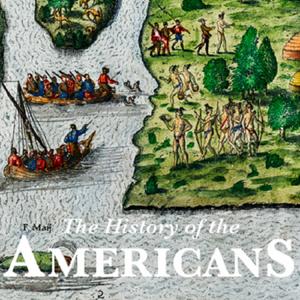
This factoid-rich episode is a major rewriting of one of the earliest and most popular episodes of the podcast, Introduction to the Columbian Exchange, which originally aired on February 12, 2021 and then again in a revised form as episode #166 on October 11, 2024. This version includes lots of new aspects of the Columbian Exchange, and more recent scholarship on several of the topics discussed in the old episodes.
The supercontinent known as Pangaea (Pangea if you are reading most American textbooks) began to split apart around 200 million years ago, near the beginning of the dinosaur era, and the new Atlantic Ocean entirely divided the eastern and western hemispheres about 75 million years ago. Biological life on the two continents probably began evolving separately about 100 million years ago.
That biological diversity enabled by the breaking up of Pangaea has been an enormous boon for homo sapiens as a species in the more than five centuries since October 12, 1492, and also the cause of much suffering for individual humans in both the Americas and the Old World, Africa particularly.
I learned a lot in the rewriting of this – such as the correct scholarly spelling for the name of the supercontinent of old is “Pangaea” – and I hope you do too.
And listen to the end for the controversial takes!
Subscribe to my Substack!
X (new account) @jbhenneman – https://x.com/jbhenneman
Facebook – https://www.facebook.com/HistoryOfTheAmericans
#166 Introduction to the Columbian Exchange (Revised)
Selected references for this episode (Commission earned for Amazon purchases through the website)
Alfred W. Crosby, Jr., The Columbian Exchange: Biological and Cultural Consequences of 1492, 30th Anniversary Edition
Noble David Cook, Born to Die: Disease and New World Conquest, 1492-1650
Charles C. Mann, 1493: Uncovering the New World Columbus Created
Nathan Nunn and Nancy Qian, “The Columbian Exchange: A History of Disease, Food, and Ideas”
Rodrigo Barquera and others, “Ancient genomes reveal a deep history of Treponema pallidum in the Americas,” Nature, December 18, 2024 (subscription required).
Jorge R. Díaz-Valderrama and others, “The History of Cacao and Its Diseases in the Americas,” Phytopathology, September 14, 2020.
It is the 1670s. Robert Cavelier, Sieur de La Salle, having returned from exploring south of Lake Erie, made common cause with the flamboyant and visionary new governor of New France, Louis de Buade, Comte de Frontenac. Together they hatch a plan to get permission from Louis XIV to build a string of forts in the Great Lakes region and explore and settle the Mississippi River Valley. La Salle travels to France twice, and enlists the King’s first minister, the great Jean-Baptiste Colbert, to support a mission to find the mouth of the Mississippi so that France might establish a base there for the purpose of better harrassing Spain. Along the way La Salle builds a huge fort at the eastern end of Lake … Ontario, survives the second of five assassination attempts, and Frontenac demonstrates a great flair for diplomacy with the Iroquois.
Oh, and the Jesuits have it out for them.
Subscribe to my Substack!
X (new account) @jbhenneman – https://x.com/jbhenneman
Facebook – https://www.facebook.com/HistoryOfTheAmericans
#217 Introduction to René-Robert Cavelier, Sieur de La Salle
Primary references for this episode (Commission earned for Amazon purchases through the episode notes on our website)
Anka Muhlstein, La Salle: Explorer of the North American Frontier
Richard Gross and Craig P. Howard, “Colbert, La Salle, and the Search for Empire,” Journal of the Illinois State Historical Society, Summer 2020.
It is time to get back to New France and the exploration of the middle of this beautiful country of ours. Our vehicle will René-Robert Cavelier, Sieur de La Salle, known to both his contemporaries and to history as “La Salle.” You’ve heard his name, especially if you live within driving distance of the Mississippi, but do you know what he actually did? This and the next few episodes tell La Salle’s remarkable story.
We are back in New France, along the St. Lawrence River, now in the 1660s. The episode begins with an introduction to the geopolitics of North America from the French perspective, then pivots to La Salle’s early life and first years in New France, where he had received a grant of land on roughly the site of Montreal’s international airport. Finally, we conclude with his first journey of discovery, an attempt – perhaps fulfilled – to discover the Ohio River, of which he had heard from Seneca Iroquois who wintered with him in 1668-69. This voyage mattered, because it might have established French claims to the Pittsburgh area, the ambiguity of which was, along with George Washington, the catalyst for the French and Indian War. Sadly, those claims were ambiguous because the French national archives had misplaced the relevant narratives, and they only resurfaced in the 19th century. Archivists matter!
Subscribe to my Substack!
X – @TheHistoryOfTh2 – https://x.com/TheHistoryOfTh2
Facebook – https://www.facebook.com/HistoryOfTheAmericans
Primary references for this episode (Commission earned for Amazon purchases through the episode notes on our website)
Anka Muhlstein, La Salle: Explorer of the North American Frontier
Robert S. Weddle, “Tarnished Hero: A La Salle Overview,” The Southwestern Historical Quarterly, Oct. 2009.
Richard Gross, “La Salle’s Claim and the Ohio River Valley,” Pennsylvania History: A Journal of Mid-Atlantic Studies, Spring 2020.
It is the spring of 1681. The “exclusion crisis,” an insurgency in Parliament proposing to exclude the king’s brother, James, Duke of York, from the line of succession, was reaching its climax. Even so, on March 4 King Charles II found time to grant William Penn a vast territory extending from the west bank of the Delaware River to a longitude equal to the then western border of Maryland. It was now William Penn’s role, as sole proprietor of Pennsylvania, to fill it up with people. He would do a remarkable job, especially under the challenging circumstances, relying heavily on his … pen. Along the way he would write a practical and moral defense of English colonialism at a time when many of the movers and shakers in London were arguing against it.
Subscribe to my Substack!
X – @TheHistoryOfTh2 – https://x.com/TheHistoryOfTh2
Facebook – https://www.facebook.com/HistoryOfTheAmericans
Primary references for this episode (Commission earned for Amazon purchases through the episode notes on our website)
Andrew R. Murphy, William Penn: A Life
Jean R. Soderlund (Editor), William Penn and the Founding of Pennsylvania: A Documentary History
Joseph E. Illick, Colonial Pennsylvania: A History
Richard S. Dunn, “William Penn and the Selling of Pennsylvania, 1681-1685,” Proceedings of the American Philosophical Society, Oct. 14, 1983
With Sir William Penn’s passing in 1671, and his deathbed admonition that his son stay true to himself, young William Penn was both financially independent and liberated from worrying that his own activism on behalf of the Quakers would hurt his family. William now owned lands that generated income of around 2000 pounds a year, or roughly the wages of 100 laborers of the time.
Penn was a pious son of privilege who used his social, material, and intellectual advantages to advance his family’s business interests and the interests of Quakers, both as individuals and as a religious community. He would get tossed in jail at least once more for his religion, and he would use that time writing defenses of the Quakers and their theology that irritated the established church and its supporters to no end. By the second half of the 1670s he had written more than fifty books and pamphlets on religion and political theory, most of which would vex the English elites in general and local authorities in specific cases.
And, yet, by 1681 Penn would persuade King Charles II and his brother, James, Duke of York, to give him, as sole proprietor, an area of 34 million acres, the last land on the eastern seaboard of North America controlled by England.
How the heck did that happen?
Subscribe to my Substack!
Facebook – https://www.facebook.com/HistoryOfTheAmericans
#212 William Penn Before Pennsylvania 1
#214 William Penn Before Pennsylvania 2: Penn on Trial
#210 The Quakers Invade West New Jersey
Primary references for this episode (Commission earned for Amazon purchases through the episode notes on our website)
Andrew R. Murphy, William Penn: A Life
Jean R. Soderlund (Editor), William Penn and the Founding of Pennsylvania: A Documentary History
Joseph E. Illick, Colonial Pennsylvania: A History
William Penn returned from Ireland in August 1670, and soon found himself arrested, along with fellow Quaker William Mead, for preaching to a crowd in public in violation of “the common law,” an ambiguity that would play out during their momentous trial. The trial would end in their acquittal, notwithstanding egregious intimidation of the jury by the judge, the Lord Mayor Sir Samuel Starling. Among other exciting moments, Starling threw the principled foreman of the jury, Edward Bushel, in jail. Bushel’s suit for a writ of habeas corpus would lead to a verdict that established an inviolate principle in Anglo-American law, that judges may not intimidate juries.
Penn and Mead were acquitted under the glare of remarkable publicity for the day, and the case would establish Penn as a nationally famous advocate for Dissenting religion.
After his acquittal, Penn finally made it home to visit his dying father, Sir William Penn, with whom he reconciled in a poignant father-son moment.
Subscribe to my Substack!
X – @TheHistoryOfTh2 – https://x.com/TheHistoryOfTh2
Facebook – https://www.facebook.com/HistoryOfTheAmericans
#212 William Penn Before Pennsylvania 1
#208 What You Need to Know About English Politics in the 1680s 1: The Exclusion Crisis
Primary references for this episode (Commission earned for Amazon purchases through the episode notes on our website)
Andrew R. Murphy, William Penn: A Life
Julius J. Marke, “The Trial of William Penn,” Litigation, Fall 1979.
Robert and Marilyn Aitken, “Bushell’s Case,” Litigation, Winter 2010.
The purpose of this episode is very simple: If you find yourself driving in your car with others this weekend (or on some future Fourth of July) and you and your passengers – perhaps they are your children and now they are a captive audience at your mercy – might enjoy hearing the Declaration of Independence and knowing just a little bit about the heroic signers of it, play this episode!
For those of you too down-to-earth to say “semiquincentennial,” happy 250th Fourth everybody, and please pass this around to anybody who you think might be interested in it.
Subscribe to my Substack!
X – @TheHistoryOfTh2 – https://x.com/TheHistoryOfTh2
Facebook – https://www.facebook.com/HistoryOfTheAmericans
The Declaration of Independence (National Archives transcription)
[Announcement: From November 4 through 6, 2026, the Foundation for Individual Rights and Expression (FIRE) is hosting its inaugural Soapbox free speech conference in Philadelphia, the city where so many of America’s defining debates over liberty began. I and the wife of the pod will be there and would love to hoist one with listeners of the History of the Americans. More compellingly, there will be several far more famous podcasters for whom free speech is an important value. Were he able to attend, William Penn would be there too, probably as a keynote speaker.
Soapbox will bring together leading writers, comedians, scholars, and others for three days of lively debate and thought-provoking conversations about free expression, history, law, culture, and current events. Learn more and grab early-bird tickets before July 4 at soapbox.fire.org, link in the episode notes. Listeners of The History of the Americans Podcast can use promo code HISTORY in all caps to save an additional $50 on their tickets. I hope to see you there.]
This episode is about William Penn, founder of three American colonies, before he founded them. The best way to describe the story to be told here is with a quotation from David Hackett Fischer, in his book Albion’s Seed:
[The] “Delaware culture area” developed not by some random process of social selection, but from the conscious will and purpose of its Quaker founders. The leading role was played by one founder in particular, William Penn, who served Pennsylvania, Delaware, and also West Jersey as lawgiver, social planner, organizer, tireless promoter, and regulator of the immigration process. The cultural history of this region cannot be understood without knowing something about the mind and character of this extraordinary man.
William Penn was a bundle of paradoxes – an admiral’s son who became a pacifist, an undergraduate at Oxford’s Christ Church who became a pious Quaker, a member of Lincoln’s Inn who became an advocate of arbitration, a Fellow of the Royal Society who despised pedantry, a man of property who devoted himself to the welfare of the poor, a polished courtier who preferred the plain style, a friend of kings who became a radical Whig, and an English gentlemen who became one of Christianity’s great spiritual leaders.
This episode and the next will explore the mind and character “of this extraordinary man.”
Subscribe to my Substack!
X – @TheHistoryOfTh2 – https://x.com/TheHistoryOfTh2
Facebook – https://www.facebook.com/HistoryOfTheAmericans
Primary references for this episode
David Hackett Fischer, Albion’s Seed: Four British Folkways in America
Andrew R. Murphy, William Penn: A Life
Richard Bell, Rick to his friends and podcast hosts, is Professor of History at the University of Maryland. He is the author of the book Stolen: Five Free Boys Kidnapped into Slavery and their Astonishing Odyssey Home which was a finalist for the George Washington Prize and the Harriet Tubman Prize. He has held major research fellowships at Yale, Cambridge, and the Library of Congress and is the recipient of the National Endowment of the Humanities Public Scholar award and the Andrew Carnegie Fellowship. His new book, The American Revolution and the Fate of the World, published by Penguin, recently won the Journal of the American Revolution Book of the Year Award.
The wife of the pod and I saw Rick speak to a small group in Austin in the beginning of April, and his talk stimulated me to buy and read his new and very timely book on the global history of the American Revolution. I enjoyed it very much, insofar as it is packed with the sort of interesting stories that are the stock-in-trade of the History of the Americans Podcast, and of course recommend that you run out and buy it!
In our conversation we discuss two of the fourteen chapters in the book, one on the grassroots antiwar movement that emerged in Great Britain early in the war, and the other on Spain’s remarkable contribution to the ultimate patriot victory. I hope you enjoy listening as much as I had fun doing it.
Subscribe to my Substack!
X – @TheHistoryOfTh2 – https://x.com/TheHistoryOfTh2
Facebook – https://www.facebook.com/HistoryOfTheAmericans
This is the story of the division of the colony of New Jersey into East New Jersey and West New Jersey, and the bizarre legal and financial machinations that resulted ultimately in the settlement of the region by Quakers in the second half of the 1670s. Fundamentally, those machinations were between two somewhat disreputable Quakers, John Fenwick and Edward Byllynge. Their longstanding quarrel would threaten to spill out into non-Quaker circles, so William Penn intervened to arbitrate between them and save the Friends from embarrassment. It was this intervention that would first involve Penn in North American colonization, and just a few years down the road would result in the founding of Pennsylvania.
Subscribe to my Substack!
X – @TheHistoryOfTh2 – https://x.com/TheHistoryOfTh2
Facebook – https://www.facebook.com/HistoryOfTheAmericans
Useful prerequisite episodes:
#167 Ohhhh! Whaddabout New Jersey?
#171 New Jersey Is Revolting!
Primary references for this episode
John E. Pomfret, The Province Of West New Jersey 1609-1702 (Out of print – best found in libraries)
The concessions and agreements of the proprietors, freeholders and inhabitants of the province of West New-Jersey, in America
Introduction to and summary of the West Jersey Concessions
Quintipartite Deed
From the publisher's feed
4,396 Listeners

1,562 Listeners

4,270 Listeners

2,275 Listeners

1,843 Listeners

1,514 Listeners

2,885 Listeners

6,227 Listeners

6,588 Listeners

735 Listeners

3,920 Listeners

3,340 Listeners

454 Listeners
1,065 Listeners
214 Listeners