
Sign up to save your podcasts
Or

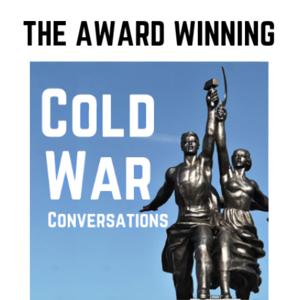

The Cold War got colder in the early 1980s and the relationship between the two military superpowers, the USA and the Soviet Union, each of whom had the capacity to annihilate the other, was tense. By the end of the decade, East-West relations had been utterly transformed, with most of the dividing lines -including the division of Europe- removed.
We are here with Archie Brown, Emeritus Professor of Politics at the University of Oxford, a Fellow of the British Academy, and an International Honorary Member of the American Academy of Arts and Sciences.
He is the author of numerous books including his latest work , The Human Factor, Gorbachev, Reagan, and Thatcher, and the End of the Cold War arguing the engagement between Gorbachev and Reagan was a crucial part of that process of change. More surprising was Margaret Thatcher's role.
Our reviews help the podcast grow, so if you are enjoying our content please leave a written review in Apple podcasts or share us on social media.
If you can spare it I’m asking listeners to contribute $3 USD per month to help keep us on the air (larger amounts are welcome too) plus you can get a sought after Cold War Conversations coaster as a monthly financial supporter of the podcast and you bask in the warm glow of knowing you are helping preserve Cold War history.
Just go to https://coldwarconversations.com/donate/
Back to today’s episode, we start by talking about Archie’s’ time as a British Council exchange scholar at Moscow State University for a year between 1967 and 1968. We welcome Archie Brown to our Cold War conversation…
There’s further information on this episode in our show notes, which can also be found as a link in your podcast app. https://coldwarconversations.com/episode117/
If you like what you are hearing, please leave reviews in Apple podcasts and share us on social media.
If you can’t wait for next week’s episode do visit our Facebook discussion group where guests and listeners continue the Cold War Conversation. Just search Cold War Conversations in Facebook.
Thankyou very much for listening. It is really appreciated
Support the project! https://coldwarconversations.com/donate/
Follow us on Twitter https://twitter.com/ColdWarPod
Facebook https://www.facebook.com/groups/coldwarpod/
Instagram https://www.instagram.com/coldwarconversations/
Youtube https://youtube.com/@ColdWarConversations
Learn more about your ad choices. Visit podcastchoices.com/adchoices
 View all episodes
 By Ian Sanders

4.8
436436 ratings
The Cold War got colder in the early 1980s and the relationship between the two military superpowers, the USA and the Soviet Union, each of whom had the capacity to annihilate the other, was tense. By the end of the decade, East-West relations had been utterly transformed, with most of the dividing lines -including the division of Europe- removed.
We are here with Archie Brown, Emeritus Professor of Politics at the University of Oxford, a Fellow of the British Academy, and an International Honorary Member of the American Academy of Arts and Sciences.
He is the author of numerous books including his latest work , The Human Factor, Gorbachev, Reagan, and Thatcher, and the End of the Cold War arguing the engagement between Gorbachev and Reagan was a crucial part of that process of change. More surprising was Margaret Thatcher's role.
Our reviews help the podcast grow, so if you are enjoying our content please leave a written review in Apple podcasts or share us on social media.
If you can spare it I’m asking listeners to contribute $3 USD per month to help keep us on the air (larger amounts are welcome too) plus you can get a sought after Cold War Conversations coaster as a monthly financial supporter of the podcast and you bask in the warm glow of knowing you are helping preserve Cold War history.
Just go to https://coldwarconversations.com/donate/
Back to today’s episode, we start by talking about Archie’s’ time as a British Council exchange scholar at Moscow State University for a year between 1967 and 1968. We welcome Archie Brown to our Cold War conversation…
There’s further information on this episode in our show notes, which can also be found as a link in your podcast app. https://coldwarconversations.com/episode117/
If you like what you are hearing, please leave reviews in Apple podcasts and share us on social media.
If you can’t wait for next week’s episode do visit our Facebook discussion group where guests and listeners continue the Cold War Conversation. Just search Cold War Conversations in Facebook.
Thankyou very much for listening. It is really appreciated
Support the project! https://coldwarconversations.com/donate/
Follow us on Twitter https://twitter.com/ColdWarPod
Facebook https://www.facebook.com/groups/coldwarpod/
Instagram https://www.instagram.com/coldwarconversations/
Youtube https://youtube.com/@ColdWarConversations
Learn more about your ad choices. Visit podcastchoices.com/adchoices
1,239 Listeners
1,529 Listeners
4,780 Listeners

278 Listeners
1,425 Listeners
187 Listeners

1,957 Listeners

369 Listeners
531 Listeners

15,596 Listeners
347 Listeners
479 Listeners
336 Listeners
268 Listeners

1,095 Listeners