
Sign up to save your podcasts
Or

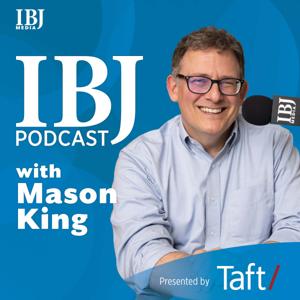


The southeast side of Indianapolis has been home to seven generations of the Waterman family, which has farmed parcels in the area for much of that time. About 50 years ago, Bruce and Carol Waterman took a big step toward a new, public-facing endeavor called Waterman’s Family Farm. Those seeds planted on 50 acres at 7010 E. Raymond St. soon brought folks from across central Indiana for you-pick produce — including strawberries, tomatoes and corn — and its five-week Fall Festival for autumn enthusiasts and families who love playgrounds, corn mazes and amusement rides. This year’s
Waterman’s Family Farm was founded in 1978. Bruce and Carol’s children and grandchildren are now intimately involved in running the attraction. Bruce, who had a passion for farming the family land, passed away several years ago. An outside party now handles farming responsibilities, and Bruce’s descendants are leaning even more heavily on the agritourism side of the Waterman legacy to make their living.
Scott Waterman, co-owner of Waterman’s Family Farm, and his daughter, Taylor Waterman, are the guests this week on the IBJ Podcast to discuss the growth of the festival, which attracted about 15,000 ticketed attendees last year and already has surpassed that total this year. They also discuss the challenges of running a seasonal business and their devotion to promoting agriculture in Indianapolis even as most of the farms in the area have long since been supplanted by housing and highways.
In 2020, Bloomington-based device maker Cook Medical and several Indianapolis-based nonprofits announced plans to build a $15 million manufacturing facility on Indy’s near-eastside. The goal was to create about 100 jobs for residents of the high-poverty neighborhood. Those 100 employees then would receive key services from Goodwill of Central & Southern Indiana to ensure the workers and their families have the food, housing and education they need to succeed. Goodwill Commercial Services would run the plant, which would make medical devices for Cook. And to ensure employees and other area residents had access to healthy food, Cook also planned to develop a grocery store next door named Indy Fresh Market, employing another 40 people.
Cook Medical President Pete Yonkman returns to the IBJ Podcast this week to deliver an update on the facilities and how well Cook and its partners have been able to deliver on their goals. In particular, he discusses the grocery’s struggle to reach the break-even point, the process for addressing crime in the neighborhood and whether this blueprint for community investment has caught on elsewhere.
Fishers-based Round Room LCC is the sixth-largest private company in Indiana. You’re forgiven for not knowing the name, although the brand it represents is one of the most recognizable in the United States and provides goods and services to more than 100 million people. And Round Room is in the midst of a major growth spurt that could put it higher on the list of Indiana private companies, although it’s unlikely to change from what owner and CEO Scott Moorehead calls “the best company that nobody knows about in the state.”
The easiest way to explain Round Room is to say that it is one of the nation’s largest independent wireless retailers with exclusive agreements with Verizon. It currently owns or has franchised about 1,550 stores in about 45 states. The sign on the outside will say Verizon, and the interior will look like any other Verizon store, but there’s decent chance just about anywhere in the country that you’re walking in a Round Room store. And the numbers are growing fast: Round Room counted about 1,300 stores at the beginning of this year, and Moorehead projects the number will be somewhere in the 1,600 to 1,650 range by the end of the year with annual revenue close to $3 billion. Round Room’s employee count is just under 3,000 people, including about 500 added just this year.
Moorehead returns to the IBJ Podcast this week to discuss what’s driving the growth spurt. He also explains why selling phones and wireless service is a recession-resistant business. As Moorehead explains, artificial intelligence is now an important part of the business. And he goes into some detail describing Round Room’s evolving relationship with Verizon, currently the 28th largest member of the Fortune 500.
Adam Weber and Andrew Clark seem to be cut from similar cloth. Before working in the technology sector, they both earned degrees in the liberal arts at Ball State University. The eventually worked together at tech firm BlueBridge Digital, which was co-founded by Weber. Clark joined Weber again at the firm Emplify, which was an evolved version of BlueBridge and was acquired in 2021 for $50 million. Weber and Clark knew they enjoyed working with each other and kept their eyes peeled for the right idea.
They founded it in February and made the decision to team up over dinner. Named Helm, the company evaluates executive teams to find points of friction that can slow growth. Helm then helps the CEO improve group dynamics and accelerate performance. Weber and Clark work closely together, in part because new artificial intelligence tools can handle responsibilities that would have required as many as 20 full-time employees just five years ago. The tools also have helped eliminate major startup costs. In fact, Weber and Clark have no plans for the foreseeable future to hire a third person or to seek investor capital. They’re a two-man band.
In this week’s edition of the podcast, Weber and Clark discuss the ways creating a startup has changed in the age of AI and why they enjoy working together. They also address the challenges of evaluating top executives and the five main signals they apply to client companies.
On Friday, IBJ reported that a coalition of Indianapolis business, civic and institutional leaders is developing an ambitious plan to reshape downtown’s west side, including a near-complete reworking of West Street and major changes to the street’s connections with Interstates 65 and 70. The concept calls for lowering sections of West Street, recessing portions of the interstates at the two gateways and building streets, pedestrian connections and public spaces above some of the roadways. Led by the Indy Chamber, the coalition is fleshing out its vision and soon could face the formidable task of getting buy-in from the state, the city, two major universities, some of Indy’s biggest employers and other property owners.
This might be a tough one to get your arms around, so this week’s podcast features two interviews with people who were close to the process of conceptualizing the so-called Downtown West Innovation District. IBJ Editor Lesley Weidenbener sat down with Matt Mindrum, the CEO of the Indy Chamber, to discuss the big picture, the potential economic benefit and the complex vision for financing the project. Then you’ll hear podcast host Mason King’s interview with Brenda Freije, president and CEO of the transit-focused nonprofit Rethink Coalition, about specific changes proposed for four sections of West Street.
Once upon a time, our relationship with consumer technology started and ended with how we could tell time. In the 1800s, your pocket watch or your wristwatch might have been the most complicated and vital piece of technology you owned, and folks passed them down over generations as signature artifacts of the original owners. Today, watches or the personal devices we use to tell time are unimaginable complex and versatile, compared to a century ago, but they’re surprisingly disposable. Their obsolescence is practically guaranteed within five years. No one is bragging about refurbishing and wearing their father’s iPhone as a cherished keepsake.
Adam Fleddermann approached the watch-making industry from two directions. He brought a deep respect for the role mechanical watches used to play in business and family life while leveraging his up-to-the-minute professional expertise in logistics. Over a few years he turned a hobby into a family business, designing his own watch models, sourcing parts from the global supply chain and arranging to have them assembled by artisans in Kokomo. His brand of watches inspired by German culture is known as Fleddermann Von Rieste, and one of the latest models is a limited-edition timepiece licensed by Purdue University using several of the school’s signature design elements. In this week’s edition of the IBJ Podcast, Fleddermann discusses the entrepreneurial origins of his Indianapolis-based company during the pandemic and his drive to create sophisticated timepieces that can survive to become multigenerational heirlooms. He also discusses finding the right entry point when nearly everyone owns a device that tells time and the high-end watch market is populated with several famous brands.
For its 10th movie, Bloomington-based Pigasus Pictures has mounted its biggest production yet, with a $10 million budget and a key role played by one of Hollywood’s biggest stars. Indiana has more than its fair share of inspirational sports movies, and Pigasus is diving deep into the genre with “Little Five,” the story of the first Women’s Little 500 bicycle race on Indiana University’s Bloomington campus. Pigasus is the lead production company, but it received a boost from co-producer Somewhere Pictures, founded by Oscar-winning actress Anne Hathaway.
Pigasus CEO Zachary Spicer returns to the IBJ Podcast this week to talk about one of the recent low points in his career that inspired him to develop a movie about the first Women’s Little 500. He discusses the evolution of the concept, raising the $10 million and his longtime connection with Hathway that led to her company’s participation. He also reminisces about filming in Bloomington, where he attended IU, and how the football team’s national championship helped the production team. Plus, we get the lowdown on the Pigasus project “Trash Mountain,” that debuted last Friday at the Toronto International Film Festival.
The financial media’s laser pointer is often so jittery that it’s tough to figure out which developments are most important to your financial life. The topic that received the most focus last week was rising bond yields. As we’ll discuss in this week’s podcast, that issue could have serious legs, and its feet appear to be pointing downhill.
You might be surprised to know that the yield on a 10-year U.S. Treasury bond is considered by many to be the most important interest rate in the world. It plays a big role in determining your cost when you borrow money – from a mortgage to a car loan to a credit card. And news that yields are rising means that bonds are falling out of favor in the marketplace, indicating there’s considerable anxiety over the government’s ability to handle inflation, budget deficits and the war in Iran, among several concerns.
In this week’s edition of the IBJ Podcast, Peter Dunn, aka IBJ columnist Pete the Planner, joins us to help focus on the meaning behind rising bond yields. He also discusses the duality that many Americans face in the current financial system, in which some folks thrive and others fall behind. You’ve probably heard it referred to as the K-shaped economy.
IBJ celebrated philanthropy, nonprofit organizations and the businesses who support them at our second annual Nonprofit Excellence Awards event on Aug. 4 at the Indiana Roof Ballroom.
During the event, IBJ reporter Dave Lindquist interviewed Taggart Birge, the 2025 winner of the Philanthropist of the Year Award. Tag, who is a real estate investor, and his wife annually support scholarships, education programs and public art, among other efforts.
For this week’s IBJ Podcast, we bring you that conversation.
Dave talks in detail with Tag about how he and his wife have settled on their philanthropic strategy and the personal connections that led them to focus particularly on helping disadvantaged students. And you’ll hear Tag answer questions submitted by those in the room at the event.
You can find a full video of the 2026 Nonprofit Excellence Awards event here.
For all of the people who have said at some point in their lives, “Wouldn’t it be fun to open a small bookstore,” consider the story of Julia Breakey and Jake Budler, a married couple who opened Tomorrow Bookstore on Mass Ave in 2023. They hurdled all of the concerns that likely dissuade most folks from following through. Questions like, “How do I get startup capital?” How do I compete with Amazon?” “Why try to sell printed books in an increasingly digital world?” And “How can I, a constitutionally introspective person, survive a career that requires intense customer service?”
The origin story of Tomorrow Books seems all the more unlikely given that Breakey and Budler hail from South Africa and are in their very early 30s. But they had a built-in advantage, in that Jake has a wealth of expertise related to startups as an employee of a global firm that supports high-growth entrepreneurs. In this week’s edition of the podcast, Julia and Jake explain how they chose to settle in Indianapolis and open their own business, how they divide the duties of running a bookstore, how they found the right mix of financing and why they have embraced the recent wave of new independent booksellers in Indianapolis instead of considering them competitors.
From the publisher's feed

31,916 Listeners
1,101 Listeners

800 Listeners
250 Listeners

30,112 Listeners

4,242 Listeners
13 Listeners

3,062 Listeners

828 Listeners

2 Listeners
6 Listeners
53 Listeners

1,612 Listeners

10,493 Listeners
4 Listeners

1,532 Listeners
8 Listeners
9 Listeners
4 Listeners

0 Listeners
383 Listeners