
Sign up to save your podcasts
Or

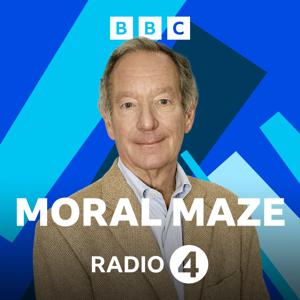

Michael Buerk chairs a special Moral Maze debate recorded at 'HowTheLightGetsIn' festival of philosophy and music.
The language of freedom permeates our political debate. In the US, it may be a decisive battleground in the 2024 presidential election. The problem is that people mean very different things by it. Is it freedom from government regulation or freedom to have an abortion? Freedom of speech or freedom from discrimination? Freedom to own a gun or freedom for communities to ban them?
A distinction is often made between positive and negative freedom. Negative freedom is the absence of constraints (‘freedom from’) – while positive freedom is the possibility of acting in such a way as to take control of one’s life (‘freedom to’). Libertarians often see individual freedom - the private enjoyment of one’s life and goods, free from interference – as the most fundamental value that any society should pursue and protect. This view is challenged by those who believe wealth, health and educational inequalities inevitably mean some people are more free than others, and seek instead to promote the collective freedom of society as a whole.
If a society in which there is a complete absence of restraint is as dystopian as one in which our every action is controlled, how should we navigate the trade-offs between individual freedom and other goods, like security and collective wellbeing? Is the language of freedom helpful or harmful in negotiating our political differences? Deeper question: what does it mean for a human being to be free?
With guests: Konstantin Kisin, Sophie Howe and James Orr.
Producer: Dan Tierney.
 View all episodes
 By BBC Radio 4

4.6
5151 ratings
Michael Buerk chairs a special Moral Maze debate recorded at 'HowTheLightGetsIn' festival of philosophy and music.
The language of freedom permeates our political debate. In the US, it may be a decisive battleground in the 2024 presidential election. The problem is that people mean very different things by it. Is it freedom from government regulation or freedom to have an abortion? Freedom of speech or freedom from discrimination? Freedom to own a gun or freedom for communities to ban them?
A distinction is often made between positive and negative freedom. Negative freedom is the absence of constraints (‘freedom from’) – while positive freedom is the possibility of acting in such a way as to take control of one’s life (‘freedom to’). Libertarians often see individual freedom - the private enjoyment of one’s life and goods, free from interference – as the most fundamental value that any society should pursue and protect. This view is challenged by those who believe wealth, health and educational inequalities inevitably mean some people are more free than others, and seek instead to promote the collective freedom of society as a whole.
If a society in which there is a complete absence of restraint is as dystopian as one in which our every action is controlled, how should we navigate the trade-offs between individual freedom and other goods, like security and collective wellbeing? Is the language of freedom helpful or harmful in negotiating our political differences? Deeper question: what does it mean for a human being to be free?
With guests: Konstantin Kisin, Sophie Howe and James Orr.
Producer: Dan Tierney.

7,913 Listeners

863 Listeners

1,067 Listeners
159 Listeners

5,576 Listeners

1,808 Listeners

1,729 Listeners

1,018 Listeners
2,113 Listeners

1,952 Listeners
32 Listeners
38 Listeners
428 Listeners
159 Listeners
43 Listeners
75 Listeners
108 Listeners
745 Listeners

3,245 Listeners

779 Listeners
1,010 Listeners
3,858 Listeners
1,314 Listeners
851 Listeners
48 Listeners