The Learning Curve

The Learning Curve

By Pioneer InstituteEducation
Download on the App Store

The Learning Curve episodes

  • Stanford's Lerone Martin on the Rev. Dr. Martin Luther King, Jr. & the Civil Rights Movement
    In this special MLK Day episode of The Learning Curve, co-hosts Alisha Searcy and U-Arkansas Prof. Albert Cheng interview Prof. Lerone Martin, Martin Luther King, Jr. Centennial Professor at Stanford University and Director of the MLK Research and Education Institute. Dr. Martin offers deep insights into the life and legacy of Dr. King. He explores MLK’s role as a spiritual and political leader, advocating for nonviolent protest and “soul force.” Prof. Martin discusses the dynamic between Dr. King, the Southern Christian Leadership Conference (SCLC), the Student Nonviolent Coordinating Committee (SNCC), and figures like Bob Moses and Fannie Lou Hamer. He highlights how MLK's understanding of history, literature, poetry, and hymns influenced his iconic speeches, including the famous “I Have a Dream” address. Dr. Martin then delves into MLK's struggles in Birmingham, the challenges he faced from FBI director J. Edgar Hoover, and his "Mountaintop" speech before his assassination. Prof. Martin also examines the Civil Rights Movement’s impact on both Southern and Northern cities and its place in contemporary education, urging policymakers, schools, and parents to learn from MLK’s teachings.
    52 min
  • ExcelinEd's Dr. Kymyona Burk on Mississippi, Early Literacy, & Reading Science
    This week on The Learning Curve, co-hosts Alisha Searcy and U-Arkansas Prof. Albert Cheng interview Dr. Kymyona Burk, Senior Policy Fellow at ExcelinEd and former state literacy director for Mississippi. Dr. Burk shares insights from her remarkable career in K-12 education reform. She discusses her journey from classroom teacher to leading transformative literacy initiatives in Mississippi that resulted in groundbreaking improvements in early literacy and NAEP reading scores. She examines the strengths and weaknesses of teaching approaches like “whole language” and phonics and emphasizes the importance of early childhood education, leadership, and high-quality reading materials in fostering young readers. Reflecting on Mississippi’s successes and the broader national learning loss exacerbated by COVID-19, Dr. Burk offers actionable advice for state policymakers to help students recover and thrive with the science of reading.
    39 min
  • Harvard's Leo Damrosch on Alexis de Tocqueville & Democracy in America
    This week on The Learning Curve, co-hosts Alisha Searcy of DFER and U-Arkansas Prof. Albert Cheng interview Leo Damrosch, the Ernest Bernbaum Professor of Literature Emeritus at Harvard University and author of Tocqueville’s Discovery of America. Prof. Damrosch delves into Alexis de Tocqueville’s historic nine-month journey through the United States in 1831–1832, which inspired his masterpiece, Democracy in America. He explores Tocqueville’s observations on American democracy, civic individualism, materialism, and the rule of law, contrasting them with European political institutions. Prof. Damrosch highlights Tocqueville’s impressions of influential political figures like Andrew Jackson and John Quincy Adams, his prescient views on slavery’s moral and political impact, and his critiques of American materialism and inequality. He also sheds light on Tocqueville’s insights into education’s role in fostering self-government and democracy, as well as his enduring legacy as a thinker whose analysis of democracy resonates across political divides. Throughout the interview Damrosch offers his profound understanding of Tocqueville’s relevance to contemporary debates on equality, governance, and democratic ideals. In closing, he reads a passage from Tocqueville's writings.
    40 min
  • UK’s John Suchet, OBE, on Tchaikovsky, The Nutcracker, & Ballets
    This week on The Learning Curve, co-hosts U-Arkansas Prof. Albert Cheng and Dr. Jocelyn Chadwick interview distinguished British television journalist, author, and Classic FM presenter, John Suchet, OBE. Mr. Suchet explores the life and legacy of Pyotr Tchaikovsky, one of Russia's greatest composers. He shares insights into Tchaikovsky’s upbringing, his late start in composing, and the emotional challenges that shaped his career and music. Suchet discusses Tchaikovsky's struggles with self-doubt, harsh critics, and a turbulent personal life, which influenced his famous works. He highlights Tchaikovsky's enduring masterpieces, including The 1812 Overture, The Nutcracker, Swan Lake, and The Sleeping Beauty, examining his genius for melody, orchestral “color,” and exploring international inspirations. Suchet also reflects on the immense contemporary cultural and financial success of The Nutcracker and Tchaikovsky’s other ballets, which captivate audiences worldwide. Closing the discussion, Suchet celebrates Tchaikovsky’s unparalleled ability to create music that remains timeless, magical, and universally beloved, establishing his place as a cornerstone of the classical music repertoire. In doing so, he reads a passage from his book, Tchaikovsky: The Man Revealed.

    52 min
  • U-OK’s Dan Hamlin on Emerging School Models & Learning Loss
    This week on The Learning Curve, co-hosts Alisha Searcy of DFER and U-Arkansas Prof. Albert Cheng interview Dan Hamlin, an Associate Professor in the Department of Educational Leadership and Policy Studies at the University of Oklahoma. Prof. Hamlin offers his insights on the state of K-12 education policy and reform. He shares how his academic experiences and research shaped his philosophy on education and informed his work with Harvard PEPG’s “Emerging School Models” conference. Hamlin also analyzes the pandemic's impact on education, including the rise of school choice options like ESAs, microschools, and pods. He highlights findings from his Pioneer white paper, From Crisis to Opportunity: Post-Pandemic Academic Growth in Massachusetts, and offers policy recommendations for addressing learning loss, including effective use of ESSER funds. Prof. Hamlin also delves into his research on high-dosage tutoring models, emphasizing their potential to improve academic outcomes and close opportunity gaps, and advocates for data-driven approaches to K-12 education reform.
    51 min
  • NYT #1 Bestseller Dava Sobel on Marie Curie & Women in Science
    This week on The Learning Curve, co-hosts Alisha Searcy of DFER and U-Arkansas Prof. Albert Cheng interview Dava Sobel, acclaimed author of The Elements of Marie Curie: How the Glow of Radium Lit a Path for Women in Science. Sobel delves into the life of Marie Curie, the “scientific Joan of Arc,” exploring her extraordinary journey from clandestine education in Tsarist-controlled Poland to becoming the first woman to win two Nobel Prizes in different scientific disciplines. She highlights Madame Curie's groundbreaking discoveries of radium and polonium, with her husband Pierre Curie, and her pioneering work in radioactivity. Sobel also examines Marie Curie’s role as a mentor to women scientists, her wartime contributions with mobile X-ray units, and her enduring legacy as a trailblazer for women in STEM. Through Madame Curie’s story, Ms. Sobel reflects on the power of scientific curiosity and its profound societal impact. In closing, Sobel reads a passage from her book, The Elements of Marie Curie: How the Glow of Radium Lit a Path for Women in Science.
    45 min
  • Becket Fund’s Eric Rassbach on Loffman v. CA DOE, Religious Liberty, & Schooling
    This week on The Learning Curve, co-hosts Alisha Searcy of DFER and U-Arkansas Prof. Albert Cheng interview Eric Rassbach, Vice President and Senior Counsel at the Becket Fund for Religious Liberty. Mr. Rassbach discusses the Loffman v. California Department of Education case, where Becket successfully secured a unanimous Ninth Circuit decision ensuring equal access to special education funding for religious school students. He explores how California’s restrictive interpretation of the Individuals with Disabilities Education Act (IDEA) denied federal funds to students at private religious schools, in contrast to secular ones. He delves into the broader context of religious liberty in K-12 education, highlighting landmark SCOTUS rulings, including Trinity Lutheran, Espinoza, and Carson’s impact on the evolving legal battles reshaping states’ Blaine Amendments and school choice policies. Rassbach also examines how religious schooling and school choice initiatives can enhance student achievement. He foresees increased litigation and legislative action bolstering educational freedom nationwide.
    35 min
  • CUNY’s Carl Rollyson on William Faulkner & Southern Literature
    This week on The Learning Curve, co-hosts Alisha Searcy of DFER and U-Arkansas Prof. Albert Cheng interview Carl Rollyson, CUNY professor, and acclaimed biographer of William Faulkner. Prof. Rollyson offers an in-depth exploration of Faulkner’s life, work, and enduring legacy. He discusses Faulkner’s formative years in early 20th-century Mississippi a region still grappling with its post-Civil War identity, and his early literary influences, including mentorship by Phil Stone and encounters with literary greats like Sherwood Anderson. Rollyson delves into Faulkner’s tumultuous personal life, his complex marriage to his wife Estelle, and his writing routine at his Oxford, Mississippi, home, Rowan Oak. Rollyson examines Faulkner’s creation of Yoknapatawpha County, the setting for masterpieces such as The Sound and the Fury and Absalom, Absalom!, as well as his Hollywood years and their impact on his craft. He also explores Faulkner’s views on race and civil rights, his Nobel Prize-winning novels, and his influence on Southern literature and writers like Flannery O’Connor and Ralph Ellison. In closing, Prof. Rollyson reads a passage from his two-volume biography, The Life of William Faulkner.
    48 min
  • NH Gov. Chris Sununu on School Choice
    This week on The Learning Curve, co-hosts Alisha Searcy of DFER and U-Arkansas Prof. Albert Cheng interview New Hampshire Governor Christopher Sununu. Gov. Sununu discusses his upbringing in a well-known political family and how the influence of his father, a former governor and White House chief of staff, and his brother, a former U.S. senator, has shaped his public service. He reflects on attending a competitive STEM-centric magnet high school and MIT, where studying engineering shaped his approach to policy, particularly K-12 reform. Gov. Sununu also highlights how his wife, a special education teacher, has deepened his knowledge of school choice, early literacy, and expanding opportunities for students with disabilities. He describes his efforts to support school choice within New Hampshire’s strong K-12 public education system; and the importance of empowering communities, parents, and state leaders to drive education reforms and create more equitable school options for students.
    Stories of the Week: Alisha discussed an article from Commonwealth Beacon on how Massachusetts voted to end the MCAS graduation requirement, Albert shared a story from Forbes on understanding the results from three school choice referenda.
    47 min
  • Dr. Helen Baxendale on Great Hearts Classical Liberal Arts Charter Schools
    This week on The Learning Curve, co-hosts Alisha Searcy of DFER and U-Arkansas Prof. Albert Cheng interview Dr. Helen Baxendale, the chief of staff and vice president of strategy at Great Hearts Academies. Dr. Baxendale discusses how her global educational experiences inform her perspective on K-12 policy and Great Hearts’ mission to integrate the humanities, math, and science for intellectual and character development. She explains how Great Hearts uses classical texts by Plato, Aristotle, and African-American thinkers like W.E.B. Du Bois and MLK to teach justice and democracy amid today’s social divisions. Dr. Baxendale also shares the school’s approach to teacher preparation, navigating regulations, and competing in choice-rich, historically lower-performing NAEP states. She concludes with insights into the importance of the classical liberal arts for preparing students for both higher education and the workforce, and her vision for improving U.S. K-12 outcomes.

    42 min

About The Learning Curve

From the publisher's feed

Join The Learning Curve every Wednesday for insight and perspective on education, learning trends, school choice, and public policy. Our hosts and guests offer a mix of provocative…

More shows like The Learning Curve

The Joe Rogan Experience by Joe Rogan

The Joe Rogan Experience

227,684 Listeners

The School of Greatness by Lewis Howes

The School of Greatness

21,074 Listeners

Bourbon Pursuit by Bourbon Pursuit

Bourbon Pursuit

897 Listeners

The Daily by The New York Times

The Daily

112,298 Listeners

Kibbe on Liberty by Blaze Podcast Network

Kibbe on Liberty

307 Listeners

Against the Rules: Blockers Companion Podcast by Pushkin Industries

Against the Rules: Blockers Companion Podcast

9,567 Listeners

The Becker Business Report: Private Equity and Business by Scott Becker

The Becker Business Report: Private Equity and Business

80 Listeners

The Ten News, News For Curious Kids by Small But Mighty Media

The Ten News, News For Curious Kids

810 Listeners

The Mel Robbins Podcast by Mel Robbins

The Mel Robbins Podcast

18,937 Listeners

Unpacked by Afar | Travel Smarter, More Responsibly by Afar

Unpacked by Afar | Travel Smarter, More Responsibly

44 Listeners

Do This, NOT That: Marketing Tips with Jay Schwedelson by GURU Media Hub

Do This, NOT That: Marketing Tips with Jay Schwedelson

1,001 Listeners

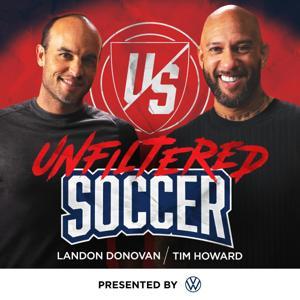
Unfiltered Soccer with Landon Donovan and Tim Howard by Landon Donovan, Tim Howard

Unfiltered Soccer with Landon Donovan and Tim Howard

400 Listeners

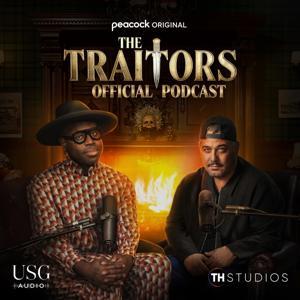
The Traitors Official Podcast by USG Audio

The Traitors Official Podcast

172 Listeners