
Sign up to save your podcasts
Or



Based on Podcast App listening data
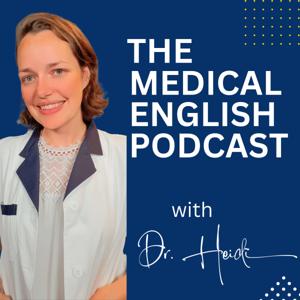
In this episode of the Medical English Podcast, we do a deep dive into inflammatory bowel disease — covering both Crohn's disease and ulcerative colitis — with a focus on adapting the same explanation for very different patients at very different stages of their journey.
You'll learn how to:
We explore three completely different patient conversations built around the same condition, and how the right vocabulary and tone make each one land the way it should.
This episode is perfect for doctors, nurses, GPs, gastroenterology teams, international medical graduates, and healthcare professionals preparing for exams like the OET, who want to sharpen both their clinical English vocabulary and patient communication skills.
Enhance your practical medical English with the Medical English Collection: https://australiabiomed.com/med 🎧 Free transcript & practice quiz for this episode: https://australiabiomed.com/mep-s5e17/
Structured lessons, real-world case dialogues, pronunciation practice, and exam preparation — all designed for healthcare professionals who want to communicate with confidence.
Disclaimer: This podcast is for educational purposes only and does not provide medical advice.
In this episode of the Medical English Podcast, we follow a consultation with Daniel, a patient presenting with sudden severe flank pain, as his doctor works through the diagnosis, imaging, and management of a kidney stone.
You'll learn how to:
We explore a full kidney stone consultation from presentation through to pain management, imaging, and safety-netting, and how clear explanations ease a patient through a genuinely painful experience.
This episode is perfect for doctors, nurses, GPs, ED and urology teams, international medical graduates, and healthcare professionals preparing for exams like the OET, who want to sharpen both their clinical English vocabulary and patient communication skills.
Enhance your practical medical English with the Medical English Collection: https://australiabiomed.com/med 🎧 Free transcript & practice quiz for this episode: https://australiabiomed.com/mep-s5e16/
Structured lessons, real-world case dialogues, pronunciation practice, and exam preparation — all designed for healthcare professionals who want to communicate with confidence.
Disclaimer: This podcast is for educational purposes only and does not provide medical advice.
In this episode of the Medical English Podcast, we do a deep dive into dehydration — one of the most common presentations in clinical practice — with a focus on explaining causes, symptoms, and treatment in language patients can actually understand.
You'll learn how to:
We explore the clinical context behind dehydration, the essential vocabulary for ward conversations, and how small, deliberate word choices make technical explanations land clearly with patients.
This episode is perfect for doctors, nurses, allied health workers, international medical graduates, and healthcare professionals preparing for exams like the OET, who want to sharpen both their clinical English vocabulary and patient communication skills.
Enhance your practical medical English with the Medical English Collection: https://australiabiomed.com/med 🎧 Free transcript & practice quiz for this episode: https://australiabiomed.com/mep-s5e15/
Structured lessons, real-world case dialogues, pronunciation practice, and exam preparation — all designed for healthcare professionals who want to communicate with confidence.
Disclaimer: This podcast is for educational purposes only and does not provide medical advice.
In this episode of the Medical English Podcast, we follow a consultation with Liam, a young patient who breaks out in itchy hives after a birthday party, and his dad, Tom, as the doctor works through triggers, treatment, and when hives become a medical emergency.
You'll learn how to:
We explore a full urticaria consultation from first presentation through to treatment and safety-netting, and how calm, clear communication reassures both patient and parent.
This episode is perfect for doctors, nurses, GPs, paediatric teams, international medical graduates, and healthcare professionals preparing for exams like the OET, who want to sharpen both their clinical English vocabulary and patient communication skills.
Enhance your practical medical English with the Medical English Collection: https://australiabiomed.com/med 🎧 Free transcript & practice quiz for this episode: https://australiabiomed.com/mep-s5e14/
Structured lessons, real-world case dialogues, pronunciation practice, and exam preparation — all designed for healthcare professionals who want to communicate with confidence.
Disclaimer: This podcast is for educational purposes only and does not provide medical advice.
In this episode of the Medical English Podcast, we follow a consultation with James, a patient with a spreading rash and flu-like symptoms after a recent bushwalk, as his doctor works through the diagnosis and treatment of Lyme disease.
You'll learn how to:
We explore a full Lyme disease consultation from history-taking through to treatment and prevention advice, and how a thorough outdoor-exposure history can make all the difference to an early diagnosis.
This episode is perfect for doctors, nurses, GPs, international medical graduates, and healthcare professionals preparing for exams like the OET, who want to sharpen both their clinical English vocabulary and patient communication skills.
Enhance your practical medical English with the Medical English Collection: https://australiabiomed.com/med 🎧 Free transcript & practice quiz for this episode: https://australiabiomed.com/mep-s5e13/
Structured lessons, real-world case dialogues, pronunciation practice, and exam preparation — all designed for healthcare professionals who want to communicate with confidence.
Disclaimer: This podcast is for educational purposes only and does not provide medical advice.
In this episode of the Medical English Podcast, we follow a consultation with Rachel, a patient with worsening scaly patches on her elbows and knees, as her doctor explains psoriasis, its triggers, and the step-up approach to treatment.
You'll learn how to:
• Use key vocabulary including "plaques," "flare-up," "topical treatment," "biologic," and "autoimmune"
• Take a history that identifies common flare-up triggers like stress, illness, and skin injury
• Explain psoriasis as an autoimmune condition in clear, understandable terms
• Discuss the step-up treatment pathway from topical creams to light therapy to biologic therapy
• Advise patients on self-care strategies to reduce the frequency and severity of flares
We explore a full psoriasis consultation from history-taking through to treatment planning and follow-up, and how clear language helps a self-conscious patient feel understood.
This episode is perfect for doctors, nurses, dermatology teams, international medical graduates, and healthcare professionals preparing for exams like the OET, who want to sharpen both their clinical English vocabulary and patient communication skills.
Enhance your practical medical English with the Medical English Collection: https://australiabiomed.com/med
🎧 Free transcript & practice quiz for this episode: https://australiabiomed.com/mep-s5e12/
Structured lessons, real-world case dialogues, pronunciation practice, and exam preparation — all designed for healthcare professionals who want to communicate with confidence.
Disclaimer: This podcast is for educational purposes only and does not provide medical advice.
In this episode of the Medical English Podcast, we translate three everyday patient expressions — off my food, shivery, and sweaty and clammy — into the correct clinical documentation, so nothing important gets lost between what a patient says and what you write.
You'll learn how to:
• Recognise "off my food" as reduced appetite, not necessarily nausea, and document it as "decreased oral intake"
• Use "shivery" for cold trembling before a fever, while reserving "rigors" for severe, uncontrollable shaking
• Take "sweaty and clammy" seriously as a possible sign of shock, low blood sugar, or acute stress response
• Ask the right follow-up questions instead of dismissing vague symptoms as routine tiredness
• Translate all three into correct formal terms: "reports chills," "reports rigors," and "diaphoresis"
We explore the pronunciation, meaning, and documentation requirements behind three phrases you'll hear on nearly every shift, and why getting them right matters for patient safety.
This episode is perfect for doctors, nurses, ED and triage staff, international medical graduates, and healthcare professionals preparing for exams like the OET, who want to sharpen both their clinical English vocabulary and documentation skills.
Enhance your practical medical English with the Medical English Collection: https://australiabiomed.com/med
🎧 Free transcript & practice quiz for this episode: https://australiabiomed.com/mep-s5e11/
Structured lessons, real-world case dialogues, pronunciation practice, and exam preparation — all designed for healthcare professionals who want to communicate with confidence.
Disclaimer: This podcast is for educational purposes only and does not provide medical advice.
In this episode of the Medical English Podcast, we do a deep dive into pulmonary fibrosis, a progressive lung disease, with a focus on the precise English vocabulary you need to explain it clearly to both colleagues and patients.
You'll learn how to:
• Pronounce and use "idiopathic," "fibrosis," "alveoli," "exacerbation," and "interstitial" with clinical confidence
• Explain how thickened, scarred lung tissue makes oxygen transfer harder over time
• Translate dense terminology into patient-friendly language like "scarring," "air sacs," and "a sudden flare-up"
• Avoid frightening direct translations like "your interstitial is ruined"
• Use gentler, more accurate alternatives such as "the tissue around your air sacs is stiff"
We explore the clinical context behind pulmonary fibrosis, the essential terminology for handovers and case presentations, and how patient-friendly language builds trust during a serious diagnosis.
This episode is perfect for doctors, nurses, respiratory teams, international medical graduates, and healthcare professionals preparing for exams like the OET, who want to sharpen both their clinical English vocabulary and patient communication skills.
Enhance your practical medical English with the Medical English Collection: https://australiabiomed.com/med
🎧 Free transcript & practice quiz for this episode: https://australiabiomed.com/mep-s5e10/
Structured lessons, real-world case dialogues, pronunciation practice, and exam preparation — all designed for healthcare professionals who want to communicate with confidence.
Disclaimer: This podcast is for educational purposes only and does not provide medical advice.
In this episode of the Medical English Podcast, we follow a consultation with David, a patient presenting with fatigue and yellowing eyes, as his doctor works through a differential between hepatitis A, B, and C based on his travel and tattoo history.
You'll learn how to:
• Use key vocabulary including "jaundice," "liver function tests (LFTs)," "transmission," "antiviral treatment," and "cirrhosis"
• Take a history that identifies risk factors for different hepatitis types
• Explain the difference in treatment approach between acute hepatitis A and chronic hepatitis B or C
• Discuss modern antiviral therapy and its high cure rates for hepatitis C
• Advise patients on precautions to protect their liver and reduce transmission risk to family
We explore a full hepatitis consultation from history-taking through to diagnosis, treatment planning, and safety-netting, and how clear explanations ease a worried patient's mind.
This episode is perfect for doctors, nurses, gastroenterology and hepatology teams, international medical graduates, and healthcare professionals preparing for exams like the OET, who want to sharpen both their clinical English vocabulary and patient communication skills.
Enhance your practical medical English with the Medical English Collection: https://australiabiomed.com/med
🎧 Free transcript & practice quiz for this episode: https://australiabiomed.com/mep-s5e9/
Structured lessons, real-world case dialogues, pronunciation practice, and exam preparation — all designed for healthcare professionals who want to communicate with confidence.
Disclaimer: This podcast is for educational purposes only and does not provide medical advice.
In this episode of the Medical English Podcast, we map out the everyday spectrum of fatigue — from mild to severe — through three expressions patients and colleagues use constantly: rundown, under the weather, and wiped out.
You'll learn how to:
• Use "rundown" correctly as an adjective, not a verb ("I'm rundown," not "I'm running down")
• Recognise "under the weather" as mild, short-term unwellness with no specific diagnosis
• Reserve "wiped out" for intense, event-driven exhaustion rather than everyday tiredness
• Translate all three casual expressions into correct clinical documentation like "malaise" and "fatigue"
• Choose the right expression depending on severity and context
We explore the pronunciation, grammar, and golden rule behind this fatigue spectrum: speak in idioms with your patients, but document like a clinician.
This episode is perfect for doctors, nurses, allied health workers, international medical graduates, and healthcare professionals preparing for exams like the OET, who want to sound more natural and confident in everyday clinical conversations.
Enhance your practical medical English with the Medical English Collection: https://australiabiomed.com/med
🎧 Free transcript & practice quiz for this episode: https://australiabiomed.com/mep-s5e8/
Structured lessons, real-world case dialogues, pronunciation practice, and exam preparation — all designed for healthcare professionals who want to communicate with confidence.
Disclaimer: This podcast is for educational purposes only and does not provide medical advice.
From the publisher's feed
Ranked by our users in the last 21 days

1,832 Listeners

1,042 Listeners

977 Listeners

417 Listeners

513 Listeners

377 Listeners

402 Listeners

460 Listeners

307 Listeners

554 Listeners

237 Listeners
116 Listeners
555 Listeners
39 Listeners

109 Listeners