
Sign up to save your podcasts
Or

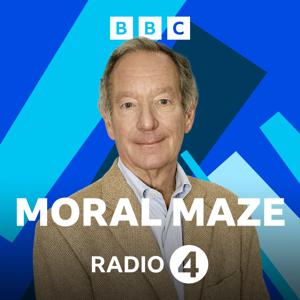

The Prime Minister said the second lockdown in England was necessary to avoid the "medical and moral disaster" of the NHS being overwhelmed. In starker terms: many people will die if nothing is done, and not just of Covid-19. Depending on one’s perspective, the government’s strategy has either been too concerned, or not concerned enough, with the avoidance of death above all else. What has the crisis revealed about our attitude to our own mortality and how we value human life? Some are accused of being too blasé about the fact that many who died in the first wave of the pandemic either had ‘underlying conditions’ or, more bluntly, would have died soon anyway. Others, who believe the second lockdown should have been sooner and more severe, are accused of giving in to fear – as one lady quipped in a TV vox pop: “I’m 83 and I don’t give a sod”. Nevertheless, the coronavirus has made many people face death far earlier than they were expecting. People have died alone and their loved ones have grieved for them in isolation. For some, the pandemic has highlighted how inadequate we are at confronting death more generally. Medical progress has given us longer and healthier lives yet there are many who believe that we have focused too much on prolonging life rather than making the time we have left meaningful. We also live in an age when some think the prospect of ‘defeating death’ is in touching distance. Is death the ultimate taboo in our culture? If we can’t medicalise our way out of it, how can we live – and die – well? With Prof Michael Hauskeller, Kathryn Mannix, Revd Dr Brendan McCarthy and Prof Ellen Townsend.
Producer: Dan Tierney.
 View all episodes
 By BBC Radio 4

4.6
5151 ratings
The Prime Minister said the second lockdown in England was necessary to avoid the "medical and moral disaster" of the NHS being overwhelmed. In starker terms: many people will die if nothing is done, and not just of Covid-19. Depending on one’s perspective, the government’s strategy has either been too concerned, or not concerned enough, with the avoidance of death above all else. What has the crisis revealed about our attitude to our own mortality and how we value human life? Some are accused of being too blasé about the fact that many who died in the first wave of the pandemic either had ‘underlying conditions’ or, more bluntly, would have died soon anyway. Others, who believe the second lockdown should have been sooner and more severe, are accused of giving in to fear – as one lady quipped in a TV vox pop: “I’m 83 and I don’t give a sod”. Nevertheless, the coronavirus has made many people face death far earlier than they were expecting. People have died alone and their loved ones have grieved for them in isolation. For some, the pandemic has highlighted how inadequate we are at confronting death more generally. Medical progress has given us longer and healthier lives yet there are many who believe that we have focused too much on prolonging life rather than making the time we have left meaningful. We also live in an age when some think the prospect of ‘defeating death’ is in touching distance. Is death the ultimate taboo in our culture? If we can’t medicalise our way out of it, how can we live – and die – well? With Prof Michael Hauskeller, Kathryn Mannix, Revd Dr Brendan McCarthy and Prof Ellen Townsend.
Producer: Dan Tierney.

7,913 Listeners
863 Listeners

1,067 Listeners
159 Listeners

5,576 Listeners

1,808 Listeners

1,729 Listeners

1,018 Listeners
2,113 Listeners
1,952 Listeners
32 Listeners
38 Listeners

428 Listeners
159 Listeners
43 Listeners
75 Listeners
108 Listeners
745 Listeners

3,245 Listeners
779 Listeners
1,010 Listeners
3,858 Listeners

1,314 Listeners
851 Listeners
48 Listeners