
Sign up to save your podcasts
Or

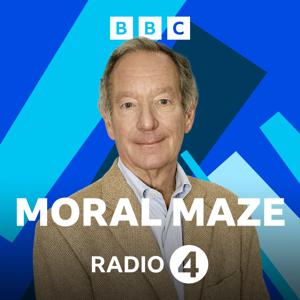

It’s easy to see how lots of people singing, shouting and smooching in a stuffy space would keep a virologist up at night. Within hours of nightclubs reopening the Prime Minister announced that full vaccination will be the condition of entry from September. The Netherlands recently tried reopening its clubs and quickly decided to close them again amid rising infection rates. We may be free to party, but we’re not free of the virus. Just because we can, does it mean we should? For some, there is a clear moral case for delaying our gratification that little bit longer. Another view is that we have to start living again; young people in particular deserve an escape after the months of sacrifice, and the fact that every adult in the UK has now been offered at least one jab should be an important part of the moral calculation. Others have gone even further than the Beastie Boys in suggesting we have not just a right, but a duty, to party. Is there an intrinsic moral value in revelry? Those partial to a bit of table-top dancing might argue that these are spontaneous and transcendent experiences of human connection; in theological terms, a celebration of the gift of life itself. Yet, many philosophical and religious traditions have been highly suspicious of hedonistic pleasures. Modern-day stoics and puritans might associate a “living for the weekend” clubbing culture with chaos, over-indulgence and a loss of self-control. Does the truest form of joy lie in self-restraint? Or should we follow Oscar Wilde’s advice: “everything in moderation, including moderation”? With Jeremy Gilbert, Prof Christopher Gill, Olivia Petter and Julian Tang.
Producer: Dan Tierney.
 View all episodes
 By BBC Radio 4

4.6
5151 ratings
It’s easy to see how lots of people singing, shouting and smooching in a stuffy space would keep a virologist up at night. Within hours of nightclubs reopening the Prime Minister announced that full vaccination will be the condition of entry from September. The Netherlands recently tried reopening its clubs and quickly decided to close them again amid rising infection rates. We may be free to party, but we’re not free of the virus. Just because we can, does it mean we should? For some, there is a clear moral case for delaying our gratification that little bit longer. Another view is that we have to start living again; young people in particular deserve an escape after the months of sacrifice, and the fact that every adult in the UK has now been offered at least one jab should be an important part of the moral calculation. Others have gone even further than the Beastie Boys in suggesting we have not just a right, but a duty, to party. Is there an intrinsic moral value in revelry? Those partial to a bit of table-top dancing might argue that these are spontaneous and transcendent experiences of human connection; in theological terms, a celebration of the gift of life itself. Yet, many philosophical and religious traditions have been highly suspicious of hedonistic pleasures. Modern-day stoics and puritans might associate a “living for the weekend” clubbing culture with chaos, over-indulgence and a loss of self-control. Does the truest form of joy lie in self-restraint? Or should we follow Oscar Wilde’s advice: “everything in moderation, including moderation”? With Jeremy Gilbert, Prof Christopher Gill, Olivia Petter and Julian Tang.
Producer: Dan Tierney.

7,913 Listeners

863 Listeners

1,067 Listeners

159 Listeners

5,576 Listeners

1,808 Listeners

1,729 Listeners

1,018 Listeners

2,113 Listeners

1,952 Listeners
32 Listeners
38 Listeners

428 Listeners
159 Listeners
43 Listeners
75 Listeners
108 Listeners

745 Listeners

3,245 Listeners

779 Listeners

1,010 Listeners

3,858 Listeners

1,314 Listeners
851 Listeners

48 Listeners