
Sign up to save your podcasts
Or

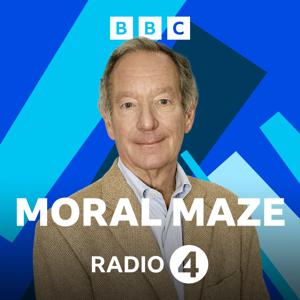

The G7 group of advanced economies has reached a deal to make multinational companies pay more tax. It is a cause which has focussed minds in the wake of a costly global pandemic. For centuries, taxation has been seen as a moral, as well as an economic, principle. At a national level, some see this as a moment for the government to be bold in recouping wealth from those who have become richer during the Covid-19 crisis, and redistributing it to redress the social and economic inequalities the virus has exposed. Those who argue for high taxes on the rich believe that no one achieves their wealth on their own; rather, their wealth is a product of the society they live in, and taxation is a moral mechanism to recognise the people and infrastructures that enabled that wealth creation in the first place. While some see taxation as raising revenue for public goods, others see it as plunder and theft. Low tax enthusiasts don’t view taxation as a moral obligation at all, since there is no choice involved, and they often object to the way in which their money is spent. Moreover, they don’t believe that higher taxes are intrinsically more moral since public spending can relieve people of personal responsibility and limit their ability to spend their own money on the charitable causes that matter to them. Would a truly fair and equal society need to tax its citizens? What constitutes a fair tax system? To what extent is the contents of our pay packet ‘ours’? With Dr Eamonn Butler, Dr Philip Goff, James Quarmby and Carys Roberts.
 View all episodes
 By BBC Radio 4

4.6
5151 ratings
The G7 group of advanced economies has reached a deal to make multinational companies pay more tax. It is a cause which has focussed minds in the wake of a costly global pandemic. For centuries, taxation has been seen as a moral, as well as an economic, principle. At a national level, some see this as a moment for the government to be bold in recouping wealth from those who have become richer during the Covid-19 crisis, and redistributing it to redress the social and economic inequalities the virus has exposed. Those who argue for high taxes on the rich believe that no one achieves their wealth on their own; rather, their wealth is a product of the society they live in, and taxation is a moral mechanism to recognise the people and infrastructures that enabled that wealth creation in the first place. While some see taxation as raising revenue for public goods, others see it as plunder and theft. Low tax enthusiasts don’t view taxation as a moral obligation at all, since there is no choice involved, and they often object to the way in which their money is spent. Moreover, they don’t believe that higher taxes are intrinsically more moral since public spending can relieve people of personal responsibility and limit their ability to spend their own money on the charitable causes that matter to them. Would a truly fair and equal society need to tax its citizens? What constitutes a fair tax system? To what extent is the contents of our pay packet ‘ours’? With Dr Eamonn Butler, Dr Philip Goff, James Quarmby and Carys Roberts.

7,913 Listeners

863 Listeners

1,067 Listeners
159 Listeners

5,576 Listeners

1,808 Listeners

1,729 Listeners

1,018 Listeners
2,113 Listeners
1,952 Listeners
32 Listeners
38 Listeners
428 Listeners
159 Listeners
43 Listeners
75 Listeners
108 Listeners
745 Listeners

3,245 Listeners
779 Listeners
1,010 Listeners
3,858 Listeners

1,314 Listeners
851 Listeners
48 Listeners