
Sign up to save your podcasts
Or

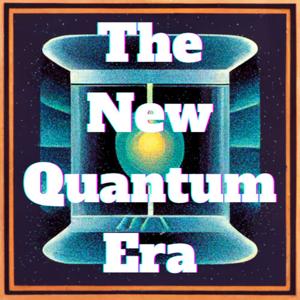

Welcome to another episode of The New Quantum Era Podcast hosted by Kevin Rowney and Sebastian Hassinger. Today, they are joined by an outstanding European researcher: Professor Leo Kouwenhoven.
Leo is a professor in Applied Physics specialized in the field of Quantum NanoScience at TU Delft. Leo got his Ph.D. in Mesoscopic Physics at Delft. He was a postdoc researcher at the University of California at Berkeley and a visiting professor at Harvard. Highlights in Leo’s career include the discovery of conductance quantization in quantum point contacts, Coulomb blockade in quantum dots, artificial atoms, the Kondo effect in quantum dots, Spin qubits, induced superconductivity in nanowires and nanotubes, spin-orbit qubits in nanowires and nanotubes and Majoranas in nanowires. Leo and his group found evidence of Majoranas detailed in a paper from 2012. He lead the Microsoft hardware R&D effort, working on topological qubits using Majorana zero modes from 2016 to 2022. His current focus at Delft is on topological effects in solid-state devices, such as the emergence of Majoranas and topological qubits.
Key Takeaways:
[2:53] Kevin and Sebastian share their appreciation about how quantum computing was represented in the episode Joan is Awful of the TV show Black Mirror.
[6:04] Leo shares how he got interested in the field of quantum computing.
[9:40] Leo discusses how much he knew about the work done in theoretical quantum computing in the mid to late 90s.
[14:37] The advantage of superconducting qubits is that you have a large number of electrons in the circuit you are manipulating.
[15:34] Measurability can be easier but “it always comes with a price”.
[17:05] Leo admits the coherence was insufficient, and he shares how they tried to improve it.
[19:15] What is the feature of silicon that makes it valuable for Quantum Computing?
[22:12] Leo shares the benefits of a hybrid system (combining super connectivity and semi-connectors).
[23:10] Leo discusses how he became interested in Majoranas.
[27:30] Leo addresses the main research agenda destination regarding Majoranas.
[28:22] Was the Majoranas fundamental particle found?
[33:21] The potential for theory and application is so huge. What's Leo’s sense about the prospects for these avenues of inquiry research?
[36:25] Leo explains the non-abelian property that Majoranas zero modes have.
[40:18] Leo addresses the two groups of gate operations needed for universal computing.
[41:22] Leo gives his opinion regarding the timeframe for the appearance of commercially viable outcomes in this domain.
[47:16] Sebastian reflects on the maturation of the neutral atom systems, considering them as the first realization of Feynman's vision from 1981 regarding the fact that in order to simulate a natural system, there is a need for a quantum computer to do it.
[48:08] Can we build machines that can help us simulate the dynamics of quantum systems that might help us understand more what the challenges are in Majorana Qubit?
[51:01] Does Leo think there's any value in Majorana braiding simulations to try to understand the dynamics of the system or overcome the challenges?
[53:50] There is room for optimism in Quantum Computing.
[56:24] Leo talks about the dream of topological Majoranas qubit.
[58:16] Kevin and Sebastian share the highlights of an insightful conversation with Leo Kouwenhoven.
Mentioned in this episode:
Visit The New Quantum Era Podcast
Black Mirror: Joan is Awful
Learn more about Leo Kouwenhoven
Signatures of Majorana fermions in hybrid superconductor-semiconductor nanowire devices
Tweetables and Quotes:
“The advantage of the superconducting qubits is that you have a large number of electrons in the circuit you are manipulating, which can make measurability easier, but it always comes with a price.”— Leo Kouwenhoven
“I read that making qubits was too much engineering when it should be something more fundamental… so now we think qubits are fundamental?!” — Leo Kouwenhoven
“Problems are there to be solved; they only exist to be solved. People in classical electronics also solved all their problems, so why can’t we? ” — Leo Kouwenhoven
 View all episodes
 By Sebastian Hassinger

4.5
3939 ratings
Welcome to another episode of The New Quantum Era Podcast hosted by Kevin Rowney and Sebastian Hassinger. Today, they are joined by an outstanding European researcher: Professor Leo Kouwenhoven.
Leo is a professor in Applied Physics specialized in the field of Quantum NanoScience at TU Delft. Leo got his Ph.D. in Mesoscopic Physics at Delft. He was a postdoc researcher at the University of California at Berkeley and a visiting professor at Harvard. Highlights in Leo’s career include the discovery of conductance quantization in quantum point contacts, Coulomb blockade in quantum dots, artificial atoms, the Kondo effect in quantum dots, Spin qubits, induced superconductivity in nanowires and nanotubes, spin-orbit qubits in nanowires and nanotubes and Majoranas in nanowires. Leo and his group found evidence of Majoranas detailed in a paper from 2012. He lead the Microsoft hardware R&D effort, working on topological qubits using Majorana zero modes from 2016 to 2022. His current focus at Delft is on topological effects in solid-state devices, such as the emergence of Majoranas and topological qubits.
Key Takeaways:
[2:53] Kevin and Sebastian share their appreciation about how quantum computing was represented in the episode Joan is Awful of the TV show Black Mirror.
[6:04] Leo shares how he got interested in the field of quantum computing.
[9:40] Leo discusses how much he knew about the work done in theoretical quantum computing in the mid to late 90s.
[14:37] The advantage of superconducting qubits is that you have a large number of electrons in the circuit you are manipulating.
[15:34] Measurability can be easier but “it always comes with a price”.
[17:05] Leo admits the coherence was insufficient, and he shares how they tried to improve it.
[19:15] What is the feature of silicon that makes it valuable for Quantum Computing?
[22:12] Leo shares the benefits of a hybrid system (combining super connectivity and semi-connectors).
[23:10] Leo discusses how he became interested in Majoranas.
[27:30] Leo addresses the main research agenda destination regarding Majoranas.
[28:22] Was the Majoranas fundamental particle found?
[33:21] The potential for theory and application is so huge. What's Leo’s sense about the prospects for these avenues of inquiry research?
[36:25] Leo explains the non-abelian property that Majoranas zero modes have.
[40:18] Leo addresses the two groups of gate operations needed for universal computing.
[41:22] Leo gives his opinion regarding the timeframe for the appearance of commercially viable outcomes in this domain.
[47:16] Sebastian reflects on the maturation of the neutral atom systems, considering them as the first realization of Feynman's vision from 1981 regarding the fact that in order to simulate a natural system, there is a need for a quantum computer to do it.
[48:08] Can we build machines that can help us simulate the dynamics of quantum systems that might help us understand more what the challenges are in Majorana Qubit?
[51:01] Does Leo think there's any value in Majorana braiding simulations to try to understand the dynamics of the system or overcome the challenges?
[53:50] There is room for optimism in Quantum Computing.
[56:24] Leo talks about the dream of topological Majoranas qubit.
[58:16] Kevin and Sebastian share the highlights of an insightful conversation with Leo Kouwenhoven.
Mentioned in this episode:
Visit The New Quantum Era Podcast
Black Mirror: Joan is Awful
Learn more about Leo Kouwenhoven
Signatures of Majorana fermions in hybrid superconductor-semiconductor nanowire devices
Tweetables and Quotes:
“The advantage of the superconducting qubits is that you have a large number of electrons in the circuit you are manipulating, which can make measurability easier, but it always comes with a price.”— Leo Kouwenhoven
“I read that making qubits was too much engineering when it should be something more fundamental… so now we think qubits are fundamental?!” — Leo Kouwenhoven
“Problems are there to be solved; they only exist to be solved. People in classical electronics also solved all their problems, so why can’t we? ” — Leo Kouwenhoven
14,353 Listeners
321 Listeners
544 Listeners
231 Listeners
331 Listeners
1,065 Listeners
83 Listeners
4,167 Listeners
2,367 Listeners
506 Listeners
323 Listeners

18 Listeners
384 Listeners
68 Listeners
572 Listeners