
Sign up to save your podcasts
Or

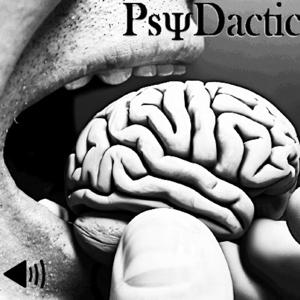

In this episode, I am sliding down and under the front part of the brain and consider the orbital frontal cortex, that part of the brain right above and a little behind your eyes. It is much smaller than the lateral gyri on the prefrontal cortex, but appears to be an important probability generator in our brain when we need to consider different options that can result in different rewards or in order to avoid aversive stimuli. The most basic kinds of rewards that neuroscientists can study are for food, because lab animals will respond to those, and while the OFC is definitely intimately related to food, in humans, its powers of prognostication are much more generalized.
Please leave feedback at https://www.psydactic.com or send any comments to [email protected].
References and readings (when available) are posted at the end of each episode transcript, located at psydactic.buzzsprout.com. All opinions expressed in this podcast are exclusively those of the person speaking and should not be confused with the opinions of anyone else. We reserve the right to be wrong. Nothing in this podcast should be treated as individual medical advice.
 View all episodes
 By T. Ryan O'Leary
5
55 ratings
In this episode, I am sliding down and under the front part of the brain and consider the orbital frontal cortex, that part of the brain right above and a little behind your eyes. It is much smaller than the lateral gyri on the prefrontal cortex, but appears to be an important probability generator in our brain when we need to consider different options that can result in different rewards or in order to avoid aversive stimuli. The most basic kinds of rewards that neuroscientists can study are for food, because lab animals will respond to those, and while the OFC is definitely intimately related to food, in humans, its powers of prognostication are much more generalized.
Please leave feedback at https://www.psydactic.com or send any comments to [email protected].
References and readings (when available) are posted at the end of each episode transcript, located at psydactic.buzzsprout.com. All opinions expressed in this podcast are exclusively those of the person speaking and should not be confused with the opinions of anyone else. We reserve the right to be wrong. Nothing in this podcast should be treated as individual medical advice.

143 Listeners

112,234 Listeners

156 Listeners

1,346 Listeners

554 Listeners
200 Listeners
155 Listeners