
Sign up to save your podcasts
Or

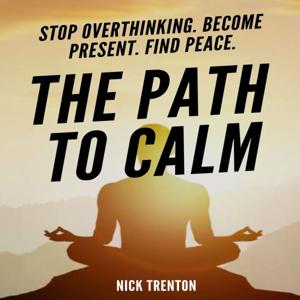


The Empath Self-Care Blueprint: How to Manage, Navigate, and Thrive in an Overwhelming World By Nick Trenton
00:00:00 The Empath self-care blueprint
00:15:44 Origins, Causes, and Journeys
00:31:49 The Double-Edged Sword
Hear it Here - https://bit.ly/EmpathTrenton
https://www.amazon.com/dp/B08BKSS4KK
Defend and claim your space, say no to people, and compensate for your unique sensitivities.
The world is noisy, intense, and exhausting. For some, it feels like they are wearing hearing aids and binoculars, unable to hide, recharge, or shelter. This is no way to live.
Stop the feeling responsible for the emotions of everyone around you. Learn to say no and defend your own space.
The Empath Self-Care Blueprint is a book written for empaths by an empath. If you’ve ever felt too many emotional and sensory burdens, and struggled to breathe, this is the book for you. This book provides a much-needed sense of relief; it will bring you the relaxation and peace you so desperately seek.You’ll first learn what makes you different, how you perceive the world differenly, and most importantly, how to live better and more happily. You’ll get a full blueprint about taking advantage of your gifts and also protecting yourself. Understand the double-edged sword that is the empath’s mind.
Tools for protecting yourself from sensory overload and exhaustion, and managing compassion fatigue.
Nick Trenton grew up in rural Illinois and is quite literally a farm boy. His best friend growing up was his trusty companion Leonard the dachshund. RIP Leonard. Eventually, he made it off the farm and obtained a BS in Economics, followed by an MA in Behavioral Psychology.
Practice self-care, self-protection, and learn to declare your boundaries and limits.
•Answer the question, “Why do I feel so intensely?”•Differentiate between normal empathy, narcissists, introverts, highly sensitive people, and more.•Learn to manage your energy as well as the people around you.•Best practices for work, socializing, and even romance.
Make constant, everyday overwhelm a thing of the past. Stop feeling the weight of the world on your shoulders.
Face the world knowing that you are beautifully unique and that you can handle pressure without feeling the burden of too many emotions.
Utilize your gifts -- scroll up the click the BUY NOW BUTTON.
This is book 1 in the Mental and Emotional Abundance series, as listed below:1. The Empath Self-Care Blueprint2. Transform Your Self-Talk
#DrJudithOrloff #Empath #Empaths #EmpathSelfCareBlueprint #EmpathsSurvivalGuide #HighlySensitivePersonHSP #JudithOrloff #Orloff #Selfcare #RussellNewton #NewtonMG #TheEmpathSelf-CareBlueprint #AreYouAnEmpath? #WhyYouFeelSoIntensely
Mindful Master: 10 Minutes a Day to Less Stress, Less Worry, More Peace, and More Resilience (Mental and Emotional Abundance Book 3) By Nick Trenton
00:04:48 The Benefits of a Mindfulness Practice
00:14:04 A Historical Perspective - From the East to the West, and from Religion to Science
00:18:42 Mindfulness from the Eastern Perspective
00:22:51 Mindfulness in the Modern Era, and Positive Psychology
00:25:04 Neuroscience on Mindfulness and Meditation - Why You Have “Two Minds”
00:28:23 Mindfulness in Plain English Self-Awareness and Mindfulness
00:30:02 The Pillars of Mindfulness
00:34:53 A Word of Warning
Hear it Here - https://Mindful Master
www.audible.com.au/pd/B08JH8NDFD/?source_code=AUDORWS022318009D-BK-ACX0-216537&ref=acx_bty_BK_ACX0_216537_pd_au
Practical steps to live in the present and stop overthinking with everyday meditation and mindfulness.
If you’re feeling emotionally absent in your own life, something needs to change. If you can’t focus on the present moment, and keep drifting to past regrets or future dangers, something needs to change. That change is mindfulness meditation.
Tame your anxious and negative emotions and stay even-keeled no matter what.
Mindful Master is a spotlight on how to focus on the now, which is to focus on happiness and gratitude. All we have is the present moment, and cultivating this skill is the key to fulfillment. This book brings mindfulness and meditation into simple, everyday practices for you to become the best version of yourself.The modern world pulls us 100 different directions at once, so it’s easy to become lost and overwhelmed. Mindful Master is the tool you need to downsize your thoughts and focus only on what matters.
Mindfulness and meditation in plain English for both beginners and veterans.
Nick Trenton grew up in rural Illinois and is quite literally a farm boy. His best friend growing up was his trusty companion Leonard the dachshund. RIP Leonard. Eventually, he made it off the farm and obtained a BS in Economics, followed by an MA in Behavioral Psychology.
Unlock the most valuable tool to help navigate life’s challenges.
•Positive psychology and how to use it for your own peace of mind.•The surprising pillars of mindfulness and mental calm.•How mindfulness can develop in less than 10 minutes a day with simple exercises.•How to master meditation and make it work for you, even for skeptics.•Emergency techniques for moments of rage, anxiety, and worry.•How to ease emotional turmoil and simply breathe.
Discover how to live in the present, not in the past or future. No more emotional overwhelm. It’s time to take charge of your life.
• Meditation is not the same as mindfulness, which can be practiced right now, no matter what you are doing. Each day presents opportunities to enter a state of heightened awareness, in the ordinary activities that you engage in—from washing your face, to eating, to the daily commute, to your interactions with others.
• A common myth about the practice of mindfulness is that it requires total emptiness of the mind, where every emerging thought is blocked by a wall to prevent it from disturbing a pure, flawless Zen state. In reality, however, the mind will wander—and you are not required to completely stop it from doing so.
• In mindfulness, you can allow your mind to wander, and work instead toward simply becoming aware, notice the stream of thoughts without becoming attached to it, and anchor back to the now. All you need is an attitude of non-striving, acceptance, patience, and the willingness to consistently and gently bring yourself back to the present.
• A way to come back to the present moment is to tune in to your breathing. As the breath remains constant no matter what time of the day it is or what activity you engage in, breathing is a natural anchor you can use to bring yourself back to the now. Focusing on how your breath moves in and out of you leads you to redirect your consciousness to what is in the here and now.
• In addition to breathing, your body’s sense perceptions (from your eyes, ears, nose, tongue, and skin) are effective anchors you can employ to activate your direct experience circuit instead of your narrative circuit.
• You can be mindful when you interact with others. As you talk with the person in front of you, really see them, be fully with them, and immerse yourself in their world for the time that you are with them.
• Practice mindfulness as you read, write, and listen. Mindful reading allows a space for absorption, reflection, and insight to boom. Mindful writing sharpens your capacity for keen observation, discernment, and faithful documentation of what is. Mindful listening grants you the ability to remain calm, open, and accepting of the other person’s being as an expression of the present moment.
This is book 3 in the Mental and Emotional Abundance series, as listed below:1. The Empath Self-Care Blueprint2. Transform Your Self-Talk3. Mindful Master
#BarnesDekeyserWachs #BCE #BhagavadGhita #Buddhism #Buddhism #KabatZinn #FullCatastropheLiving #GaëlleDesbordes #Hoffman #Kabatzinn #KabatZinn #MartinosCenter #MBSR #McMindfulness #Meditation #MindfulMaster #Mindfulness #MindfulnessPractice #NormanFarb #Ortner #Selfawareness #Shapiro #StressReduction #Zen #ZenBuddhism #RussellNewton #NewtonMG #MindfulMaster #MindfulnessExplained #NickTrenton
Think in Models: A Structured Approach to Clear Thinking and the Art of Strategic Decision-Making (Mental and Emotional Abundance Book 5) By Nick Trenton
00:00:00 Think in Models, a structured approach to clear thinking and the art of strategic decision making
00:08:12 Erik Sadberg-Diment wrote in 1985 in the New York Times
00:27:18 The Problem of the Runaway Trolley
00:35:33 Famous investor Howard Marks
00:42:58 “The Monkey’s Paw”
Hear it Here - https://bit.ly/thinkinmodels
https://www.amazon.com/dp/B08NZWFRLS
Learn mental models for error-proof thinking, analysis, and decisions.
The world is not as it seems. It requires a bit more analysis to see reality, and applying mental models is the best way to start.
A thinking toolkit for nearly all problems and complexities in life.
Think in Models is a collection of the world’s (and history’s) greatest mental models that are exclusively focused on getting the most insight from the least amount of information. You’ll learn over 20 of the most helpful and widely-applicable mental models and above all else, learn to think like a genius.
A wide variety of examples, explanations, and step-by-step guidelines are also included.
Nick Trenton grew up in rural Illinois and is quite literally a farm boy. His best friend growing up was his trusty companion Leonard the dachshund. RIP Leonard. Eventually, he made it off the farm and obtained a BS in Economics, followed by an MA in Behavioral Psychology.
Knowing how to think is always better than having more information.
•The simple way to know whether you are truly open-minded or not•Why you must always ask yourself a few questions in Latin•What your gut feeling is really telling you•How to analyze systems in your everyday life•How Sherlock Holmes thinks and solves crimes
Don’t just wing it. Emulate the best and reach your goals.
Thinking in models isn’t just important for large decisions or work issues. You can use all of these skills in daily life to live better, happier, and more stress-free.
Think in models and think like history’s most accomplished thinkers.
#Bhikkhus #DanAriely #DSM #ErikSadbergDiment #HowardMarks #JohnMaynardKeynes #MonkeysPaw #RunawayTrolley #Thich #ThichNhatHanh #TrolleyProblem #WWJacobs #RussellNewton #NewtonMG #ThinkinModels #HowToAccuratelySeeReality #NickTrenton
Hear it Here - https://adbl.co/3v0o8uB
00:00:02 Hello listeners
00:05:46 The Positive IS Powerful, But ...
00:11:15 Good Versus Whole
00:14:26 Letting Go of Toxic Positivity
• Toxic positivity is a kind of cognitive distortion and is an overgeneralization of a positive and optimistic attitude. It consists of denial, minimization, and invalidation of your own experience. Toxic positivity grows with shame, silence, and judgment. Positivity itself isn’t toxic, but denying our reality is. Human beings are wholes who contain both good and bad.
• We can embrace the whole instead of the good by watching the phrases we use, making friends with discomfort, being patient while we are in process, distinguishing between productive and unproductive negativity, and reconnecting to what we value and want to achieve in life. Ask yourself, “How does a person who values what I value behave when they experience what I’m experiencing?”
• Keeping a gratitude journal is a great way to create genuine feelings of positivity.
#RussellNewton #NewtonMG #AvoidTheTrapOfToxicPositivityAndFeelYourFeelings #NickTrenton
Hear it Here - https://adbl.co/3xpRccv
00:00:00 Hello listeners
00:01:59 BELLY BREATHING
00:07:38 THE 5-4-3-2-1 GROUNDING TECHNIQUE
00:13:09 HAVE A MANTRA
00:18:41 SCAN YOUR BODY
00:26:58 LAUGHTER MEDITATION
00:31:43 LOVING-KINDNESS MEDITATION
• Easy, everyday lifestyle changes can make a big difference with anxiety and overthinking. An obvious area to examine is whether you’re having too much caffeine. Try to limit yourself to four hundred milligrams daily.
• Everyone worries, so at least do it strategically by scheduling worry time. Keep a worry journal so that instead of fighting worry, you postpone and contain it, tackling it on your own terms.
• Practice gratitude daily to gently shift your perspective to focus on everything that is going well in your world. Use a journal or write thank-you notes to people who have shown you kindness.
• Mental anchoring is a technique that, once established, can be used as often as you like to help ground and calm you. Choose an anchor, choose a desired state, then connect the two during visualization so that revisiting the anchor brings you back to that state of mind.
• Have a consistent morning routine where you focus on good food, nature, healthy habits, and quiet contemplative time where you set your intention for the day. Make sure you’re hydrated, since dehydration can elevate cortisol levels.
Hear it Here - bit.ly/selftalktrenton
00:00:00 This is The Path to Calm
00:06:42 The Science of Self-Talk
00:15:05 The Dialogical Self Theory
00:16:23 The Relational Frame Theory (RFT)
00:18:01 Self-Talk as an Amplifier
00:24:09 Eenie, Meenie, Minie, Moe
• Have you ever noticed a voice inside your head that is constantly chattering about something or the other right from the moment you wake up? You might have grown so accustomed to it that you barely notice it anymore, but it's definitely there, and it’s either hurting or helping you. No perspective is truly neutral. This voice, a part of your stream of consciousness, is an inner monologue that runs alongside your life, observing and commenting on its various happenings. It tells you who you are, and how you should feel about your identity and the events that occur in your life.
• There are three main types of inner voices or self-talk. The first is positive self-talk, which acts as a continuous reaffirmation of the good things about you and your life. This type of inner voice bolsters our confidence and elevates happiness levels. However, on the other end lies negative self-talk. This voice is always critical and saying degrading things to us about who we are, what we do, etc. If left uncontrolled, it can lead to several mental health issues. The third type is neutral self-talk, which simply consists of unbiased observations as we walk through life—although this almost always has a positive or negative subtext.
• Our inner voice, regardless of type, represents the inner representation we have of ourselves. Often, this is not consistent with reality. The way we think we are and what we actually are can be miles apart, but reality seldom matters if we’re convinced that things are a certain way. This leads to why having healthy self-talk is so important. It influences our thoughts, perceptions, and the way we view ourselves, all of which have physiological correlations that affect how we feel and behave. The basis behind this is neuroplasticity, as the more you repeat something, the more it changes your brain’s structure and becomes your reality.
• If you’re wondering what exactly counts as self-talk, it includes positive or negative statements we say to ourselves, our ruminations, racing thoughts, and the conversations we have with ourselves. Regulating this self-talk can have many positive effects that are essential to our well-being, such as improving sports performances, reducing stress, promoting better self-esteem, and helping us cope with the ups and downs of life. Monitoring self-talk is the key to changing your emotions, behavior, perspective, and life potential.
Hear it Here - https://adbl.co/3v0o8uB
00:00:00 Hello listeners
00:02:30 Beyond Radical Acceptance: Amor Fati
00:07:36 Tip 1: Define the event as objectively as possible
00:08:37 Tip 2: Have a mantra
00:09:36 Tip 3: Focus on action, focus on solutions
00:11:18 Negative Visualization
00:18:24 Stoicism and CBT Combined—the “What-If” Technique
00:30:08 Be Honest with Yourself
00:36:39 Keep It Simple with the Two-Column Exercise
• The ancient Stoics were masters of living in the present.
• One way of rethinking your relationship to the past is to adopt the Stoic attitude of amor fati. This translates roughly to “love of one’s fate.” Whatever happens is embraced, wanting “nothing to be different.” To practice it, look at events as neutrally as possible and then respond to them with a simple mantra like “good.” By focusing on action and solutions, we are able to transform adversity.
• Negative visualization is where we occasionally spend a short amount of time imagining in detail the negative things that could happen in life. This renews appreciation and gratitude for what matters, allows us to prepare for the future, and creates psychological resilience.
• With the “what-if” technique, we write down a fear and ask, “What if this were true?” and explore the worst that could happen, showing ourselves that it is tolerable and not so bad after all. Likewise, remember Memento mori, Latin for, “remember that you will die” to help remind you of what matters.
• Problem-focused thinking zooms in on what’s wrong. Solution-focused thinking zooms in on what could be right and looks to taking action to change the situation. Thinking needs to be balanced with action. Focus on the problem needs to be balanced with focus on the solution.
• Remember the Serenity Prayer and try the two-column exercise to help you identify what you can change and what you can’t. Accept what you can’t, act where you can.
• Ask what you want and value, then ask yourself, “Is what I’m doing, thinking, or feeling bringing me closer to that?”
Rewire Your Anxious Brain: Stop Overthinking, Find Calm, and Be Present (The Path to Calm Book 12) By: Nick Trenton
Hear it Here - https://adbl.co/45JyGw6
https://www.amazon.com/dp/B0BXM6SWRH
Introduce your brain to moments that are free of worry, anxiety, and pressure.
Whether it's from work stress or relationship discord, an overactive brain is never a good thing. It keeps you trapped in the future or the past, and it keeps you out of the present. It's time to change.
Your anxious brain is completely within your control. Really.
Rewire Your Anxious Brain tackles the problem of an overactive brain from the inside out. Anxiety comes from thoughts, which come from beliefs, which can come from environmental and upbringing factors. The key is to deal with all of these aspects simultaneously, and this book offers you the tools to do that.
Stop dwelling on the negative with therapy techniques.
Nick Trenton grew up in rural Illinois and is quite literally a farm boy. His best friend growing up was his trusty companion Leonard the dachshund. RIP Leonard. Eventually, he made it off the farm and obtained a BS in Economics, followed by an MA in Behavioral Psychology.
Deconstruct the cycle of anxiety and conquer it.
-Learning how to emotionally calibrate to deal with hardships
-The simple ABCDE method for anxiety and overcoming overwhelm
-How to manage your expectations and change your beliefs
-How to use three columns to see a different perspective
-How to turn your anxiety and worrying into an actual superpower
How to overcome feeling paralyzed and terrified - and start living your life.
#Overthinkers #RAIN #Rewire #RewireYourAnxiousBrain #RussellNewton #NewtonMG #RewireYourAnxiousBrain #UnderstandingHowAnxietyWorks #NickTrenton
Feeling overwhelmed by anxiety and overthinking? You're not alone! This video dives into 6 powerful, yet simple lifestyle changes you can incorporate into your daily routine to find calm and quiet your mind.
00:00:00 Hello listeners, welcome back to the Path to Calm on April 2nd, 2024.
00:00:53 LIMIT YOUR CAFFEINE INTAKE
00:04:31 SCHEDULE YOUR “WORRY TIME”
00:11:28 CULTIVATE GRATITUDE
00:17:12 Gratitude Tip 1.
00:17:56 Gratitude Tip 2.
00:19:01 Gratitude Tip 3.
00:19:56 USE “MENTAL ANCHORING”
00:26:25 HAVE A SOLID MORNING ROUTINE
00:29:43 Ali Miller is a dietician and author of The Anti-Anxiety Diet
00:34:35 START A HOBBY
We'll cover:
Limiting caffeine intake: Discover how much is too much and how it affects anxiety.
Scheduling "worry time": Learn how to strategically tackle worries on your own terms.
The power of gratitude: Shift your focus and appreciate the good things in life.
Mental anchoring: Discover a powerful technique to instantly calm your mind.
Building a solid morning routine: Set the tone for a peaceful day with healthy habits.
Finding a fun hobby: Engage in activities you enjoy to take your mind off worries.
These small changes can have a BIG impact on your anxiety levels! Take control of your well-being and start living a calmer life.
For more info, check out the book "Anxiety is the Enemy" by Nick Trenton, and visit his website at bitly.slash.NickTrenton
Like this video? Let us know in the comments!
Subscribe for more tips on your path to a calmer you!
The Overthinking Cure: How to Stay in the Present, Shake Negativity, and Stop Your Stress and Anxiety (Mental and Emotional Abundance Book 3) By: Nick Trenton
00:06:22 Drop Blaming and Complaining
00:09:50 The Key to Calm, Focused Flexibility
00:11:51 Nip “If Only” in the Bud
00:14:01 No More Blaming or Complaining
00:15:20 No More Reacting, Only Responding
00:16:17 No More Daydreaming, No More Excuses
00:17:58 Create Perspective by Creating Mental Distance
00:19:49 Introspection is Not Mind Chatter
00:22:44 Kinds of Distance—And How to Create Them
00:26:24 Use the Power of Your Imagination to Create Distance
00:27:26 Advise a Friend
00:28:41 Picture Another Version of Yourself
00:29:50 Reframe Perceptions
Hear it Here - https://bit.ly/OverthinkingCureTrenton
https://www.amazon.com/dp/B09JMNMD71
Your mind doesn't have to be a minefield. Constant chatter is unhealthy; find a better way and see a brighter life.
A distracted and non-present mind is the biggest cause of unhappiness. It prevents us from seeing what possibilities lie before us. Life turns into a minefield rather than a set of new opportunities.
The key to a happy life is your internal dialogue. Remain your own master.
The Overthinking Cure is a book that understands where you’ve been through,the exhausting situation you’ve put yourself into, and how you lose your mind in the trap of anxiety and stress. Acclaimed author Nick Trenton will walk you through the obstacles with detailed and proven techniques to help you rewire your brain, control your thoughts, and change your mental habits.
What’s more, the book will provide you scientific approaches to completely change the way you think and feel about yourself by ending the vicious thought patterns.
Keep your thoughts from spiraling out of control.
Nick Trenton grew up in rural Illinois and is quite literally a farm boy. His best friend growing up was his trusty companion Leonard the dachshund. RIP Leonard. Eventually, he made it off the farm and obtained a BS in Economics, followed by an MA in Behavioral Psychology.
A day without worry, rumination, or anxiety. That could be yours.
-Simple ways to shift your perspective to positivity and opportunity
-The anti-anxiety superweapon of going META
-A new approach on how to destroy the toxic habit of rumination
-How to change your world one cognitive distortion at a time
-Seeing the world in shades of grey - and not black and white
Psychologically-proven tips to get out of your head and into your life.
No more self-deprecating talk. No more sleepless nights with racing thoughts. Free your mind from overthinking and achieve more, feel better, and unleash your potential. Finally be able to live in the present moment.
#RussellNewton #NewtonMG #TheOverthinkingCure #It’SAllInThePerspective:BeingProactiveVersusReactiveNickTrenton
From the publisher's feed

90,541 Listeners

37,570 Listeners

43,330 Listeners

1,118 Listeners

87,221 Listeners

111,734 Listeners

56,384 Listeners

369,311 Listeners

27,840 Listeners

50,388 Listeners

2,053 Listeners

18,833 Listeners

13,630 Listeners
96 Listeners