
Sign up to save your podcasts
Or



Based on Podcast App listening data
In this episode, Molly sits down with Jim Rocco and Thom Weidlich, co-authors of Sports Crisis Communications: Cases and Controversies, to explore how the worlds of sports and crisis PR collide. From Tiger Woods’ redemption arc to Aaron Rodgers’ vaccine controversy and Brett Favre’s legal troubles, this candid conversation dissects how athletes, teams, and brands handle scandal when the spotlight turns harsh.
The trio also dives into how social media, fan loyalty, and corporate interests shape the playbook for managing reputation in modern sports. Whether it’s Tom Brady’s conflict of interest, the NFL’s uneasy dance with gambling, or the Dodgers’ Pride Night flip-flop, this episode pulls back the curtain on how power, money, and morality intersect on and off the field.
In this episode:
Key takeaway:
Reputation is built long before the crisis hits. Whether you’re a star athlete or a CEO, your credibility bank determines how hard you fall, and how fast you recover.
This episode of The PR Breakdown examines a viral crime case out of Albany, New York, that drew national attention when a suspect confessed on camera to killing and burying his parents. Guest Greg Floyd, veteran journalist and anchor, recounts how the investigation evolved from a financial-crimes lead into a homicide revelation, and reflects on the ethics, accountability, and human weight behind the interview.
In this episode:
Watch/Read:
Live & Archive:
Content note: This episode discusses homicide and may be distressing for some listeners.
When three statements drop within the same hour, it’s not just news, it’s a case study.
In this episode, dissecting how each statement was crafted, what it reveals about the motives behind it, and why credibility — not spin — decides who wins the narrative.
Outrage isn’t random anymore, it’s a playbook. In the wake of Charlie Kirk’s assassination, what started as shock turned into a communication crisis that exposed how words can either shape narratives or ignite division.
Here’s the problem: in 2025, speech doesn’t live in a vacuum. Every comment, post, and soundbite ricochets through algorithms, institutions, and public opinion. And when words turn into weapons, the fallout is swift—firings, censures, and reputational scars.
This episode explores:
The September takeaway? Speech has consequences. Some create clarity. Others create chaos. The difference lies in whether words are used to connect or to divide.
Outrage isn’t new, but the way it plays out in 2025 feels like a full-time industry. This week, it’s Phillies fans brawling over a foul ball, a CEO swiping a signed hat at the US Open, Bruce Willis’ family facing judgment in a Diane Sawyer interview, and American Eagle cashing in on controversy with its headline-grabbing campaign.
Here’s the problem: every headline slaps the same word on these stories—backlash. But backlash and blowback aren’t the same thing. If you don’t know the difference, you’re missing the real story.
In this episode:
The September takeaway? Backlash reveals character. Blowback reveals strategy. And knowing which one you’re seeing could be the difference between chaos and control.
A shooting inside a Minneapolis church during a back-to-school Mass left two children dead and several others injured. The Annunciation Catholic School community was shattered. The country watched. And almost immediately, public officials and school leaders stood in front of microphones, tasked with speaking into heartbreak.
In this episode, examining what was said—and how it was said—during the press conferences that followed.
Joining the conversation with Molly is Greg Floyd, evening anchor and investigative reporter at WRGB-TV in Albany. A six-time Emmy winner with multiple Edward R. Murrow Awards, Greg brings deep experience in live coverage, newsroom leadership, and the complexity of reporting local stories with national weight.
Together, we break down the structure, tone, and delivery of each speaker—from elected officials to faith leaders—and explore what communicators can learn from how these moments were handled.
What We Cover:
The Breakdown:
The first move most people make in a crisis is often the one that causes the most damage. It happens when emotion outruns strategy, and the brain mistakes public pressure for personal danger. The result is impulsive action, usually in the form of a rushed post, a scrambled statement, or a desperate attempt to make the backlash go away. But the real problem isn’t public. It’s neurological.
This episode explains why the body’s threat response takes over during high-stakes moments, and how that hijack shuts down the very part of the brain responsible for leadership, regulation, and long-term thinking. It’s not about judgment. It’s about biology.
Taylor Swift didn’t just pop onto her boyfriend’s New Heights podcast for fun. She executed a masterclass in brand strategy. With over 16 million views and endless headlines, her first-ever appearance alongside Travis and Jason Kelce wasn’t casual. It was calculated.
In this episode of The PR Breakdown with Molly McPherson, a look at the strategy behind the appearance. Why it mattered, what Swift accomplished, and how it ties into her broader narrative of album rollouts, relationship optics, and reputation management.
What You’ll Hear About in This Episode
Why This Episode Matters
Swift’s appearance is a case study in modern communication—blending personal storytelling, platform control, reputation management, and viral timing. It’s the kind of move every communicator, marketer, and leader should pay attention to.
This week’s PR Breakdown isn’t about a corporate crisis or a press release gone wrong. It’s about satire — and the way it forces a reaction.
In the latest season of South Park, Matt Stone and Trey Parker have turned their aim on the Trump administration, DHS Secretary Kristi Noem, and the culture of punditry. It’s not subtle. It’s not sanitized. And it’s definitely not for the thin-skinned.
The second episode, “Got a Nut,” skewers both sides of the aisle while delivering a masterclass in what happens when satire hits a nerve. The White House called the show “irrelevant” — a statement that instantly proved the opposite. Noem leaned into the joke publicly, then undercut herself in interviews. And Charlie Kirk tried to be in on the humor while still nursing the sting.
Here’s what I cover in this episode:
Satire works because it holds up a mirror. In PR, what you do next decides whether people see the reflection as truth or just a caricature.
Justin Timberlake ended his tour and dropped a bombshell on Instagram—he’s been battling Lyme disease. The post was emotional, reflective, and full of gratitude. But was it also a PR move?
In this episode of The PR Breakdown, examining the timing, language, and strategy behind Timberlake’s statement and why it dropped when it did. This isn’t about questioning the diagnosis. It’s about asking the right questions, like why fans were left disappointed for months and only got an explanation after the final show.
In this episode:
You can believe the pain and still question the play. Especially when the timing is perfect and the message lands just right.
From the publisher's feed
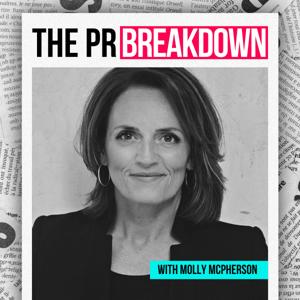
Every mess has a move behind it. Crisis communication expert Molly McPherson takes apart the viral scandals, celebrity meltdowns, and corporate disasters dominating the headlines, showing you…
Ranked by our users in the last 21 days

754 Listeners

69,588 Listeners

7,216 Listeners

164,547 Listeners

3,308 Listeners

6,478 Listeners

2,221 Listeners
3,405 Listeners
2,220 Listeners
2,099 Listeners

18,064 Listeners
598 Listeners
250 Listeners

1,335 Listeners

12,486 Listeners