
Sign up to save your podcasts
Or

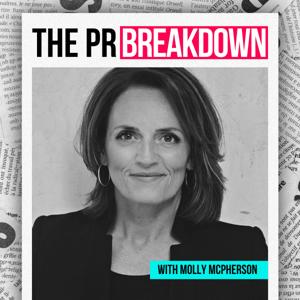


Based on Podcast App listening data
This week’s episode kicks off Part One of The Top PR Wins and Fails of 2025 by pulling straight from the headlines and social media feeds that dominated the year. Instead of rehashing scandals, it digs into the decisions behind them: who understood the moment they were in, who badly misread their audience, and who confused being everywhere online with being trusted. From cultural power plays to celebrity miscalculations, the pattern is clear and a little uncomfortable. You can win the attention economy and still lose credibility. Part Two, covering the top five PR wins and fails of the year, drops next week.
This week’s episode gives you a front row seat to my Friday live sessions, where culture, crisis, and community collide in the best possible way. Think of it as a sampler plate of reputational highs and lows. Some hits. Some misses. A few absolute disasters. And plenty of sharp commentary from the people who show up ready to spar.
We dug into the stories bubbling across media, politics, entertainment, and news.
Here’s what we got into:
• The tightening screws around Pete Hegseth and the trip wires Trump keeps casually laying in public.
• Signal Gate, and why the smallest digital habits always tell the biggest story.
• The American Eagle campaign, Pantone’s baffling color of the year, and the new era of rage bait.
• Spotify Wrapped’s identity crisis, including why the app suddenly thinks everyone is eighty.
• The Lizzo Substack pivot and why her cancellation narrative leaves out the part that actually mattered.
• The Belichick and Jordan Hudson saga that refuses to stop producing plot twists.
• Erica Kirk’s full rebrand tour and what happens when an influencer decides to shed the bling.
• The royal chaos machine that somehow keeps spinning even when no one is asking it to.
• The early contenders for 2025’s best and worst crises, including a few names the audience threw in with real enthusiasm.
If you want the unfiltered version, join us live next Friday. Right now, the streams run through Substack, but soon you’ll be able to watch on YouTube, Instagram, and Facebook. The room always warms up fast. The opinions never stay polite for long.
Until then, pay attention to what people actually react to, not what the talking points tell you. That’s where the truth hides.
A close look at Tatiana Schlossberg's viral New Yorker essay, A Battle with My Blood. It is an emotional piece that blends grief, legacy, and quiet fury, and it signals a deeper shift inside the Kennedy family. The episode walks through the layers of the essay and the choices behind it. From the shock of Schlossberg's leukemia diagnosis, to the way she describes the strained healthcare system, to her understated but unmistakable criticism of Robert F. Kennedy Jr., this story becomes both a personal account and a moral document. This episode explores why the timing mattered, why the family dynamics matter, and why this essay reshapes the public conversation around RFK Jr. as Olivia Nuzzi's forthcoming book adds another external blow. The episode closes with a look at the media cycle, the political stakes, and the long arc of the Kennedy legacy.
This week’s episode dives into a crowded lineup of public figures who all managed to confuse PR maneuvering with actual accountability: President Trump’s “quiet piggy” moment on Air Force One and the broader pattern behind his attacks on women in the press, Larry Summers’ fog-filled non-apology after his Epstein emails resurfaced, Pope Leo XIV’s straightforward call for human dignity contrasted with a White House response that dodged the moral point entirely, Kevin Spacey’s nightclub comeback performance and his ongoing attempt to swap personal suffering for responsibility, and Meghan Markle’s Harper’s Bazaar profile, complete with an Upper East Side house manager announcing “Meghan, Duchess of Sussex” to an empty room. It’s a week full of case studies in what happens when leaders and celebrities choose optics over truth, and why audiences, voters, and stakeholders are paying closer attention to who names their missteps and who tries to PR their way out of them.
This episode starts with a line that should make anyone in communications sit up a little straighter. Michael Wolff, a bestselling Trump biographer and longtime access journalist, emailed Jeffrey Epstein with strategic advice about how Epstein could handle questions about Donald Trump. Not expose him. Not confront him. Advise him.
And now, those emails are a crisis in themselves.
Today’s episode focuses on the messaging behind Wolff’s interactions with Epstein. Not the salacious details, not the conspiracy theories, not the internet rabbit holes. We’re talking about messaging, influence, framing, and the ethical gray zones revealed in more than 20,000 Epstein-related documents released by the House Oversight Committee.
To break this down, we look closely at a long on-air conversation from The Daily Beast’s emergency podcast episode featuring Wolff and host Joanna Coles. She pressed him hard. He tried to explain, defend, and reframe. And what he said on that podcast is, frankly, a crisis-communication case study in real time.
In this episode:
• How Wolff’s emails show him acting less like a journalist and more like a strategist
• The moment Wolff tells Epstein how to "let Trump hang himself"
• Why Wolff’s "I was the lone truth-teller" explanation is classic crisis reframing
• The ethical tension between ingratiation and complicity
• Why these emails matter for media credibility at a moment when Pew Research shows public trust is scraping the floor
• How Wolff’s relationship with Epstein may have shaped four Trump books
• The danger of access journalism becoming influence management
• Why everyone else in Epstein’s orbit is silent, and Wolff is the only one talking
• The deeper question: what happens when the people tasked with revealing power start acting like they’re part of it?
This episode is about messaging and the moral tradeoffs behind it.
It’s about the ugly truth of proximity to power.
And it’s about what happens when a journalist crosses the line from observing a crisis...into participating in one.
Links Mentioned:
• The Daily Beast interview with Michael Wolff and Joanna Coles
• Pew Research Center: "Americans’ Views of the News Media" (2023)
Want More Behind the Breakdown?
Follow The PR Breakdown with Molly McPherson on Substack for early access to podcast episodes, exclusive member chats, weekly lives, and monthly workshops that go deeper than the mic. It's the insider’s hub for communicators who want strategy with spine—and a little side-eye where it counts.
Follow Molly on Substack
Subscribe to Molly's Weekly Newsletter
Subscribe to Molly's Live Events Calendar.
Need a Keynote Speaker? Drawing from real-world PR battles, Molly delivers the same engaging stories and hard-won crisis insights from the podcast to your live audience. Click here to book Molly for your next meeting.
This podcast is supported by Muck Rack, the PR management platform I use to monitor media coverage, track journalist activity, and inform high-stakes strategy with real-time data. Click here to try Muck Rack for yourself.
You saw “GEO” in the title and almost tuned out, didn’t you? Hold that thought. If you work in communications, PR, media, or journalism, this episode might just change how you think about your job.
GEO, or Generative Engine Optimization, is not another passing buzzword. It is the next major shift in how information is found, shared, and trusted. It shapes how AI tools like ChatGPT, Perplexity, and Gemini decide which stories and brands get surfaced.
In this episode, Muck Rack’s CEO and Co-Founder, Greg Gallant, joins me to explain how GEO is reshaping public relations. He walks through how Muck Rack evolved from the early social media boom to the frontlines of AI-driven communications. We dig into how data and generative tools can help communicators strengthen media relationships, measure real impact, and stay relevant in an industry that is changing fast.
We talk about:
If you work in PR, communications, or reputation management, this is not a someday conversation. It is happening right now.
This episode goes behind the polished words of Buckingham Palace to unpack the public relations machinery that managed the downfall of Prince Andrew.
In October 2025, King Charles III formally removed all of Andrew’s titles and evicted him from his Windsor residence.
On the surface, it looked like accountability.
But beneath the royal phrasing lay a carefully timed communications plan.
We’ll walk through the anatomy of that plan: how one resurfaced email reignited the scandal, how two precisely timed statements reframed it,
and how the Palace’s language turned a personal disgrace into an institutional act of duty.
When your marriage becomes a media strategy, what do you say—and what do you not say?
In this episode, Molly McPherson breaks down Cheryl Hines’ carefully crafted response to rumors surrounding her husband, RFK Jr., and journalist Olivia Nuzzi. Fresh off her appearance on the Katie Miller Podcast, Hines offered a masterclass in polished PR talk, leaning on trust, communication, and a dash of Kennedy-style deflection.
But was it authenticity or choreography?
Molly dissects:
Tune in for an unfiltered look at how Hollywood charm meets political spin—and what it teaches us about image, loyalty, and the art of public denial.
When Politico dropped nearly 3,000 pages of leaked Telegram messages from the Young Republican National Federation, it revealed a disturbing culture behind closed doors. In this episode, Molly McPherson unpacks why private chats are never really private, how weak apologies deepen a crisis, and what this scandal teaches every leader about accountability, ethics, and reputation in the digital age.
Key Discussion Points:
When the internet comes for you, your instinct is to fight back or disappear. Neither helps. In this episode, Molly breaks down her simple, proven 90-second rule for handling online hate without losing your cool or your credibility.
You’ll learn:
If you’ve ever dealt with critics, trolls, or just plain mean people online, this one’s for you.
Bonus: Want to learn how to respond to any crisis with confidence?
Join Molly’s free live training: The First Hour: How to Respond to Any Crisis Before It Spirals
You’ll discover:
Spots are limited—grab yours now HERE.
From the publisher's feed
Every mess has a move behind it. Crisis communication expert Molly McPherson takes apart the viral scandals, celebrity meltdowns, and corporate disasters dominating the headlines, showing you…
Ranked by our users in the last 21 days

754 Listeners

69,588 Listeners
7,216 Listeners
164,547 Listeners
3,308 Listeners
6,478 Listeners
2,221 Listeners
3,405 Listeners
2,220 Listeners
2,099 Listeners

18,064 Listeners
598 Listeners
250 Listeners
1,335 Listeners

12,486 Listeners